

The Benefits of Printable Learning vs Digital Tools
Introduction
The Benefits of Printable Learning vs Digital Tools is a topic that encourages educators, parents, and homeschoolers to consider which approach supports children’s learning, engagement, and cognitive development best.
In today’s digital age, children have many learning tools. Tablets, apps, and online courses are everywhere. However, printable learning resources continue to offer advantages that digital tools cannot fully replace.
In this guide, we will explore the benefits of printable learning. Additionally, we will compare it to digital tools and provide examples. By the end, readers will understand why printables are still essential in modern education.
Tangible Learning Experience
One major advantage of printable learning is its tactile nature. Children benefit from physically interacting with worksheets, flashcards, coloring pages, and activity sheets. This hands-on experience develops fine motor skills. Moreover, it enhances memory retention and improves focus.
For example, when a child writes letters on a worksheet or cuts shapes, they use both their visual and kinesthetic learning channels. This helps them understand and remember the lesson better.
Reducing Screen Time
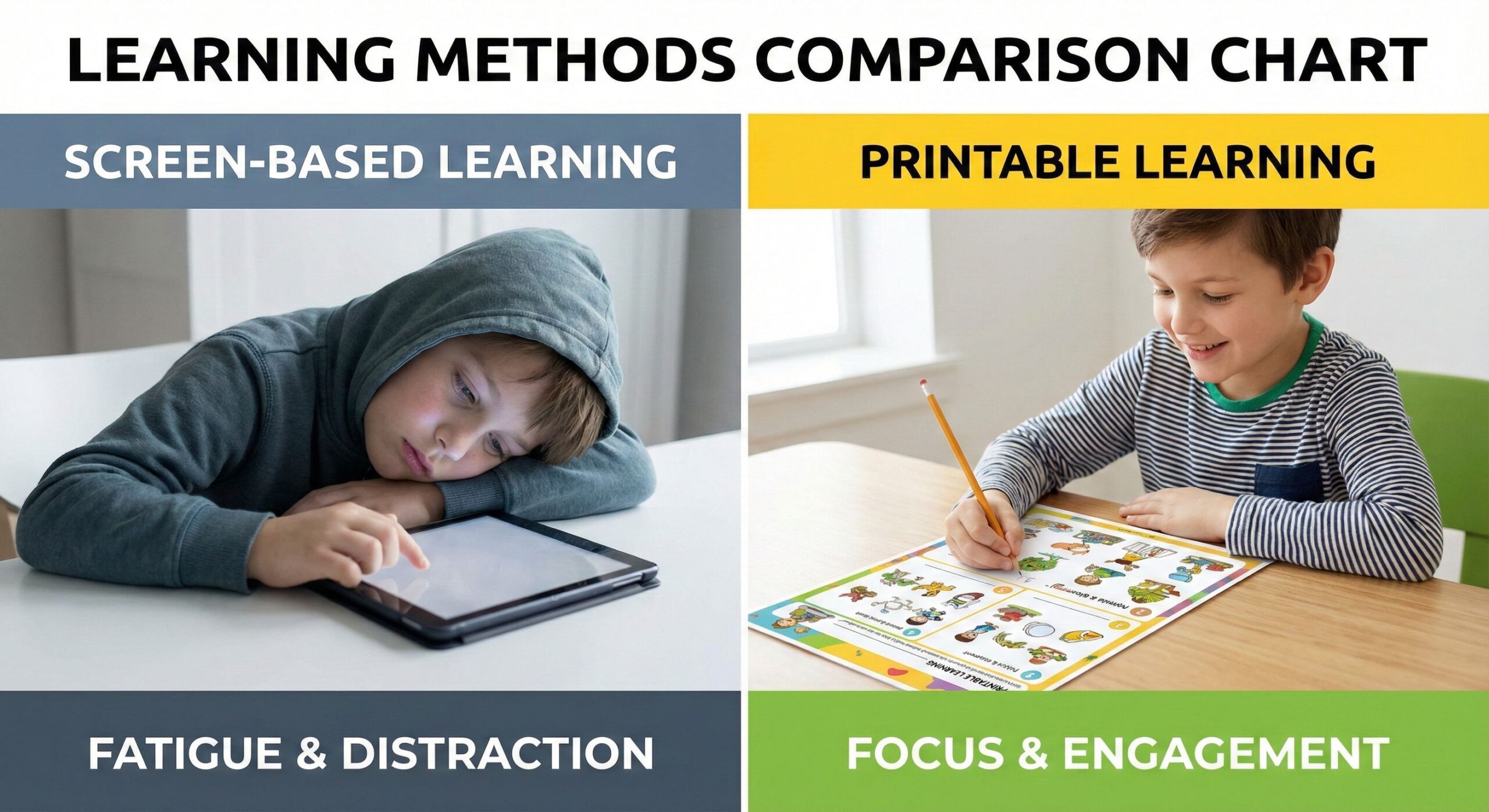
In the modern learning environment, children often spend hours in front of screens. While digital tools provide interactive content, excessive screen time can lead to eye strain, fatigue, and reduced attention span. Printable learning offers a screen-free alternative that allows children to focus without digital distractions.
By incorporating printable worksheets into daily learning routines, parents and teachers can balance screen exposure, ensuring children still enjoy interactive, engaging lessons without overreliance on technology.
Promotes Active Learning
Printable resources encourage active participation rather than passive consumption. When children complete a worksheet, solve puzzles, or color educational pages, they are actively engaging with the material. Active learning improves critical thinking and helps children retain knowledge more effectively.
Example: A math worksheet where children physically draw shapes or solve equations encourages problem-solving and logical reasoning, whereas a math app may only highlight answers after tapping a button.
Customizable and Flexible
Printables provide unmatched flexibility and customization, making them ideal for both teachers and parents. With Animated Ideas, you can access a vast library of free printable worksheets for preschool and elementary students. These resources are easy to download, require no login, and cover a wide range of subjects—from phonics and reading to math, science, and more.
For example, a first-grade student struggling with phonics can focus on specific worksheets that target their learning needs, without distractions from unrelated digital content. Parents and teachers can also personalize worksheets by adding notes, extra practice questions, or fun challenges tailored to each child.
Animated Ideas offers themed and customizable printables, such as math tracing sheets, reading activities, science handouts, and holiday or seasonal worksheets. The ready-to-print format ensures screen-free learning that’s engaging, accessible, and adaptable for both home and classroom use.

Enhances Focus and Reduces Distractions
Printable learning minimizes external distractions. Tablets or computers often come with notifications, games, or social media alerts. In contrast, printables allow children to focus solely on the task.
For example, a literacy worksheet with matching exercises keeps children engaged for 15–20 minutes. Meanwhile, a tablet app may tempt children to switch tasks frequently.
Cost-Effective and Accessible
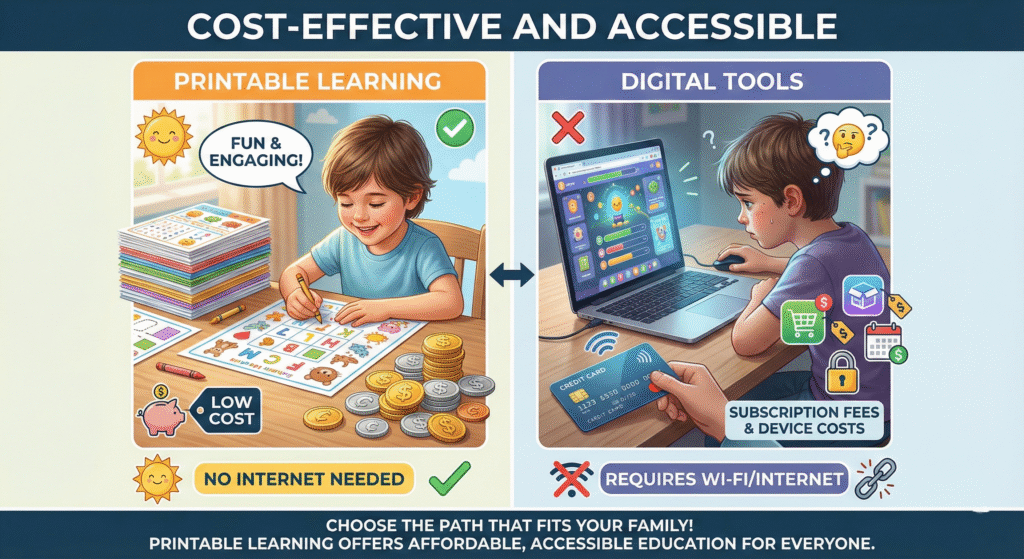
Printables are often more affordable and accessible than digital tools, apps, or online courses. Teachers and parents can print worksheets multiple times without extra cost.
Furthermore, printables do not need an internet connection or electronic devices. Therefore, they are accessible to more families. Digital tools may require subscriptions, devices, or high-speed internet, which some families may lack.
Encourages Creativity and Critical Thinking
Printables encourage children to think critically and creatively. Worksheets that involve drawing, coloring, or problem-solving allow self-expression.
For example, a story-building worksheet lets children craft narratives, develop characters, and use imagination. In contrast, digital story apps may limit creativity with pre-designed templates. Therefore, printables support open-ended learning and imagination.
Easy to Track Progress and Retention
With printable worksheets, educators and parents can physically track a child’s progress. Completed worksheets can be stored in folders or portfolios, making it easy to see improvement.
Digital tools may track progress automatically, but children cannot hold or see their work. Printables help children feel ownership and motivate them to improve continuously.
For example, a folder of math or phonics worksheets can show progress over time.
Conclusion
In summary, printable learning vs digital tools is about understanding the strengths of each method. Printables provide hands-on experiences that children cannot get from screens. They reduce screen time and help improve focus and attention.
Additionally, printables encourage creativity. Children can draw, color, or build stories freely. Digital tools may limit these activities with pre-made templates. Therefore, printables support imagination, independent thinking, and problem-solving skills.
Printables are also flexible and customizable. Teachers and parents can adjust worksheets to match a child’s level. They can add extra exercises or challenges. Digital tools often lack this flexibility.
Another advantage is accessibility. Printables are cost-effective and do not require expensive devices or constant internet access. Families can print worksheets multiple times. This makes learning more practical for home or classroom use.
Tracking progress is easier too. Completed worksheets provide a physical record of achievements. Children feel proud when they see their work. Digital tools track progress, but children cannot hold or display their results.
Finally, combining printables with digital tools is ideal. Digital resources can provide interactive lessons and immediate feedback. Printables add hands-on learning, focus, and creativity. Together, they create a balanced and enriching experience for children.
By using printables thoughtfully, educators and parents can help children build strong skills, foster creativity, and develop a love for learning.
Thank you for reading this lesson guide about “The Benefits of Printable Learning vs Digital Tools.” For more helpful resources, visit related materials from Animated Ideas, and also check our YouTube, Facebook, and Pinterest pages. You will find additional worksheets, videos, and educational content for children of all ages.