
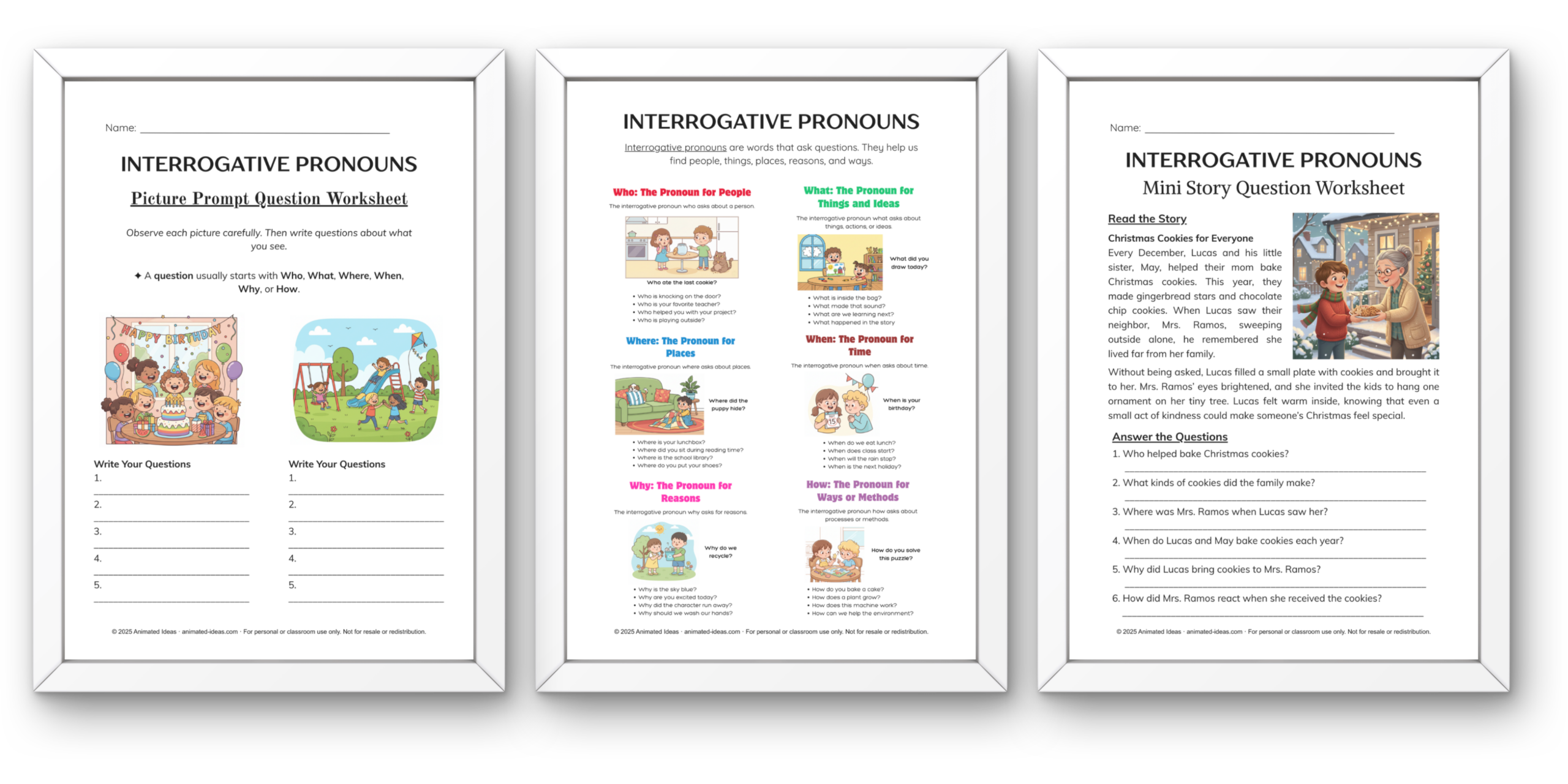
What Are Interrogative Pronouns?
Children ask questions every day. They ask questions when they feel curious and when they want information. They even ask questions when they want to understand the world. Because of this, it is important to teach them what interrogative pronouns are. These special question words guide conversations, support learning, and help children express their thoughts clearly.
In English, interrogative pronouns are words that ask for information. They start many questions and help us discover answers. They also help us talk about people, things, places, reasons, time, and methods. Because these question words appear in stories, conversations, directions, and lessons, children must understand how they work.
This lesson-style blog will explain each interrogative pronoun in detail. It will share examples, meanings, and visuals to help young learners understand the purpose of each pronoun. It will also use clear language so that children can follow along easily.
Download Free Worksheets and Handout
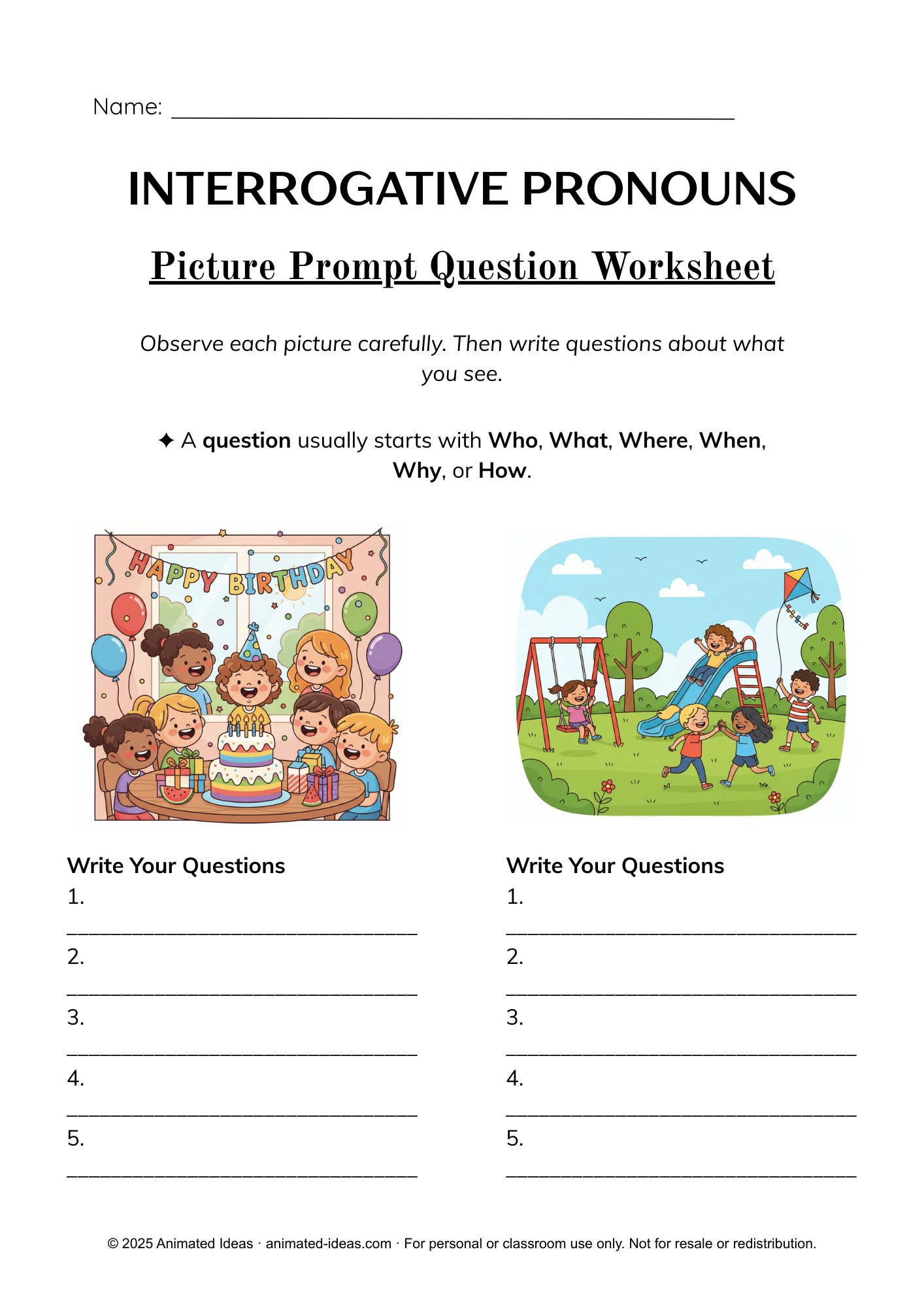

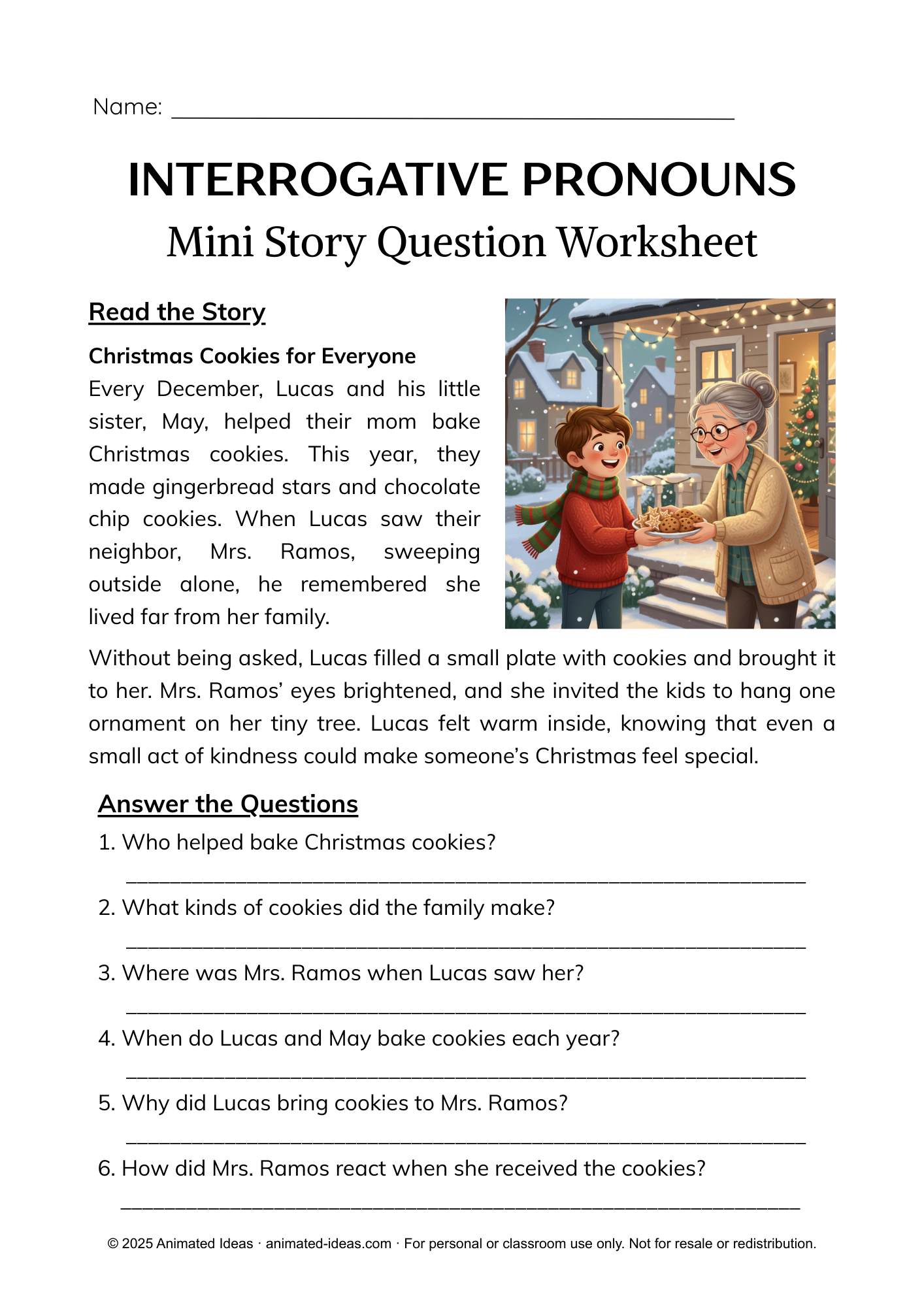
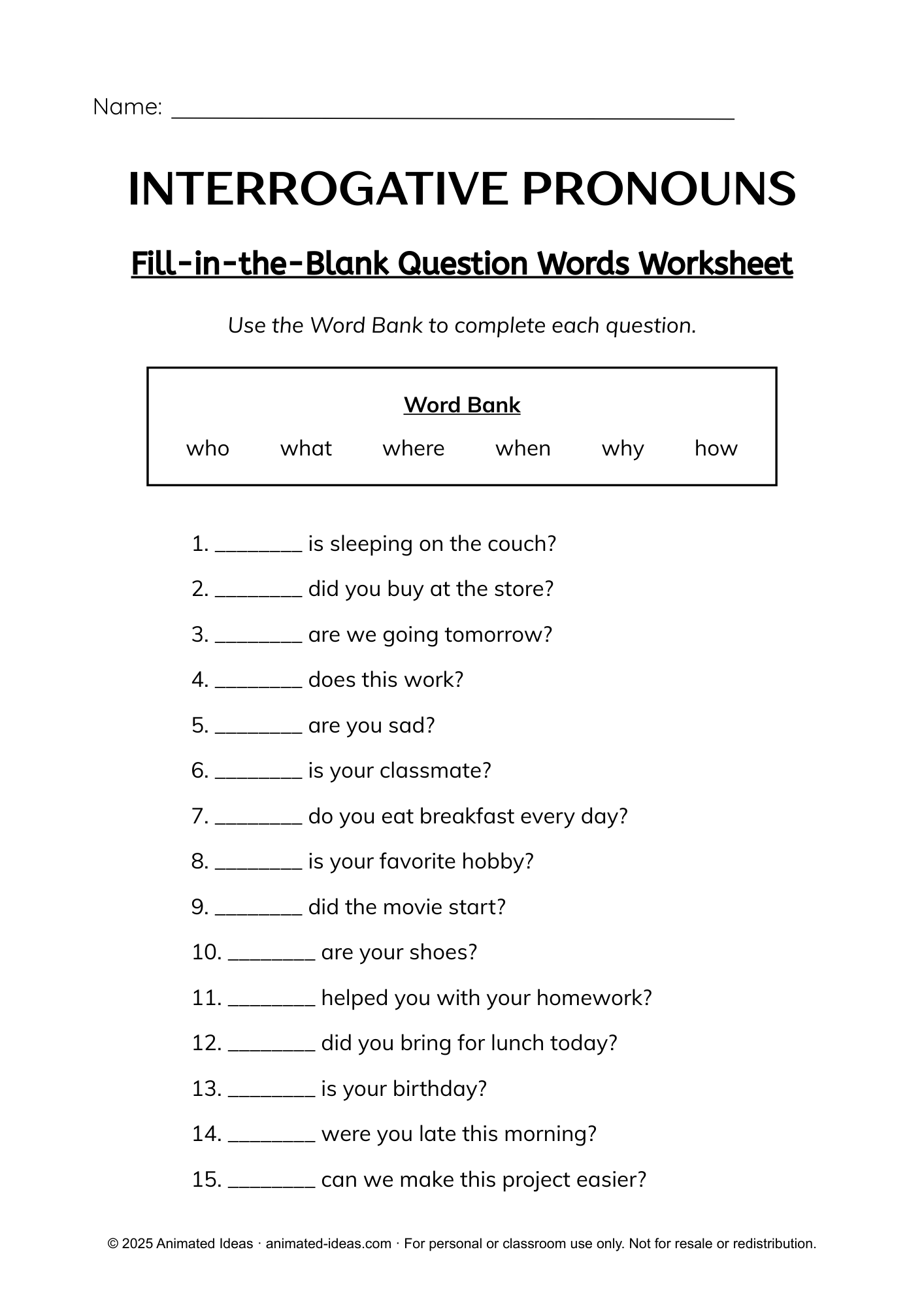


What Are Interrogative Pronouns? A Simple Explanation
Interrogative pronouns are question words. These pronouns replace the information we want to know. Instead of naming the missing detail, the question uses a pronoun to ask for it.
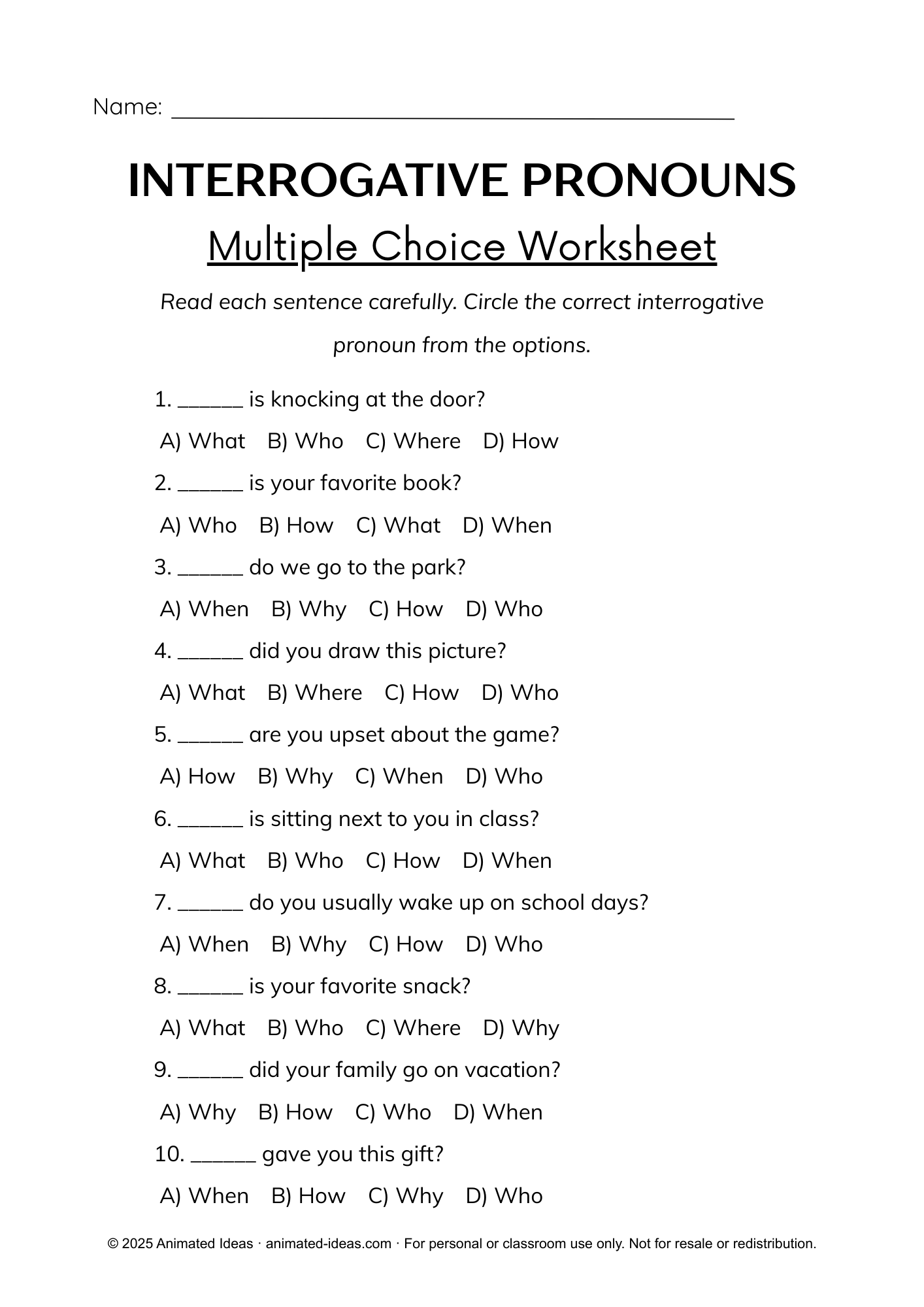
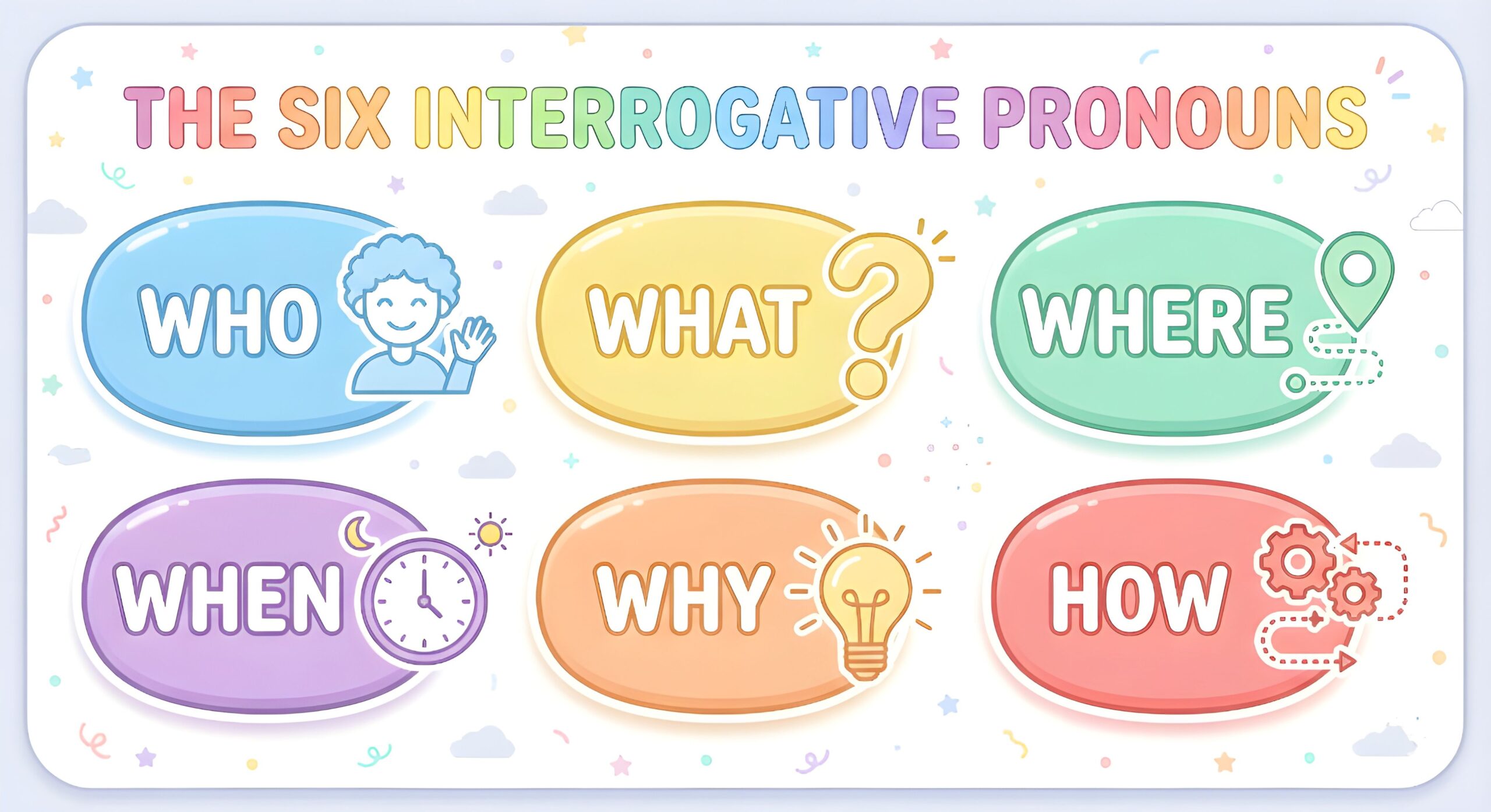
The six common interrogative pronouns in English are:
- Who
- What
- Where
- When
- Why
- How
Each pronoun has a special job. Each one asks for a specific type of information. When children learn what interrogative pronouns are, they begin to form meaningful questions with confidence. They also understand stories better because they can recognize the information each question asks for.
Interrogative pronouns almost always appear at the beginning of a question. They work closely with verbs and subjects to form natural and clear sentences. Because of this role, these pronouns are essential for communication.
Who: The Pronoun for People
The interrogative pronoun who asks about a person. Children use it when they want to know a name, a role, or an identity. When they want to discover which person performed an action, they start with “who.”
This pronoun focuses only on humans. It does not ask about objects or places. Because children talk about people often, “who” becomes one of their most natural question words.
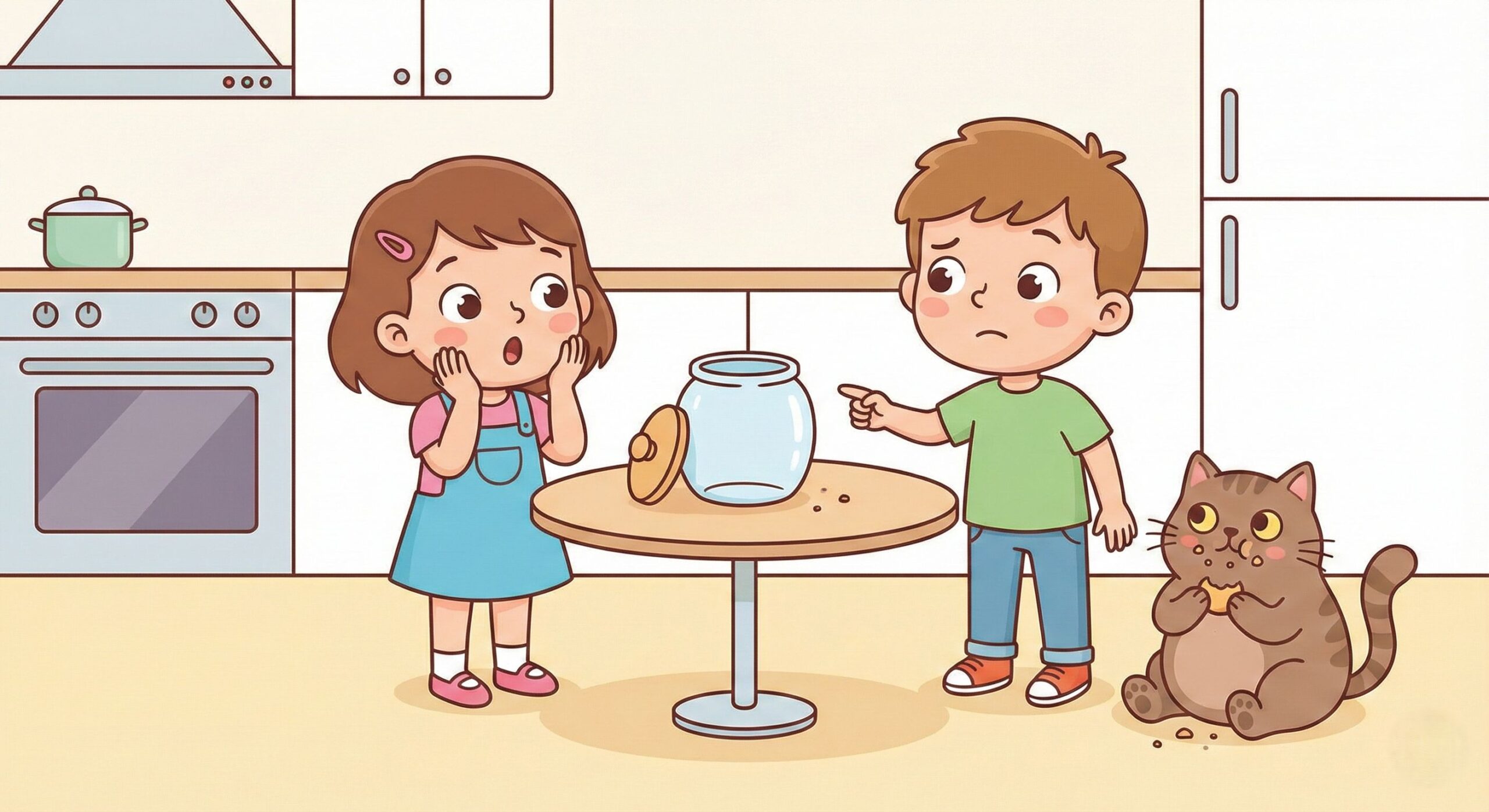
More Examples:
- Who is knocking on the door?
- Who is your favorite teacher?
- Who helped you with your project?
- Who is playing outside?
Each sentence above seeks a person. The question will be answered with a name or a group of people.
What: The Pronoun for Things and Ideas
The interrogative pronoun what asks about things, actions, or ideas. Children use “what” when they want to identify objects, understand events, or learn about concepts. It is one of the most flexible question words because it can refer to anything that is not a person.
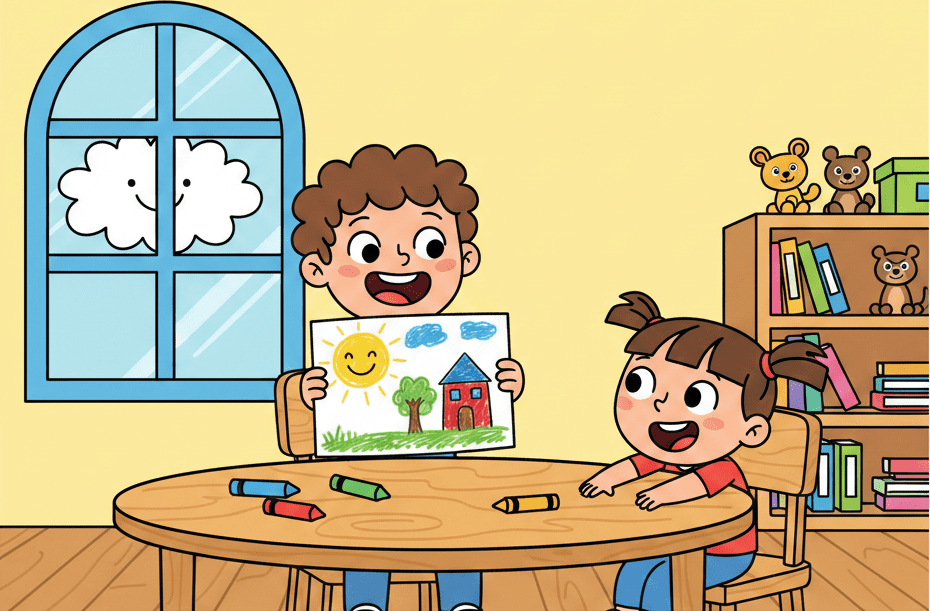
More Examples:
- What is inside the bag?
- What made that sound?
- What are we learning next?
- What happened in the story?
The answers to these questions may be objects, events, actions, or explanations. This is why “what” is used often in classrooms and at home.
Where: The Pronoun for Places
The interrogative pronoun where asks about places. Children use it when they want to find a location. This pronoun helps them talk about direction, position, and movement.

More Examples:
- Where is your lunchbox?
- Where did you sit during reading time?
- Where is the school library?
- Where do you put your shoes?
Because children move often and interact with many places, “where” becomes a natural part of their daily vocabulary.
When: The Pronoun for Time
The interrogative pronoun when asks about time. Children use it when they want to understand schedules, moments, or important dates. This pronoun helps them think about the order of events.

More Examples:
- When do we eat lunch?
- When does class start?
- When will the rain stop?
- When is the next holiday?
The answers will involve time, such as hours, days, or dates. “When” allows children to stay organized and understand routines.
Why: The Pronoun for Reasons
The interrogative pronoun why asks for reasons. Children use it when they want explanations. Because kids are naturally curious, “why” becomes one of the most common pronouns they use.

More Examples:
- Why is the sky blue?
- Why are you excited today?
- Why did the character run away?
- Why should we wash our hands?
These questions ask about causes, motivations, and purposes.
How: The Pronoun for Ways or Methods
The interrogative pronoun how asks about processes or methods. Children use it to understand steps, instructions, or explanations. “How” helps them learn how things work or how to do something.

More Examples:
- How do you bake a cake?
- How does a plant grow?
- How does this machine work?
- How can we help the environment?
The answers explain steps or methods. Because children enjoy learning new skills, “how” becomes a helpful tool for discovery.
Why Interrogative Pronouns Matter in Learning
Understanding what interrogative pronouns are helps children communicate well. These pronouns guide conversations. They help children gain information. They support curiosity and thinking. When children use these pronouns correctly, they become clearer speakers and more confident learners.
Interrogative pronouns also support reading comprehension. When children recognize question words in stories or worksheets, they understand what information the text wants them to notice. This skill helps them answer reading questions better.
Furthermore, interrogative pronouns strengthen writing skills. When children write stories or explanations, they can include questions to guide their ideas. These questions make their writing more interesting and more thoughtful.
Using Interrogative Pronouns in Everyday Life
Interrogative pronouns are used everywhere—not just in school. Children can ask questions about:
- Who is at the door?
- What is for dinner?
- Where is my backpack?
- When does the movie start?
- Why is it raining?
- How do I open this box?
Encouraging children to ask questions in their surroundings strengthens vocabulary, curiosity, and communication skills.
Tips for Remembering What Are Interrogative Pronouns
Learning what are interrogative pronouns can be easier and more fun with simple memory tricks. Mnemonics and associations help children remember each question word and its purpose.
Here are some easy tips to remember the six main interrogative pronouns:
- Who – Think of a person. Imagine a “human” when you ask who.
- What – Think of a thing, object, or idea. What helps you find out about items or actions.
- Where – Think of a place. Ask where to know the location of something.
- When – Think of time. When helps you understand moments, dates, or schedules.
- Why – Think of a reason. Why helps you find out causes or explanations.
- How – Think of steps or methods. How shows you the way something is done.
Using these tips, children can quickly remember each pronoun and ask questions confidently. Teachers and parents can even make colorful charts or posters to display these tips in classrooms and at home.
Conclusion
Interrogative pronouns are powerful tools for learning, communication, and understanding. By learning what interrogative pronouns are, children discover how to ask questions about people, things, places, times, reasons, and methods. They become curious learners who explore ideas with confidence.
Teaching “who,” “what,” “where,” “when,” “why,” and “how” gives children the foundation they need to communicate clearly and understand the world around them.