

Volcanoes and Earthquakes
Volcanoes and earthquakes are natural events that happen on Earth. They can be exciting but also dangerous. In this lesson, students will learn how volcanoes form, why earthquakes occur, and how people can stay safe.
Earthquakes happen when rocks under the Earth’s surface move. This movement can shake the ground and damage buildings. Volcanoes form when hot magma from inside Earth escapes to the surface. These events show the Earth’s energy at work.
What is a Volcano?
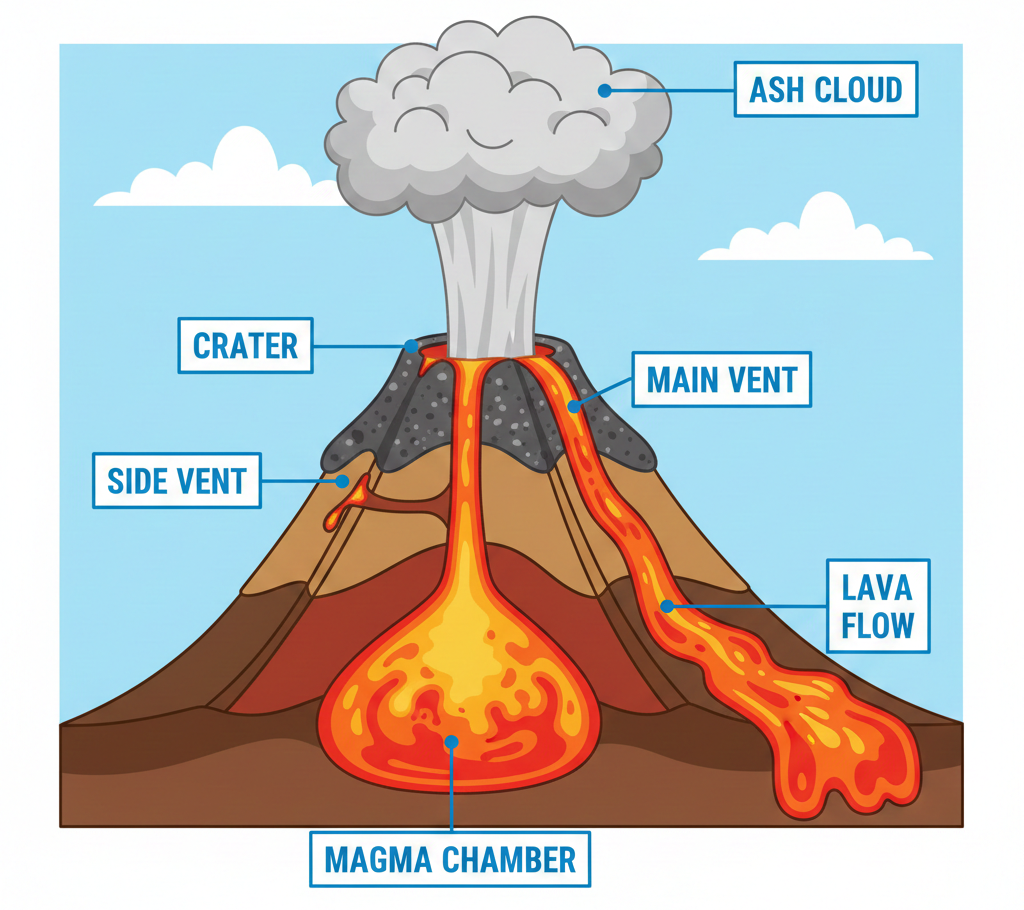
A volcano is a mountain that can erupt. Inside the Earth, there is very hot melted rock called magma. When too much pressure builds up, the magma rises and comes out of the volcano. When it reaches the surface, it is called lava.
Volcanoes come in different shapes. Some are tall and cone-shaped, and they can explode with ash and rocks. Others are wide and low, and they let lava flow out slowly. The shape of a volcano depends on the kind of lava it has and how it erupts.
Volcanoes can change the land and create new rocks. Learning about them helps us understand how our planet works and how to stay safe.
Types of Volcanoes
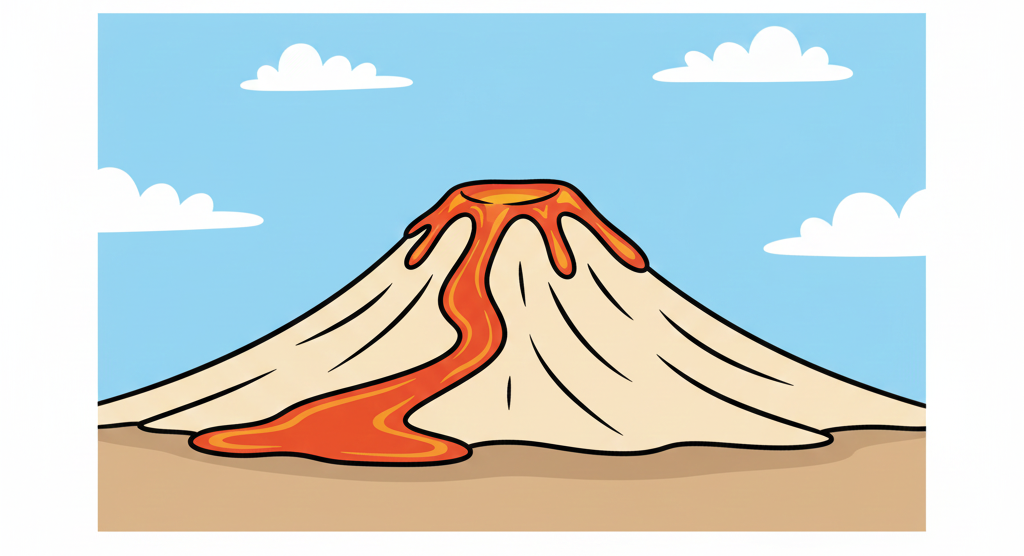
1. Shield Volcanoes
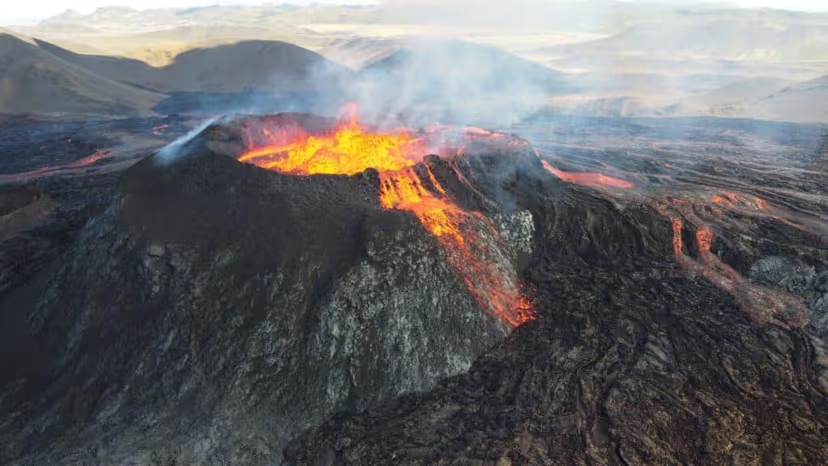
Shield Volcanoes are wide, gently sloping mountains that form when very thin, runny lava flows slowly over a large area. Because the lava spreads out far, the volcano becomes wide rather than tall. Shield volcanoes usually erupt quietly, without strong explosions. A famous example is Mauna Loa in Hawaii, which shows how calm lava flows create a broad, shield-like shape.
2. Cinder Cone Volcano
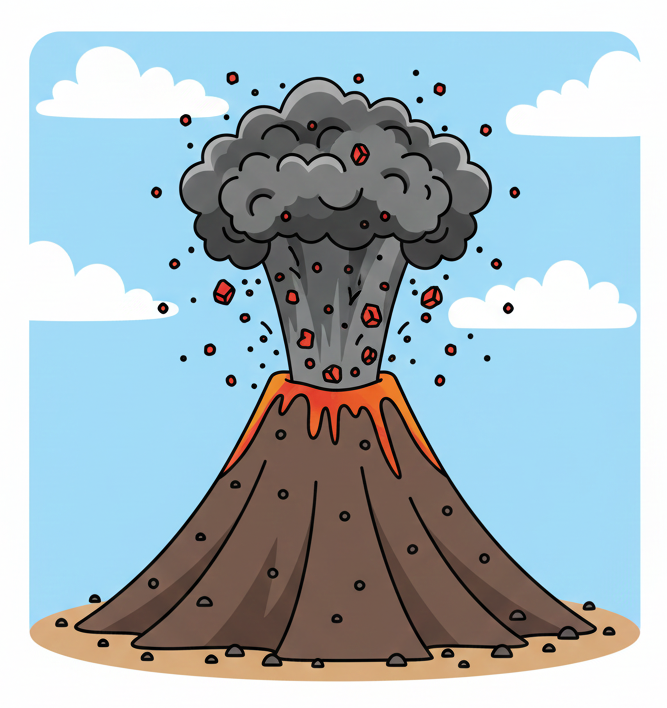
Cinder Cone Volcanoes are small, steep-sided volcanoes formed from explosive eruptions. When lava bursts into the air, it cools quickly and breaks into small pieces called cinders.
These cinders fall back around the opening of the volcano, piling up to create a cone shape.
Cinder cone volcanoes erupt for a short time and then often become inactive.
Parícutin in Mexico is a well-known cinder cone that appeared very quickly.

© K. Segerstrom, USGS / Public domain
3. Composite Volcanoes (Stratovolcanoes)
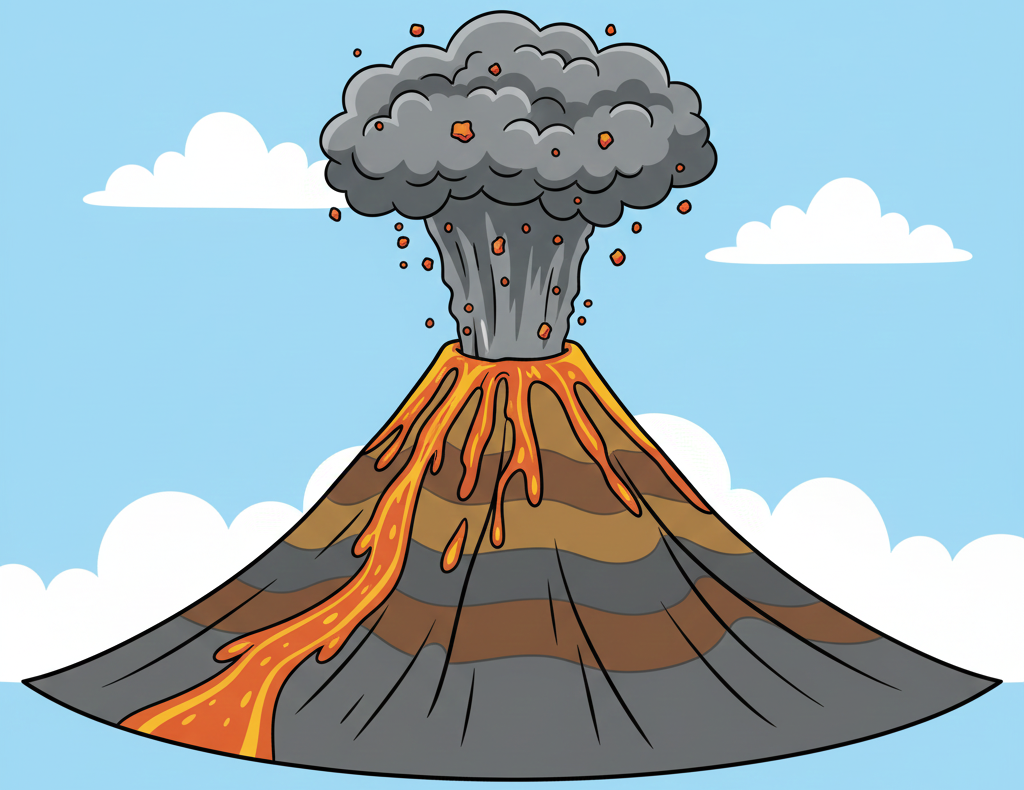
Composite Volcanoes, also called stratovolcanoes, are tall mountains with steep slopes. They are made of many layers of lava, ash, and rock from repeated eruptions over time. Composite volcanoes can erupt in different ways: sometimes they release thick lava, and other times they explode with ash and gas. These eruptions build layers, making the volcano taller and steeper. Mount Fuji in Japan and Mount St. Helens in the United States are famous examples of composite volcanoes.

How Volcanoes Erupt
Volcanoes erupt when pressure builds up inside the Earth. Deep underground, magma, which is hot molten rock, collects in a chamber. Along with magma, gas and ash also build up. Over time, the pressure becomes very strong.
When the pressure is too high, it forces the magma to rise through cracks in the Earth’s crust. The magma reaches the surface and flows out as lava. Sometimes, the eruption also releases ash clouds, which can travel far with the wind. In more violent eruptions, a pyroclastic flow may occur. This is a fast-moving cloud of hot gas, ash, and rocks that can move down the volcano at very high speeds.
*Video by Nguyễn Huynh from Pixabay
The type of eruption depends on the magma’s thickness. Thin, runny magma flows gently, while thick, sticky magma can cause explosive eruptions. This is why some volcanoes, like shield volcanoes, erupt calmly, while others, like composite volcanoes, erupt violently.
What is an Earthquake?
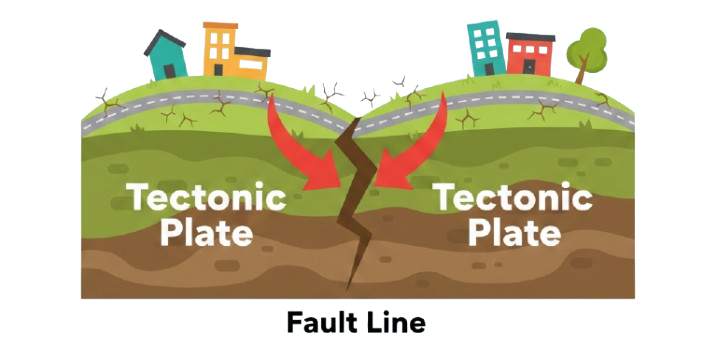
An earthquake is the shaking or trembling of the Earth’s surface. It happens when rocks under the ground suddenly move along cracks called faults.
Sometimes earthquakes are very small, and people do not feel them at all. Other times, earthquakes can be very strong. Strong earthquakes can make the ground shake hard enough to break roads, crack walls, or damage houses and buildings.
Earthquakes can even cause other natural events. One of these is a tsunami, which is a giant ocean wave. Tsunamis happen when a strong earthquake occurs under the sea. The shaking pushes the water upward and creates big waves that can travel very fast.
Even though earthquakes can be dangerous, learning about them helps us understand how the Earth works and how to stay safe when the ground begins to shake.
How Earthquakes Happen
Most earthquakes happen because of the movement of tectonic plates, which are huge pieces of the Earth’s crust. These plates move slowly, but they can push, pull, or slide past each other. When the rocks along the plate boundaries stick, pressure builds up.
After some time, this pressure becomes too much. Suddenly, the rocks break or slide, and the energy is released. This energy travels through the ground in waves, shaking everything above it. This is what we feel as an earthquake.
There are three main types of movements that cause earthquakes:
- Colliding plates: Plates push against each other, creating strong pressure.
- Separating plates: Plates move apart, and new crust forms.
- Sliding plates: Plates slide past one another, causing friction.
Measuring Earthquakes
Scientists use special tools called seismographs to measure earthquakes. A seismograph records the strength and duration of the shaking. The data is used to calculate the magnitude of the earthquake.
The Richter scale is one way to show how strong an earthquake is. A small earthquake may only be 2 or 3 on the Richter scale. A major earthquake can be 7 or higher. By measuring earthquakes, scientists can help warn people and reduce damage.
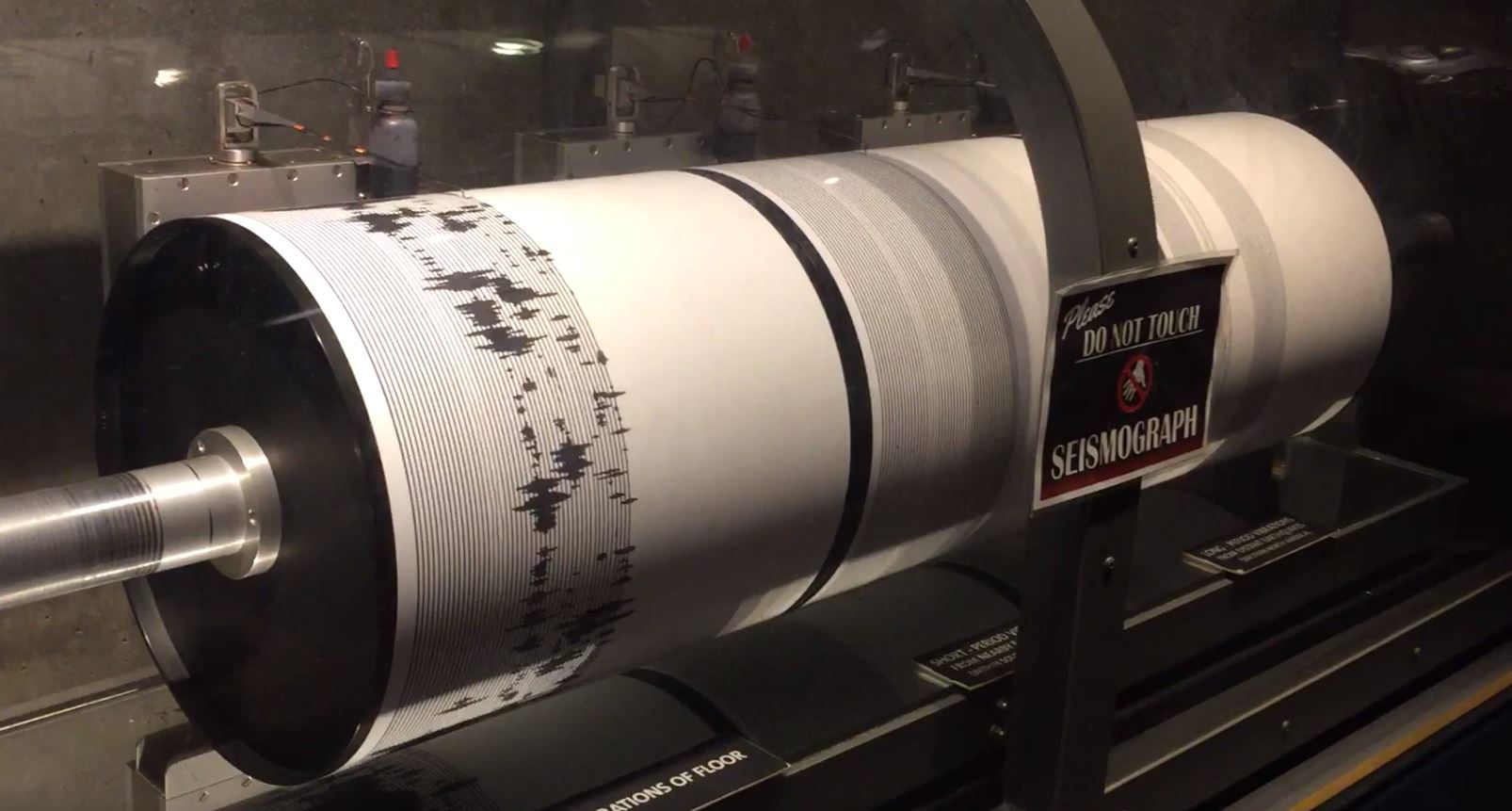
Volcanoes and Earthquakes Together
Volcanoes and earthquakes often happen in similar areas. This is because both are related to tectonic plates. Many volcanoes form near plate boundaries. Earthquakes can happen before, during, or after a volcanic eruption.
This happens because magma, the hot molten rock inside a volcano, moves underground. The movement pushes and shakes the rocks above, causing earthquakes. That is why scientists often monitor earthquakes to predict volcanic eruptions.
Safety During Volcanoes and Earthquakes
It is important to stay safe during these events. People should have an emergency kit with water, food, and first aid.
During a Volcano Eruption
- Stay indoors if possible.
- Avoid areas with lava flow or falling ash.
- Wear masks to avoid inhaling ash.
During an Earthquake
- Drop, cover, and hold on.
- Stay away from windows and heavy objects.
- If outside, move to an open area.
Fun Facts About Volcanoes and Earthquakes
- Some earthquakes are too small to feel.
Many earthquakes happen deep underground and are so tiny that humans cannot notice them. Scientists call these microearthquakes, and special instruments like seismographs are needed to detect them. - Lava can flow very fast.
Lava from volcanoes can move faster than 60 kilometers per hour, which is faster than a car driving in a city. This is why it is important to observe lava only from a safe distance. - Volcanoes exist on other planets.
Volcanoes are not unique to Earth. Mars has a giant volcano called Olympus Mons, the tallest in the solar system. Venus also has many volcanoes. This shows that volcanic activity is part of how planets change over time. - The largest earthquake ever recorded was in Chile.
In 1960, a massive earthquake struck Chile, measuring 9.5 on the Richter scale. It shook the ground so powerfully that it was felt thousands of kilometers away. This shows how strong the Earth’s forces can be.
Conclusion
Volcanoes and earthquakes show us how dynamic and active the Earth really is. They are powerful, exciting, and sometimes dangerous, but they also teach us a lot about how our planet works. By studying these natural events, we can understand the Earth’s processes, predict potential hazards, and stay safe during eruptions or earthquakes.
Learning about volcanoes and earthquakes also helps students appreciate the beauty and power of nature. Mountains, lava flows, shaking ground, and volcanic ash are all part of the amazing processes that shape our world.
By exploring volcanoes and earthquakes, students can become curious scientists, ask questions about the Earth, and enjoy learning about natural events safely. Observing and understanding these events shows the incredible strength and beauty of our planet.