
Present Simple
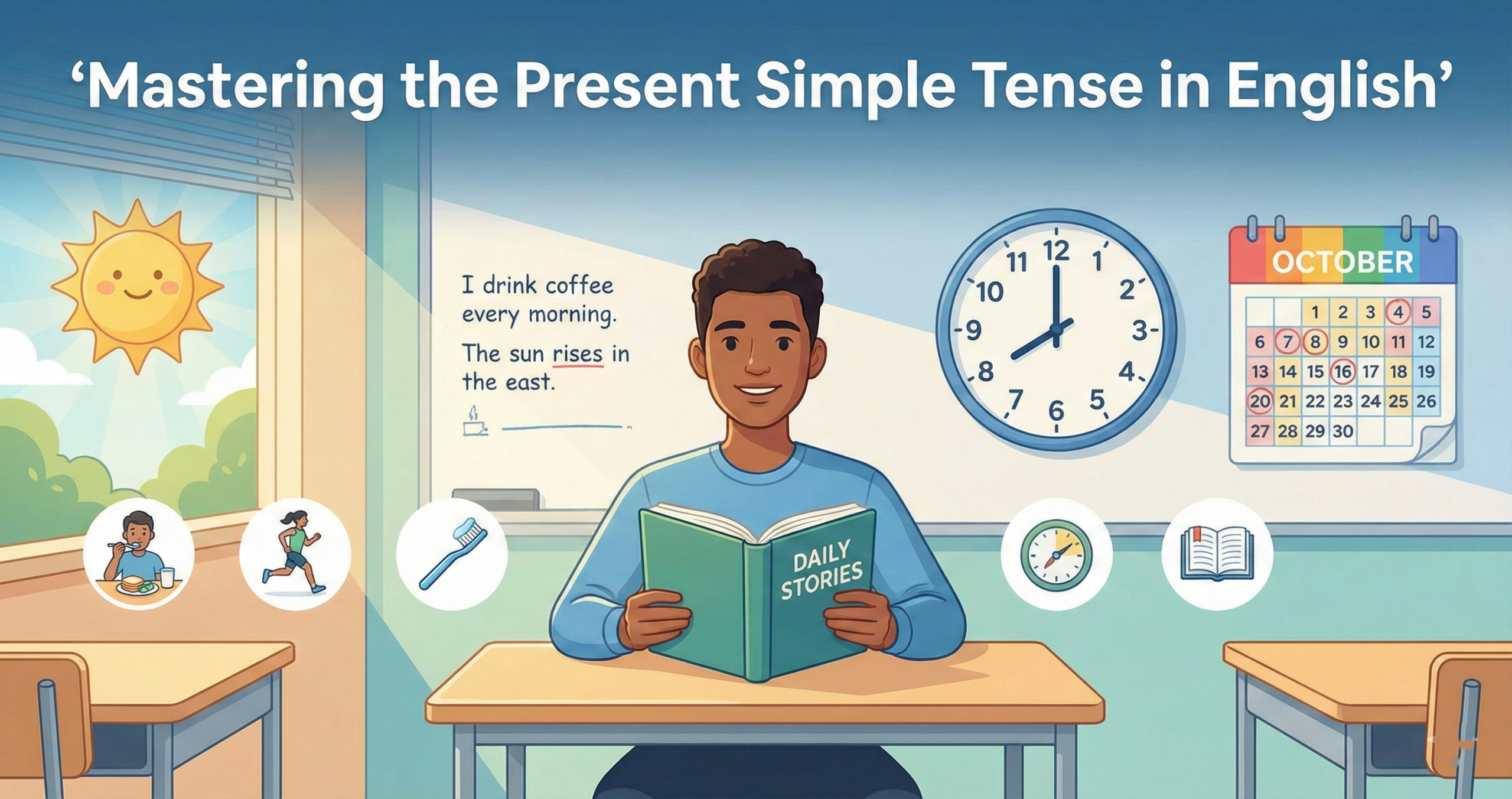
The Present Simple tense is one of the most essential tenses in English. It describes habits, routines, facts, and general truths. Understanding this tense is crucial for speaking and writing English clearly. In this guide, we will explore the rules, uses, structure, and examples of the Present Simple tense in detail.
What is the Present Simple Tense?
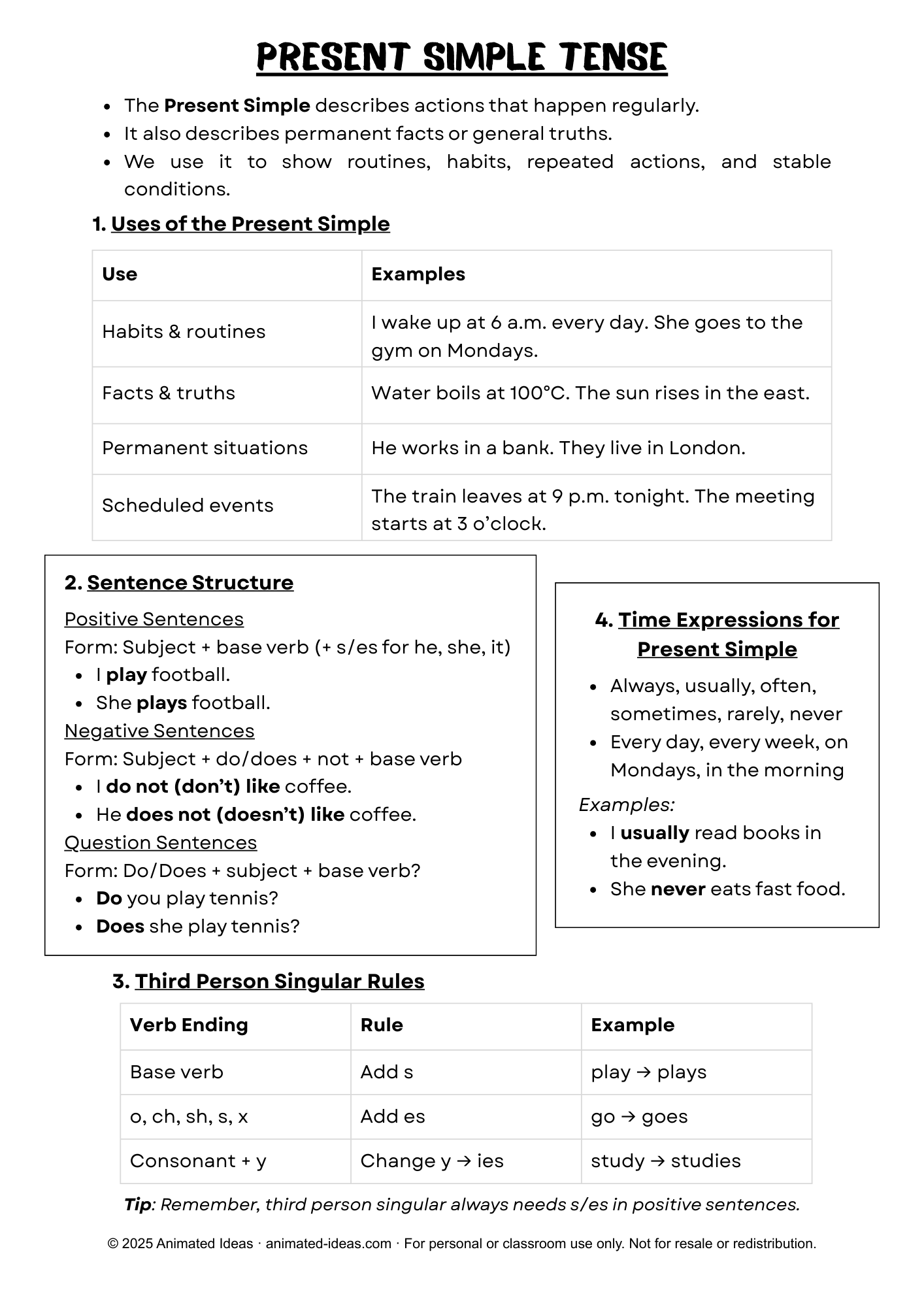
The Present Simple tense expresses actions that happen regularly or facts that are always true. For example:


Notice how these sentences show either a habit or a fact. Using the Present Simple correctly helps learners communicate clearly.
When Do We Use the Present Simple Tense?
The Present Simple has several important uses:
1. Habits and Routines
We use the Present Simple to talk about things we do regularly.
- I wake up at 6 a.m. every day.
- She goes to the gym on Mondays.
Furthermore, it is commonly used for talking about routines that are consistent over time.
2. Facts and General Truths
The Present Simple also expresses facts that are always true.
- The sun rises in the east.
- Cats like milk.
3. Permanent Situations
We use the Present Simple to talk about situations that are permanent or stable.
- He works in a bank.
- They live in London.
In addition, the Present Simple is perfect for describing long-term or permanent conditions.
4. Scheduled Events (Future Reference)
Interestingly, the Present Simple can describe scheduled events in the near future, especially for transport or programs.
- The train leaves at 9 p.m. tonight.
- The meeting starts at 3 o’clock.
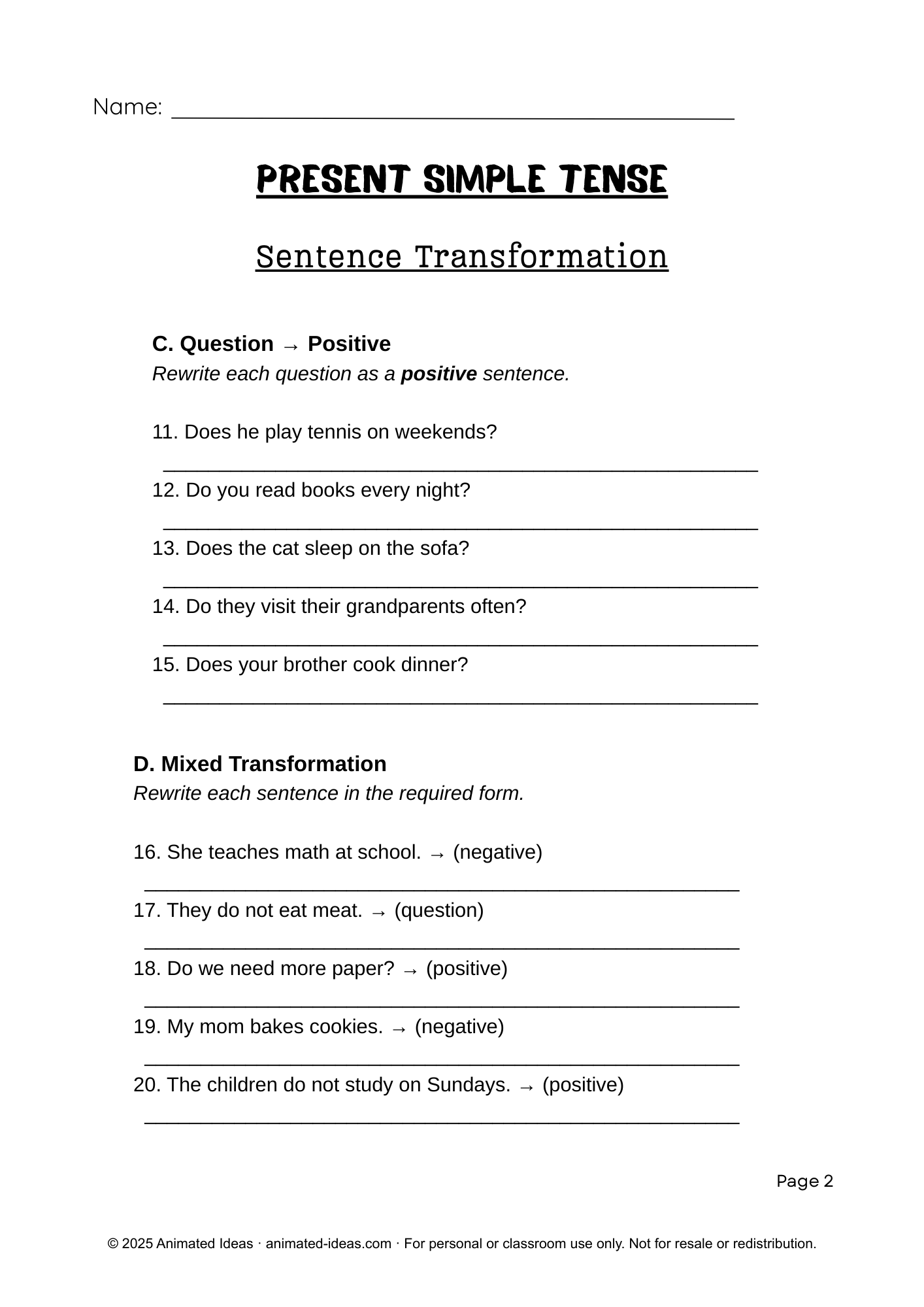
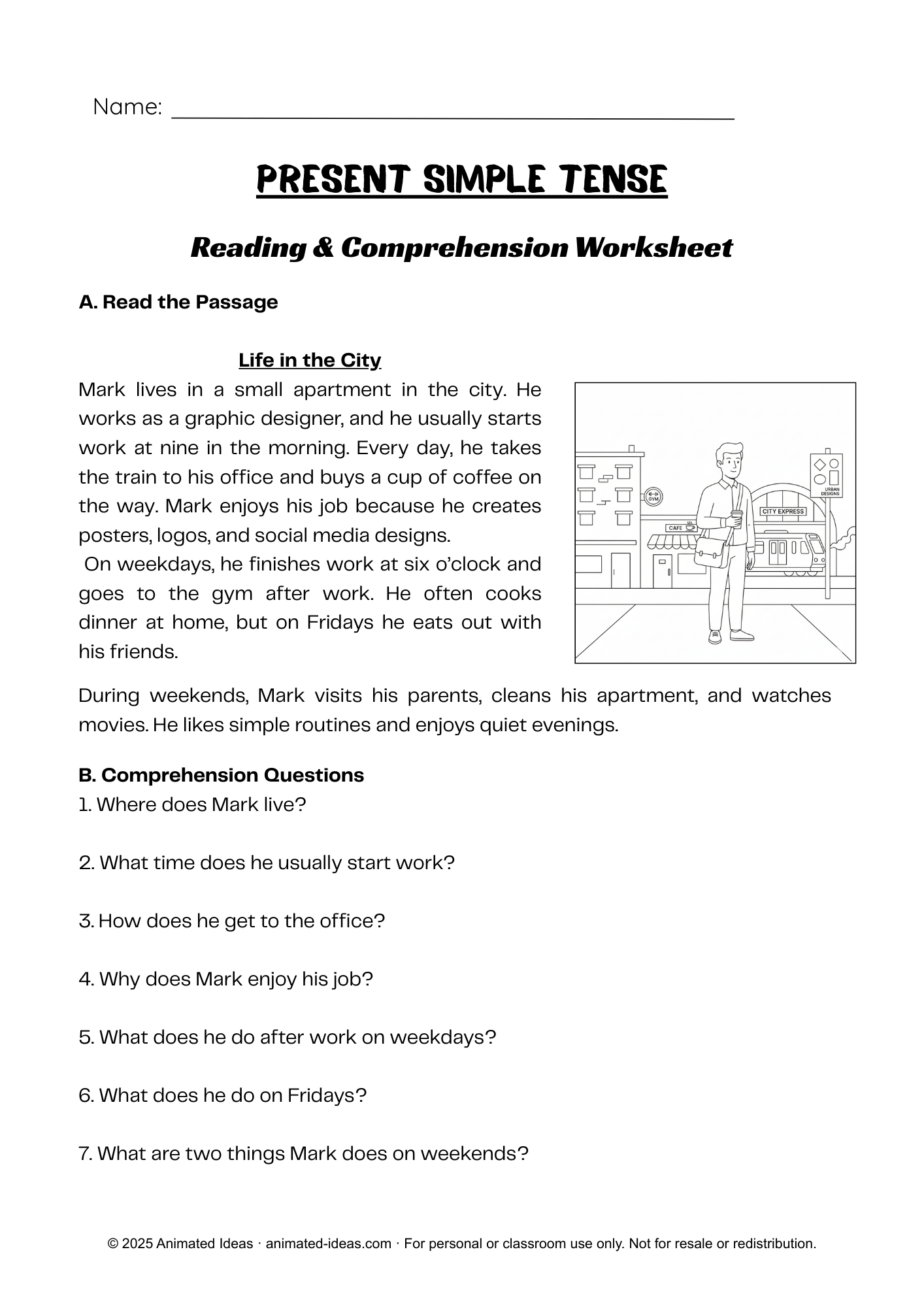
Download Free Worksheets and Notes
Get free Present Simple worksheets and notes to help learners practice positive, negative, and question forms, as well as time expressions and third-person singular rules.
Perfect for classroom lessons, homeschooling, or self-study, these resources make learning the Present Simple easy, engaging, and effective. Just download, print, and start practicing!



Structure of the Present Simple Tense
Understanding the sentence structure is critical for intermediate learners. The structure depends on whether the sentence is positive, negative, or a question.
Positive Sentences
Form: Subject + base verb (+ s/es for third person singular)
- I play football.
- She plays football.
Moreover, notice the addition of s for the third person singular, which is an essential rule.
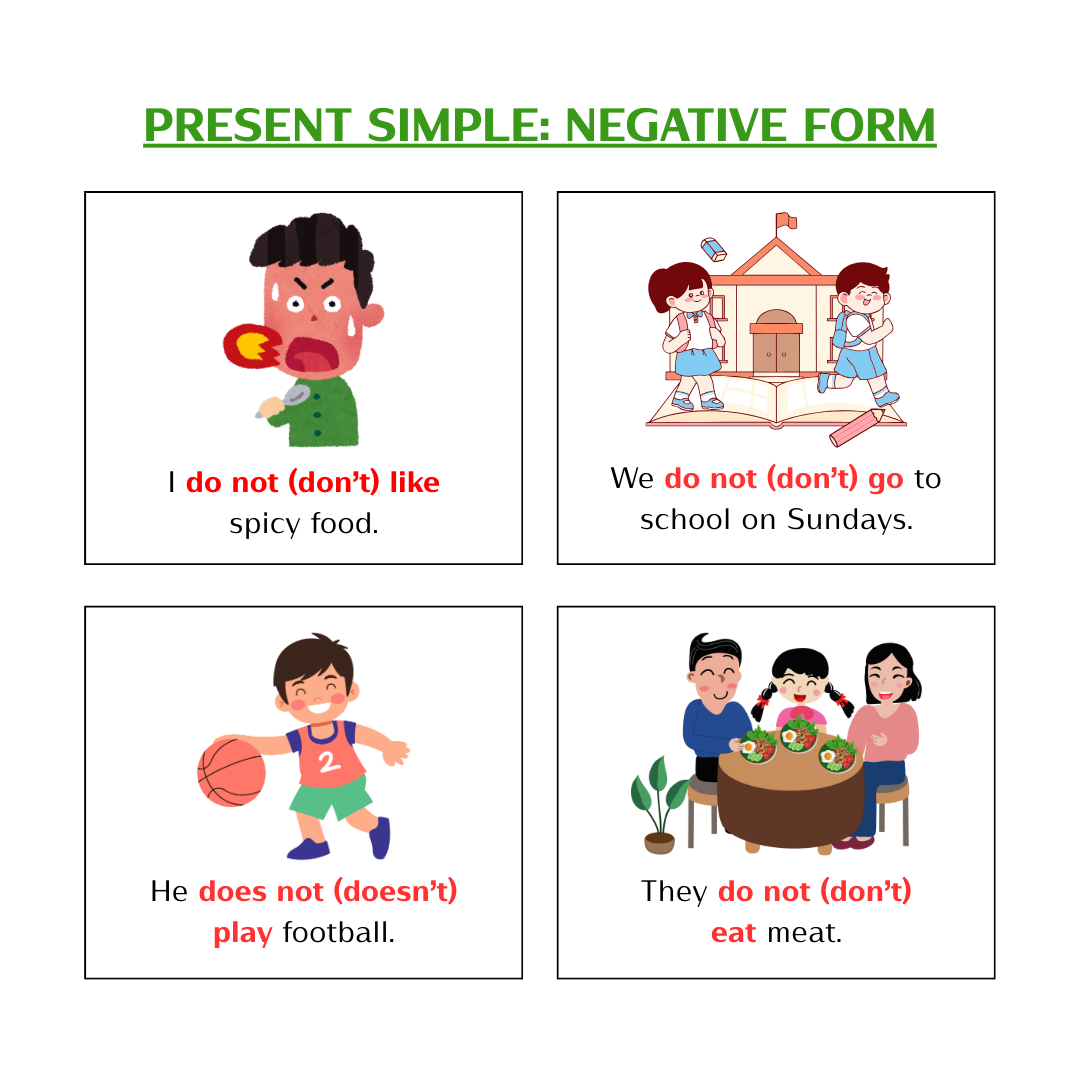
Negative Sentences
Form: Subject + do/does + not + base verb
- I do not (don’t) like coffee.
- He does not (doesn’t) like coffee.
On the other hand, negative sentences require do/does not before the verb.
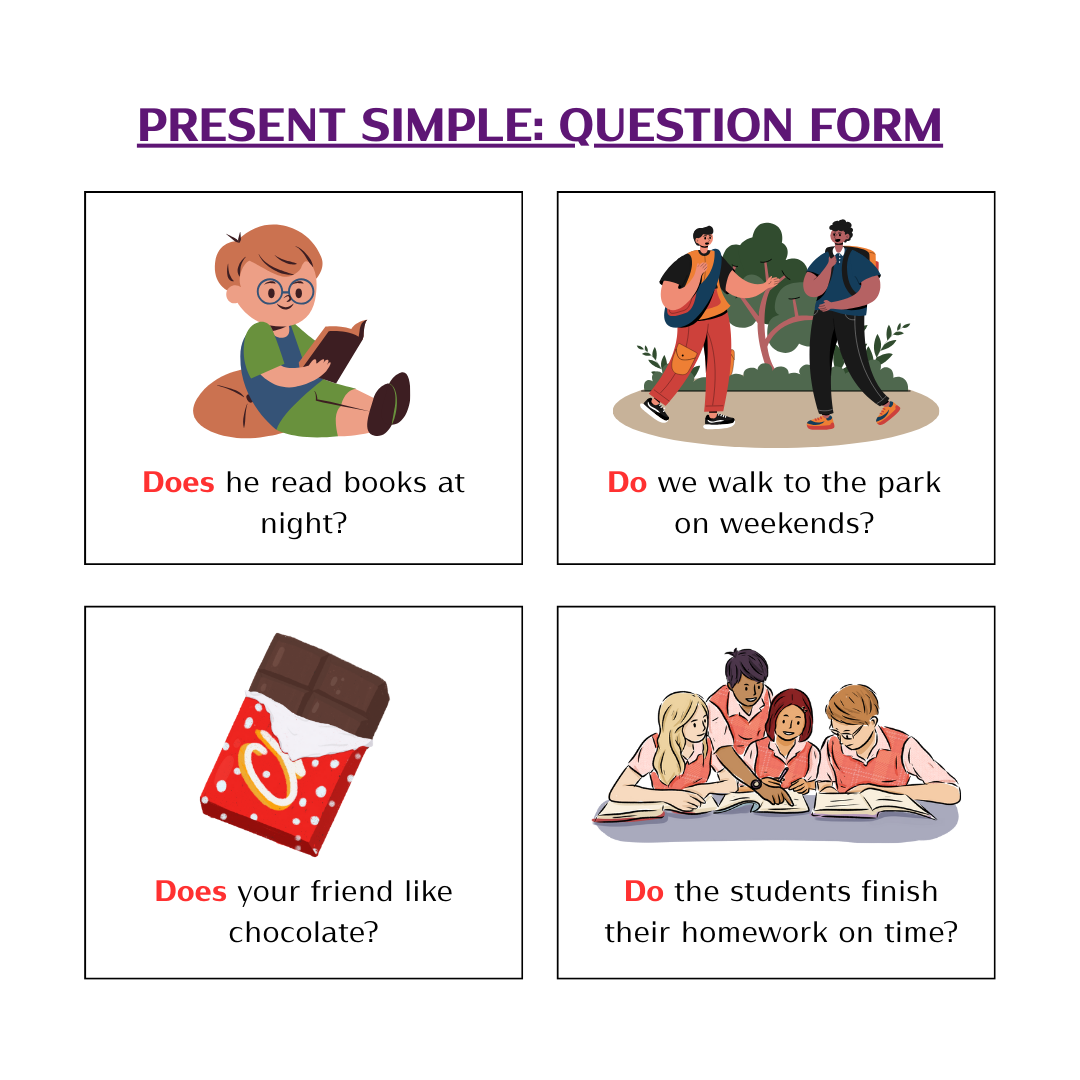
Question Sentences
Form: Subject + do/does + not + base verb
- Do you play tennis?
- Does she play tennis?
Consequently, forming questions requires inverting the auxiliary verb do/does with the subject.
More Present Simple Examples: Negative & Question Forms
Common Time Expressions with Present Simple
Certain words often appear with the Present Simple tense. These time expressions indicate routine or frequency:
- always, usually, often, sometimes, rarely, never
- every day, every week, on Mondays, in the morning
| Time Expression | Example Sentence |
|---|---|
| always | I always drink water in the morning. |
| usually | She usually goes for a walk after lunch. |
| often | They often watch movies on weekends. |
| sometimes | He sometimes plays football after school. |
| rarely | I rarely eat junk food. |
| never | She never drinks soda. |
| every day | I read books every day. |
| every week | We have a meeting every week. |
| on Mondays | She cleans her room on Mondays. |
| in the morning | He exercises in the morning. |
Spelling Rules for Third Person Singular
When forming positive sentences in the third person singular (he, she, it), small spelling changes are necessary:
1. Add -s
Rule: For most verbs, simply add -s.
Examples:
- He plays football every weekend.
- She reads a book before bed.
- It rains a lot in April.
2. Add -es
Rule: For verbs ending in -ch, -sh, -s, -x, -z, add -es.
Examples:
- He watches cartoons in the morning.
- She fixes her bike every Saturday.
- It buzzes loudly near the flowers.
3. Change y → ies
Rule: For verbs ending in a consonant + y, change y → ies.
Examples:
- He studies English every day.
- She carries her bag to school.
- It flies high in the sky.
Therefore, learners must remember these rules to avoid common mistakes when writing in the third person singular.
Tips for Using the Present Simple Correctly
1. Always use the base verb with I, you, we, and they
In the Present Simple tense, the verb stays in its base form for these subjects.
Examples:
- I play the piano every morning.
- You study English after school.
- We watch movies on weekends.
- They like reading books.
2. Add -s or -es for he, she, and it
Remember to make small spelling changes for third-person singular subjects.
Examples:
- He plays football on Sundays.
- She watches cartoons in the evening.
- It rains a lot in April.
3. Use do/does for negatives and questions
For negatives, use do not (don’t) with I, you, we, they, and does not (doesn’t) with he, she, it.
Examples:
- I don’t like spinach.
- She doesn’t eat junk food.
- They don’t go to the park every day.
- Does he play tennis?
- Do you study every evening?
4. Include time expressions to clarify frequency
Using words like always, usually, often, sometimes, rarely, never, every day, on Mondays, in the morning helps indicate routine actions.
Examples:
- She usually drinks tea in the morning.
- They never eat fast food.
- I study English every day.
5. Practice in both spoken and written English
Speaking, writing, and reading sentences with the Present Simple helps learners internalize the tense.
Try creating your own sentences, keeping in mind subjects, verbs, and time expressions.
Examples:
- Write a short paragraph about your daily routine.
- Speak aloud what your family does every day.
Common Mistakes to Avoid
Intermediate learners often make these mistakes:
- Forgetting s/es in third person singular.
- Wrong: She play football.
- Correct: She plays football.
- Using the wrong auxiliary for negatives/questions.
- Wrong: He not likes coffee.
- Correct: He does not like coffee.
- Confusing Present Simple with Present Continuous.
- Wrong: I am go to school every day.
- Correct: I go to school every day.
Conclusion
The Present Simple tense is one of the most essential tenses for speaking and writing English clearly and accurately. It allows learners to describe habits, routines, facts, permanent situations, and even scheduled events in the near future. By mastering this tense, students can express everyday actions, universal truths, and stable conditions confidently.
Moreover, intermediate learners should pay special attention to spelling rules, especially for the third person singular, to avoid common mistakes. They should also practice using auxiliary verbs like do and does when forming negative sentences and questions. Additionally, incorporating time expressions such as always, usually, sometimes, every day, and on Mondays can make sentences more precise and meaningful.
Furthermore, regular practice with positive, negative, and question forms helps learners internalize the tense and use it naturally in both speaking and writing. Observing patterns, correcting mistakes, and applying the tense in real-life contexts—like talking about daily routines, giving instructions, or describing facts—can greatly enhance fluency.
In conclusion, consistent practice and awareness of rules make the Present Simple tense a powerful tool for effective communication. Once learners are confident with its forms and uses, they can communicate more clearly, express themselves accurately, and build a strong foundation for learning other tenses in English.