
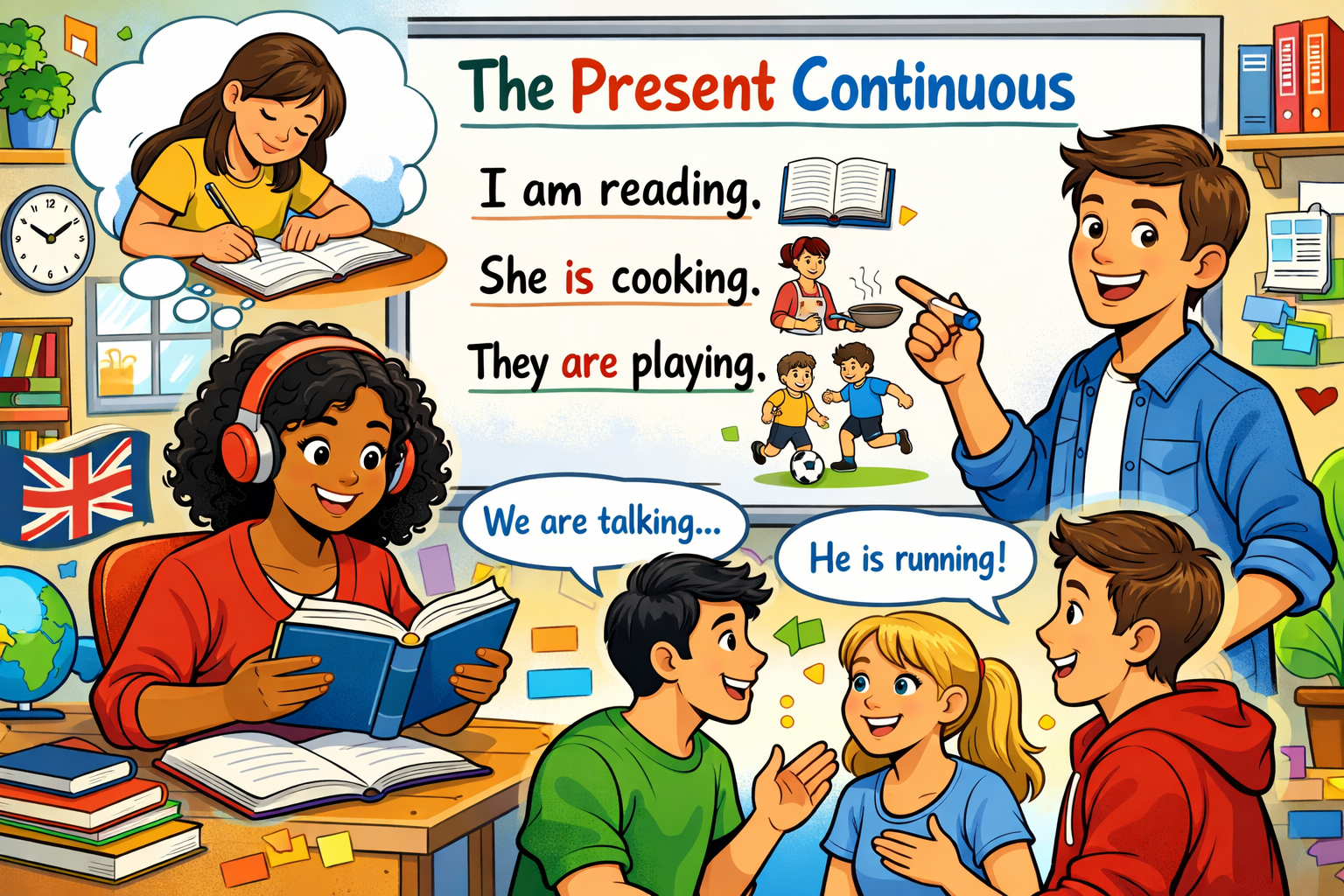
What Is the Present Continuous Tense?
The Present Continuous Tense describes actions in progress at the present moment. It focuses on activities that are not finished. These actions are temporary. They may stop later. Unlike permanent habits, these actions are happening around now.
For example:
- She is studying for her exam.
- They are talking outside.
These actions are happening at the moment of speaking. Therefore, the Present Continuous Tense is the correct choice.
Download Free Worksheets and Notes


Form of the Present Continuous Tense
The Present Continuous Tense has a clear structure. It uses the verb be and the -ing form of the main verb.
Affirmative Form
Structure: Subject + am / is / are + verb + ing
Examples:
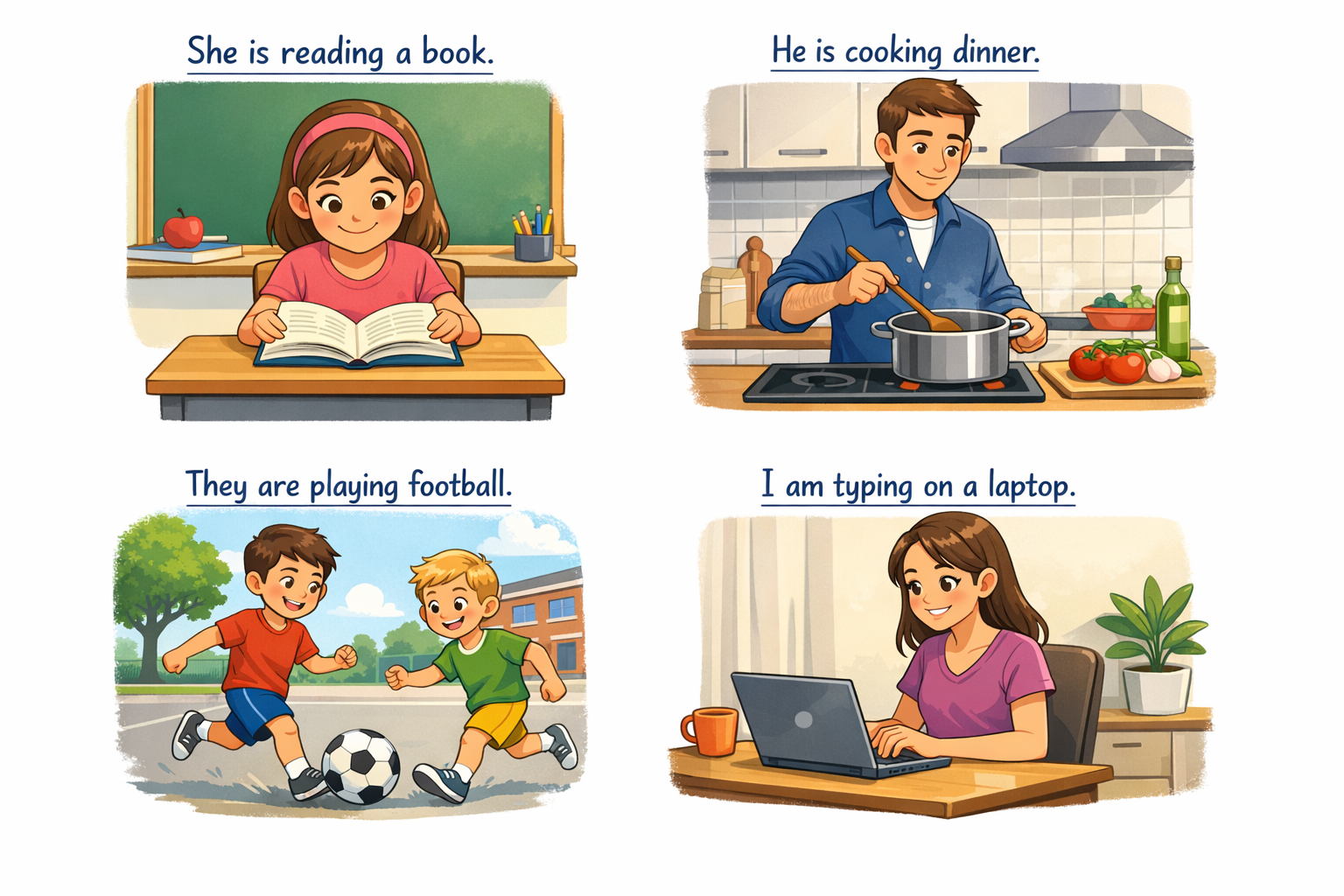
- I am reading a book.
- She is cooking dinner.
- They are watching a movie.
Each sentence uses the correct form of the verb be. The main verb ends in -ing.
Negative Form
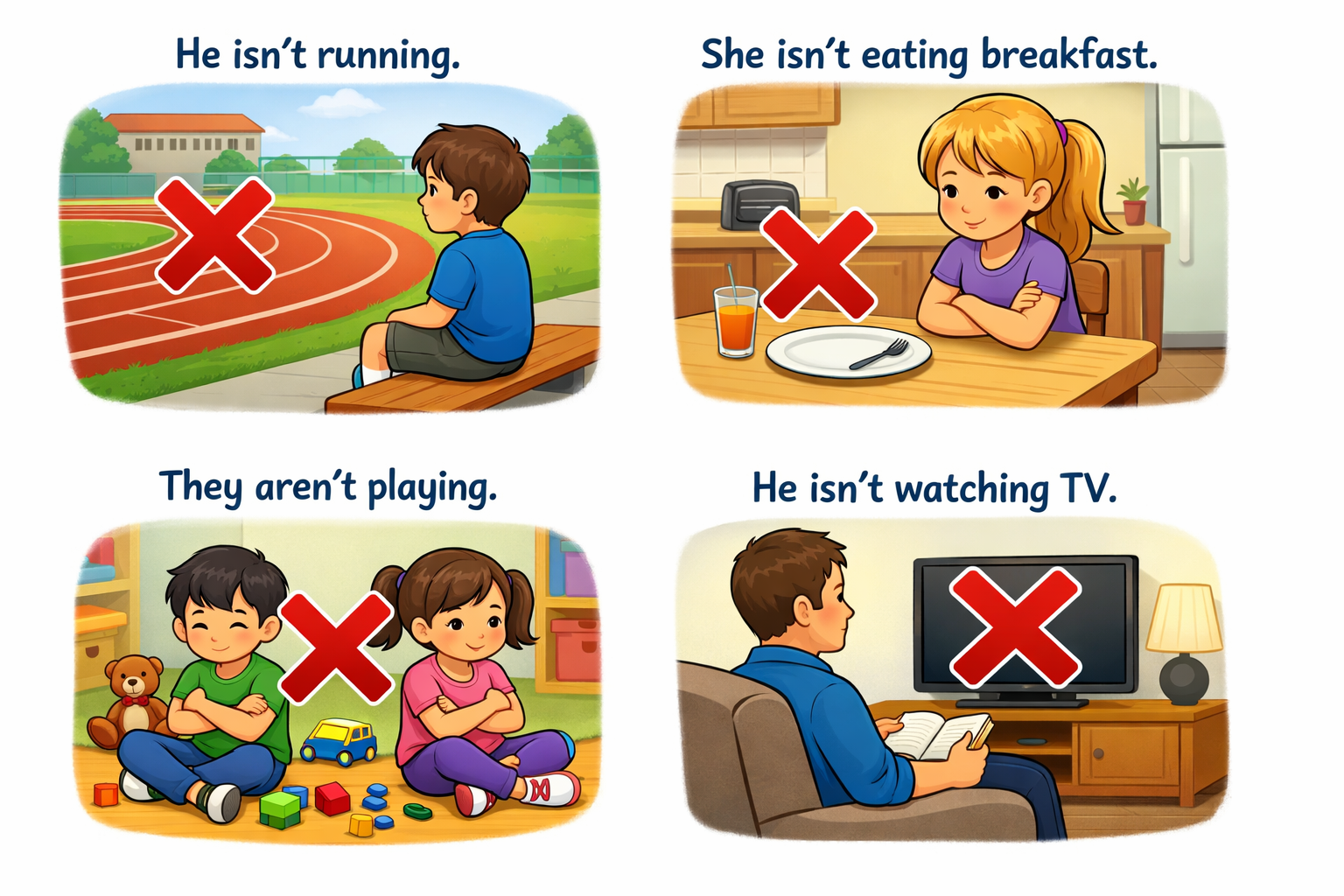
Structure: Subject + am / is / are + not + verb + -ing
Examples:
- I am not sleeping right now.
- She is not eating breakfast.
- They are not playing outside.
- We aren’t traveling this month.
The word not comes after the verb be. This structure clearly shows negation.
Tip: Contractions are common:
- is not → isn’t
- are not → aren’t
- am not → I’m not
Question Form
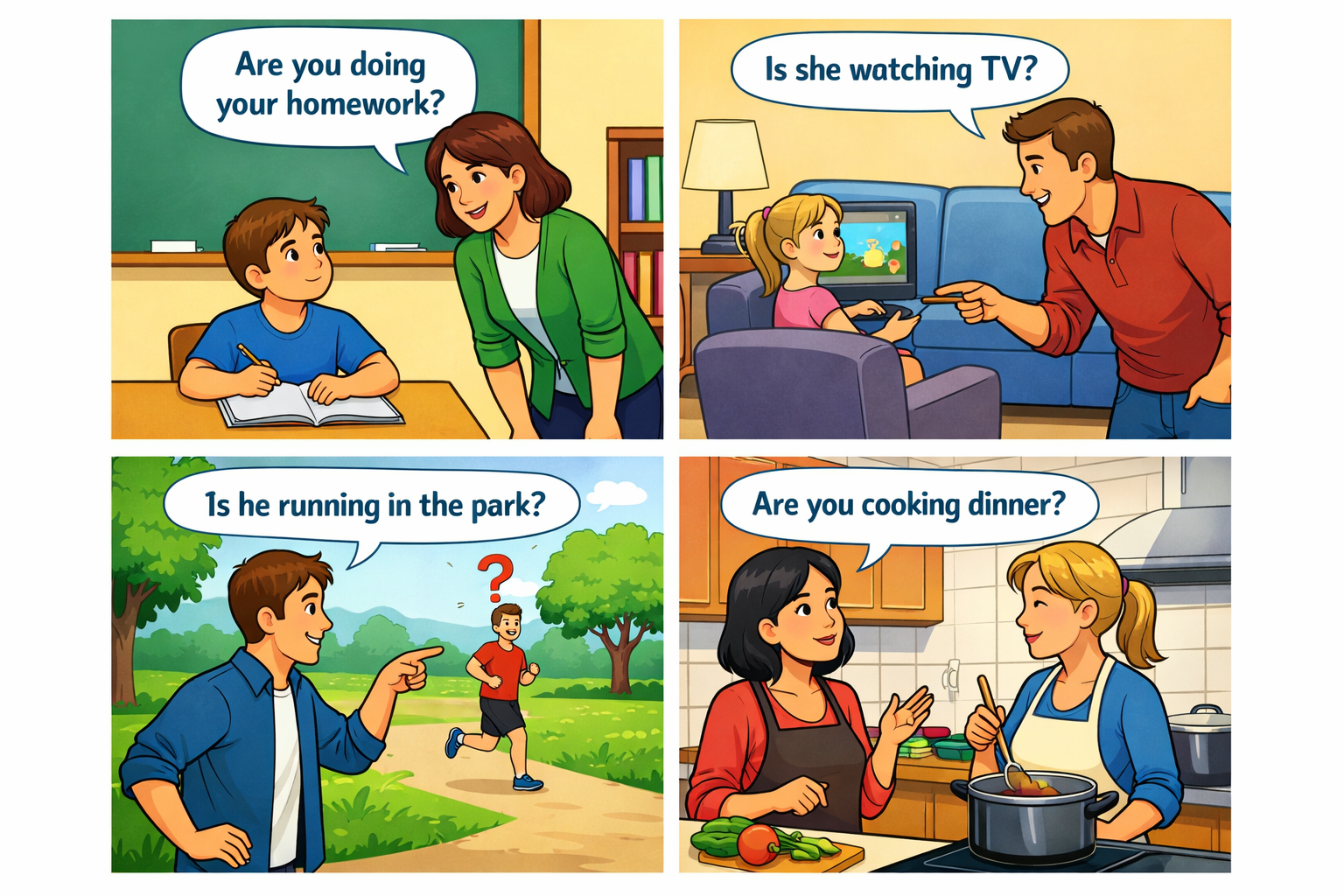
Structure: Am / Is / Are + subject + verb + -ing?
Examples:
- Am I disturbing you?
- Is he watching TV?
- Are they coming to the party?
- Are you working on the project this week?
In questions, the verb be comes before the subject. This word order is essential.
Answering:
- Yes: Yes, subject + am/is/are. → Yes, they are.
- No: No, subject + am/is/are + not. → No, he isn’t.
Summary Table
| Form | Structure | Example |
|---|---|---|
| Affirmative | Subject + am/is/are + V-ing | She is running every morning. |
| Negative | Subject + am/is/are + not + V-ing | He isn’t sleeping now. |
| Question | Am/Is/Are + Subject + V-ing? | Are they studying English today? |
Main Uses of the Present Continuous Tense
The Present Continuous Tense is used to describe actions and situations that are in progress, temporary, or developing over time. Understanding these uses helps learners choose the correct tense and express ideas more accurately in both speaking and writing.
1. Actions Happening Now
The most common use of the Present Continuous Tense is to describe actions that are happening at the exact moment of speaking.
These actions:
- Are happening right now
- Have started but are not finished yet
- Often include time expressions such as now, right now, at the moment
Examples:
- She is typing an email right now.
- The children are playing in the yard.
- I am listening to the teacher at the moment.
In each example, the action is clearly in progress and has not ended.
2. Temporary Situations
The Present Continuous Tense is also used to describe temporary situations. These situations are true around the present time, but they are not permanent.
These actions or situations:
- Are happening for a short period
- Can change in the future
- Often use time expressions like this week, these days, at the moment
Examples:
- I am staying with my aunt this week.
- He is working on a short-term project.
- She is taking online classes these days.
Even if the action is not happening at the exact moment of speaking, it is still considered temporary and ongoing.
3. Changing and Developing Situations
The Present Continuous Tense is used to describe gradual changes or developments. These actions show progress or trends that are happening over time.
These situations:
- Change slowly
- Are still ongoing
- Often describe trends or improvements
Examples:
- Technology is improving rapidly.
- The weather is getting warmer.
- More people are using online learning platforms.
In these examples, the action is not a single event. Instead, it shows continuous development.
4. Repeated Actions That Are Temporary
The Present Continuous Tense can also describe repeated actions when they are temporary or unusual.
Examples:
- He is working late these days.
- They are eating out a lot this month.
This use emphasizes that the behavior is happening for now, not always.
Signal Words Used with the Present Continuous Tense
Signal words help learners recognize when the Present Continuous Tense is used. They usually show time or duration and suggest that an action is happening now or around the present time.
Common signal words include:
- now
- right now
- at the moment
- currently
- today
- these days
These words often indicate that the action is temporary or ongoing.
Examples:
- She is studying now.
- They are working on a new plan these days.
However, signal words are helpful but not required. Many sentences use the Present Continuous Tense without any signal words. In these cases, learners should focus on the meaning and context of the sentence rather than looking for a specific time expression.
Spelling Rules for -ing Forms
When forming the Present Continuous Tense, the main verb usually changes by adding -ing. These spelling rules help learners write verbs correctly and avoid common mistakes.
1. Most Verbs: Add -ing
For most verbs, simply add -ing to the base form.
Examples:
- work → working
- read → reading
- play → playing
No spelling changes are needed in these cases.
2. Verbs Ending in -e: Drop the -e
If a verb ends in a silent -e, remove the -e before adding -ing.
Examples:
- make → making
- write → writing
- take → taking
This rule keeps the word easy to pronounce and spell.
3. Short Verbs with One Vowel and One Consonant: Double the Final Consonant
For short verbs that end in one vowel + one consonant, double the final consonant before adding -ing.
Examples:
- run → running
- sit → sitting
- stop → stopping
This rule helps maintain the correct vowel sound in the verb.
Important Reminder
- Do not double the final consonant if the verb ends in two consonants (work → working).
- Do not drop the -e if the verb ends in -ee (see → seeing).
Present Continuous vs Present Simple (Brief Contrast)
The Present Continuous Tense and the Present Simple Tense are often confused because both refer to the present. However, they are used for different purposes, and understanding the difference helps learners choose the correct tense.
The Present Simple Tense is used to talk about habits, routines, repeated actions, and general facts. These actions are usually permanent or happen regularly.
Examples:
- She works in an office.
- He wakes up at 6 a.m. every day.
- Water boils at 100°C.
The Present Continuous Tense is used to describe actions happening now, temporary situations, or changes around the present time. These actions are not permanent and may change.
Examples:
- She is working from home today.
- He is waking up early this week.
- More people are working remotely now.
Key Difference
- Use Present Simple for what is usually true.
- Use Present Continuous for what is true for now.
Understanding this contrast helps prevent confusion and makes spoken and written English more accurate and natural.
Present Simple vs Present Continuous – Comparison Table
| Aspect | Present Simple | Present Continuous |
|---|---|---|
| Main use | Habits, routines, facts | Actions happening now or temporarily |
| Time focus | Usually true, permanent | Happening now or around the present |
| Action type | Repeated or regular actions | Ongoing or temporary actions |
| Typical signal words | always, usually, often, every day | now, at the moment, today, these days |
| Example | She works in an office. | She is working from home today. |
Common Mistakes with the Present Continuous Tense
Learners often make similar errors.
- Forgetting the verb be
- Incorrect: She working now.
- Correct: She is working now.
- Using the tense for permanent situations
- Incorrect: I am living in this city all my life.
- Correct: I live in this city.
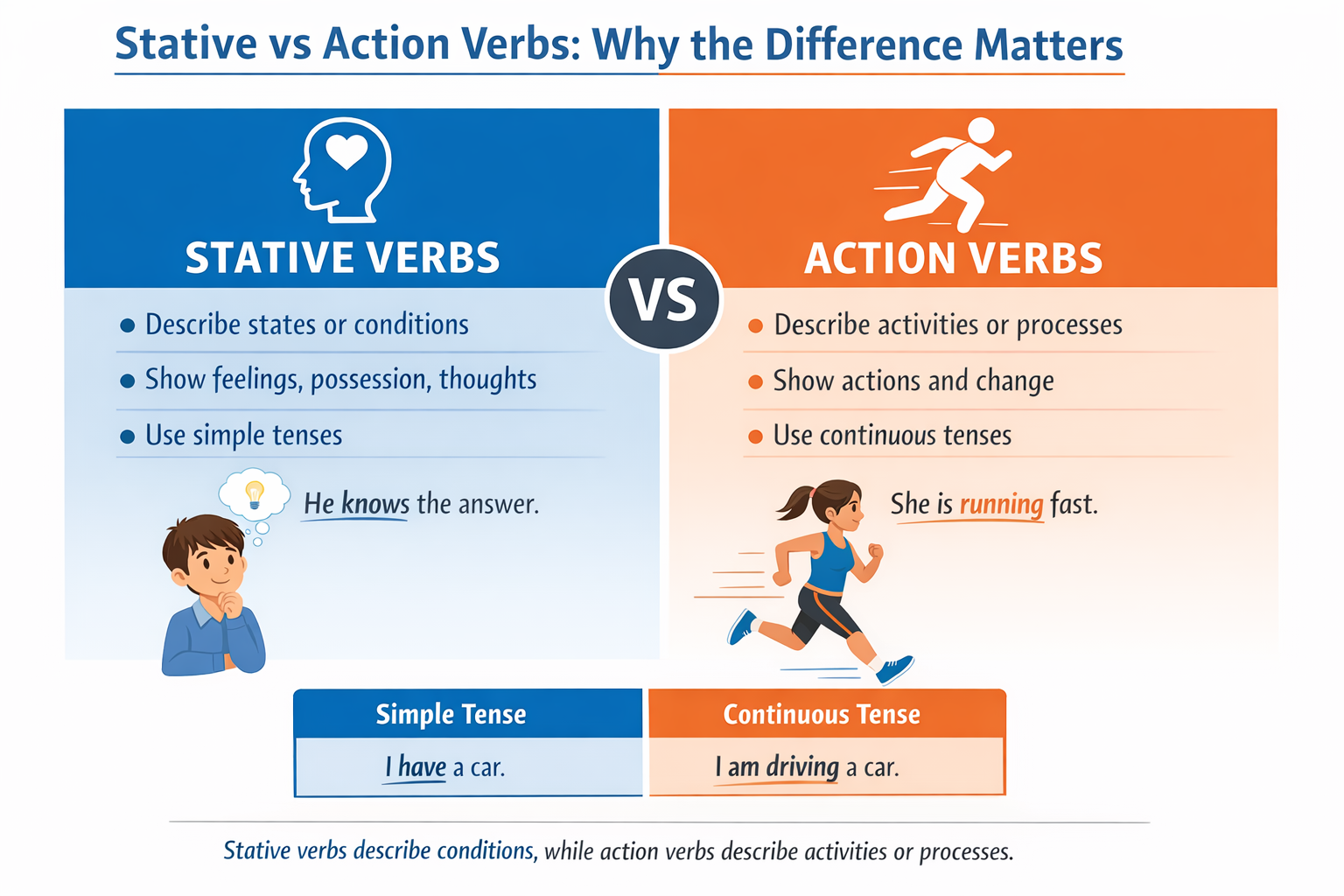
- Using non-action verbs incorrectly
- Incorrect: I am knowing the answer.
- Correct: I know the answer.
Avoiding these mistakes improves accuracy.
Summary of the Present Continuous Tense
The Present Continuous Tense is used to talk about actions that are happening right now. It is also used for temporary situations or things that are changing. To form it, we use the verb be and add -ing to the main verb. Signal words like now or these days can help, but they are not always necessary. Using correct spelling and sentence structure is important. When you master this tense, it makes your English sound more natural and easier to understand.