

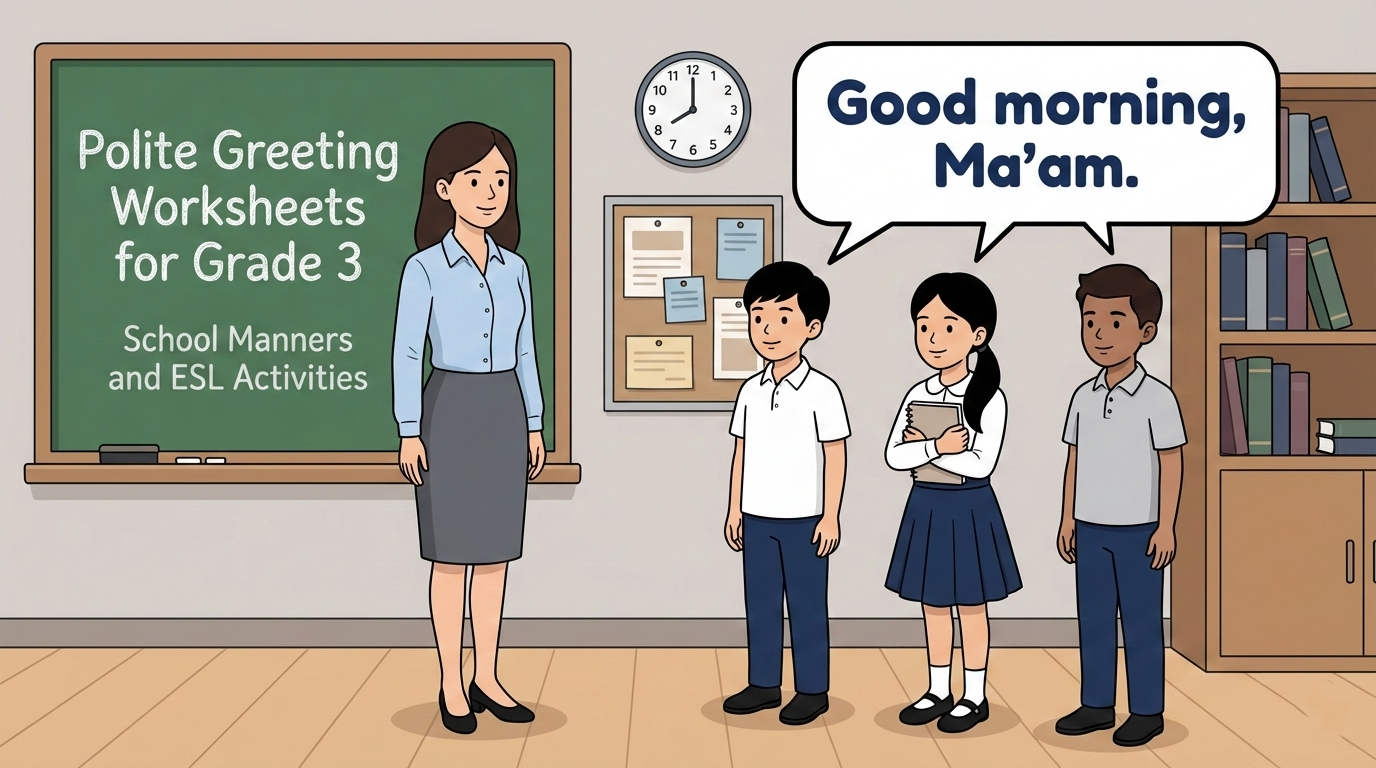
Polite Greeting Words to Teach Kids Good School Manners
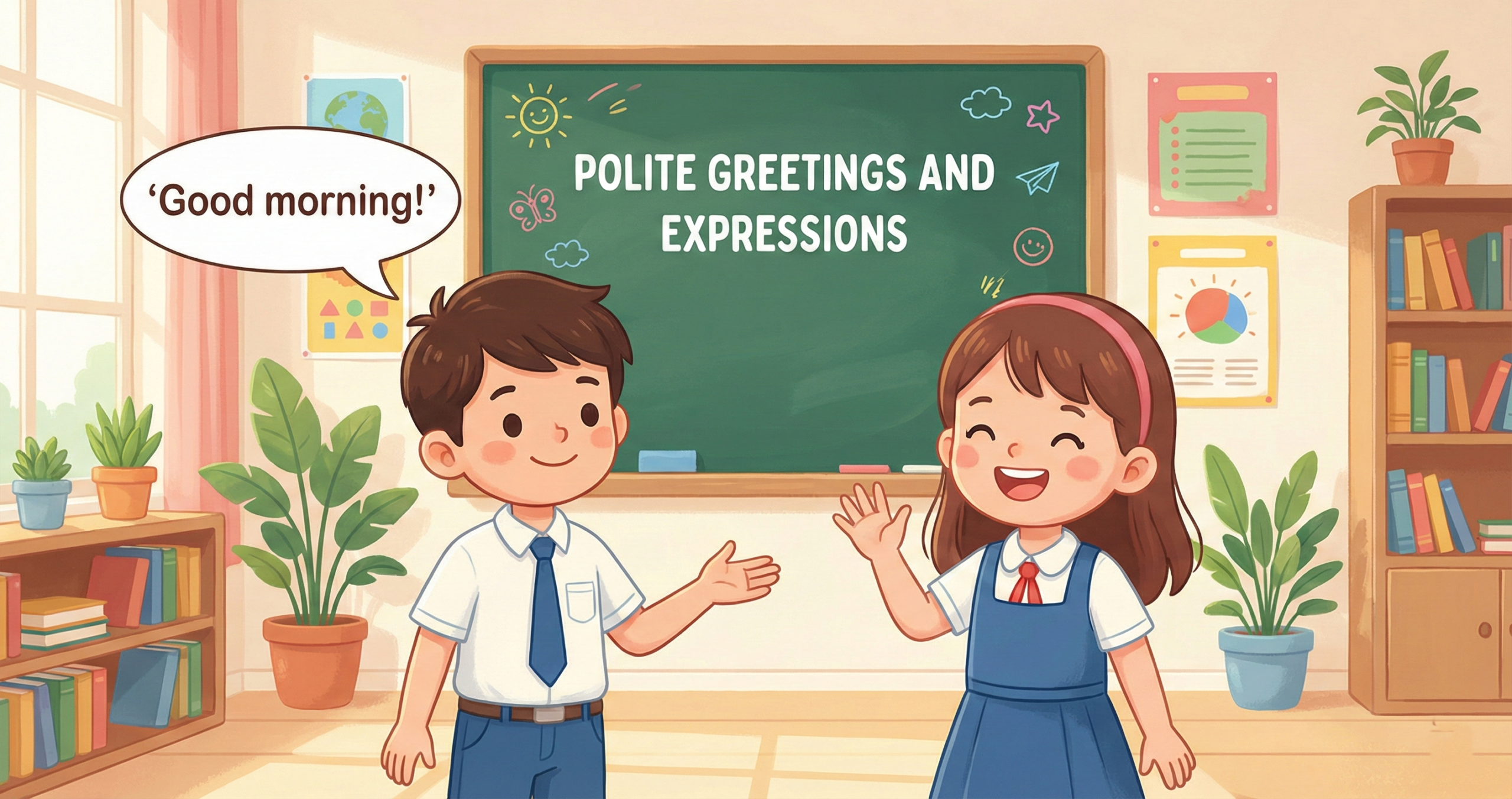
Polite Greeting Words to Teach Kids Good School Manners are important in every school. These words help children show respect every day. They also help children feel confident when speaking to others.
In school, children meet many people each day. They meet teachers, classmates, and school helpers. Therefore, polite greetings help children start conversations correctly. They also help children feel safe and welcome.
Moreover, polite greeting words support good behavior. They guide children to speak kindly. They also teach children to think before speaking. Because of this, polite greetings are an important life skill.
This lesson explains polite greeting words in detail. It uses clear examples from school life. It also explains why these words matter every day.
Understanding Polite Greeting Words in School Manners
Polite greeting words are kind words we use when meeting someone. These words show respect and good behavior. They help begin communication in a positive way.
In school, greetings happen many times each day. Students greet teachers in the morning. They greet friends during class time. They also greet staff members in hallways.
Therefore, polite greeting words are daily habits. They are not only used on special days. Instead, they are used every time someone meets another person.
Polite greetings help children learn self-control. They teach children to use respectful language. As a result, children learn how to behave in social settings.
How Polite Greeting Words Teach Respect in School
Respect is an important school value. Polite greeting words teach respect clearly. They show that every person matters.
When a child greets a teacher politely, it shows good manners. It also shows attention and care. This simple action builds trust.
Similarly, greeting classmates politely shows kindness. It helps friendships grow. It also creates a sense of belonging.
Therefore, polite greetings are not small actions. They are important signs of respect. They help children understand social rules.
Common Polite Greeting Words Used in School
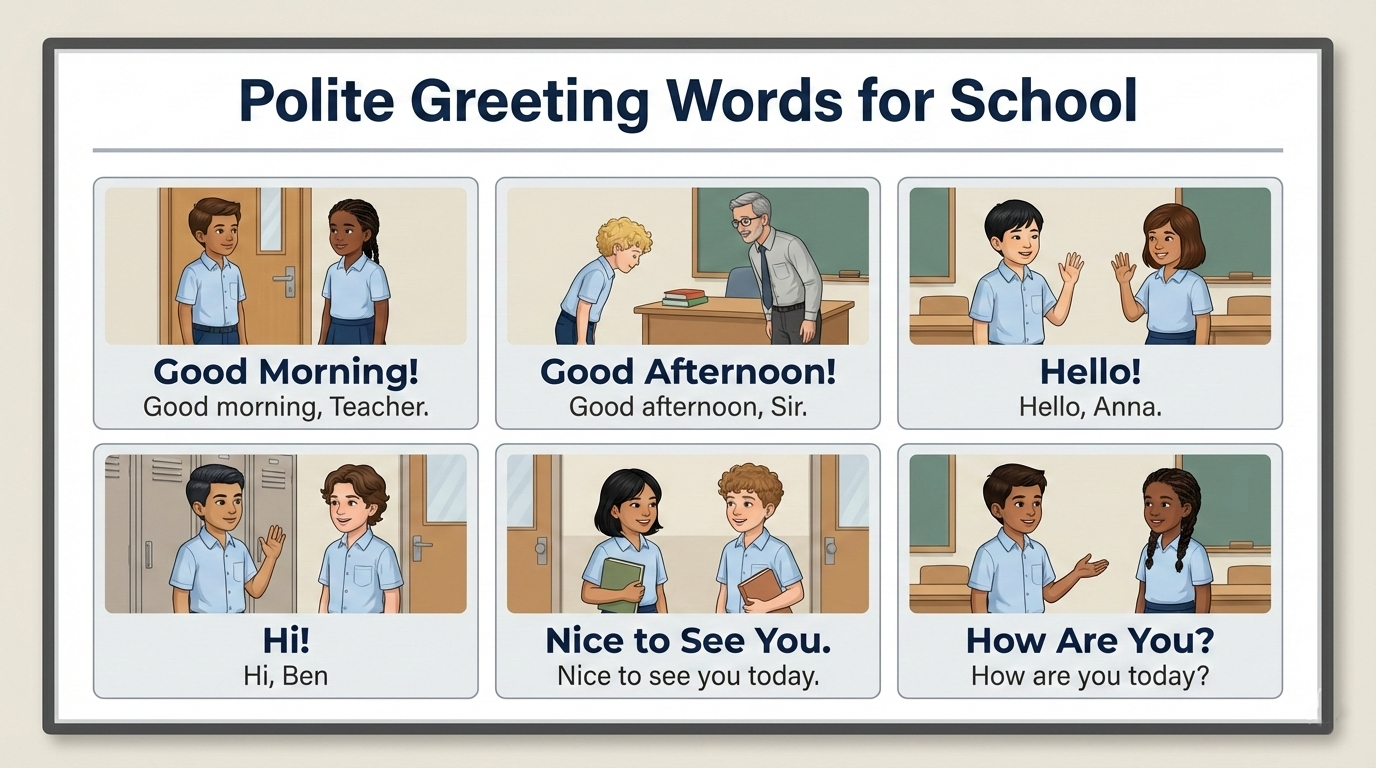
There are many polite greeting words children can use. Each greeting fits a certain time. Each greeting has a clear purpose.
Learning these greetings helps children choose the right words. It also helps them speak politely in different situations.
Below are common polite greeting words taught in school. Each one supports good school manners.
“Hello” as a Polite Greeting Word
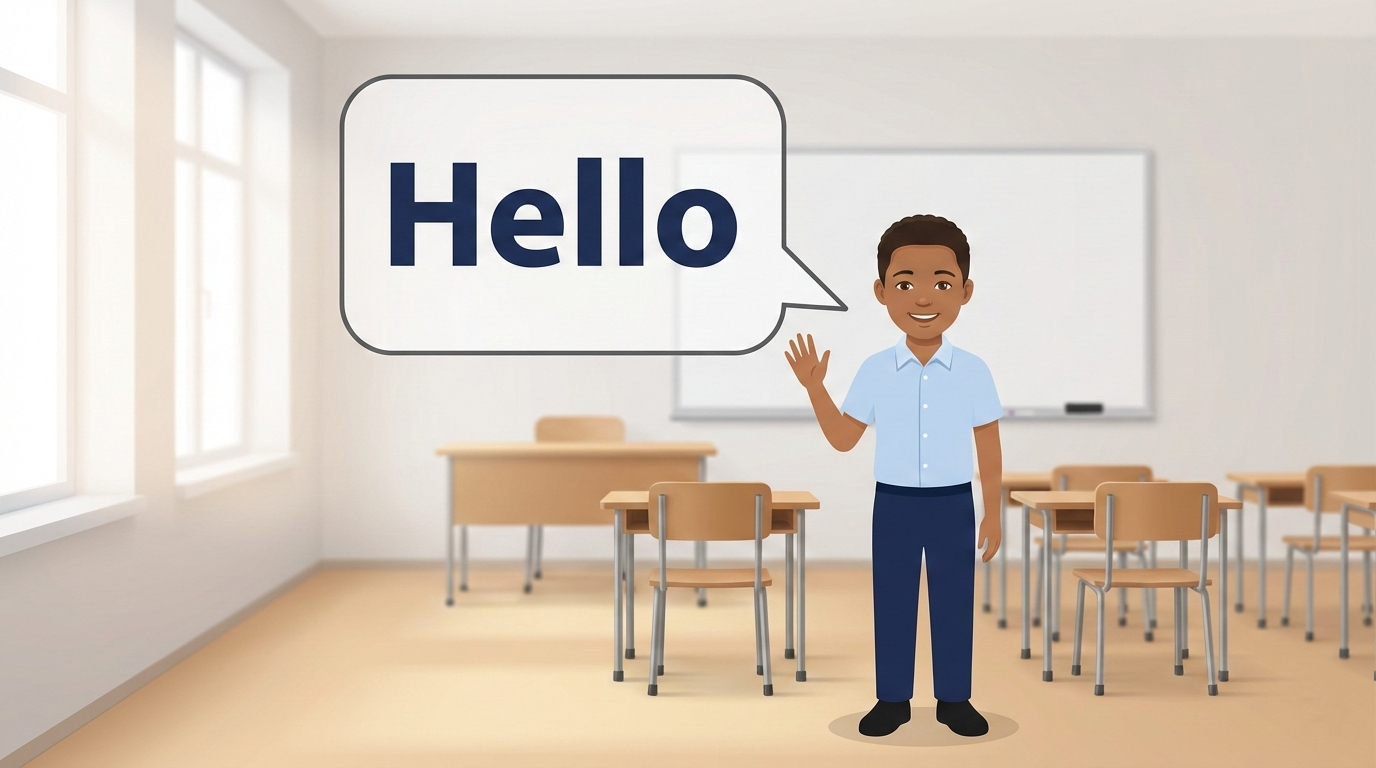
“Hello” is a simple and polite greeting word. Children can use it at any time. It works in many school situations.
Students can say “Hello” to classmates. They can also say it to teachers. The word sounds friendly and respectful.
Because it is simple, “Hello” is easy to remember. It is also easy to say. Therefore, teachers often teach it first.
“Hello” helps children feel confident. It helps them begin conversations politely. It also supports positive communication.
“Good Morning” and Respectful School Greetings
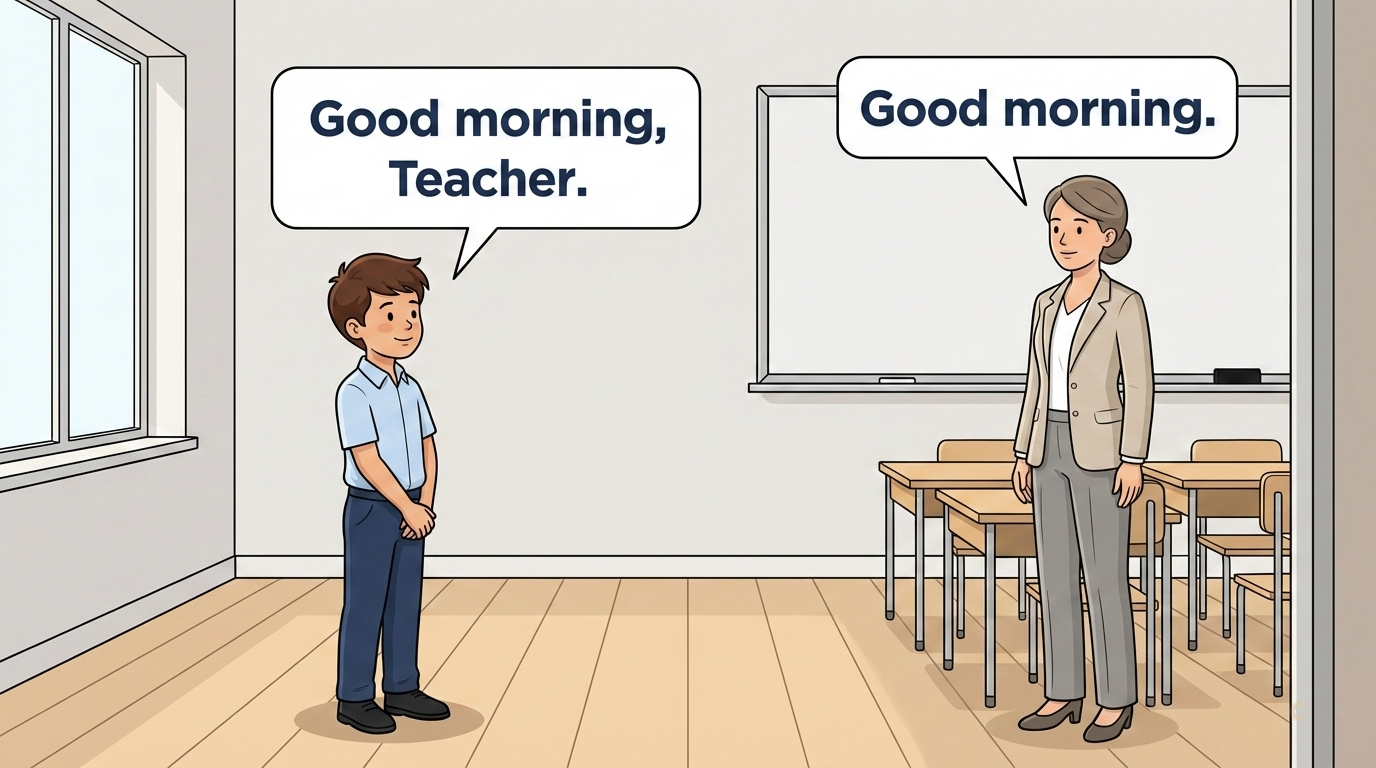
“Good morning” is a polite greeting used at the start of the day. Students often use it when entering school.
This greeting shows respect and readiness to learn. It also shows attention toward teachers and classmates.
Children usually say “Good morning” to teachers first. They may also say it to classmates. This greeting sets a positive tone.
Because mornings start the school day, polite greetings matter greatly. They help create a calm and respectful environment.
“Good Afternoon” and “Good Evening” in School Settings
“Good afternoon” is used after noon. Students may use it during later classes. It remains polite and respectful.
“Good evening” is less common in regular school hours. However, it may be used during school events. Examples include meetings or programs.
These greetings teach children about time awareness. They also teach correct word choice. Therefore, they support language growth.
Using correct time greetings shows attention and care. It also shows good manners in formal situations.
Greeting Teachers with Polite Words
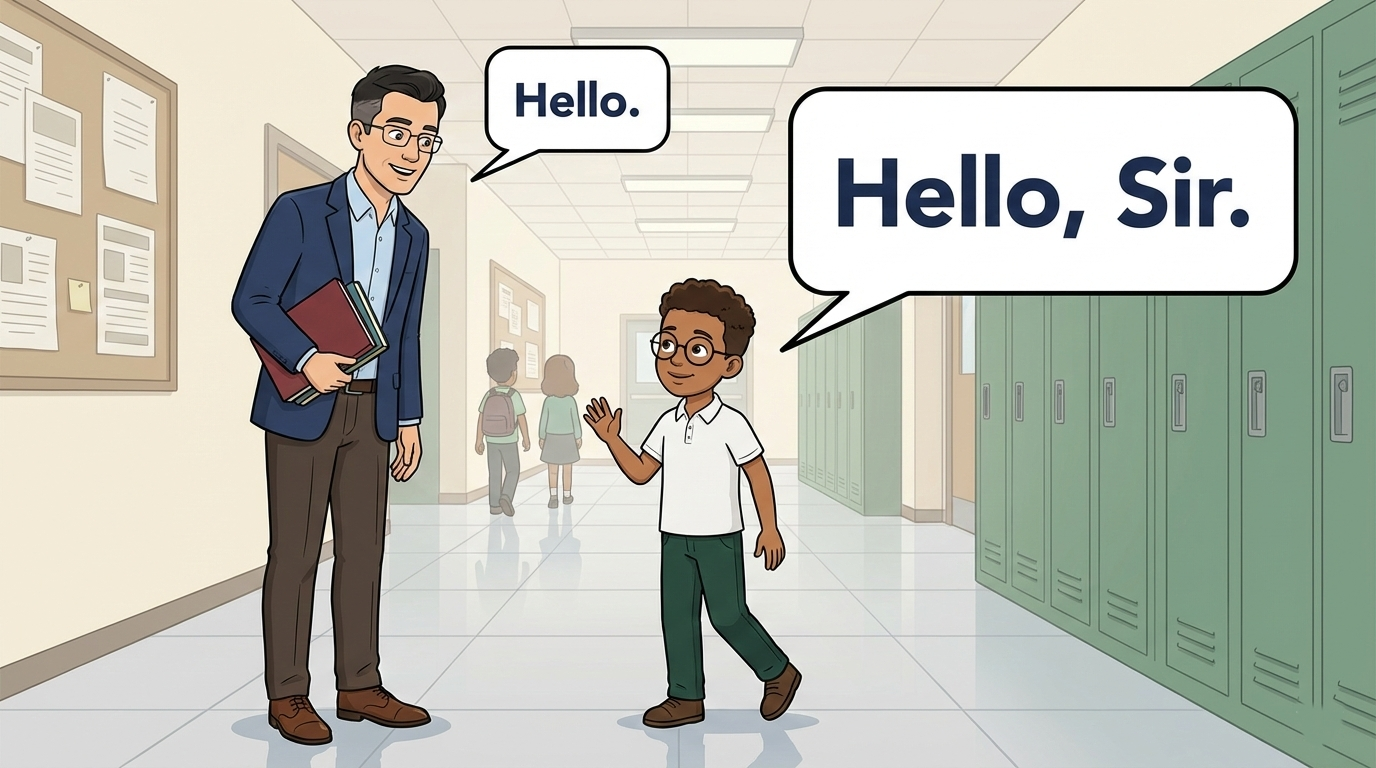
Greeting teachers politely is very important. Teachers guide learning every day. Polite greetings show appreciation.
Students often say “Good morning, teacher.” They may also say “Hello, Ma’am” or “Hello, Sir.” These greetings show respect.
Using polite titles matters. Titles show awareness of authority. They also teach children formal language use.
Therefore, greeting teachers politely supports discipline. It also supports positive teacher-student relationships.
Greeting Classmates Politely at School
Greeting classmates politely builds friendships. It helps children feel accepted. It also supports teamwork.
Students often greet friends with “Hello” or “Hi.” These greetings sound friendly and warm.
Even short greetings matter. They show kindness and respect. They help children practice social skills daily.
Therefore, polite greetings help create a supportive classroom. They encourage cooperation and understanding.
Greeting School Staff with Respectful Language
School staff members help students every day. They include guards, cleaners, and office workers. Polite greetings show appreciation.
Students may say “Good morning” or “Hello” to staff. These simple words show respect.
Teaching children to greet staff politely builds character. It also teaches equality and kindness.
Therefore, polite greetings should be used with everyone. Good manners apply to all people.
Polite Greeting Words and Emotional Development
Polite greetings support emotional growth. They help children express kindness. They also help children control emotions.
When children greet others politely, they feel confident. They feel proud of good behavior.
Positive greetings also help reduce fear. They make social situations easier. Therefore, they support emotional health.
Polite Greetings and Language Development
Greeting words help build vocabulary. They teach correct sentence patterns. They also support pronunciation practice.
Children learn when to speak and how to speak. They learn tone and expression. These skills support language growth.
Therefore, polite greetings support both manners and learning. They are valuable communication tools.
Download Free Worksheets
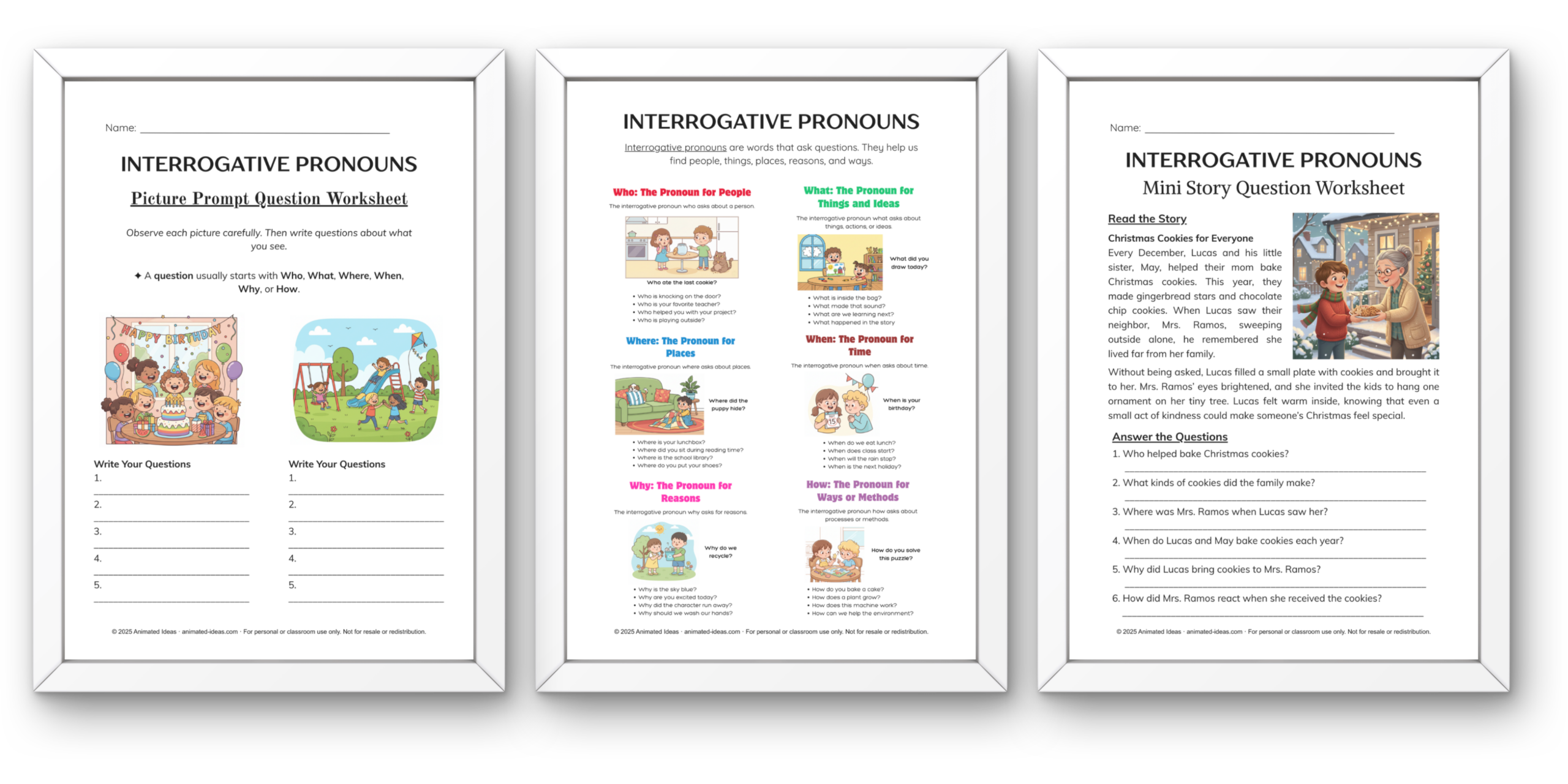
Download free worksheets to support this lesson. These materials are for teachers, parents, and students.
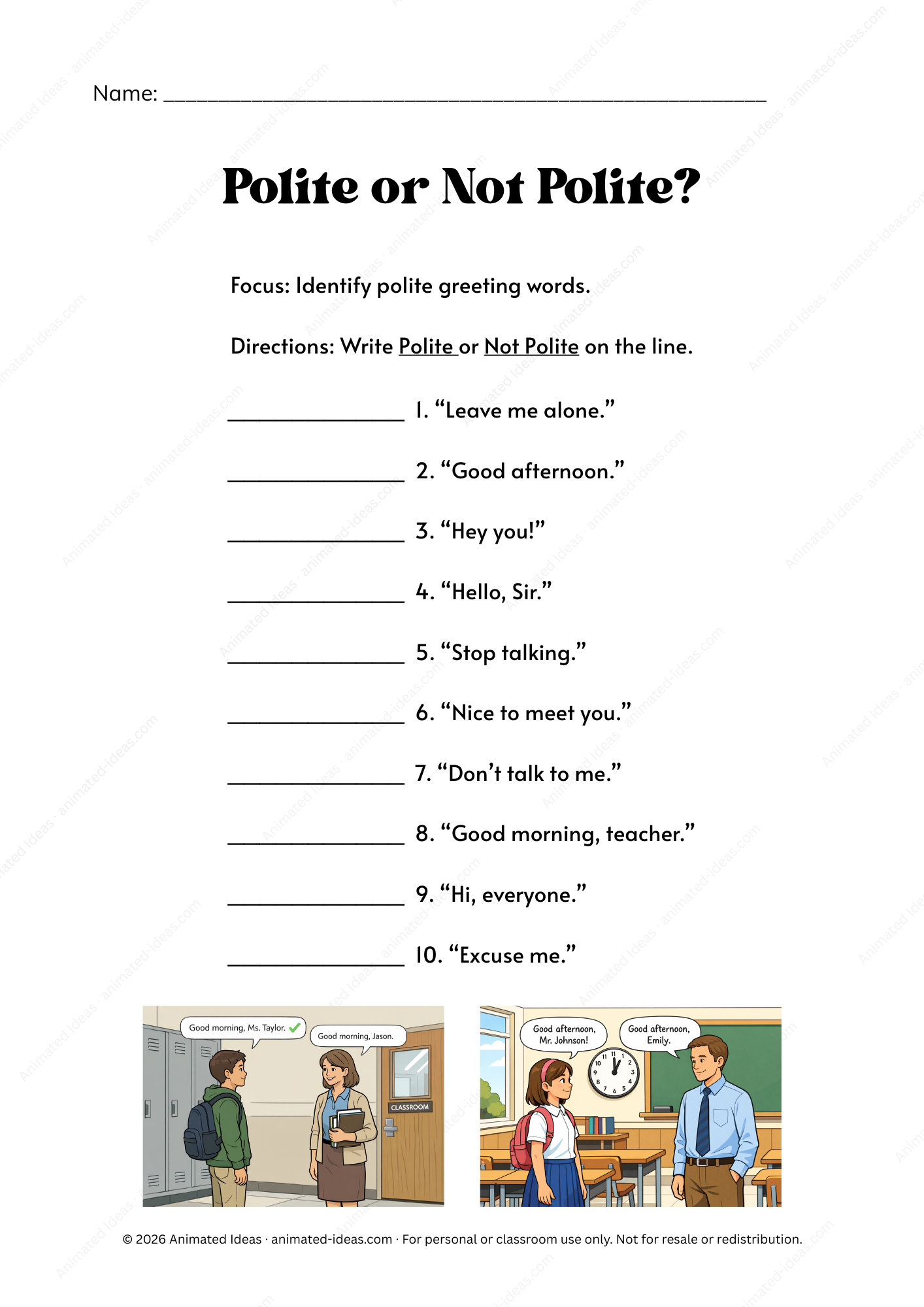
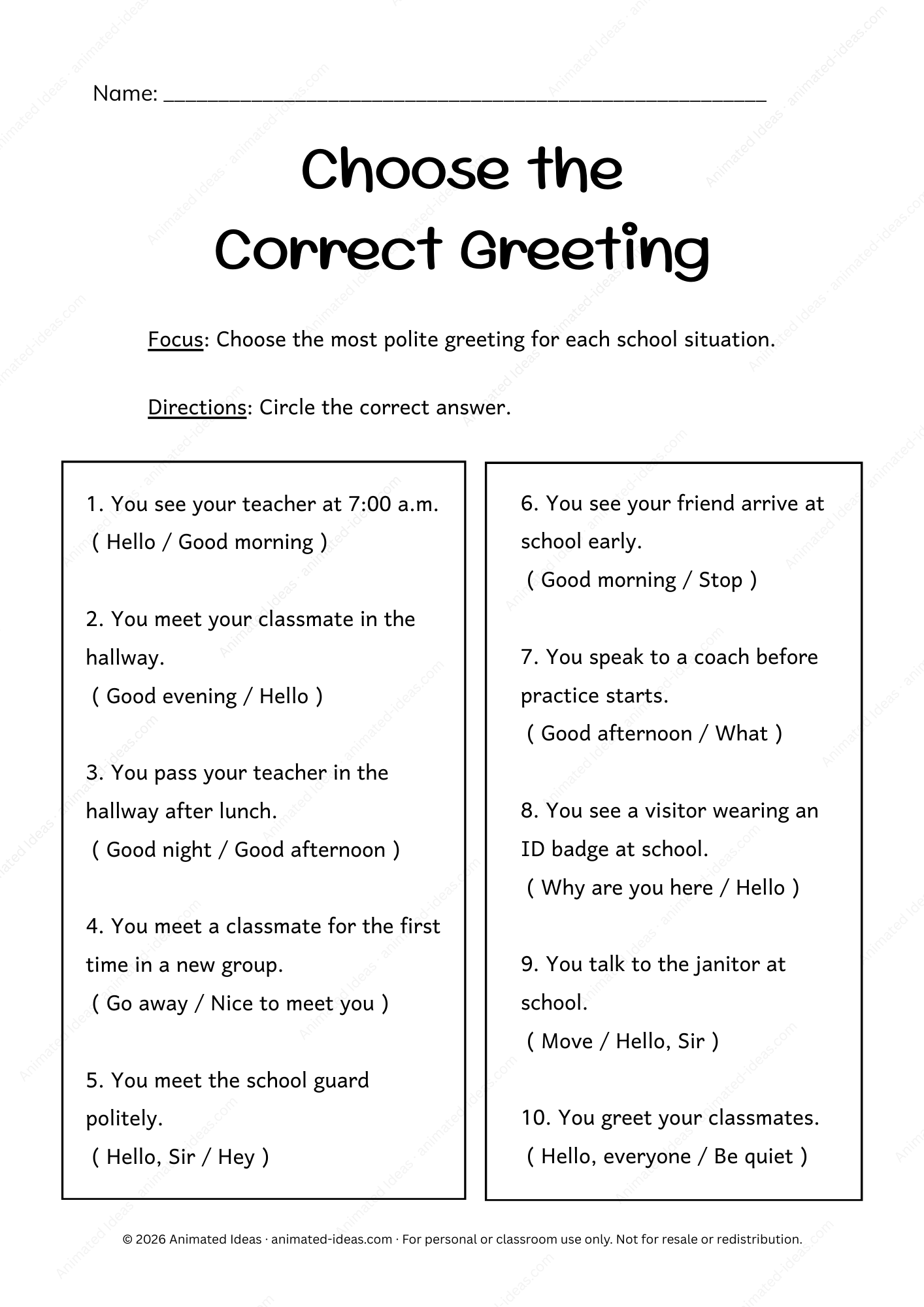
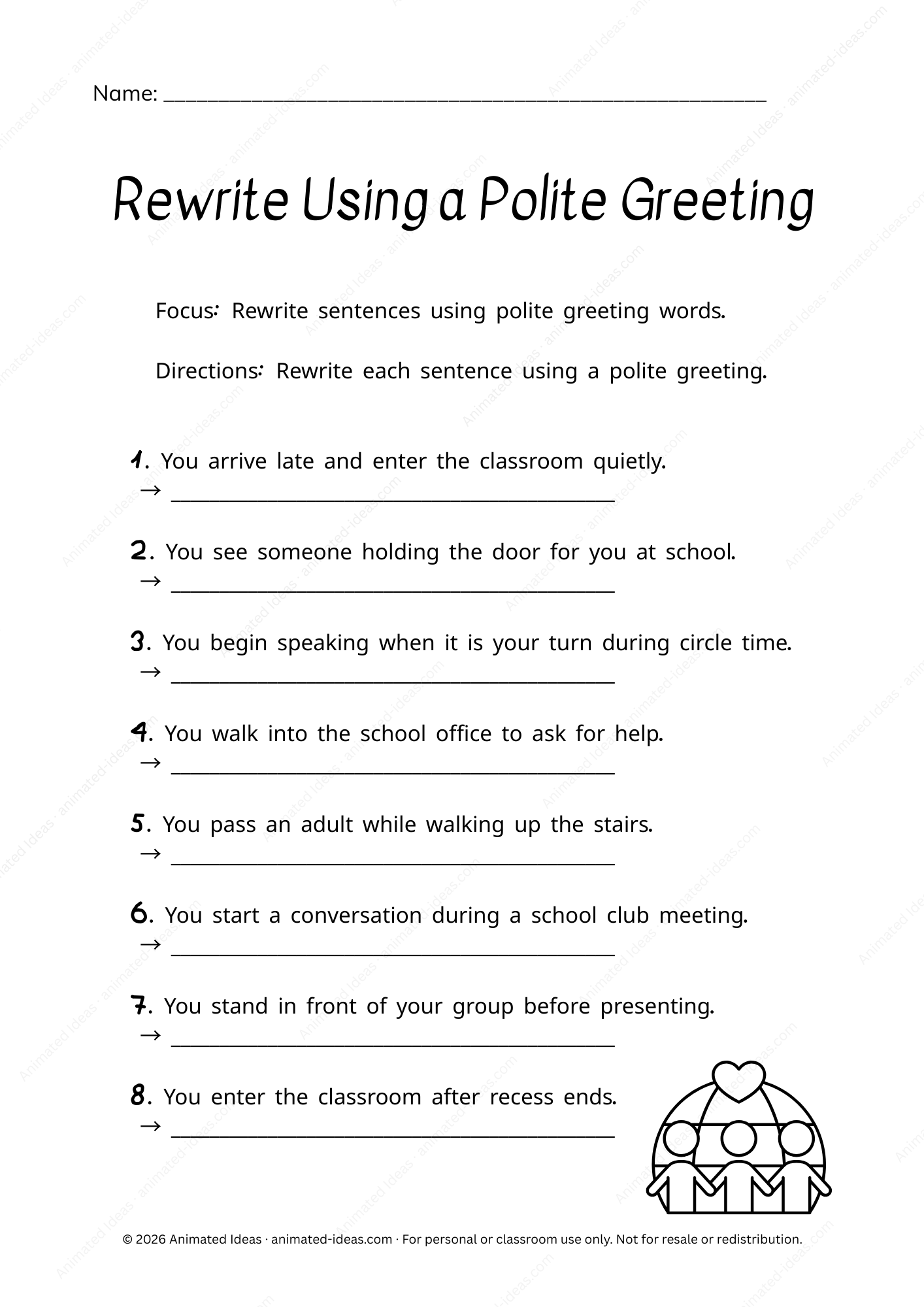
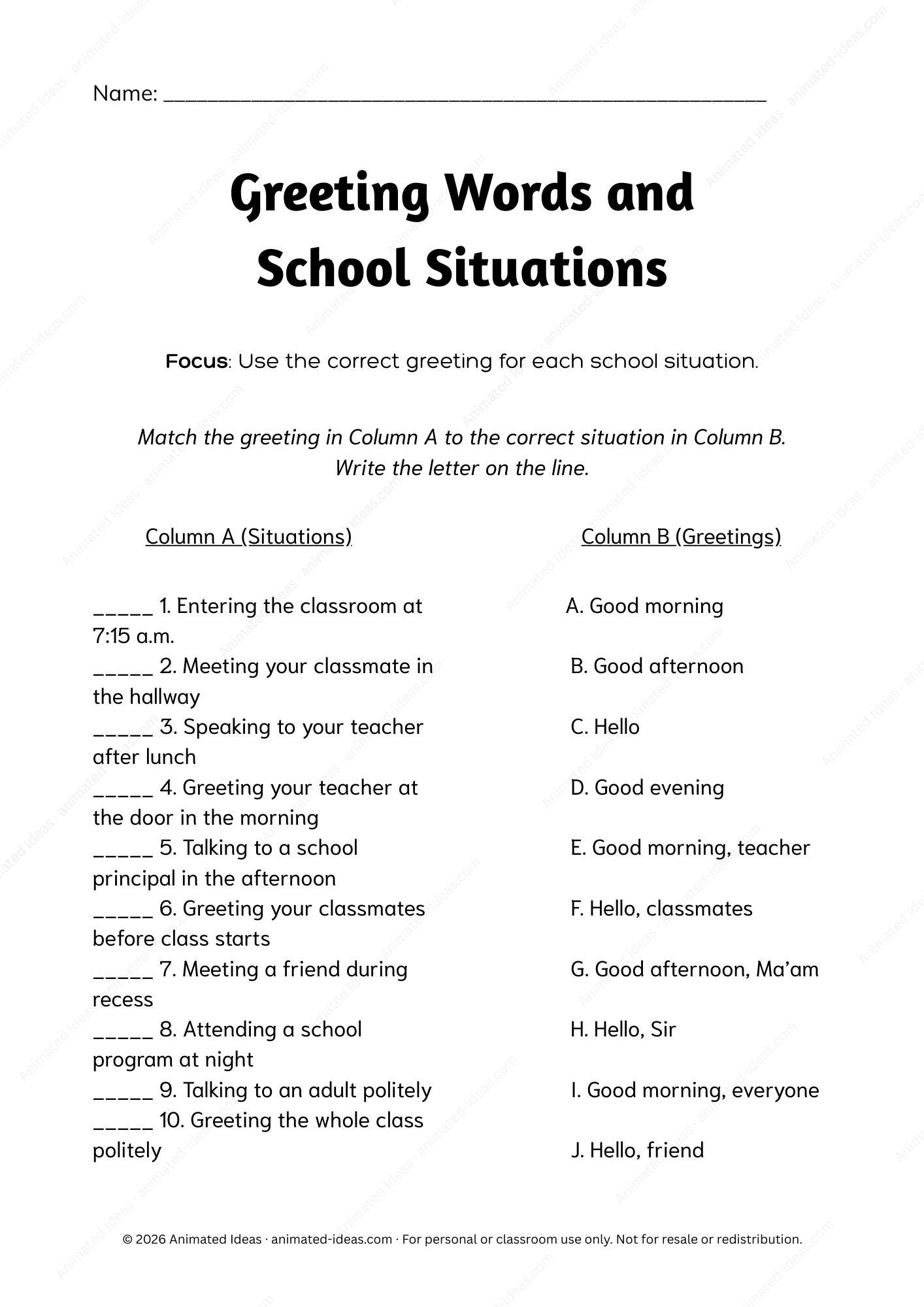
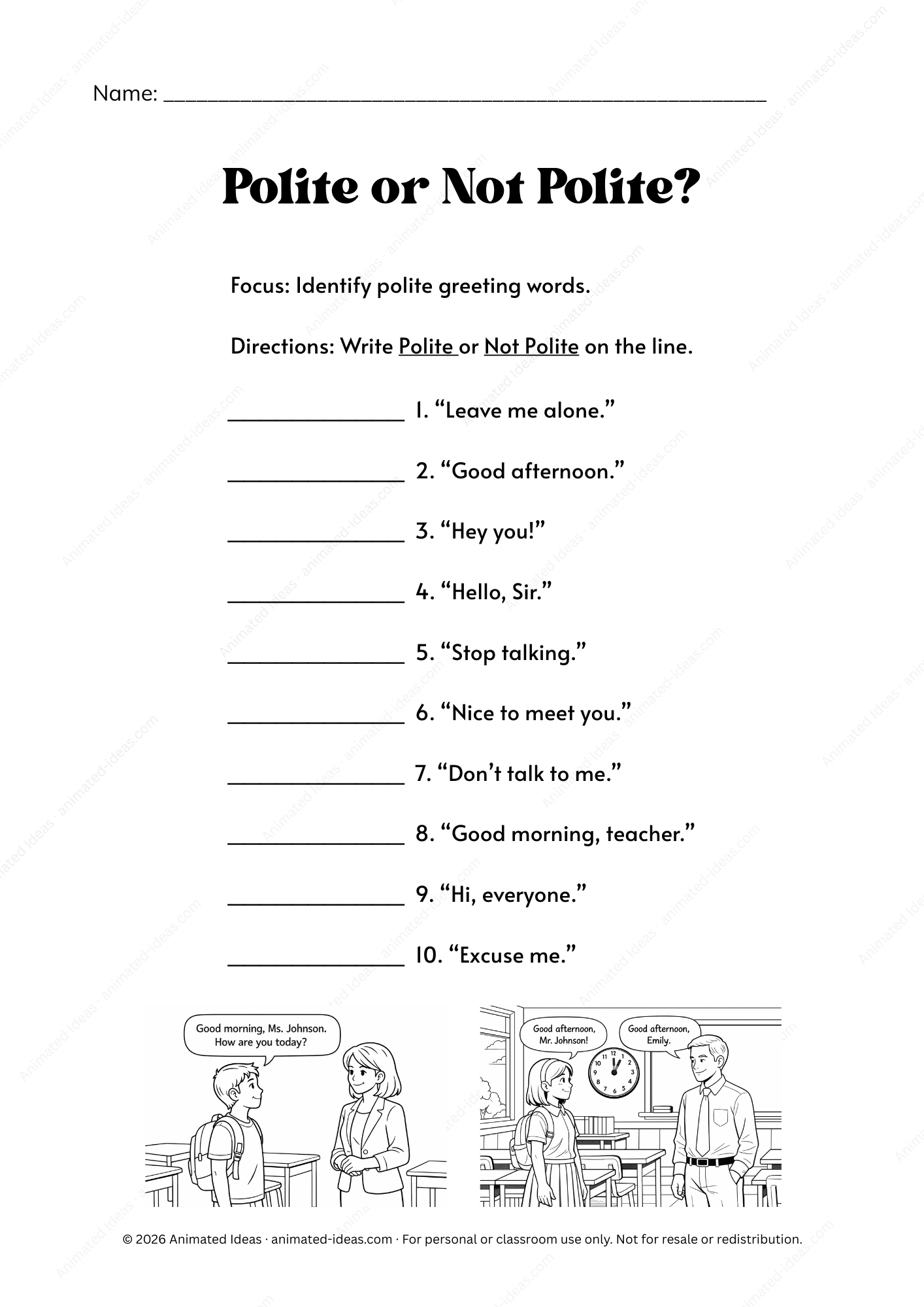
The worksheets focus on polite greeting words and school manners. They are suitable for third graders. They also work well for ESL learners. Use them at home or school.
Polite Greeting Words in School Rules and Values
Schools often include manners in rules. Polite greetings are part of these rules. They support respect and responsibility.
Teachers remind students to greet politely. This reminder builds habits. Habits support long-term behavior.
Therefore, polite greetings align with school values. They support positive school culture.
Cultural Awareness Through Polite Greetings
Polite greetings teach cultural awareness. Different cultures value respectful greetings. Learning this builds understanding.
Children learn that manners matter everywhere. They learn to respect differences. This knowledge supports global awareness.
Therefore, polite greetings prepare children for diverse environments. They support social growth.
Long-Term Benefits of Learning Polite Greeting Words
Polite greeting words support lifelong skills. They help children succeed socially. They also support future workplaces.
Adults use polite greetings daily. Learning early builds confidence later. Therefore, early lessons matter greatly.
Good manners often lead to positive impressions. They help build strong relationships. These benefits last a lifetime.
Conclusion: Polite Greeting Words to Teach Kids Good School Manners
Polite Greeting Words to Teach Kids Good School Manners are essential in school life. They teach respect, kindness, and responsibility.
These words help children communicate clearly. They also help children build strong relations


wish you best and best
色即是空,空即是色