

Common Environmental Print Symbols
Introduction
Every day, children see many signs, labels, pictures, and symbols around them. These simple images and words help people understand important information quickly. This lesson will help 1st graders learn how to identify common environmental print symbols that they often see in school, at home, on the road, and in public places.
Environmental print includes the signs, logos, and symbols that appear in the world around us. These symbols help us stay safe, follow rules, and find what we need. Learning to understand these symbols is an important skill for early readers because it connects real-life experiences with reading and comprehension skills.
In this discussion, students will explore what environmental print is, why it is important, and how to identify the most common symbols.


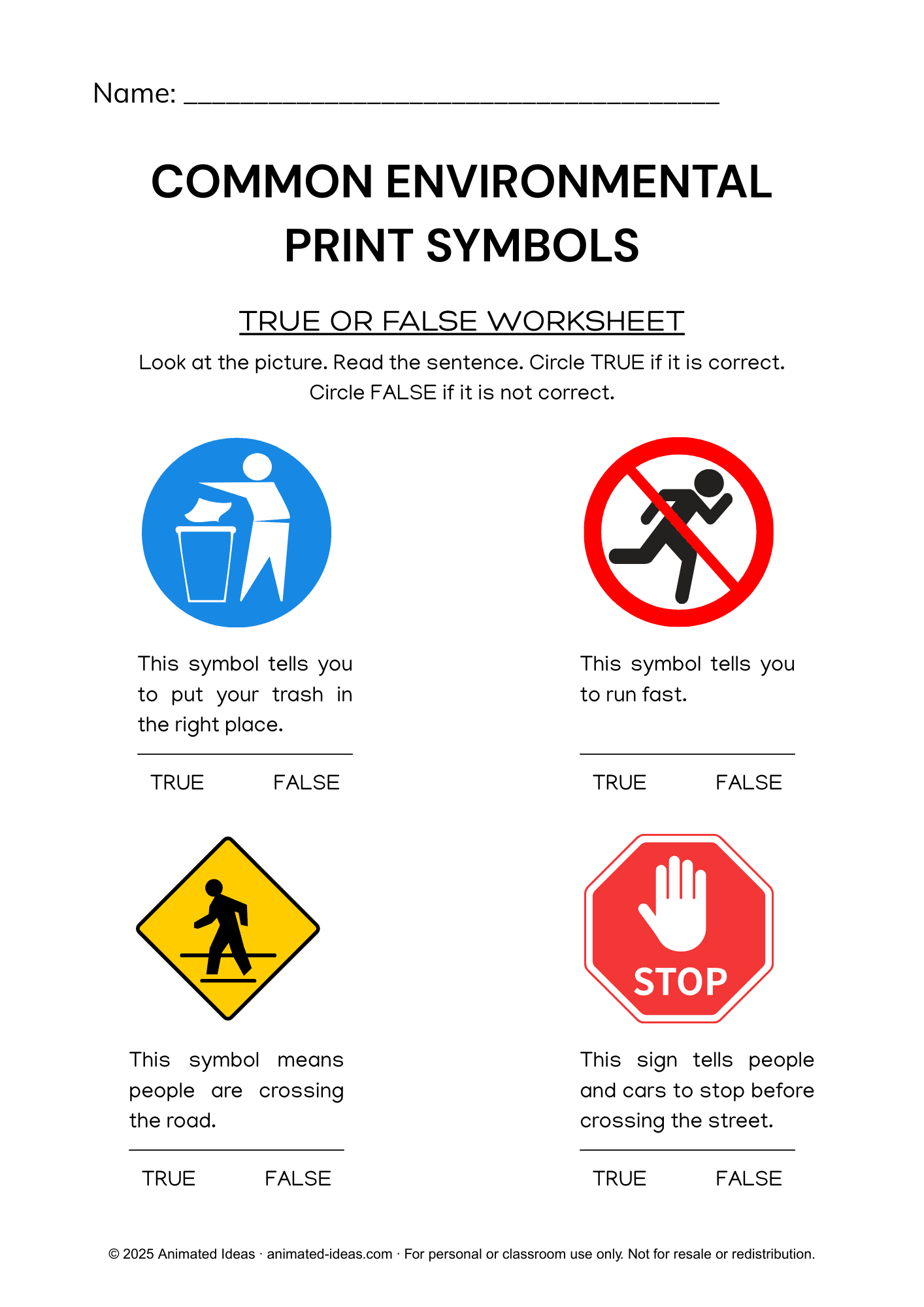
What Is Environmental Print?
Environmental print refers to the print and symbols found in everyday life. This includes:
- Signs
- Labels
- Logos
- Directions
- Product packaging
- Road signs
- Public place symbols
Children often learn to recognize these symbols even before they learn to read words. For example, they may know the logo of a favorite store or the STOP sign on the road.
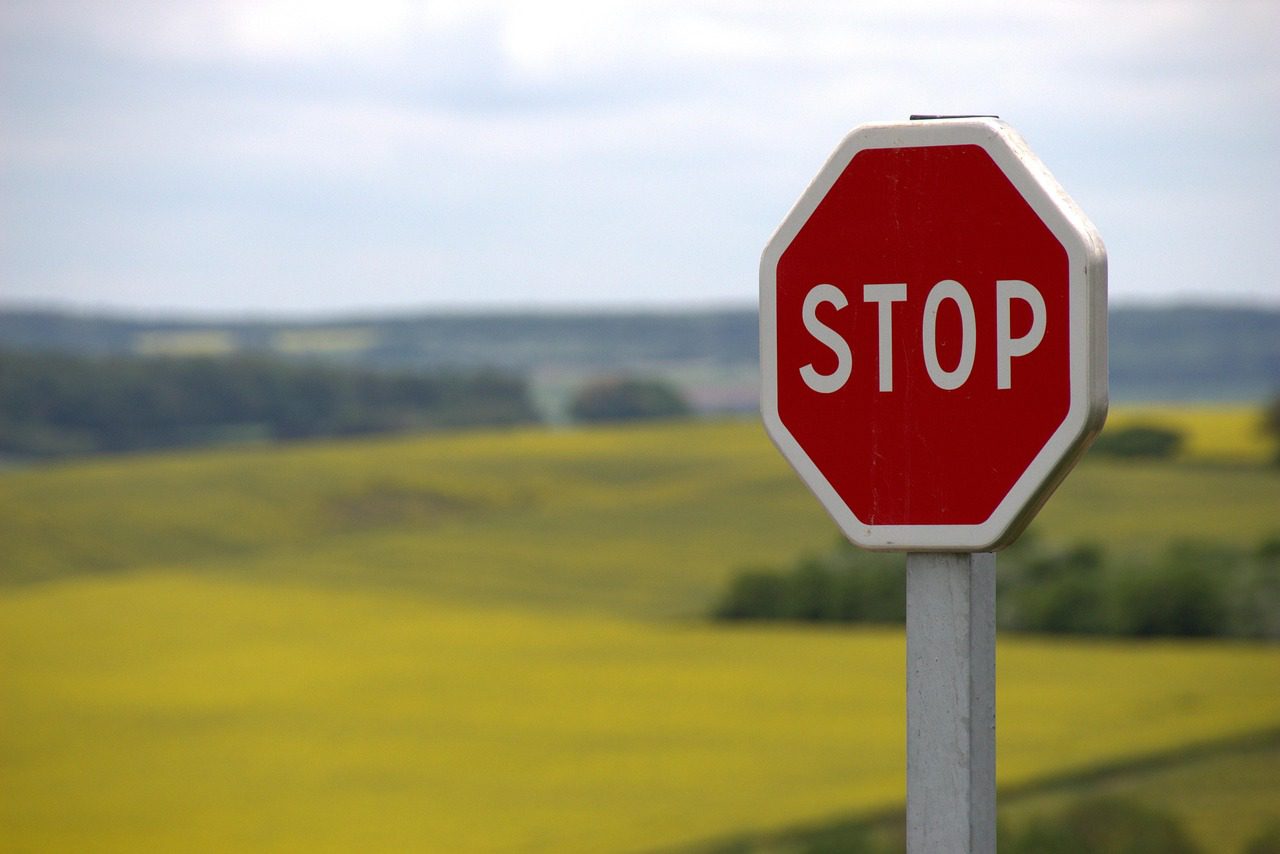
This is a common environmental print symbol that tells vehicles and people to stop.
Understanding environmental print helps children in many important ways.
Build confidence in reading
Children feel proud and motivated when they recognize familiar signs, labels, or logos. This shows them that they can “read” even before they learn all the words, which makes learning to read easier.
Make connections between pictures and meanings
By seeing pictures, symbols, and words together, children learn to understand what they represent. For example, they can connect the picture of a stop sign with the action of stopping, or a food label with what is inside a package.
Build vocabulary
Environmental print introduces children to new words in real-life situations. Seeing words on signs, boxes, or menus helps them learn words they might not encounter in books, which strengthens their language skills.
Follow rules and stay safe
Recognizing signs and symbols helps children understand rules and stay safe. For example, knowing what a stop sign, a pedestrian crossing, or a warning label means teaches them important safety habits in everyday life.
By paying attention to environmental print, children also develop awareness of their surroundings, become more independent, and gain skills that will help them in school and daily life.
Why Environmental Print Symbols Are Important
Environmental print symbols are important because they:
1. Help Keep People Safe
Symbols like STOP, WARNING, and EXIT help people understand important messages quickly.
2. Help People Know Where to Go
Symbols in stores, schools, and public places show directions such as entrance, exit, restroom, and stairs.
3. Help Children Become Early Readers
Children recognize pictures and symbols before reading words. This prepares them for reading sentences and books.
4. Help People Make Good Choices
Symbols on food, products, and places help people choose what they need.
Common Environmental Print Symbols
Below are the most familiar symbols children see every day. Each section includes a visual description, meaning, and examples of where children may see it.
Road Symbols
Road signs help people follow traffic rules and stay safe.
A. STOP Sign
Meaning:
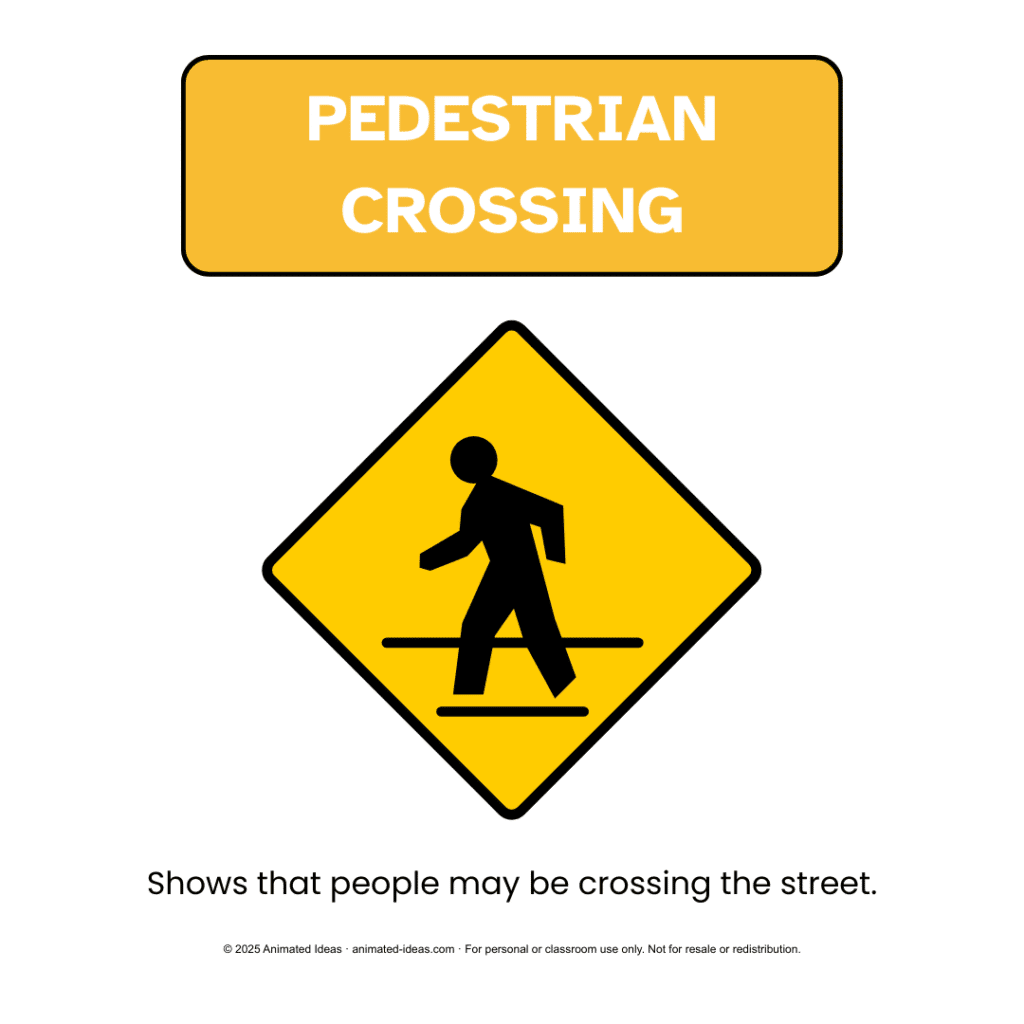
The STOP sign tells cars, bicycles, and people to stop completely before moving. It helps prevent accidents by making sure everyone checks for other vehicles or pedestrians before going.
Stopping at a STOP sign also teaches patience and following rules, which are important for safety.
Where You See It:
- Intersections
- Road crossings
- School zones
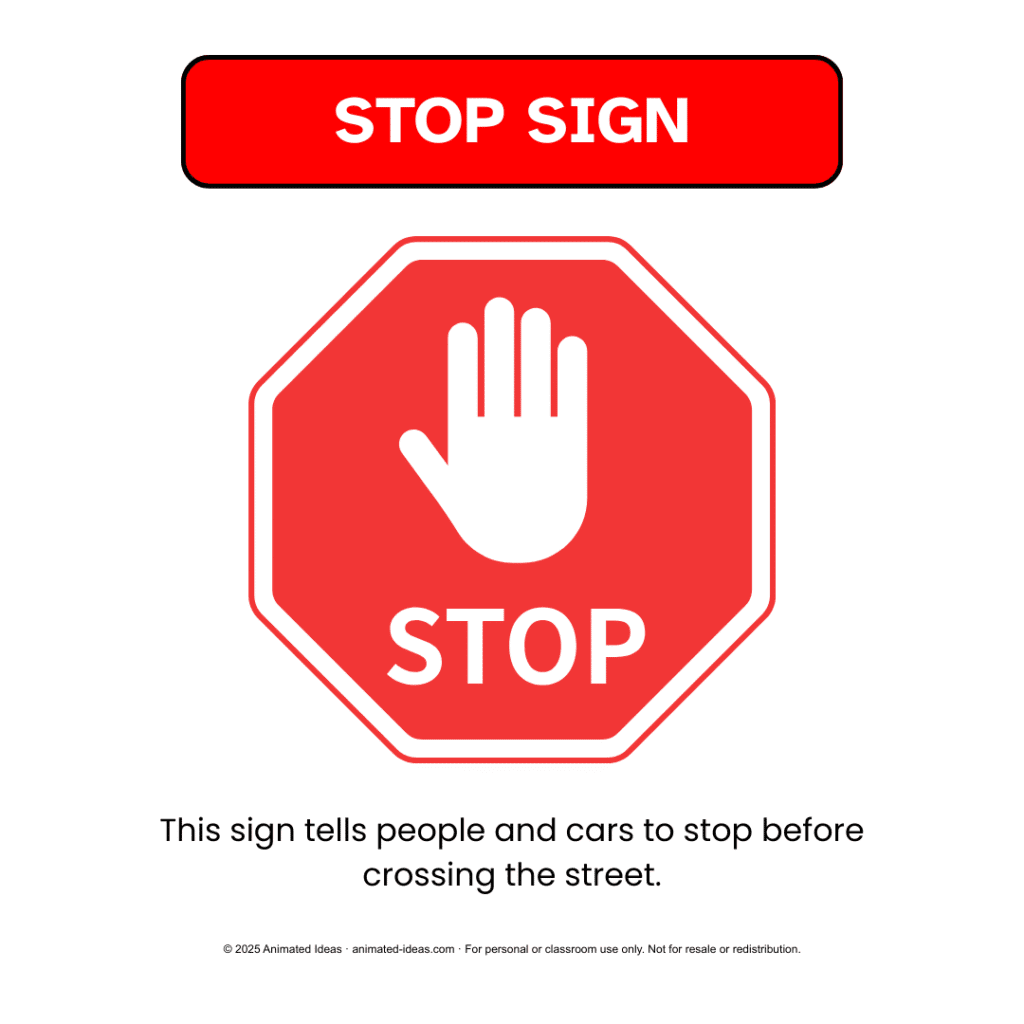
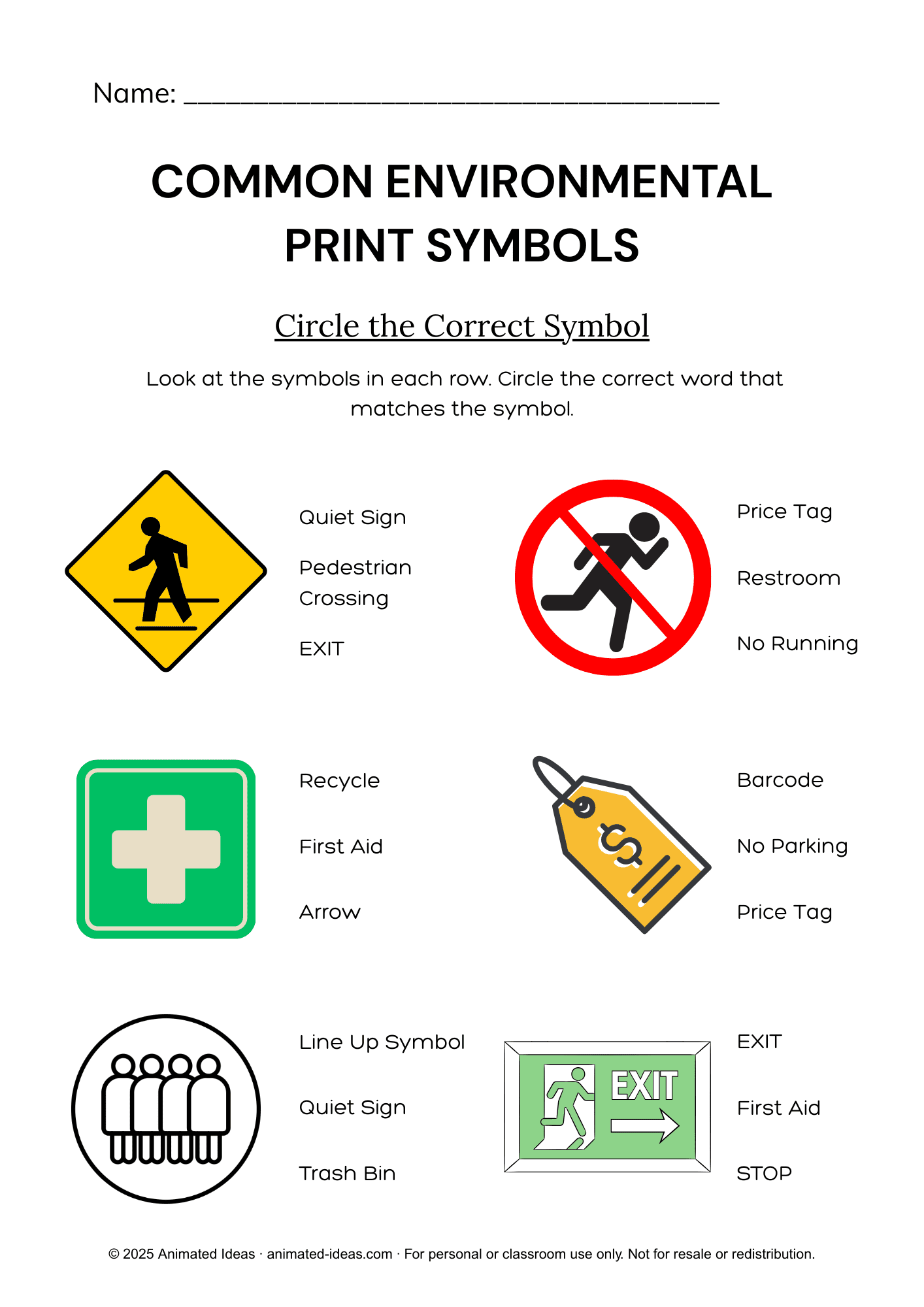
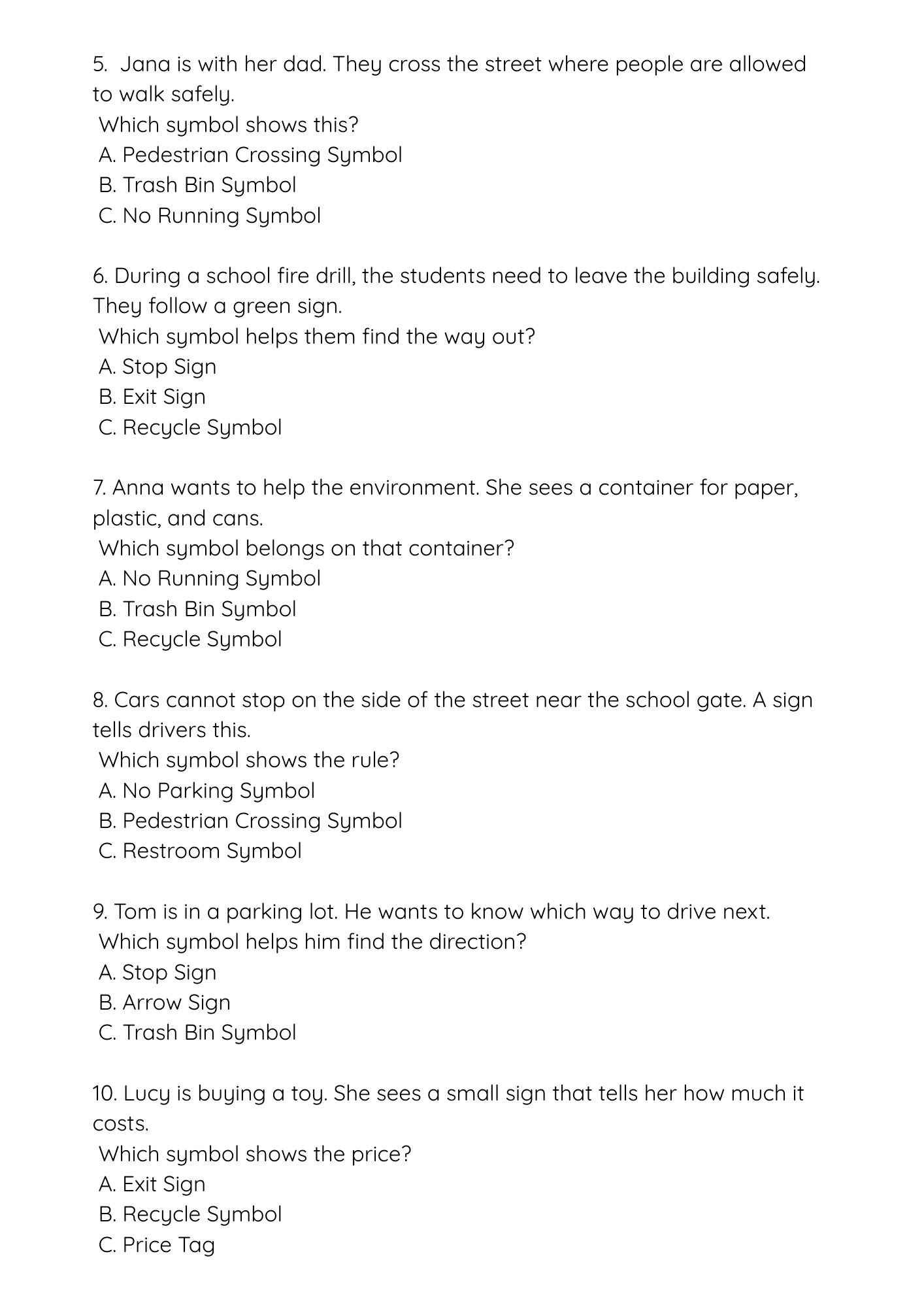
B. Pedestrian Crossing Sign
Meaning:
The Pedestrian Crossing sign shows that people may be crossing the street. It alerts drivers and cyclists to slow down and watch for anyone walking.
This sign helps protect pedestrians and makes streets safer for everyone.
Where You See It:
- Near schools
- Crosswalks
- Neighborhood streets
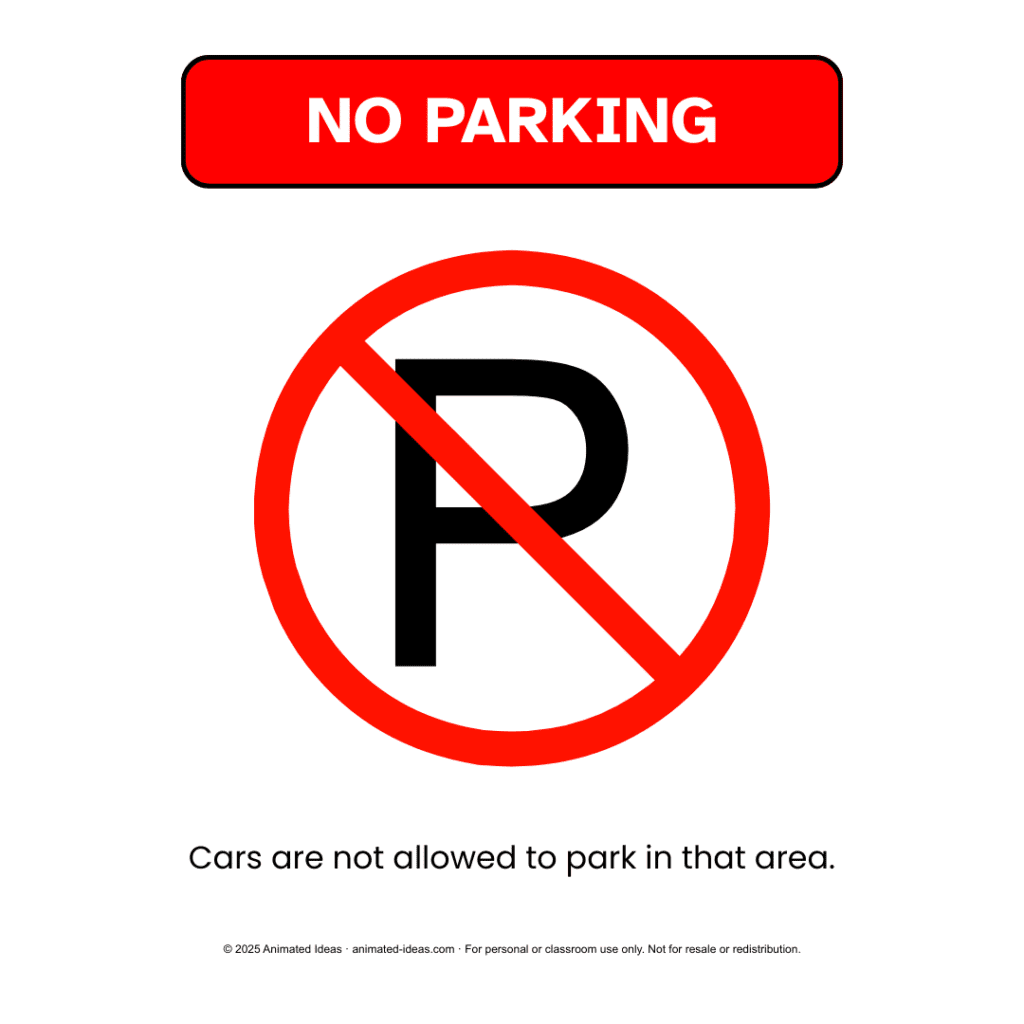
C. No Parking Sign
Meaning:
The No Parking sign tells drivers that cars are not allowed to park in that area.
This helps keep streets, driveways, and important areas clear so that traffic can move safely and emergency vehicles can pass if needed.
Where You See It:
- Streets
- Loading zones
- Private driveways
Directional and Safety Symbols
These symbols help people know what to do and where to go.
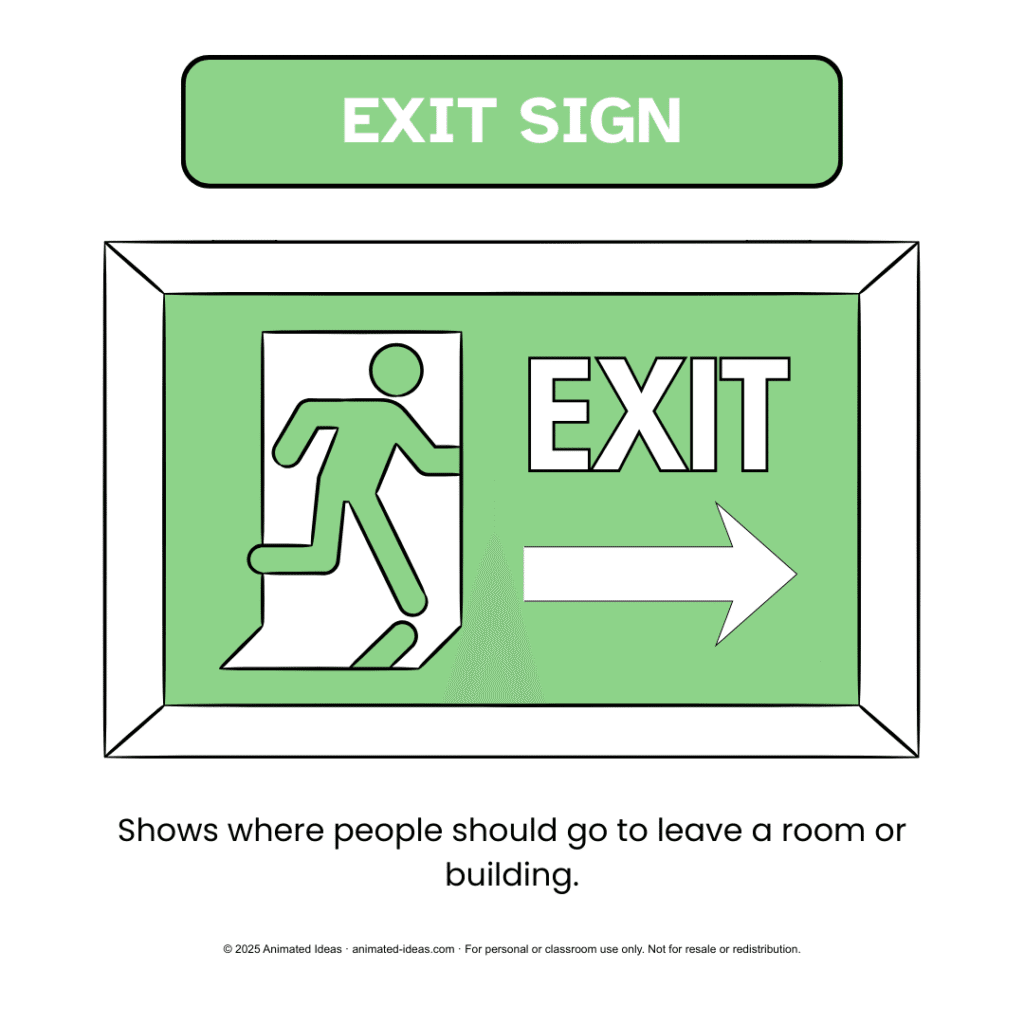
A. Exit Sign
Meaning:
The Exit sign shows people where to go to leave a room or building safely. It is an important guide in case of emergencies, such as fires, earthquakes, or other situations where everyone needs to leave quickly.
Exit signs help people find the safest path out.
Where You See It:
- School doors
- Malls
- Cinemas
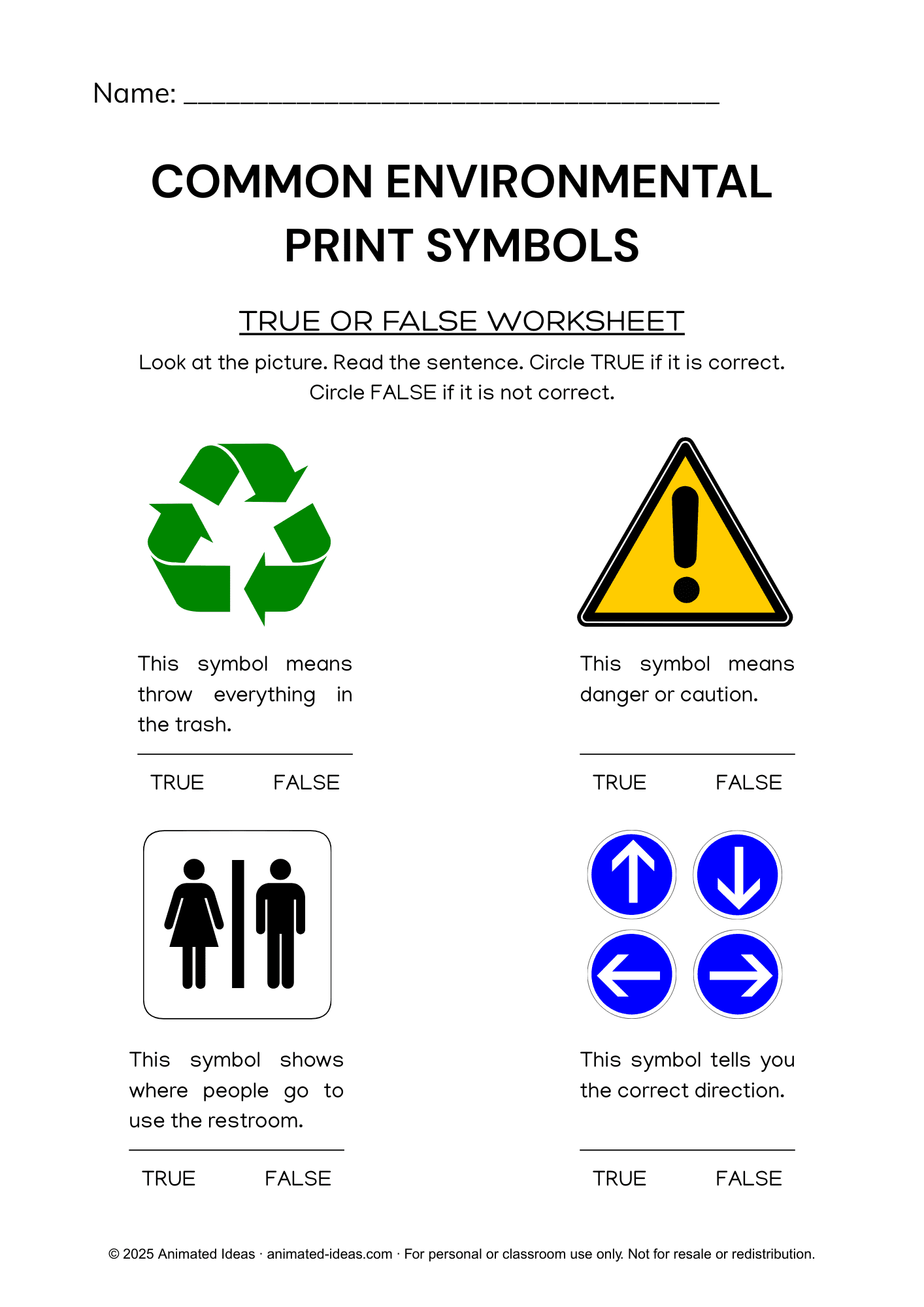
B. Arrow Symbols
Meaning:
Arrow symbols show the direction where people should go. They act like simple guides that point the way, helping people move in an organized manner.
Arrows can point left, right, up, or down. Sometimes they also show curved paths, like turning left or going around a corner.
Where You See It:
- Hallways
- Parking areas
- Grocery stores

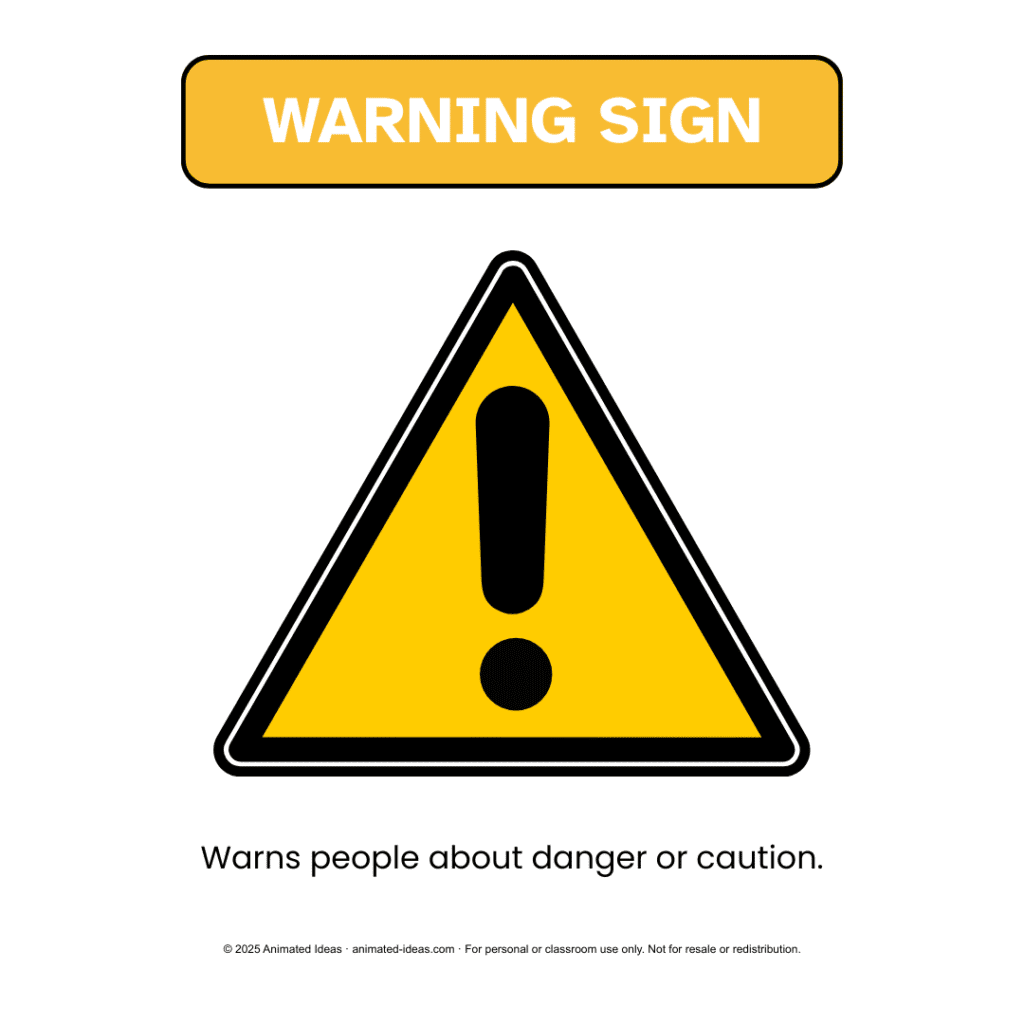
C. Warning Sign
Meaning:
A warning sign alerts people about possible danger or something they need to be careful about. It helps everyone stay safe by reminding them to slow down, pay attention, or avoid certain areas.
Warning signs often use bright colors like yellow or orange so people can notice them quickly. They may include symbols, such as an exclamation mark, slipping person, or falling objects, to show what kind of danger is present.
Where You See It:
- Wet floors
- Construction areas
- Science labs
Public Place Symbols
These symbols help people quickly understand where certain rooms or facilities are located.
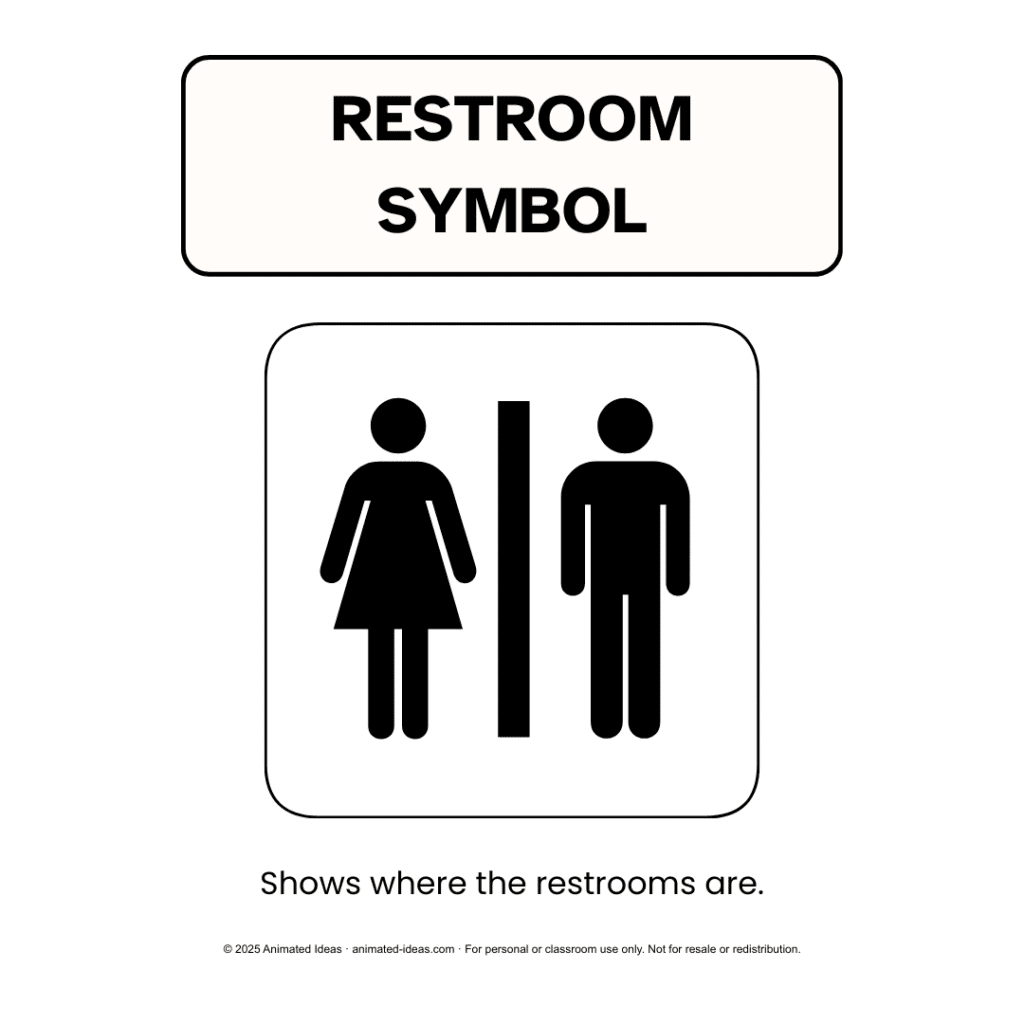
A. Restroom Symbols
Meaning:
Restroom symbols help people quickly find where the bathrooms are. These symbols usually show simple pictures of a man, a woman, or a family to indicate which restroom to use.
They are easy to recognize, even for young children or visitors who cannot read the language. Sometimes, they also include signs for accessible restrooms, which show a wheelchair symbol.
Where You See It:
- Schools
- Restaurants
- Parks
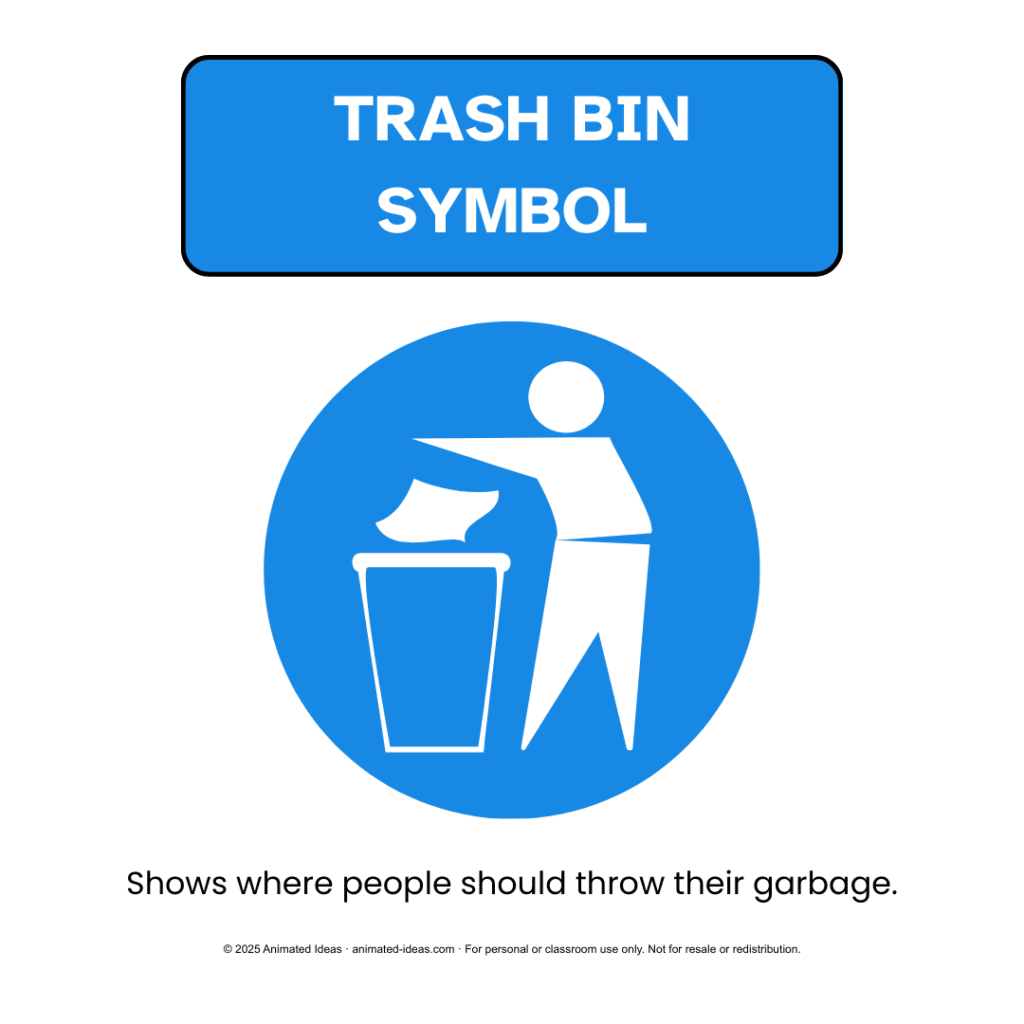
B. Trash Bin Symbol
Meaning:
The trash bin symbol shows people where they should throw their garbage. This symbol often looks like a person putting trash into a bin. It reminds everyone to keep the place clean and to avoid littering.
Sometimes, you may also see versions of this symbol for recycling bins, which help people sort paper, plastic, or bottles correctly.
Where You See It:
- School hallways
- Outdoors
- Playgrounds
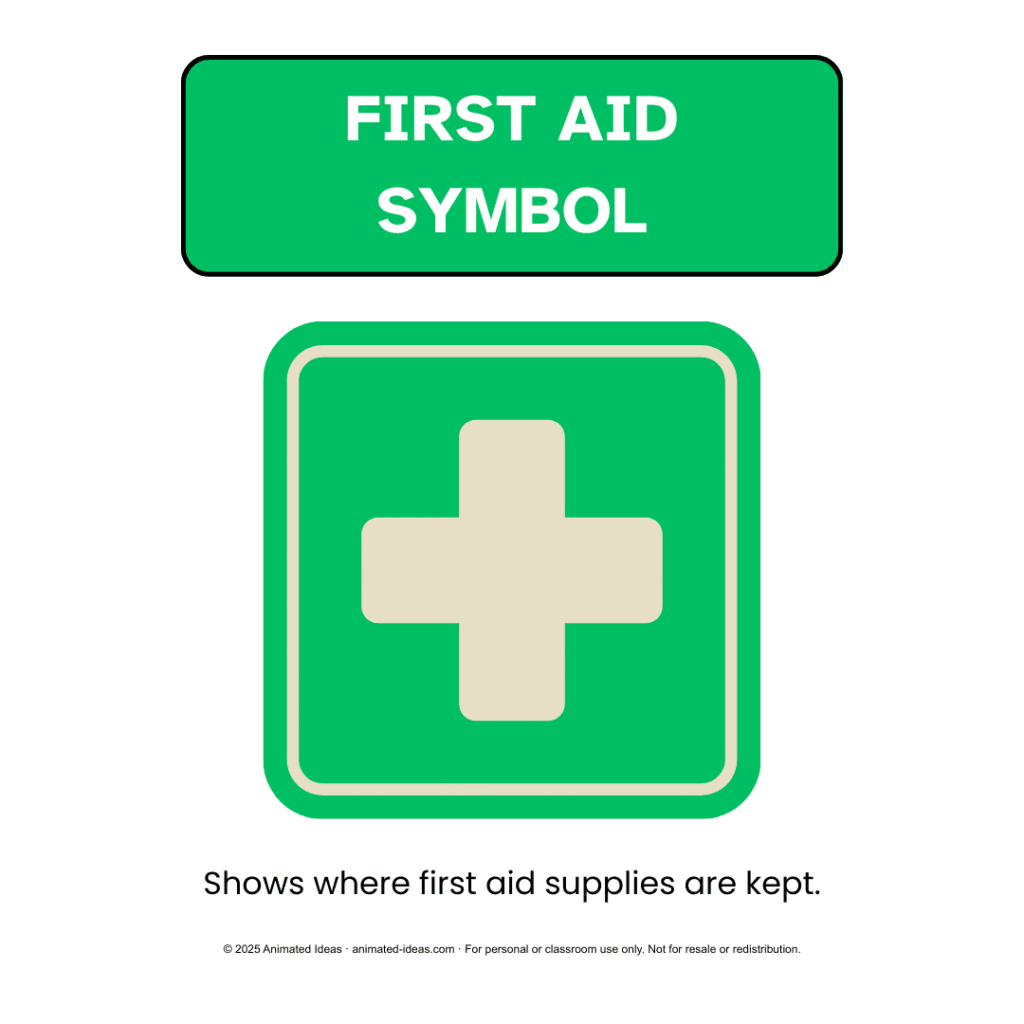
C. First Aid Symbol
Meaning:
The first aid symbol shows where first aid supplies are stored, such as bandages, medicines, and emergency tools. This symbol usually has a green background with a white cross.
It helps people quickly find help when someone is hurt, has a small cut, or needs basic medical care. Knowing this symbol is important because it guides people during emergencies.
Where You See It:
- School clinic
- Office
- Hospitals
Store and Product Symbols
Children recognize many symbols from packaging and shopping places.
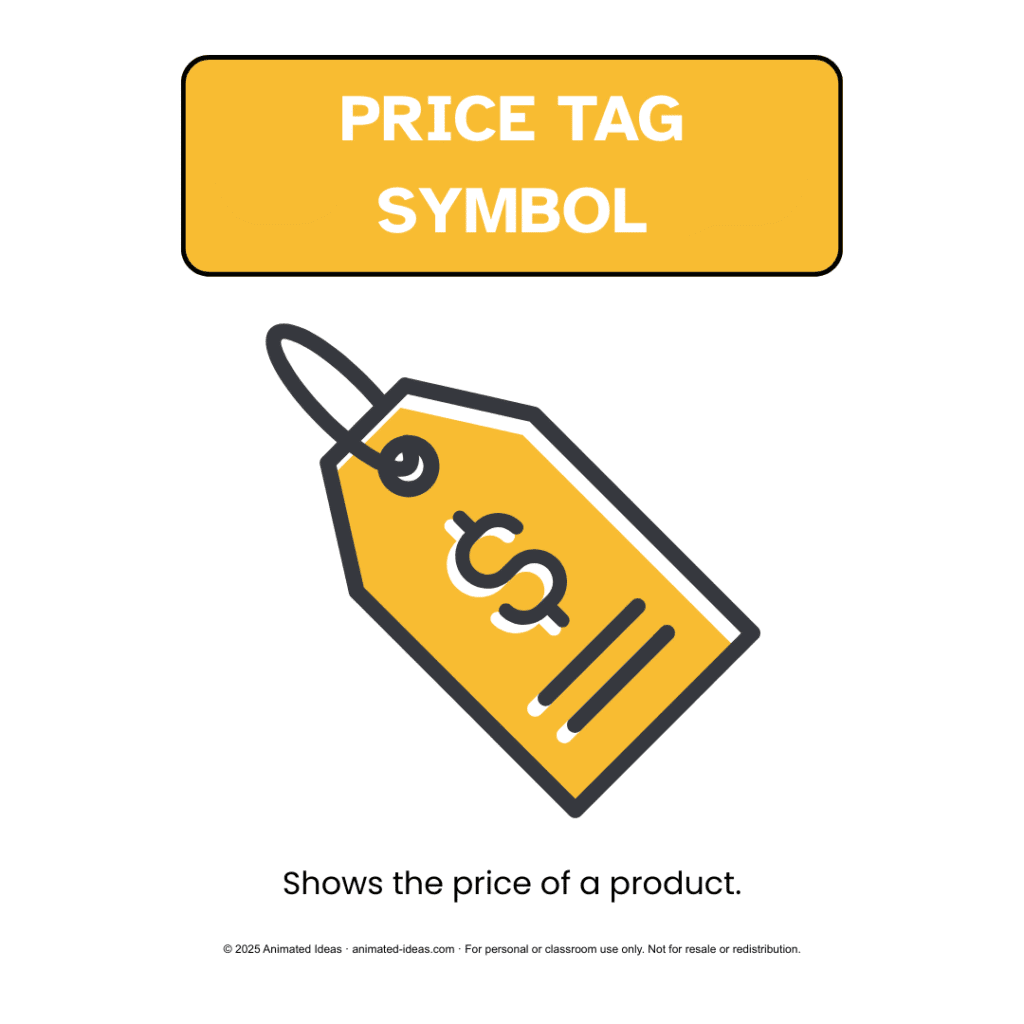
A. Price Tag Symbol
Meaning:
The price tag symbol shows how much a product costs. It helps shoppers know the value of an item before buying it. This symbol is important because it guides people in making choices that fit their budget.
Children often learn to read price tags early, helping them understand the concept of money and spending wisely.
Where You See It:
- Stores
- Markets
- Toy shops
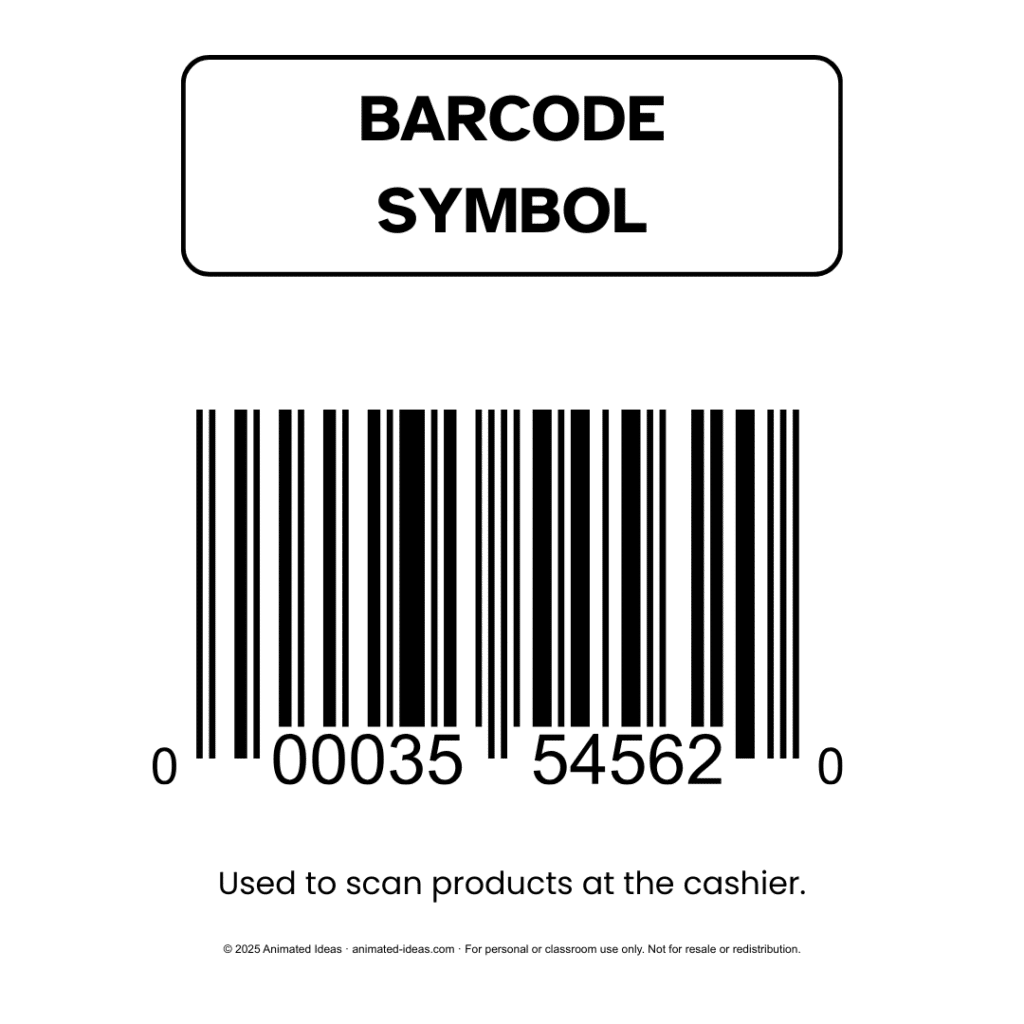
B. Barcode Symbol
Meaning:
The barcode symbol is a set of black and white lines that stores information about a product. When scanned at the cashier, it shows the item’s name and price on the computer.
Barcodes help make shopping faster and more accurate because cashiers don’t have to type prices manually. They also help stores keep track of their inventory.
Where You See It:
- Grocery items
- Toys
- School supplies
C. Recycle Symbol
Meaning:
The recycle symbol, usually shown as three arrows forming a triangle, reminds people to recycle and help protect the environment. It tells us that an item can be reused, turned into new materials, or placed in a special recycling bin instead of being thrown away.
This symbol encourages everyone—children and adults—to take care of the Earth by reducing waste and keeping our surroundings clean.
Where You See It:
- Bottles
- Boxes
- Trash bins

School Symbols
These symbols help students follow rules and routines.
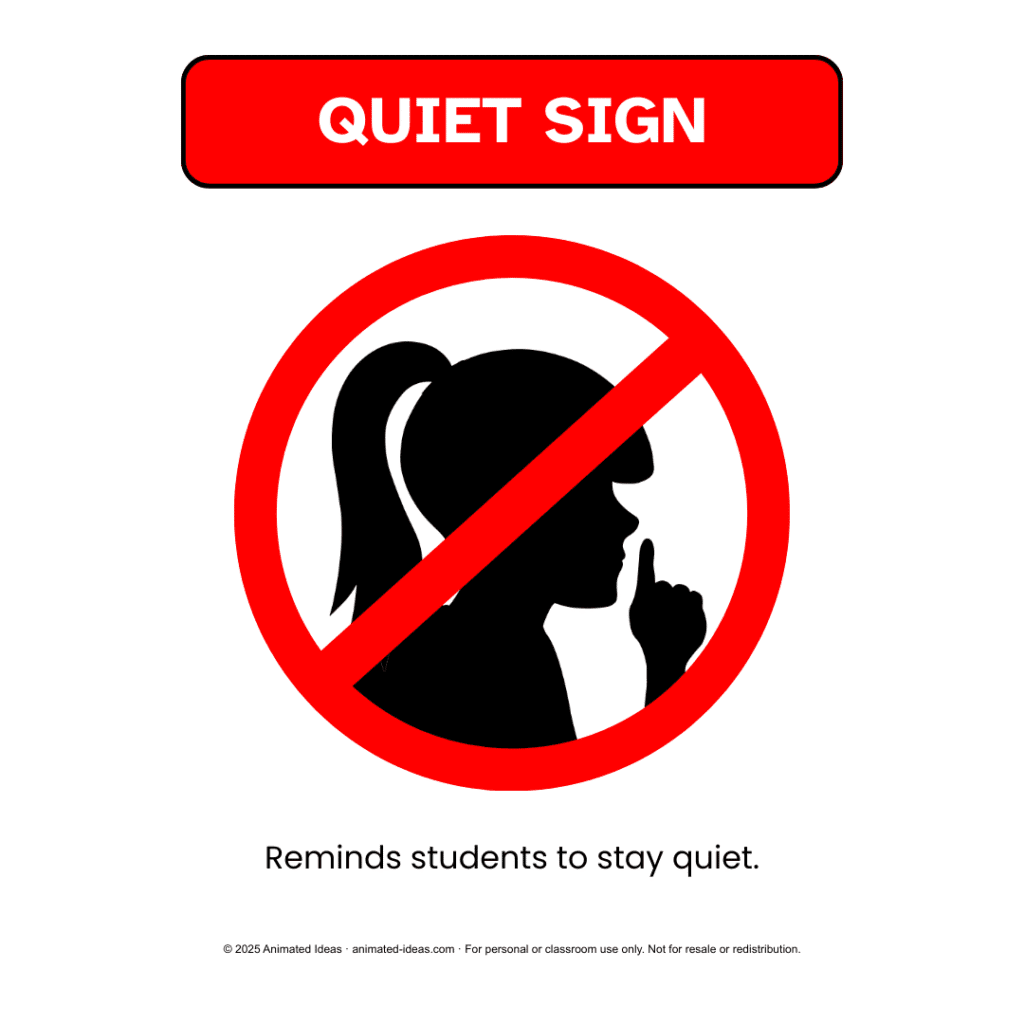
A. Quiet Sign
Meaning:
The quiet sign reminds students to stay quiet and use soft voices. This sign is important because it helps create a calm and peaceful environment where everyone can focus, read, or take tests without distractions.
When children see this symbol, they know they should keep noise low to respect others who are studying or working.
Where You See It:
- Library
- Classroom
- Testing areas
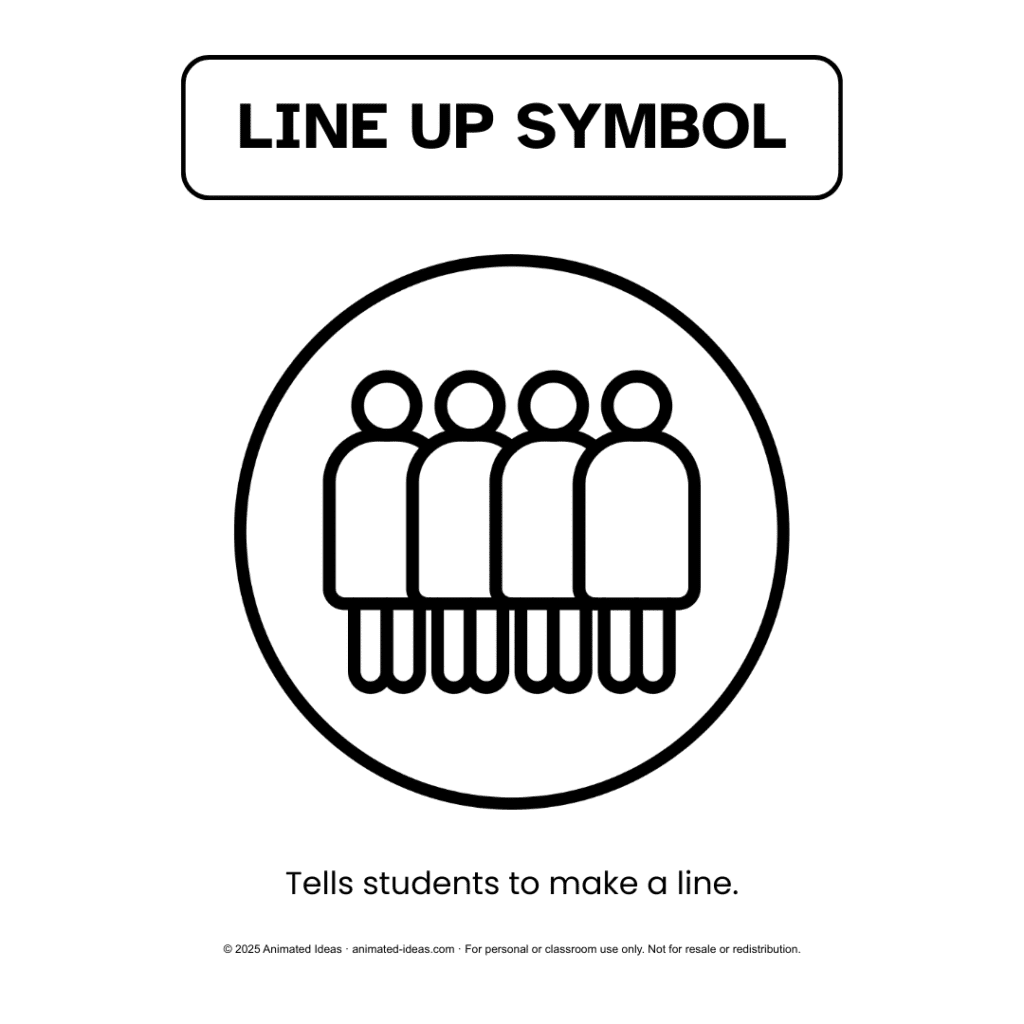
B. Line Up Symbol
Meaning:
The line up symbol tells students to form a straight and orderly line. This symbol helps keep everyone organized and prevents pushing or crowding.
When children see this sign, they know it is time to stand quietly, wait their turn, and follow their teacher’s directions. It teaches discipline, patience, and good behavior in shared school spaces.
Where You See It:
- Hallways
- Classroom door
- Cafeteria entrance
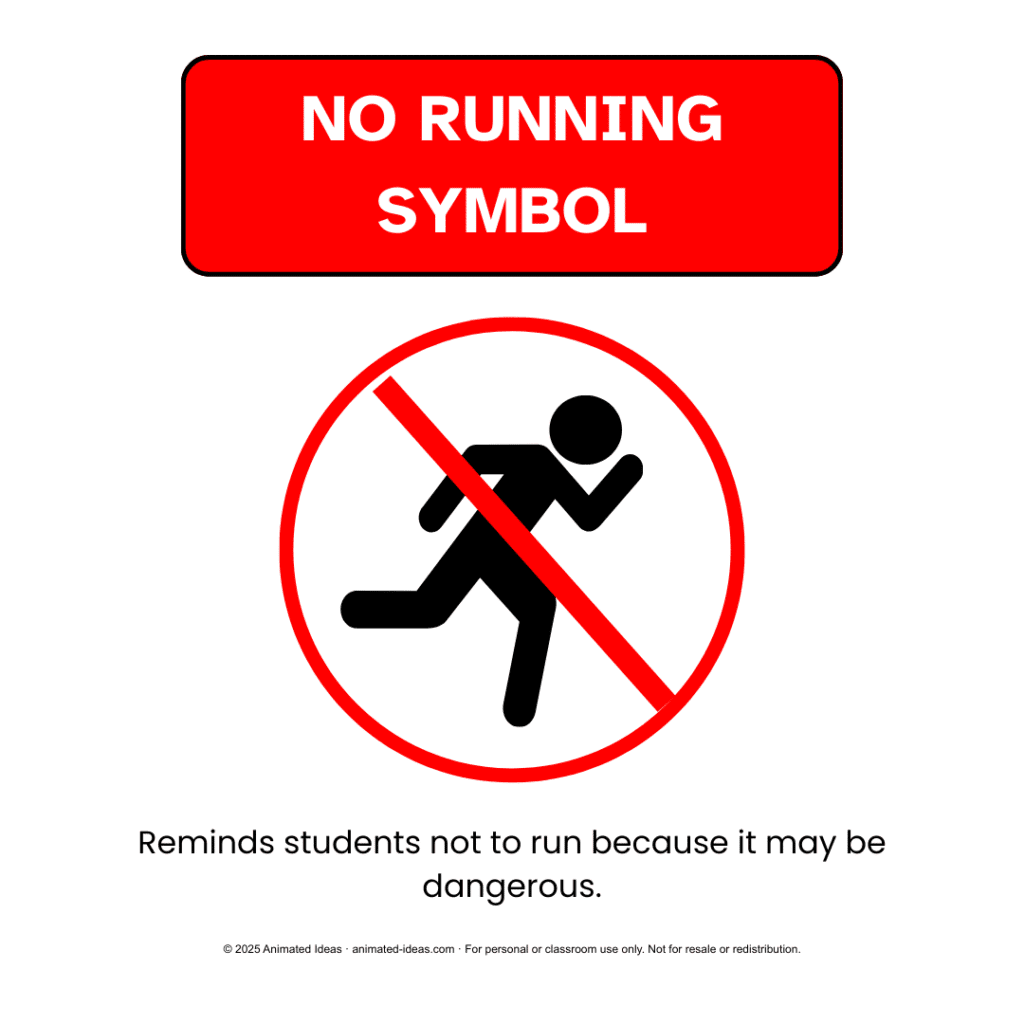
C. No Running Symbol
Meaning:
The No Running symbol reminds students not to run because it may be dangerous. Running in certain areas can lead to accidents, slips, or bumps with other students.
This symbol helps children remember to walk carefully and stay safe while moving around the school.
Where You See It:
- Walkways
- School corridors
- Near stairs
How Students Can Easily Identify These Symbols
To understand environmental print symbols, 1st graders can use three simple steps:
1. Look at the Shape
Shapes like circles, triangles, rectangles, and diamonds help identify symbols quickly.
- STOP sign → octagon
- Warning sign → triangle
- Pedestrian sign → diamond
2. Look at the Color
Colors often give clues about meaning.
- Red = danger or stop
- Yellow = warning
- Green = safety
3. Look at the Picture
Most symbols use simple pictures to show meaning.
- Person walking = pedestrian crossing
- Trash bin = throw garbage properly
- Cross = first aid
Summary
Environmental print symbols are all around us, and we see them every day in our homes, schools, streets, and stores. These symbols help us stay safe, follow rules, find directions, and understand important information even before we can read long words. They guide us when we cross the street, throw our trash properly, line up, or make safe choices in public places.
Learning these symbols builds confidence and helps students feel more independent in their environment. It also strengthens early reading skills, because children learn to connect pictures with meaning. As students grow, recognizing symbols supports stronger thinking, problem-solving, and communication skills. This knowledge prepares them for real-life situations and helps them become careful, responsible, and aware members of their community.
Thank You
Thank you for reading this lesson guide about “Identifying Common Environmental Print Symbols.” If you enjoyed this guide and want more helpful learning resources, feel free to explore our related materials from Animated Ideas, including Pronoun Worksheets – I, Me, My, Mine Activities, Getting Ready for School, and all English Worksheets for 1st Graders. You may also visit my YouTube, Facebook, and Pinterest pages for more educational videos, worksheets, and teaching content. I hope these materials continue to support your teaching journey and provide engaging, meaningful lessons for your young learners.