

Daily Routine Verbs in English
Daily routine verbs in English describe actions we do every day. These actions usually follow a regular schedule. Therefore, learning these verbs is very important for beginners.
In addition, daily routine verbs help learners talk about their lives. They allow students to describe mornings, afternoons, and evenings. As a result, communication becomes easier and clearer.
This lesson focuses on daily routine verbs in English for beginner learners. Moreover, it uses simple explanations and short sentences to support understanding.
Download Free Worksheets and Notes
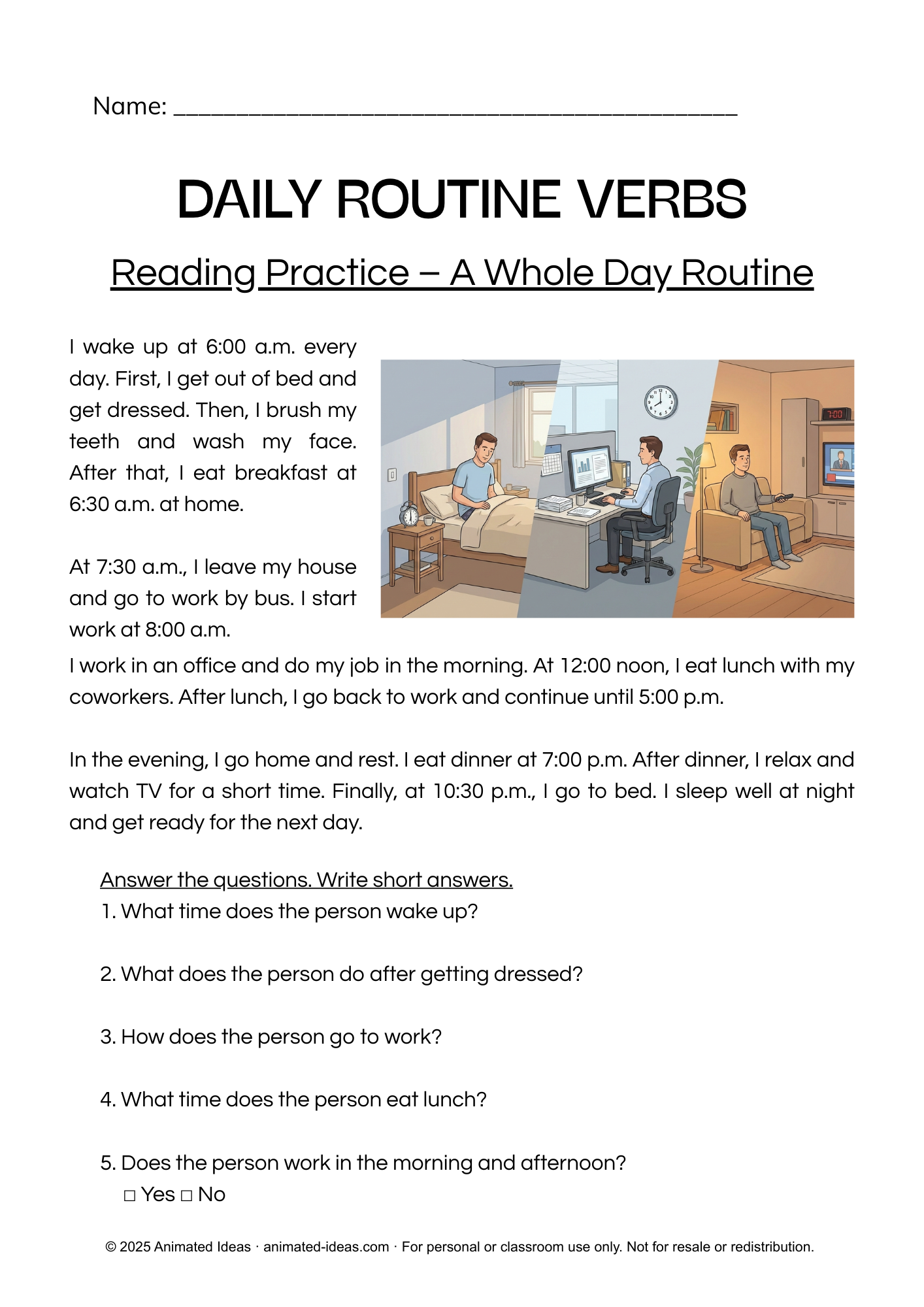


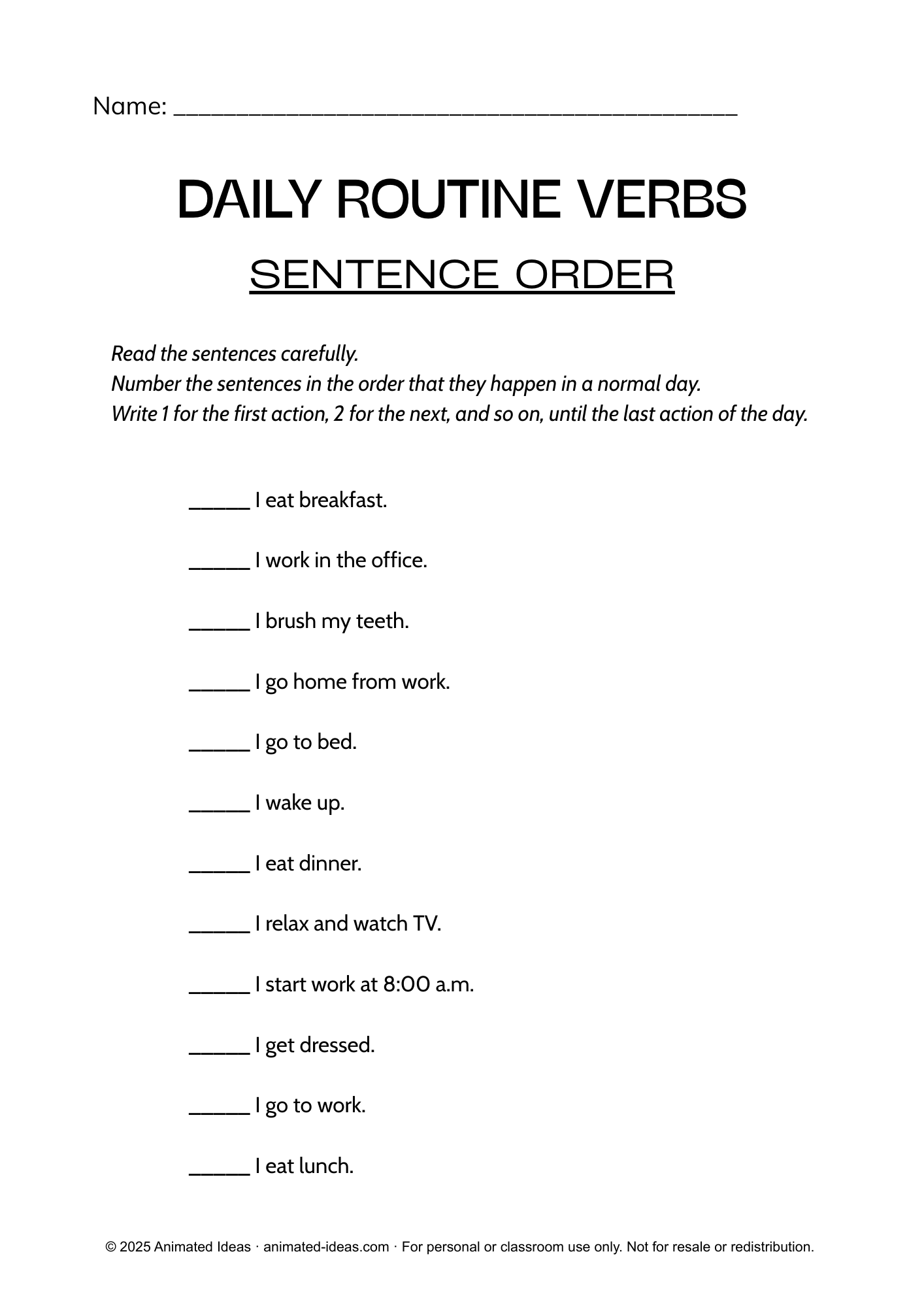

What Are Daily Routine Verbs?
Daily routine verbs are action words. They describe habits and repeated actions. These actions happen every day or almost every day.
For example, people wake up, eat, work, and sleep. These actions form a daily routine. Therefore, the verbs that describe them are daily routine verbs.
Most daily routine verbs use the present simple tense. This tense shows habits and regular actions. Because of this, beginners often learn these verbs early.
Daily Routine Verbs and the Present Simple Tense
Daily routine verbs in English are commonly used with the present simple tense. This tense is easy to recognize. It uses the base form of the verb.
For example:
- I wake up at six.
- They eat breakfast at home.
- We go to work every day.
When the subject is he, she, or it, the verb changes. An -s or -es is added. Therefore, learners must pay attention to verb forms.
For example:
- He wakes up early.
- She eats breakfast at seven.
- It starts at eight.
Common Daily Routine Verbs
Daily routine verbs in English often follow a time order. They usually begin in the morning. Then they continue during the day. Finally, they end at night.
Below is a detailed explanation of common daily routine verbs.
Morning Daily Routine Verbs
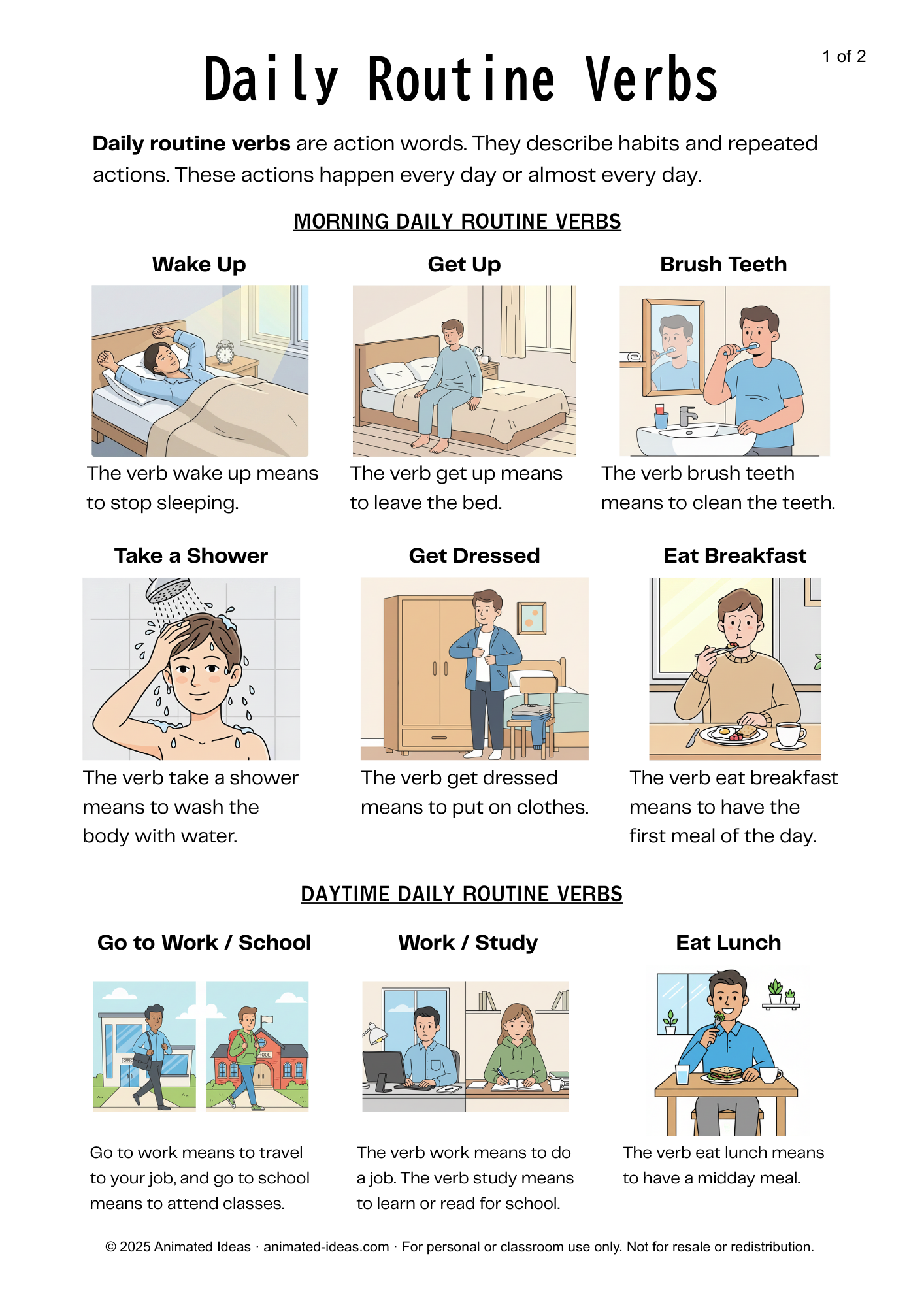
Morning activities start the day. These actions happen after waking up. They prepare a person for work or school.
Wake Up

The verb wake up means to stop sleeping. It is usually the first thing we do in the morning.
Forms of the verb:
- I/You/We/They wake up
- He/She/It wakes up
- Past tense: woke up
- Past participle: woken up
Example sentences:
- I wake up at six o’clock every morning.
- She wakes up early for school.
- He woke up late yesterday.
- I have woken up feeling happy today.
Get Up
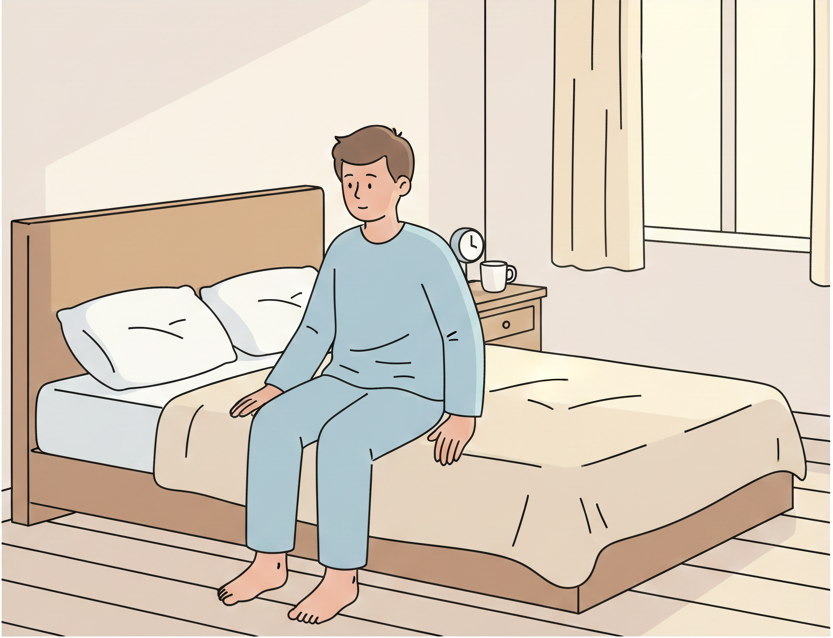
The verb get up means to leave the bed. It usually happens after you wake up.
Forms of the verb:
- I/You/We/They get up
- He/She/It gets up
- Past tense: got up
- Past participle: gotten up
Example sentences:
- I get up at six thirty every morning.
- He gets up quickly for school.
- She got up late yesterday.
- We have gotten up early many times this week.
Brush Teeth
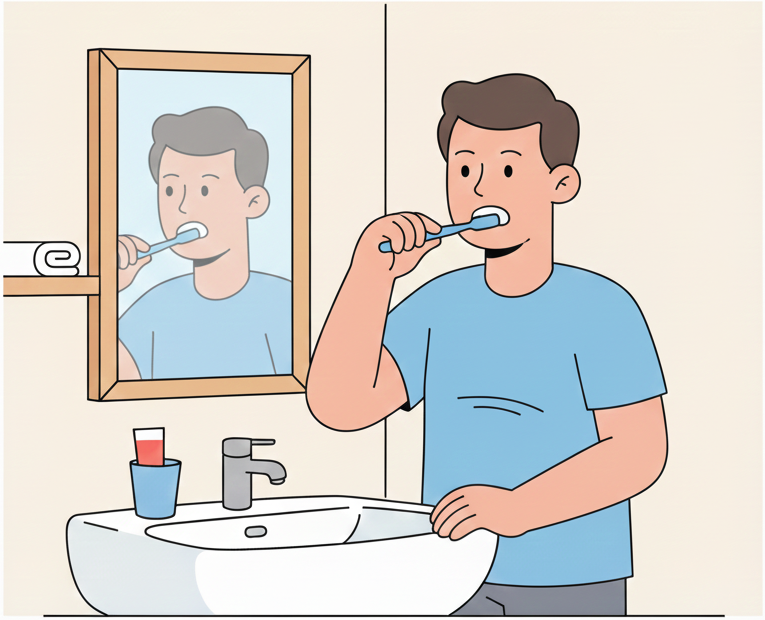
The verb brush teeth means to clean your teeth using a toothbrush and toothpaste. It is usually done in the morning and before bed.
Forms of the verb:
- I/You/We/They brush teeth
- He/She/It brushes teeth
- Past tense: brushed teeth
- Past participle: brushed teeth
Example sentences:
- I brush teeth every morning.
- She brushes teeth after breakfast.
- He brushed teeth before going to school yesterday.
- We have brushed teeth twice today.
Take a Shower

The verb take a shower means to wash your body using water and soap. Some people say take a bath instead.
Forms of the verb:
- I/You/We/They take a shower
- He/She/It takes a shower
- Past tense: took a shower
- Past participle: taken a shower
Example sentences:
- I take a shower every morning.
- She takes a shower after playing outside.
- He took a shower before going to bed yesterday.
- We have taken a shower already today.
Get Dressed
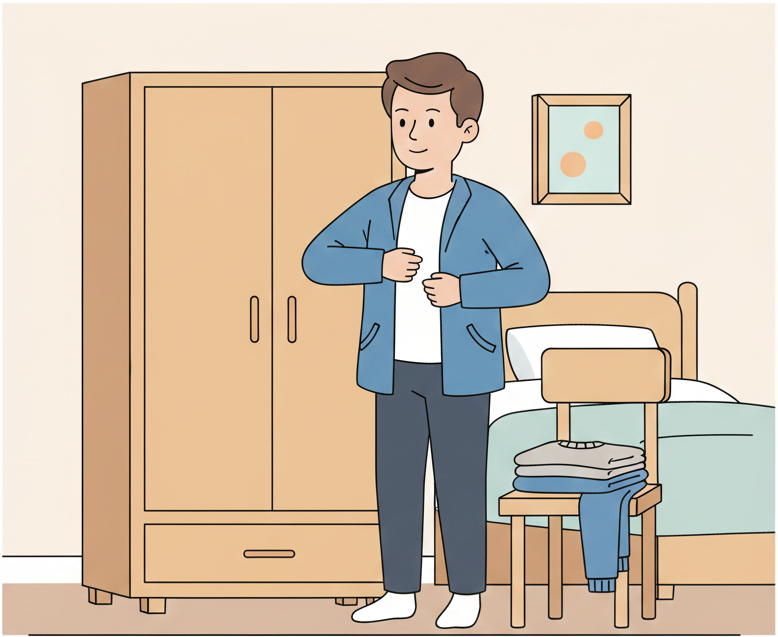
The verb get dressed means to put on clothes. This action prepares a person to leave home.
Forms of the verb:
- I/You/We/They get dressed
- He/She/It gets dressed
- Past tense: got dressed
- Past participle: gotten dressed
Example sentences:
- I get dressed after taking a shower.
- She gets dressed quickly in the morning.
- He got dressed before breakfast yesterday.
- We have gotten dressed for school already.
Eat Breakfast
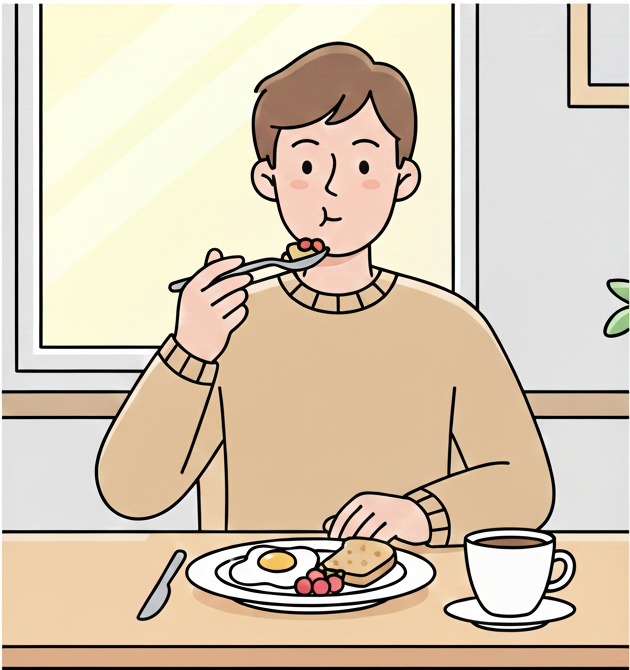
The verb eat breakfast means to have the first meal of the day.
Forms of the verb:
- I/You/We/They eat breakfast
- He/She/It eats breakfast
- Past tense: ate breakfast
- Past participle: eaten breakfast
Example sentences:
- I eat breakfast at seven o’clock every morning.
- She eats breakfast before going to school.
- He ate breakfast early yesterday.
- We have eaten breakfast already today.
Daytime Daily Routine Verbs
Daytime activities usually include work, school, and responsibilities. These actions happen during the day.
Go to Work / Go to School
The verb go to work means to travel to a job. The verb go to school means to attend classes.
Forms of the verb:
- I/You/We/They go to work / go to school
- He/She/It goes to work / goes to school
- Past tense: went to work / went to school
- Past participle: gone to work / gone to school
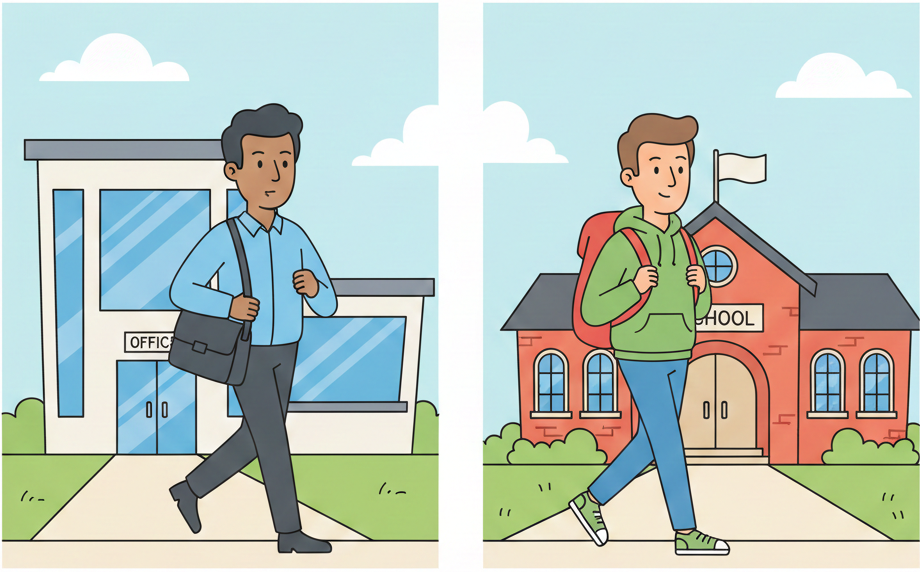
Example sentences:
- I go to school at eight o’clock every morning.
- He goes to work by bus every day.
- She went to school early yesterday.
- They have gone to work already today.
Work / Study
The verb work means to do a job. The verb study means to learn or read for school.
Forms of the verb:
- I/You/We/They work / study
- He/She/It works / studies
- Past tense: worked / studied
- Past participle: worked / studied
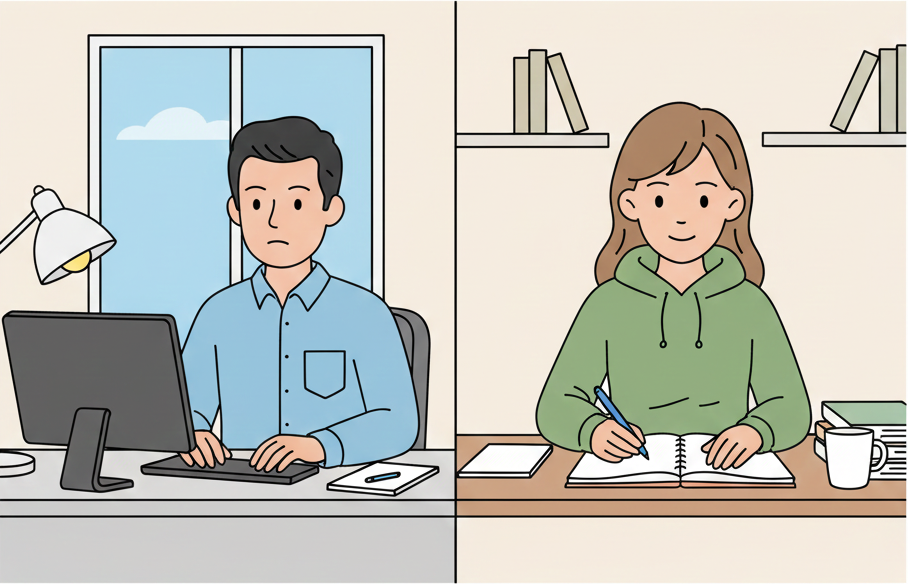
Example sentences:
- I study in the classroom every day.
- She works on her homework after school.
- He studied hard yesterday.
- We have worked on this project all morning.
Eat Lunch
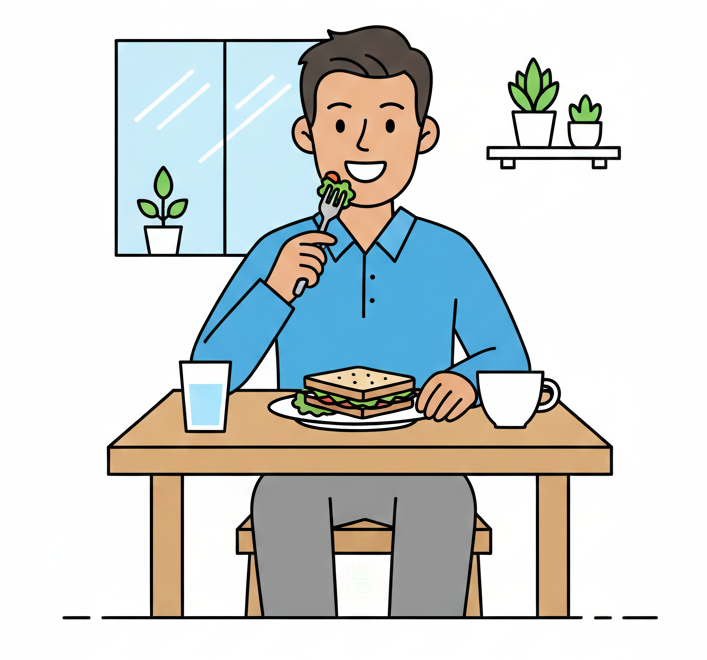
The verb eat lunch means to have a meal in the middle of the day.
Forms of the verb:
- I/You/We/They eat lunch
- He/She/It eats lunch
- Past tense: ate lunch
- Past participle: eaten lunch
Example sentences:
- I eat lunch at twelve o’clock every day.
- She eats lunch with her friends at school.
- He ate lunch early yesterday.
- We have eaten lunch already today.
Evening Daily Routine Verbs
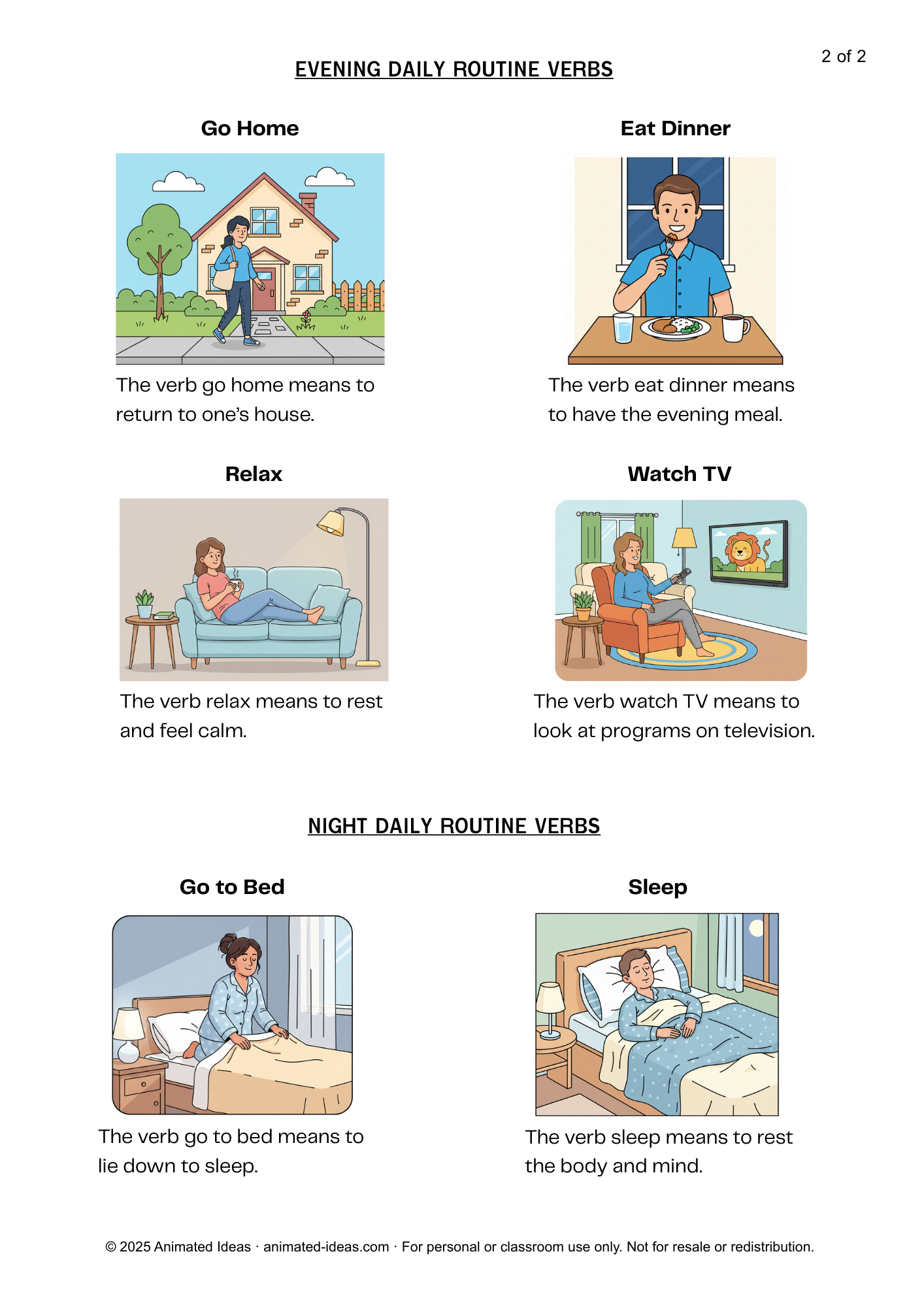
Evening activities happen after work or school. These actions help people relax.
Go Home
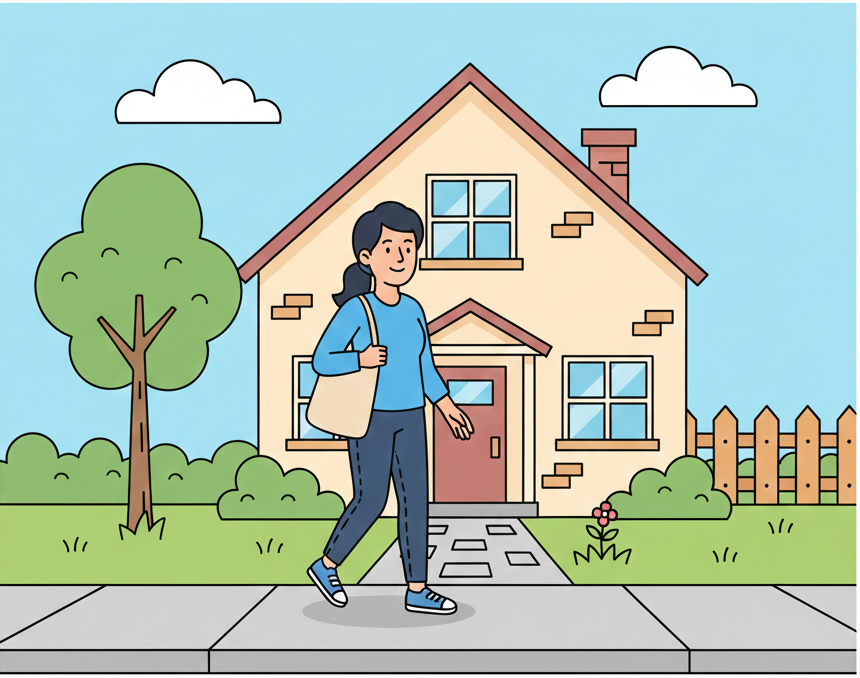
The verb go home means to return to one’s house.
Forms of the verb:
- I/You/We/They go home
- He/She/It goes home
- Past tense: went home
- Past participle: gone home
Example sentences:
- I go home at five o’clock every day.
- She goes home by bus after school.
- He went home early yesterday.
- We have gone home already today.
Eat Dinner
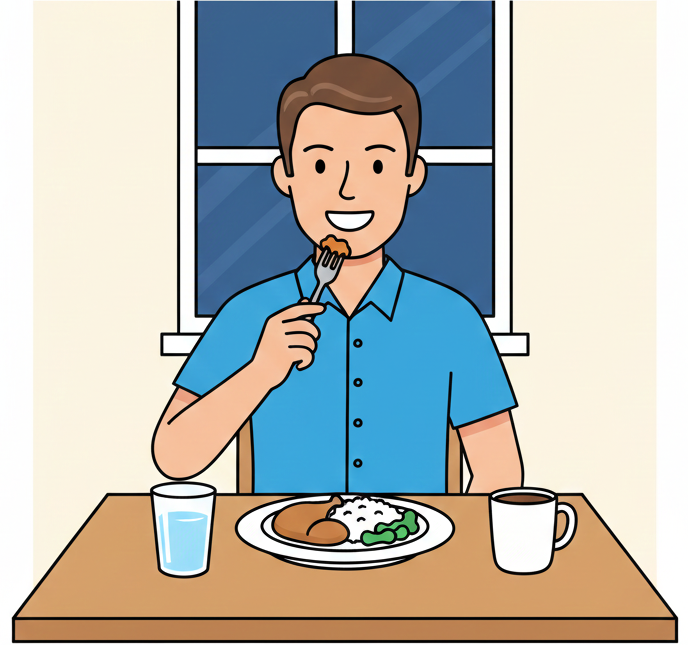
The verb eat dinner means to have the last main meal of the day. It usually happens in the evening, after going home.
Forms of the verb:
- I/You/We/They eat dinner
- He/She/It eats dinner
- Past tense: ate dinner
- Past participle: eaten dinner
Example sentences:
- I eat dinner at seven o’clock every evening.
- He eats dinner with his family.
- She ate dinner early yesterday.
- We have eaten dinner already today.
Relax
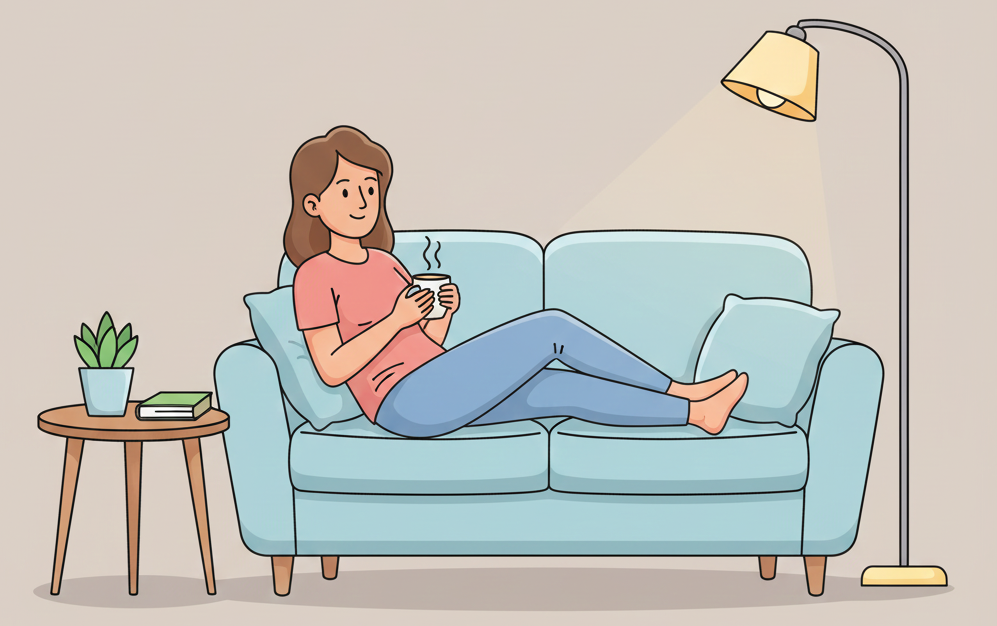
The verb relax means to rest and feel calm after working, studying, or doing activities. It usually happens in the evening or after finishing tasks.
Forms of the verb:
- I/You/We/They relax
- He/She/It relaxes
- Past tense: relaxed
- Past participle: relaxed
Example sentences:
- I relax on the sofa after school.
- She relaxes by listening to music.
- He relaxed after finishing his homework.
- We have relaxed all afternoon.
Watch TV

The verb watch TV means to look at a television program for entertainment or information. It usually happens in the evening or during free time.
Forms of the verb:
- I/You/We/They watch TV
- He/She/It watches TV
- Past tense: watched TV
- Past participle: watched TV
Example sentences:
- I watch TV after dinner every evening.
- He watches TV before going to bed.
- She watched TV yesterday evening.
- We have watched TV for two hours today.
Night Daily Routine Verbs
Night activities prepare the body for sleep. These actions end the day.
Go to Bed
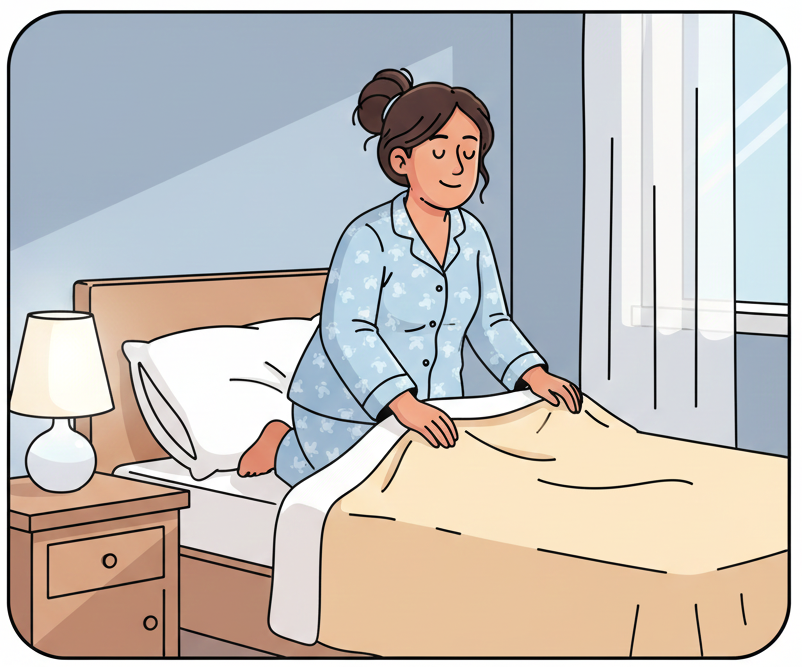
The verb go to bed means to lie down to sleep.
Forms of the verb:
- I/You/We/They go to bed
- He/She/It goes to bed
- Past tense: went to bed
- Past participle: gone to bed
Example sentences:
- I go to bed at nine o’clock every night.
- She goes to bed after reading a book.
- He went to bed early yesterday.
- We have gone to bed already today.
Sleep
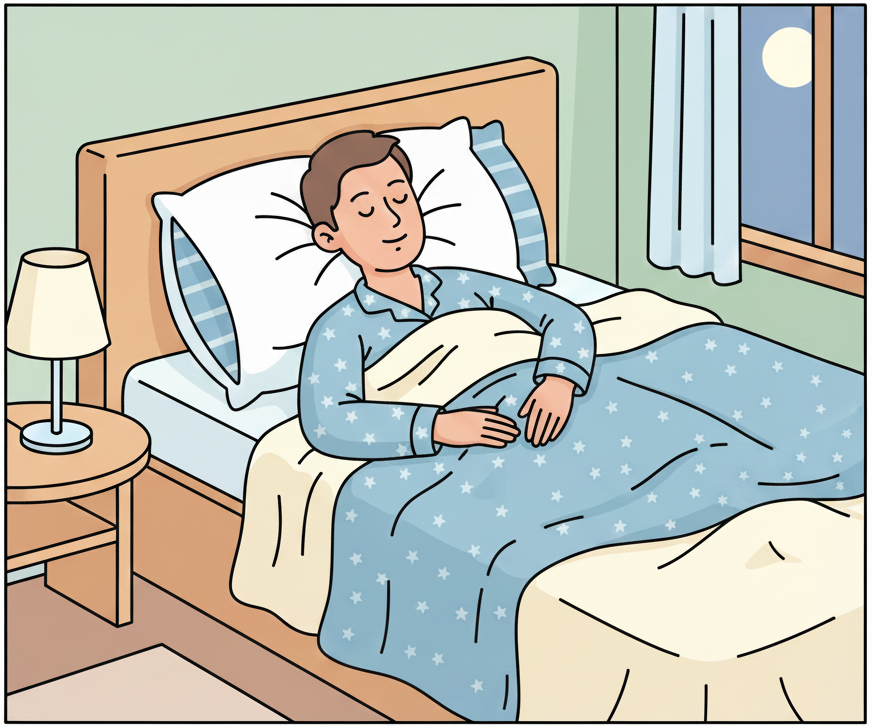
The verb sleep means to rest your body and mind with your eyes closed.
Forms of the verb:
- I/You/We/They sleep
- He/She/It sleeps
- Past tense: slept
- Past participle: slept
Example sentences:
- I sleep for eight hours every night.
- She sleeps early on school nights.
- He slept well last night.
- We have slept enough today.
Conclusion
Daily routine verbs in English help beginners speak confidently. They allow learners to describe real life.
Moreover, these verbs appear often in conversations. They also appear in reading texts. Therefore, learning them improves overall language skills.
In conclusion, daily routine verbs in English are essential. They build a strong foundation for communication. They also support future grammar learning.