

Famous Scientists and Their Inventions
Science has made our lives easier and more exciting! Many things we use every day—like the cellphone, television, refrigerator, and automobile—were once just ideas in the minds of great inventors.
In this lesson, let’s learn about some famous scientists and their inventions that changed the world.
Download Free Worksheets and Handouts
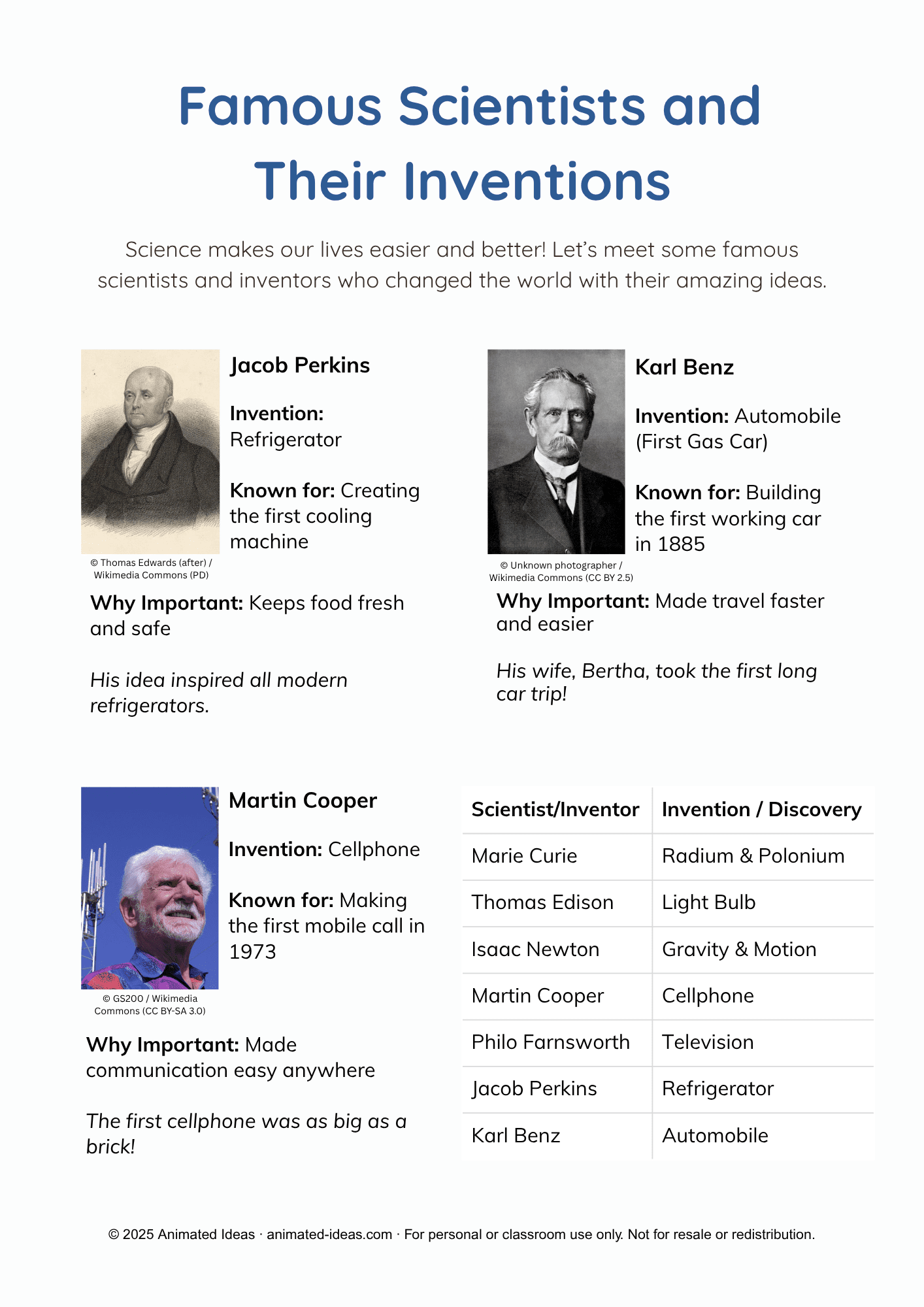
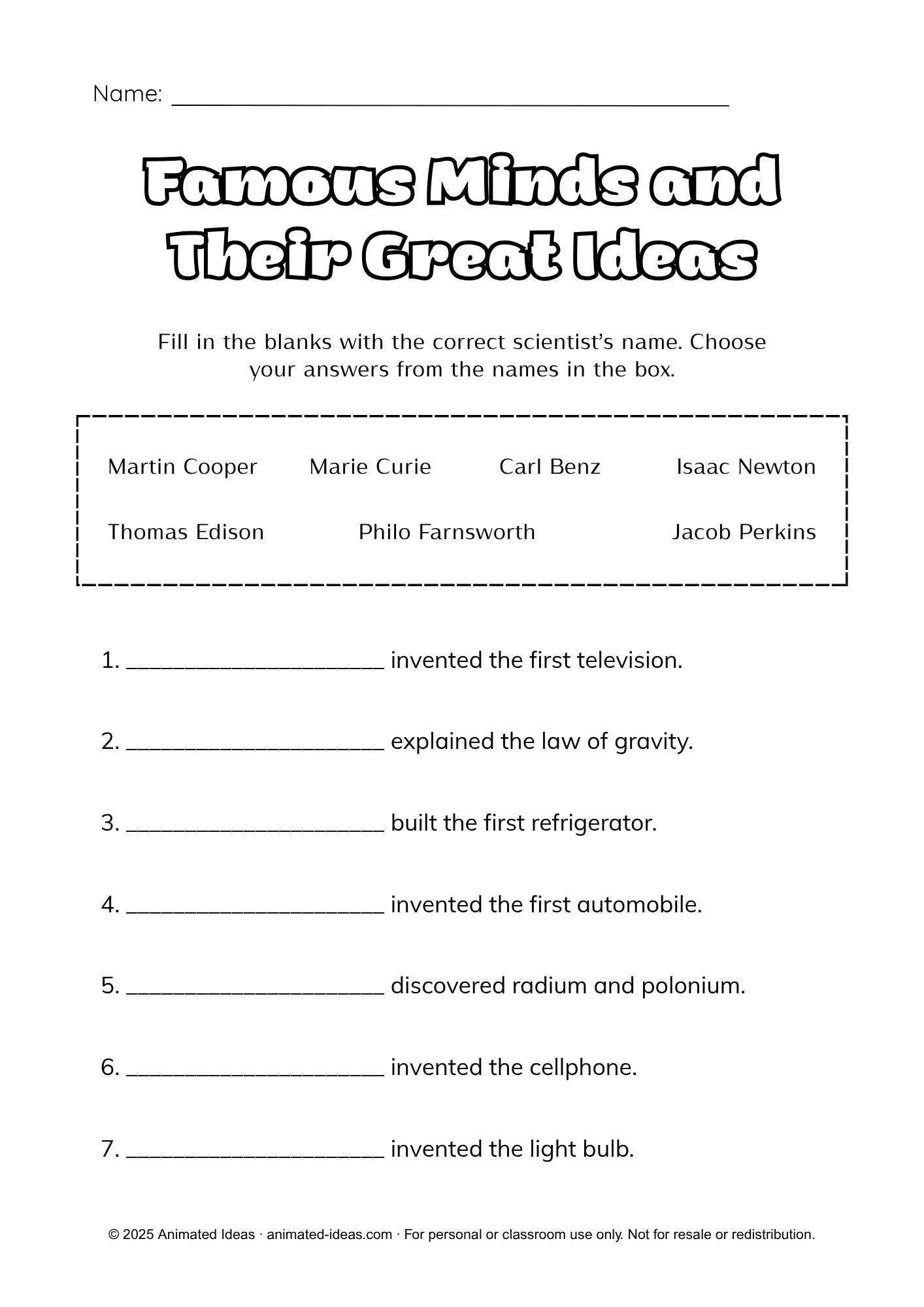
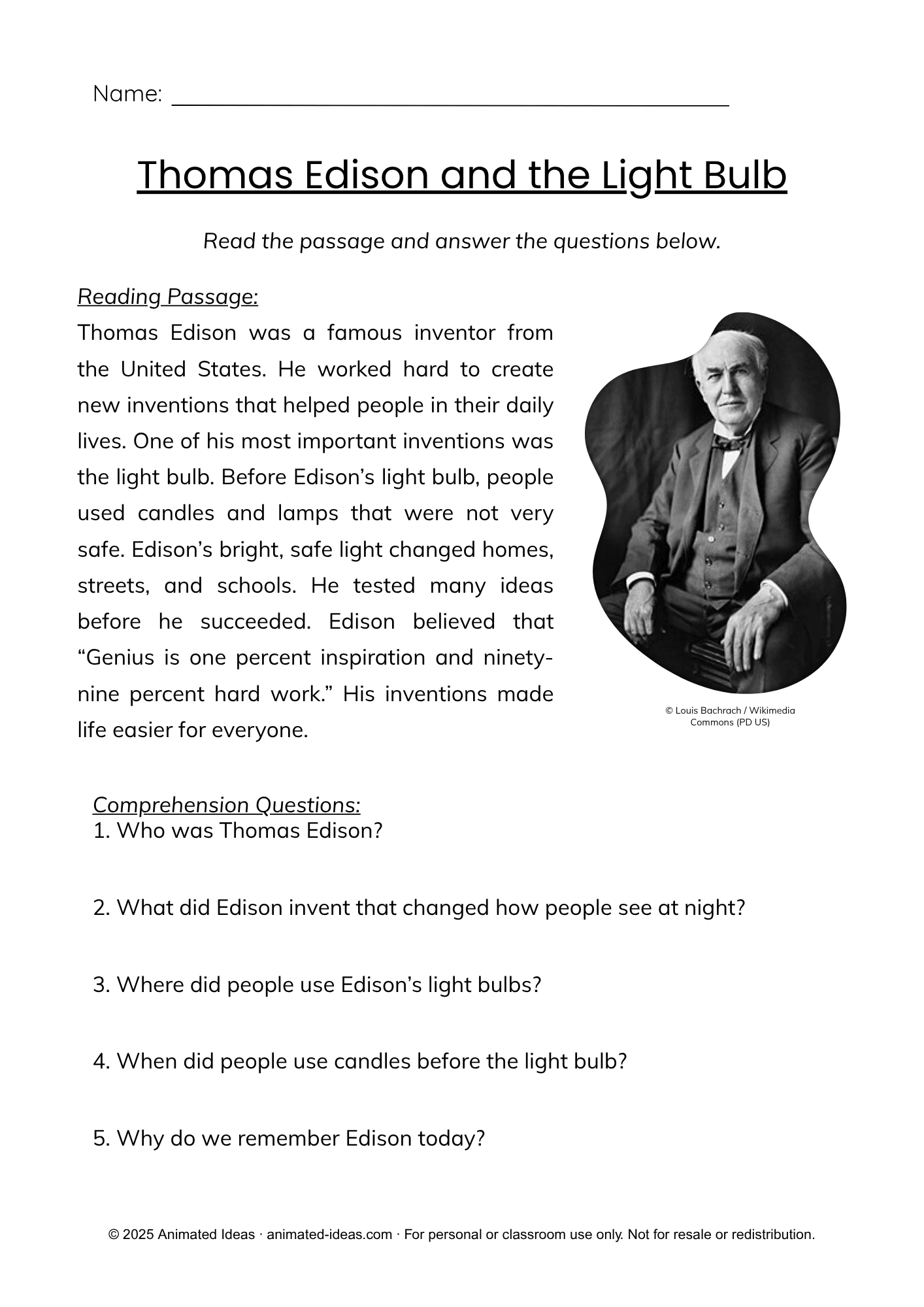
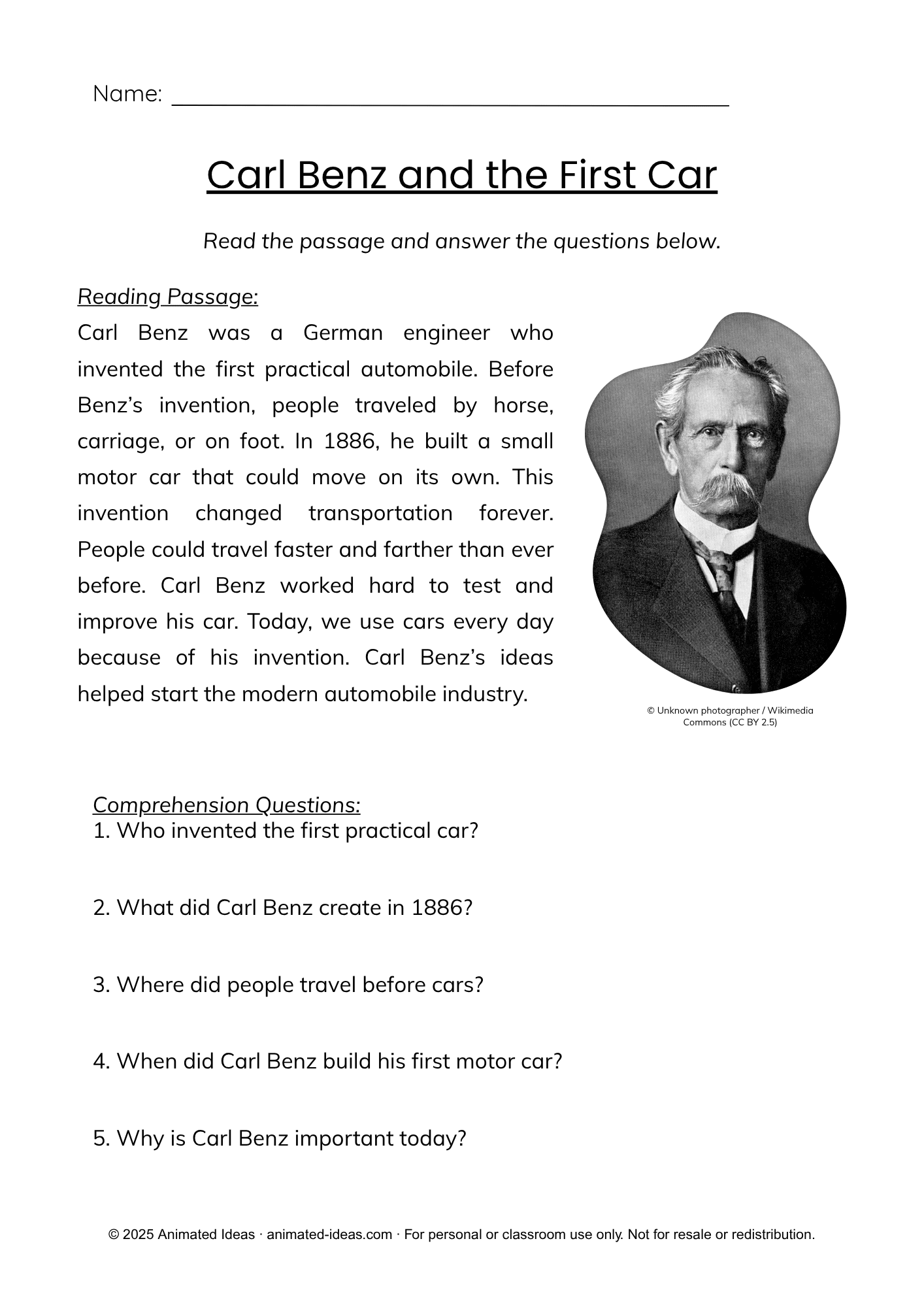
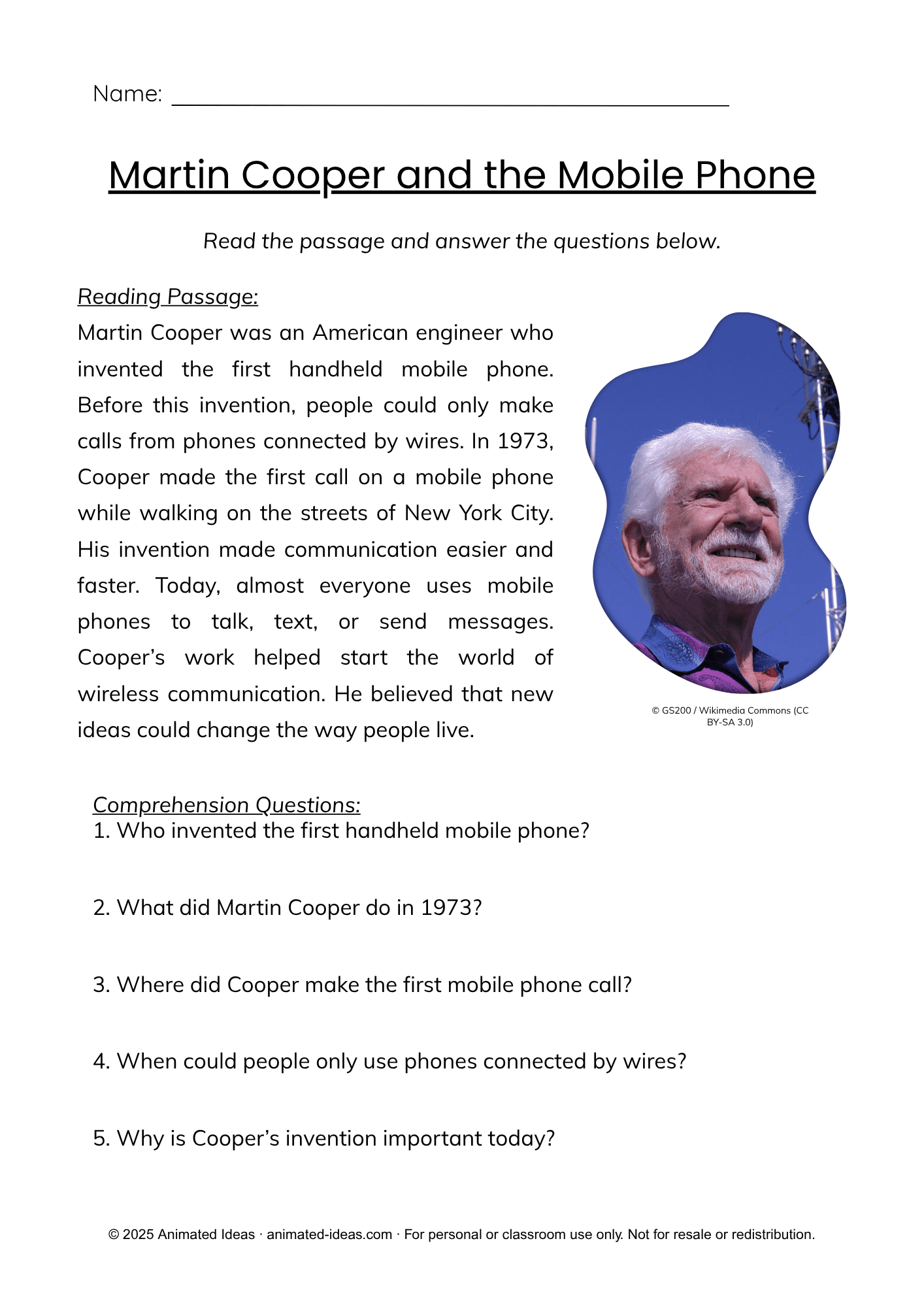
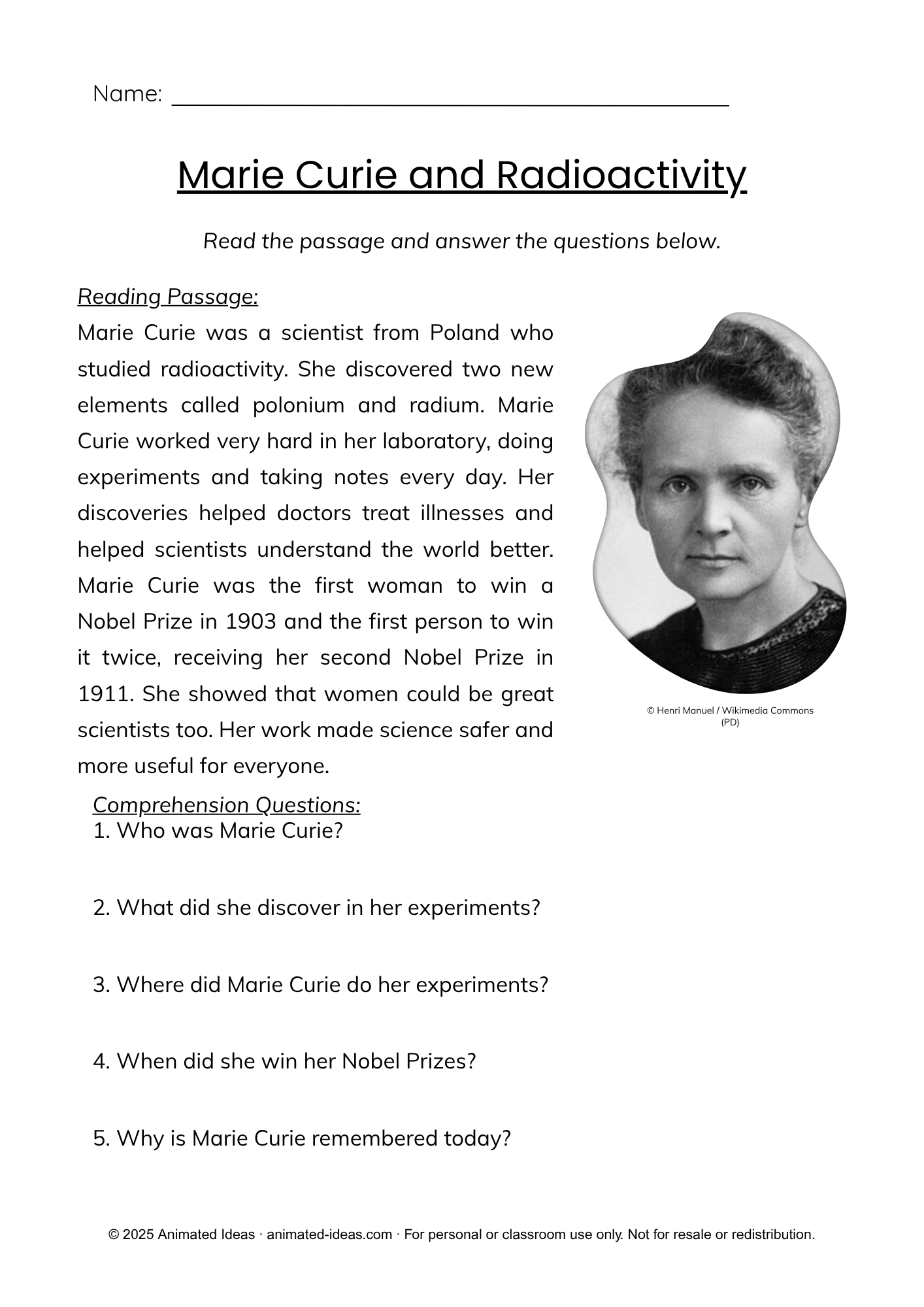
Amazing Inventions by Famous Scientists
Throughout history, famous scientists and their inventions have changed the way we live. From electricity and cars to television and refrigeration, their discoveries make everyday life easier and more fun. Learning about these inventions shows how curiosity and creativity can lead to incredible ideas. Here are some of them:
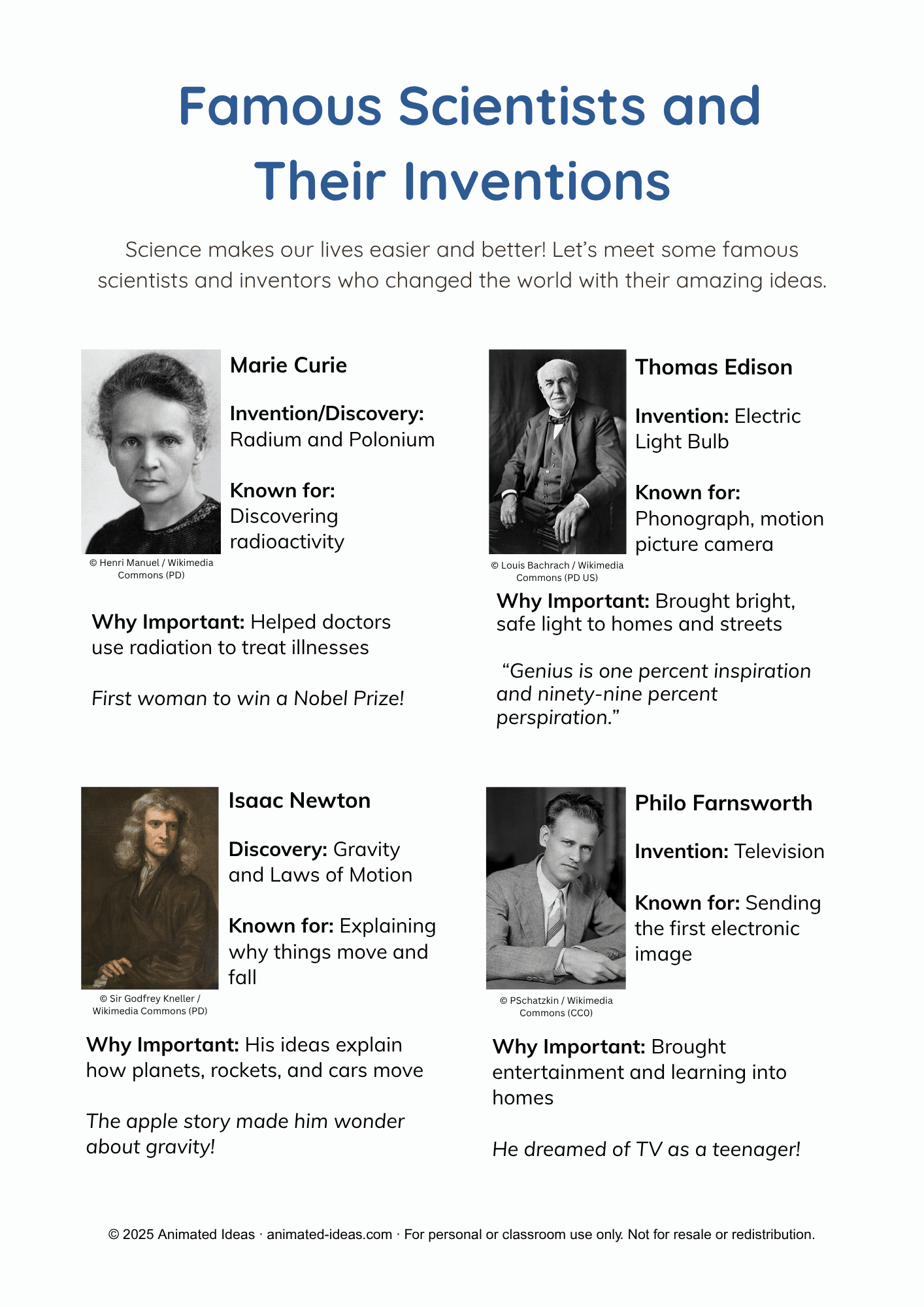
1. Marie Curie – Discoverer of Radium and Polonium
Who she was:
Marie Curie was a brilliant scientist from Poland who lived from 1867 to 1934. She was very curious about how some rocks gave off strange invisible energy. She and her husband, Pierre Curie, studied these rocks carefully.
Her invention and discovery:
Marie Curie discovered two new elements — radium and polonium — and studied a process called radioactivity. Her discoveries helped in medical treatments and research.
Why it’s important:
Her work made X-rays and cancer treatments possible. She was also the first woman to win a Nobel Prize, and the first person ever to win two Nobel Prizes in science!
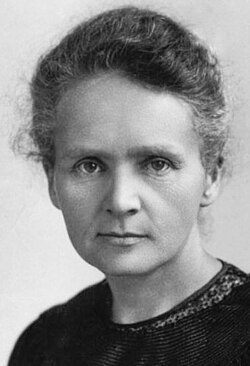
(Photo: Henri Manuel, Wikimedia Commons – Public Domain)
2. Thomas Edison – Inventor of the Light Bulb
Who he was:
Thomas Alva Edison was an American inventor born in 1847. He worked very hard and held more than 1,000 patents for his inventions!
His invention:
He created the practical electric light bulb, the phonograph (an early music player), and improved the motion picture camera.
Why it’s important:
Before Edison’s light bulb, people used candles and oil lamps. His invention allowed homes, schools, and streets to have bright, safe light at night.
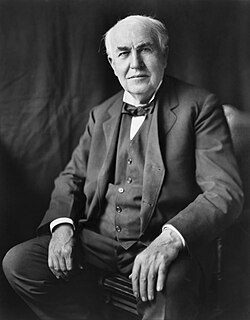
(Photo: Louis Bachrach, Wikimedia Commons – Public Domain)
3. Isaac Newton – Discoverer of Gravity and Laws of Motion
Who he was:
Isaac Newton was an English scientist born in 1643. He was very curious about how things move.
His discovery:
Newton discovered gravity—the force that pulls everything toward the Earth—and made the three laws of motion, which explain how and why things move.
Why it’s important:
His ideas help us understand why apples fall, how cars move, and even how planets orbit around the sun.
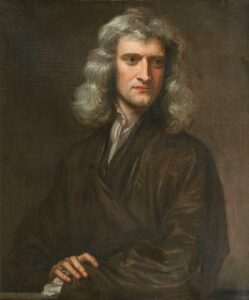
(Photo: Sir Godfrey Kneller, via Wikimedia Commons – Public Domain)
4. Martin Cooper – Inventor of the Cellphone
Who he was:
Martin Cooper is an American engineer born in 1928. He worked for Motorola and wanted to make communication easier for everyone.
His invention:
He invented the first handheld cellphone in 1973. It was large and heavy—about the size of a brick—but it worked!
Why it’s important:
Today, billions of people use mobile phones every day to talk, text, take pictures, and learn new things. Martin Cooper’s idea changed how the world communicates.
Fun fact:
The first cellphone call he made was to his rival scientist at another company!
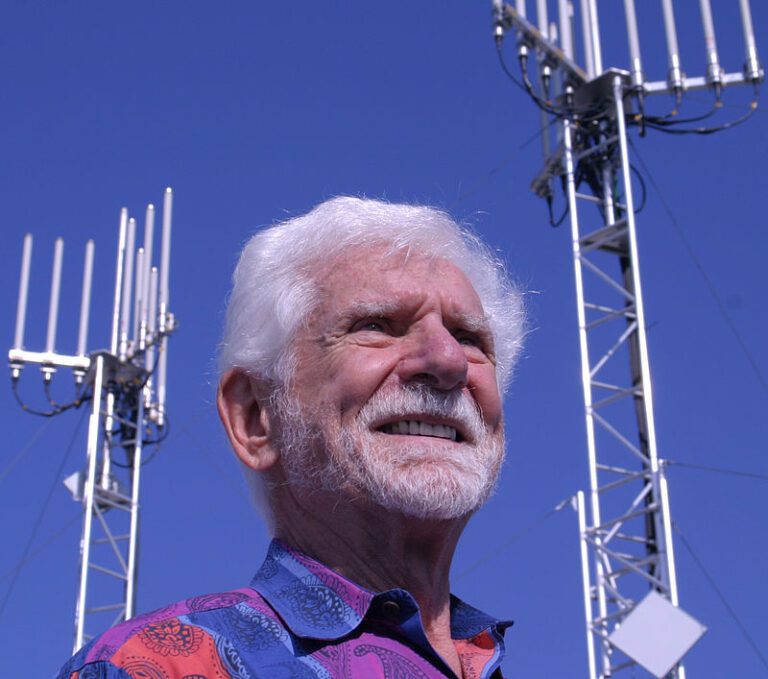
(Photo: GS200 / Wikimedia Commons – CC BY-SA 3.0)
5. Philo Farnsworth – Inventor of the Television
Who he was:
Philo Taylor Farnsworth was an American inventor born in 1906. When he was just a teenager, he dreamed of sending pictures through the air!
His invention:
He built the first working electronic television in 1927.
Why it’s important:
Television changed entertainment and education forever. People could see news, movies, and shows from all over the world without leaving their homes.
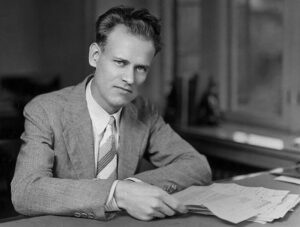
(Photo: PSchatzkin / Wikimedia Commons – CC0 Public Domain)
6. Jacob Perkins – Inventor of the Refrigerator
Who he was:
Jacob Perkins was an American inventor and engineer born in 1766. He loved creating machines and studying how things work.
His invention:
He built the first practical refrigerator in 1834 using vapor compression technology to produce cool air. His design became the foundation for the modern refrigerators we use today.
Why it’s important:
Refrigerators keep our food fresh and prevent it from spoiling. Thanks to Perkins’s invention, we can safely store meat, milk, and vegetables for many days.
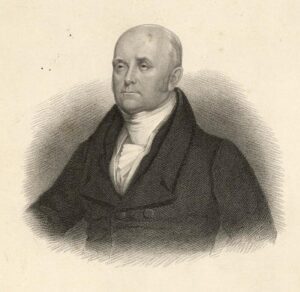
(Photo: Thomas Edwards (after), Wikimedia Commons – Public Domain)
7. Karl Benz – Inventor of the Automobile
Who he was:
Karl Benz was a German engineer born in 1844. He loved machines and engines.
His invention:
In 1885, he built the first gasoline-powered automobile. It had three wheels, a small engine, and could move without horses! His invention became the first car in the world.
Why it’s important:
Cars help people travel faster and easier. Today’s modern cars started from Karl Benz’s invention.
Fun fact:
His wife, Bertha Benz, took the first long car trip to show that the automobile really worked!
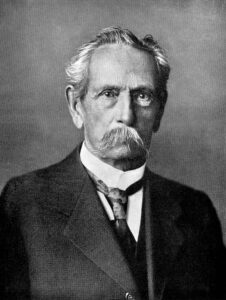
(Photo: Unknown photographer, Wikimedia Commons – CC BY 2.5)
Famous Scientists and Their Inventions : List of Major Discoveries and Years
These famous scientists and their inventions made our lives better in so many ways:
| Scientist / Inventor | Invention / Discovery | Year |
|---|---|---|
| Marie Curie | Radium & Polonium | 1898 |
| Thomas Edison | Light Bulb | 1879 |
| Isaac Newton | Laws of Motion, Gravity | 1687 |
| Martin Cooper | Cellphone | 1973 |
| Philo Farnsworth | Television | 1927 |
| Jacob Perkins | Refrigerator | 1834 |
| Karl Benz | Automobile | 1885 |
How Famous Scientists and Their Inventions Changed the World
Imagine a day without these amazing inventions and discoveries. There would be no lights at night because Thomas Edison didn’t invent the light bulb, so our homes and streets would be dark after sunset. There would be no phone calls because Alexander Graham Bell and Thomas Cooper didn’t create ways to talk to people far away.
We wouldn’t have cold drinks to enjoy on a hot day, because Perkins didn’t invent refrigeration. Cars wouldn’t exist without Karl Benz, so traveling long distances would take much longer. There would be no TV shows or cartoons for entertainment, because Philo Farnsworth didn’t create television.
Even our understanding of the world would be limited. Without Isaac Newton, we might not know about motion, gravity, or how things fall. Everyday life would be very different, and many of the things we take for granted wouldn’t exist!
These inventions and discoveries have shaped the way we live, work, and play. Thinking about a day without them helps us appreciate how much science and creativity affect our lives every day.
Key Takeaways: Famous Scientists and Their Inventions
Science is all around us. From the cellphone in your hand to the car on the road, every invention began with curiosity and imagination.
These famous scientists and their inventions teach us an important lesson: never stop asking questions. One small idea can change the world!
Thank you for taking the time to explore this lesson guide on Famous Scientists and Their Inventions. We hope it inspired you and your students to stay curious and keep learning about how science shapes our everyday lives.
If you enjoyed this topic, you might also find these useful learning guides for 4th graders helpful:
For more educational materials and creative teaching ideas, follow Animated Ideas on:
📺 YouTube | 👍 Facebook | 📌 Pinterest
Keep exploring, keep learning, and keep inspiring young minds!