
How to Describe a Picture Using Adjectives
Introduction: Why Learn How to Describe a Picture Using Adjectives
When students ask, “How do I describe a picture using adjectives?” they are learning an essential skill. Describing objects with adjectives improves writing, vocabulary, and observation skills. Adjectives make sentences clear and engaging. They also help children express what they see in pictures.
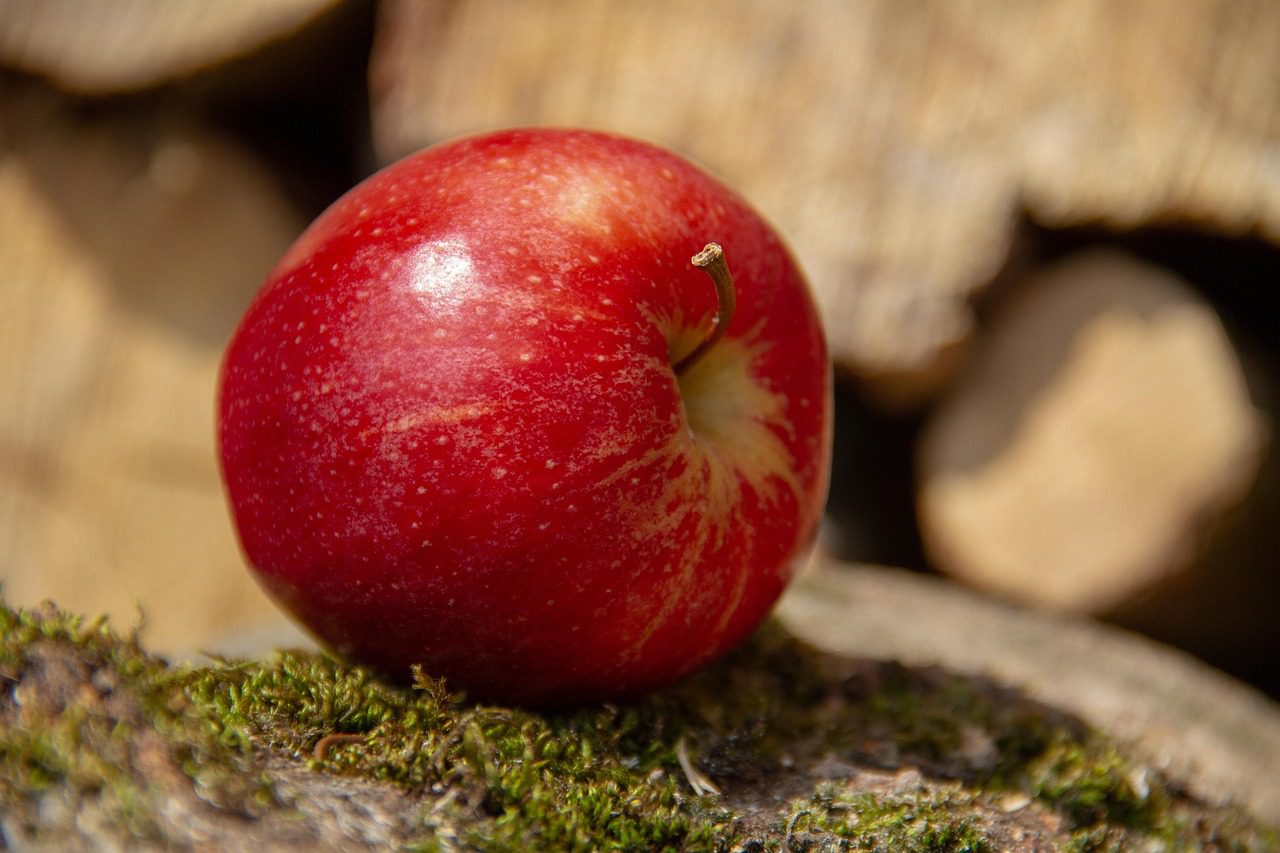
For example, a picture of an apple becomes more vivid when a child writes: “The apple is red, shiny, and round.” Without adjectives, sentences feel plain. This lesson guides students to identify details, select describing words, and write complete sentences.
What Are Adjectives? Understanding Describing Words
Adjectives are words that tell us more about a person, place, or thing. They describe:
- Color
- Shape
- Size
- Texture
- Taste
- Sound
Adjectives allow readers to imagine what a writer sees.
Example:
- Plain: The apple sits quietly.
- With adjectives: The red, shiny, round apple sits quietly.
Notice how the second sentence gives a clear image. Adjectives make writing more interesting and descriptive.
Step 1: Observe the Picture Carefully

When teaching students how to describe a picture using adjectives, the first step is observation. Children should look at:
- Colors and patterns
- Shapes and sizes
- Textures and materials
- Expressions (for people or animals)
- Surroundings and background objects
Observation helps them gather ideas. A strong observation leads to stronger, detailed sentences.
Step 2: Choose Two or Three Adjectives
After observing, children should select adjectives that describe the main object. For 3rd graders, 2–3 adjectives per sentence work best.

Sentence: The rabbit is white, fluffy, and small.

Sentence: The mountain is tall, green, and rocky.
Choosing multiple adjectives teaches children to be specific. It also improves vocabulary and sentence variety.
Step 3: Use a Sentence Pattern
A simple sentence pattern helps students form complete sentences:
“The ______ is _______, _______, and ______.”
This pattern is easy for most nouns and helps maintain correct grammar. It encourages consistency in writing while allowing creativity.
Example: Picture: 🍦 Ice Cream
Sentence: The ice cream is cold, sweet, and creamy.
Using a set pattern also makes peer review easier in classroom activities. Students can check if all sentences follow the same structure.
Download Free Worksheets
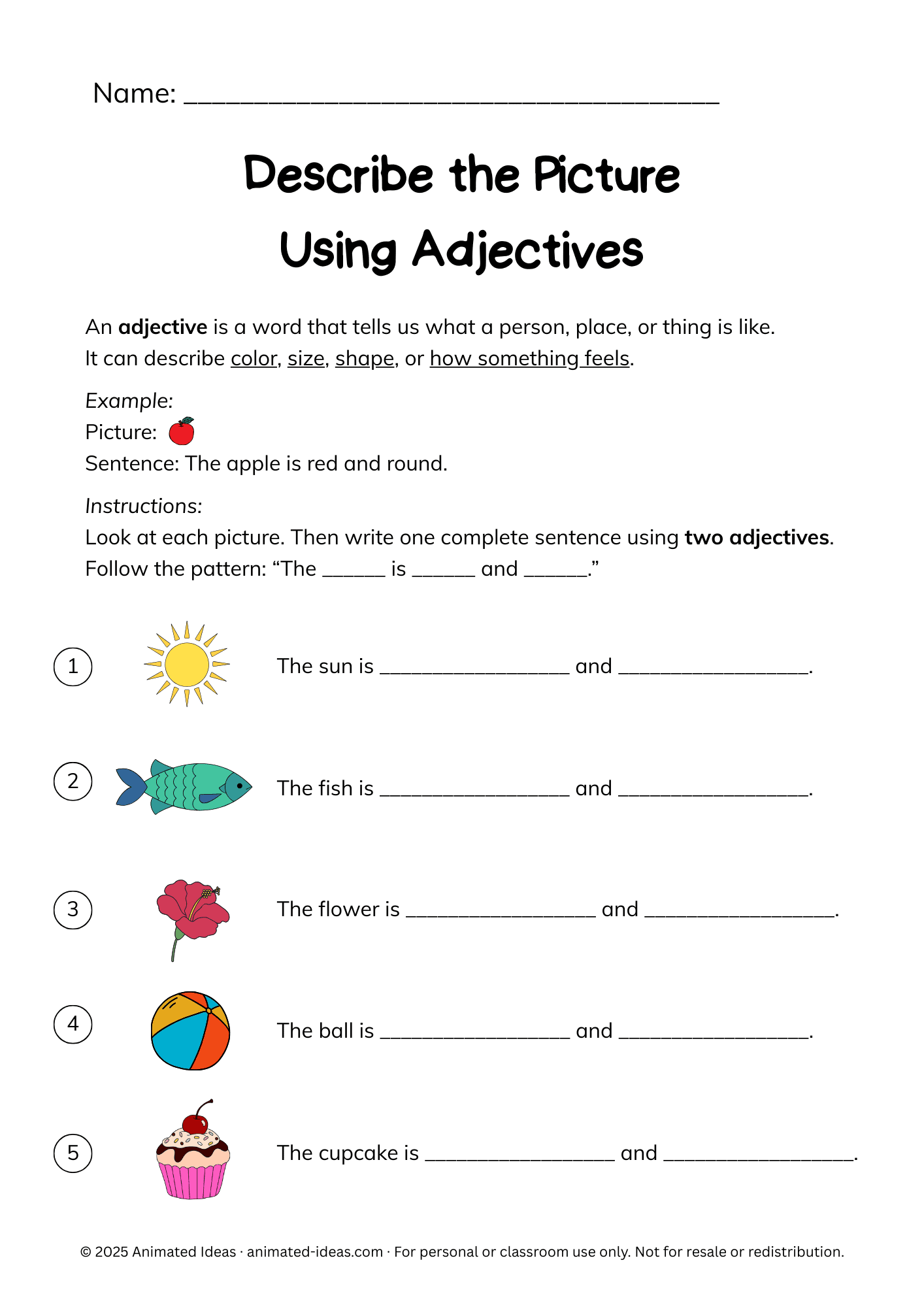

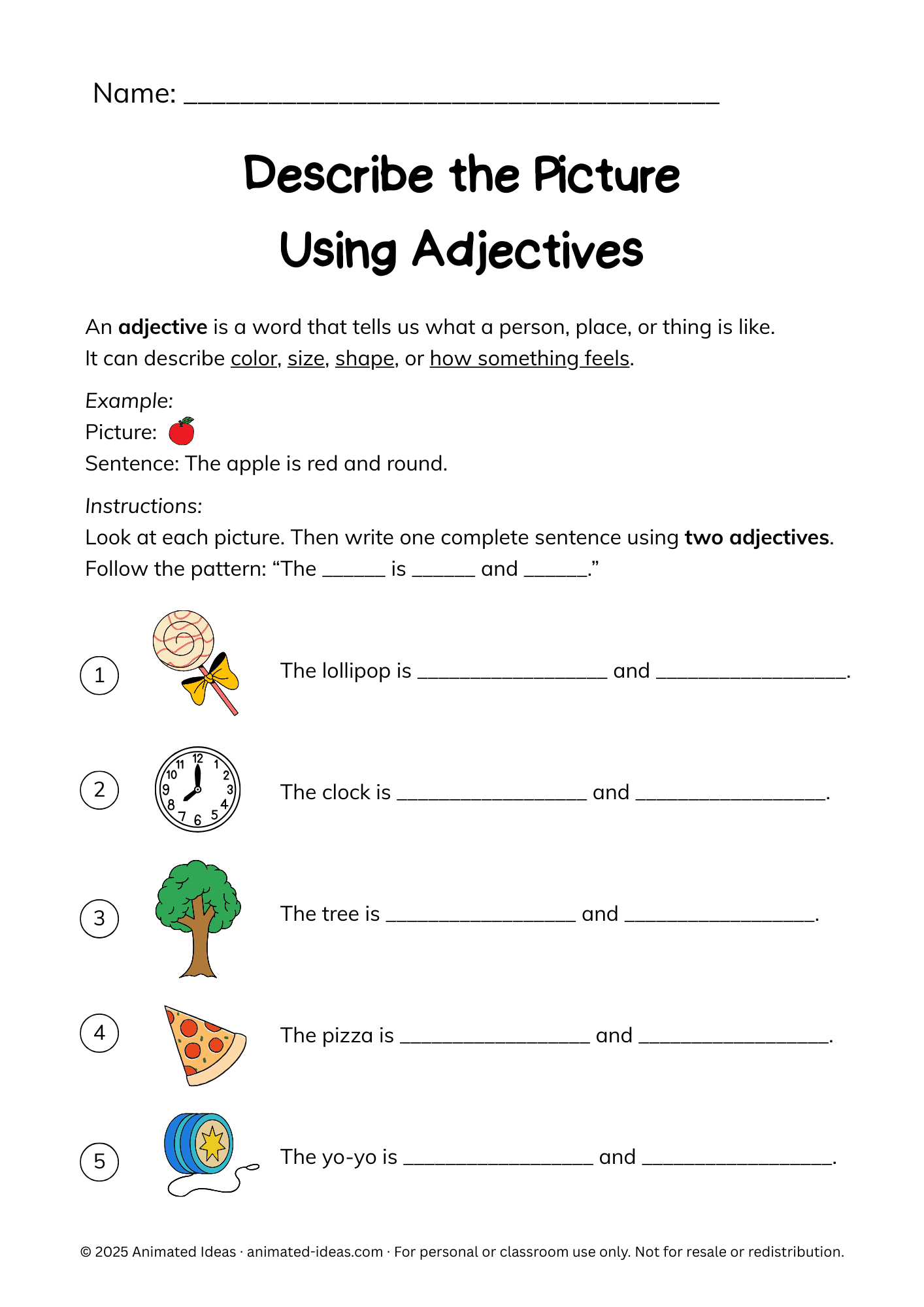
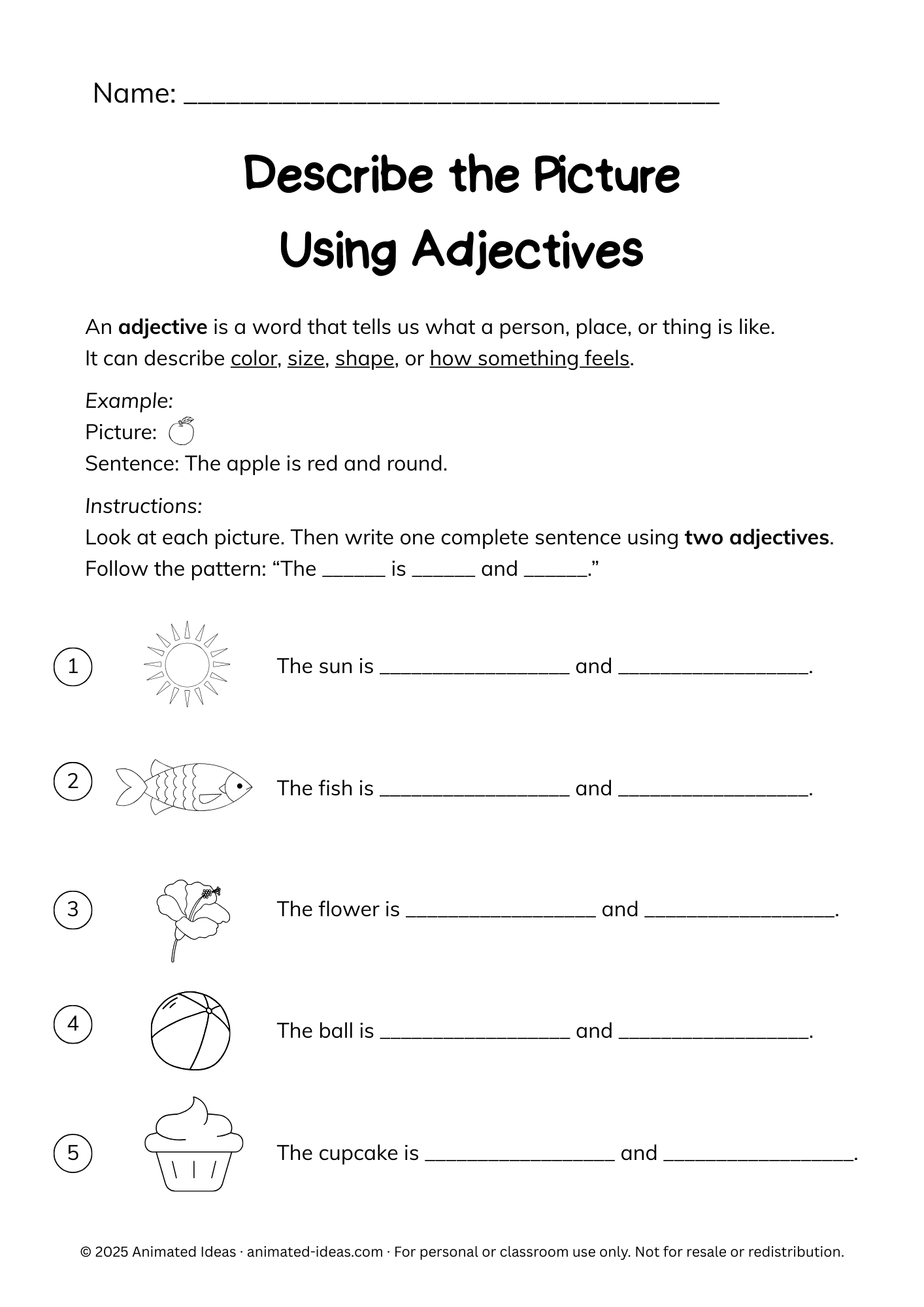
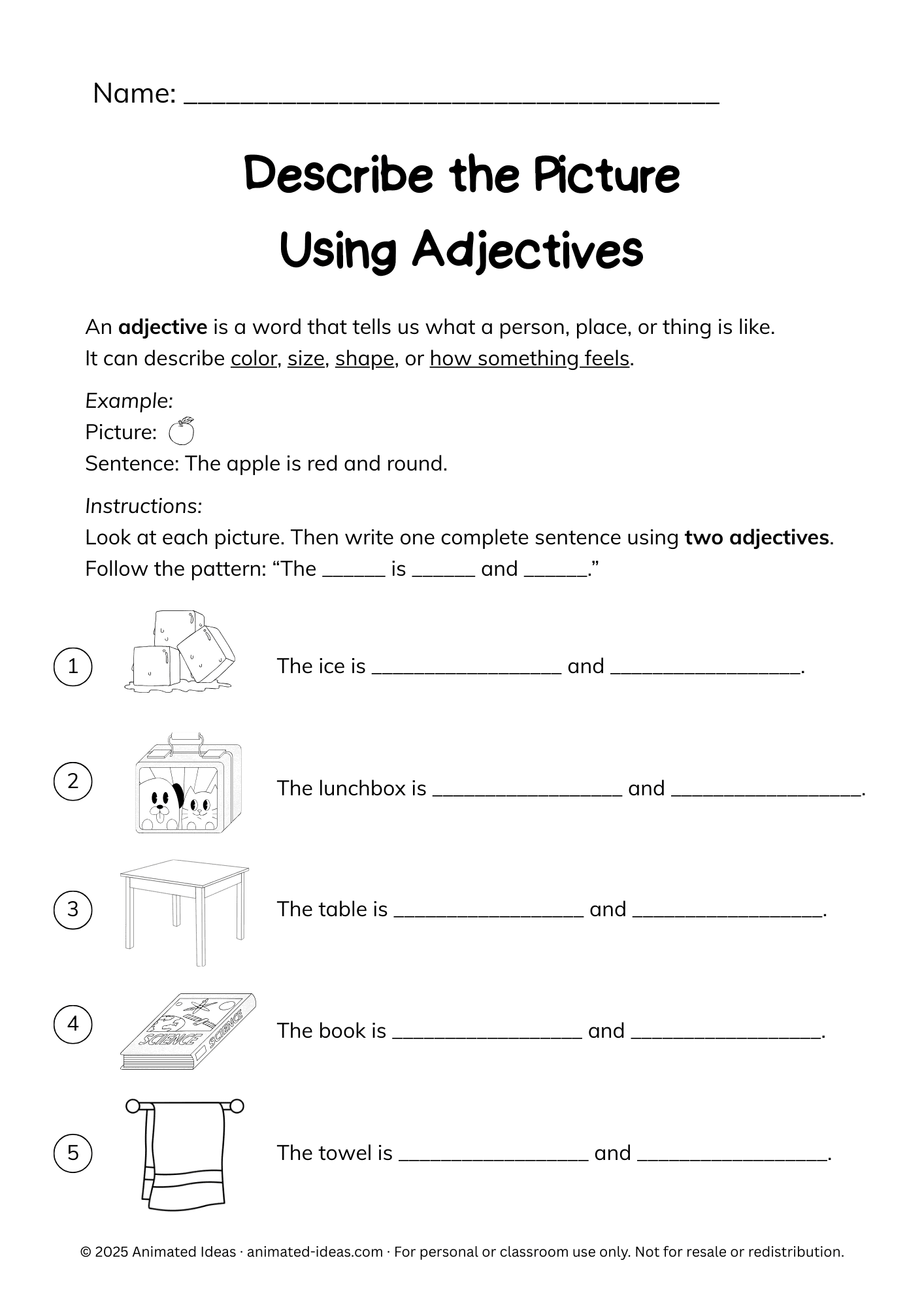
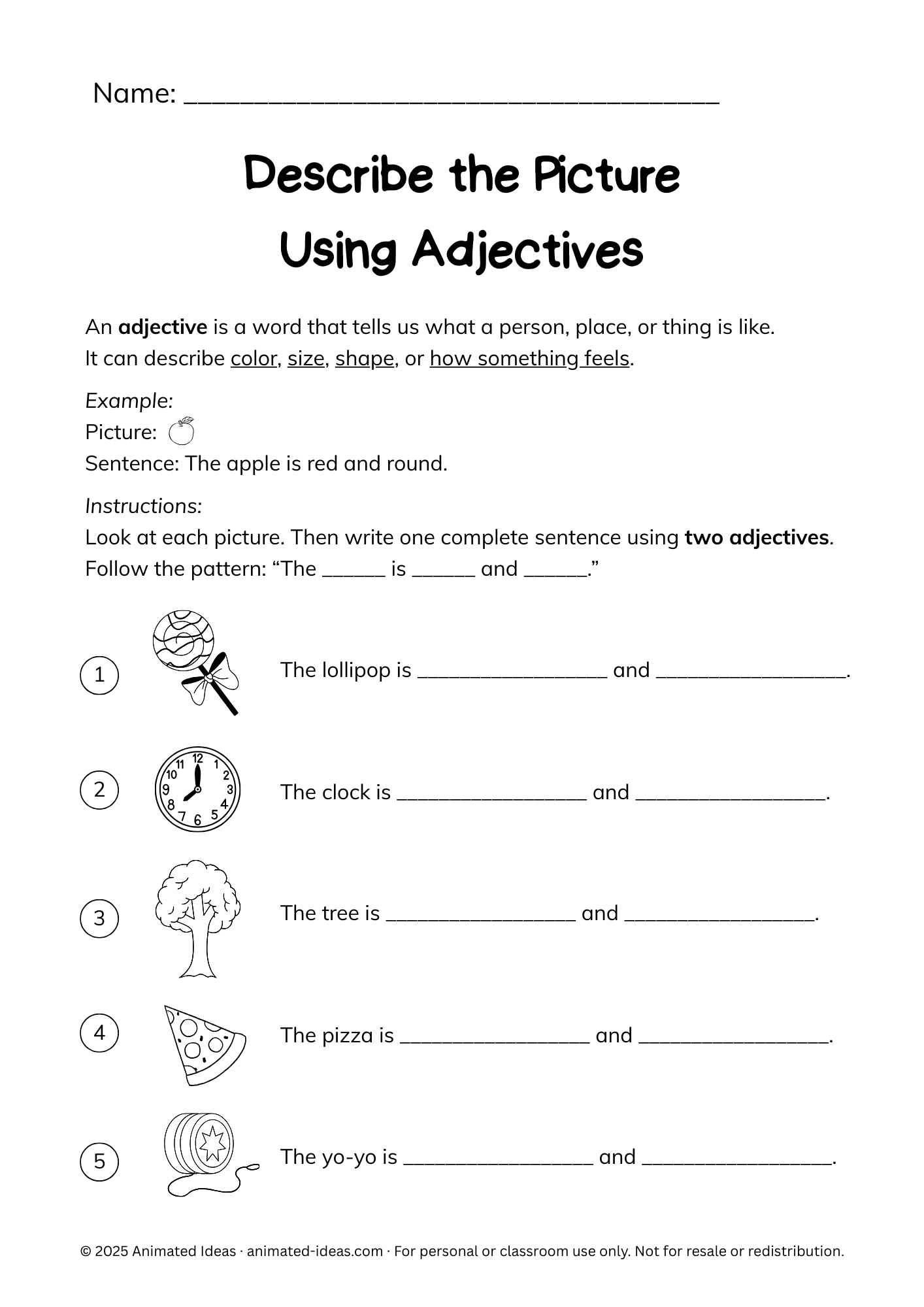
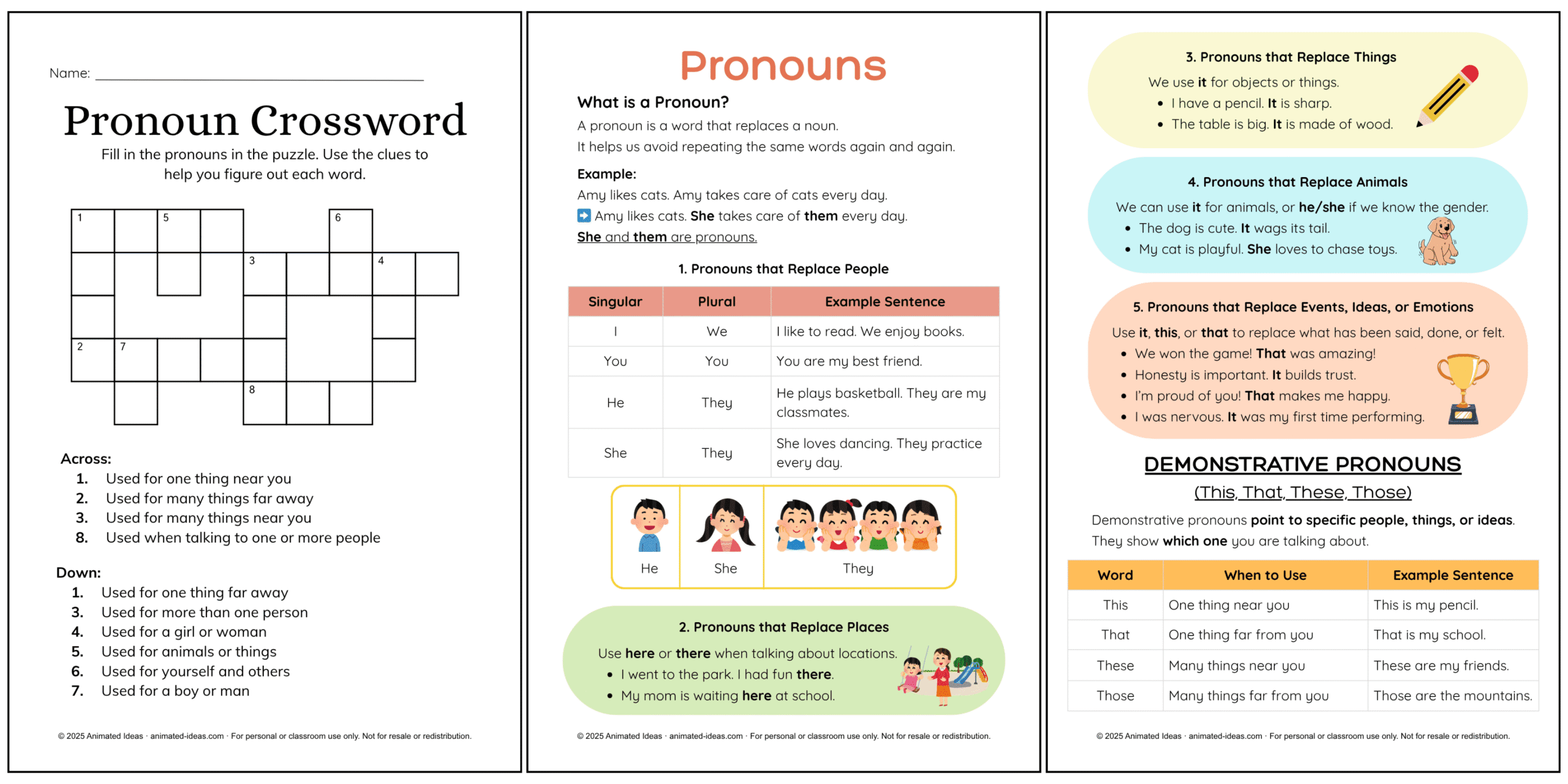
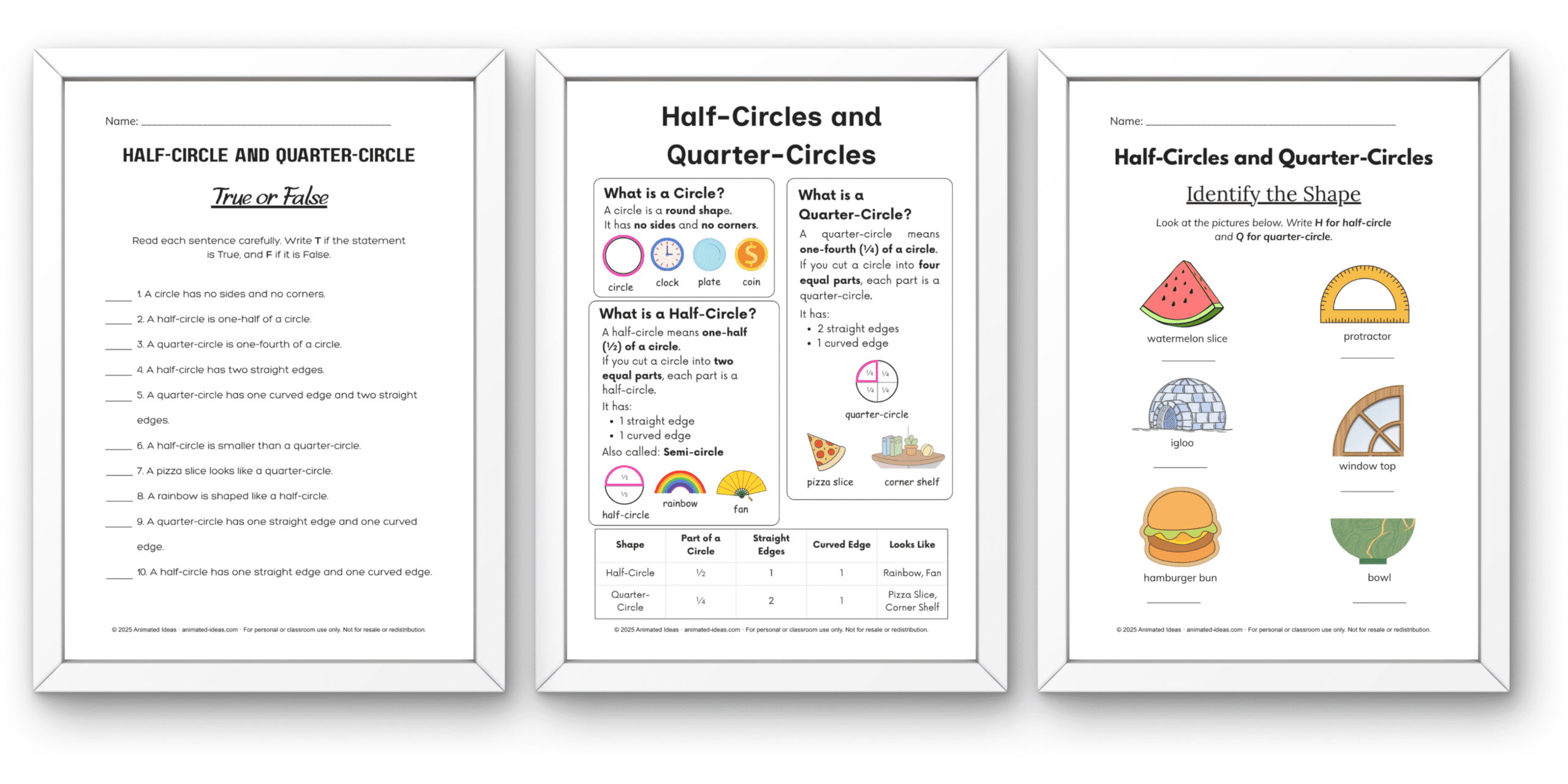
To make learning even more fun, I’ve created printable worksheets using this same sentence structure. These worksheets are perfect for preschool and elementary students to practice using adjectives, build vocabulary, and improve sentence formation. Kids can describe pictures like animals, food, and everyday objects while practicing proper grammar—all in a simple, guided format.
Using a set pattern also makes peer review and classroom activities easier. Students can check if all sentences follow the same structure, making learning interactive and organized.
Ready to help your child or students practice adjectives and complete sentences in a fun and structured way? Download these free worksheets now and make learning engaging and effective!
Why Describing Pictures Using Adjectives Matters
Teaching kids how to describe a picture using adjectives improves more than just writing. It strengthens:
- Vocabulary development
- Observation skills
- Reading comprehension
- Creativity and imagination
For example, students who can describe a picture well can also write short stories more effectively. They learn to paint mental images with words.
Adjectives also help children in other subjects. In science, they can describe experiments. In social studies, they describe communities or places.
Tips for Teachers and Parents
To support students:
- Encourage discussion about the picture before writing.
- Provide a small list of adjectives for younger learners.
- Model sentences using the pattern.
- Let students share their sentences aloud.
- Gradually increase the number of adjectives as skills improve.
These strategies help children internalize the concept while practicing descriptive writing daily.
Sample Objects and Sentences
| Picture | Sample Sentence |
|---|---|
| 🐦 Bird | The bird is small, red, and chirpy. |
| 🌻 Sunflower | The sunflower is tall, bright, and yellow. |
| 🏠 House | The house is big, brown, and cozy. |
| 🚗 Car | The car is red, fast, and shiny. |
| 🎂 Cake | The cake is round, sweet, and colorful. |
Conclusion: The Importance of Descriptive Writing
Thank you for reading this lesson guide about how to describe a picture using adjectives. By using this approach, children can significantly improve their vocabulary, writing, and observation skills. Descriptive writing is a foundational skill for young learners, as it not only enhances their ability to express ideas clearly but also strengthens critical thinking. When children describe pictures using adjectives, they learn to notice details that might otherwise go unnoticed. This practice encourages them to observe shapes, colors, sizes, textures, and expressions carefully. Over time, these skills help students describe more complex objects, people, and scenes, preparing them for more advanced writing tasks in later grades.
Using adjectives effectively allows children to make their sentences vivid and engaging. For example, instead of writing “The dog is on the grass,” a child can write “The small, brown dog is sitting on the soft, green grass.” By adding descriptive words, the sentence paints a clearer picture in the reader’s mind. This not only helps young writers communicate more effectively but also enhances their creative thinking. Encouraging children to find and select adjectives teaches them the value of precision in language. They learn that each word carries meaning and can change how their sentences are perceived. It also gives them confidence to play with words, experiment with new vocabulary, and enjoy the writing process.
Conclusion: Applying Skills and Exploring More Resources
Teachers and parents can support students by creating interactive practice opportunities. Real-life objects, storybook pictures, or classroom items help children connect adjectives to what they see. Asking children to describe everyday objects reinforces observation and strengthens writing skills.
Worksheets like Common Environmental Print Symbols and Ending Sounds Match Worksheet for 1st Grade from Animated Ideas complement this lesson. Exploring all English worksheets from Animated Ideas allows teachers and parents to create a full learning plan. Visit my YouTube, Facebook, and Pinterest pages for more videos, worksheets, and teaching content. By combining these resources with this lesson, students can practice consistently and develop stronger language skills.