

Mixed Conditional: Present Result of a Past Condition
Mixed conditionals allow you to connect different time periods in one sentence. They help you describe unreal situations with precision, especially when the past and the present influence each other. Among all mixed conditional forms, the present result of a past condition is one of the most frequently used. It appears in storytelling, academic writing, business communication, and everyday conversation. Because of its flexibility, it adds depth and clarity to advanced English.
This form helps you talk about a past event that influences your current situation, even though the imagined past did not actually happen. In other words, you use it to explain what would be true now if something different had happened then. This time connection makes the structure both powerful and expressive. Therefore, learning this mixed conditional improves your fluency and strengthens your ability to discuss complex ideas.
Although many learners know the basic conditional forms, mixed conditionals often feel confusing. The reason is simple: the timeline changes within the sentence. However, once you understand the logic, the structure becomes clear and very natural. Because English speakers use it often, mastering it is essential for advanced communication.
Download Free Worksheets and Notes
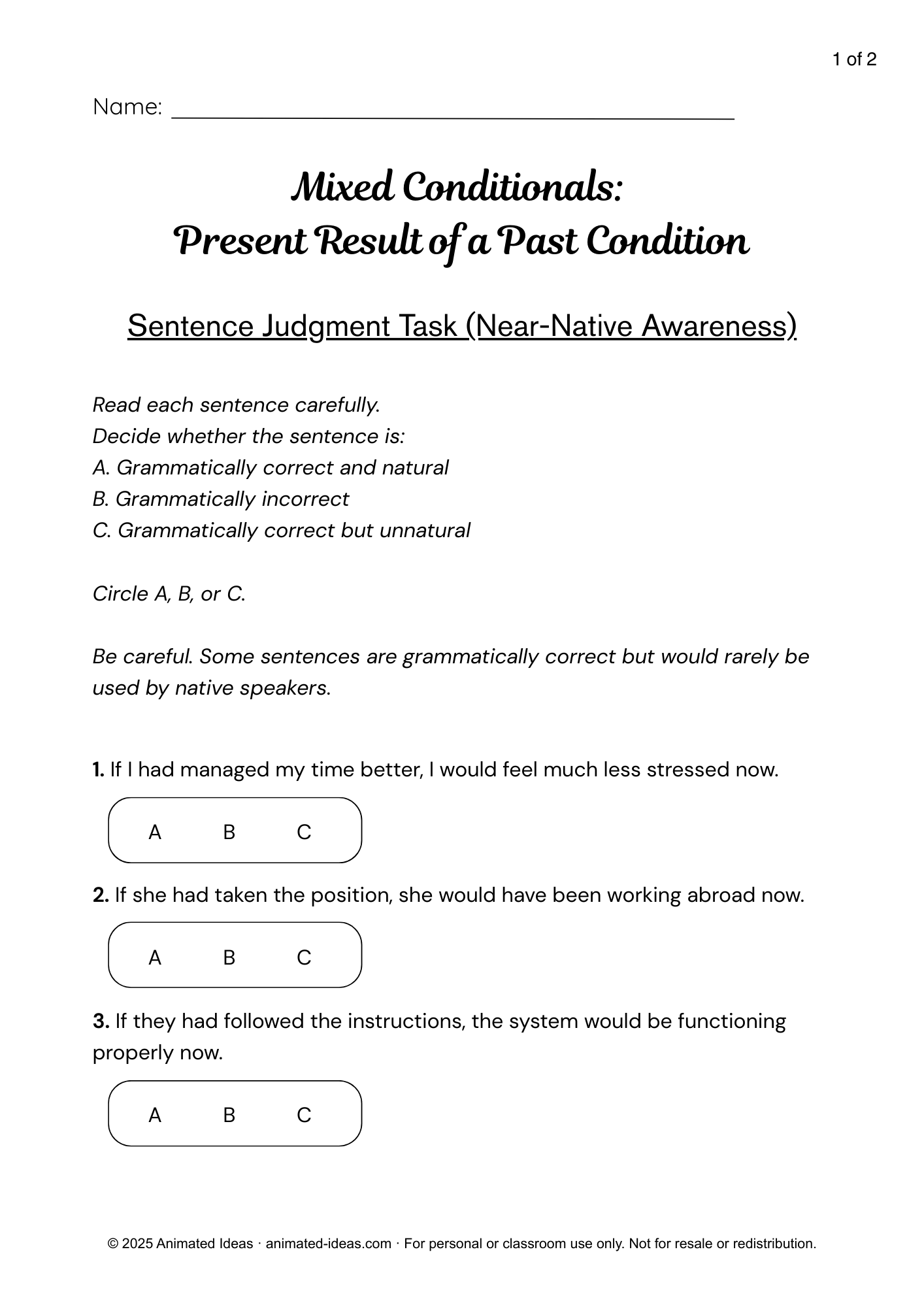
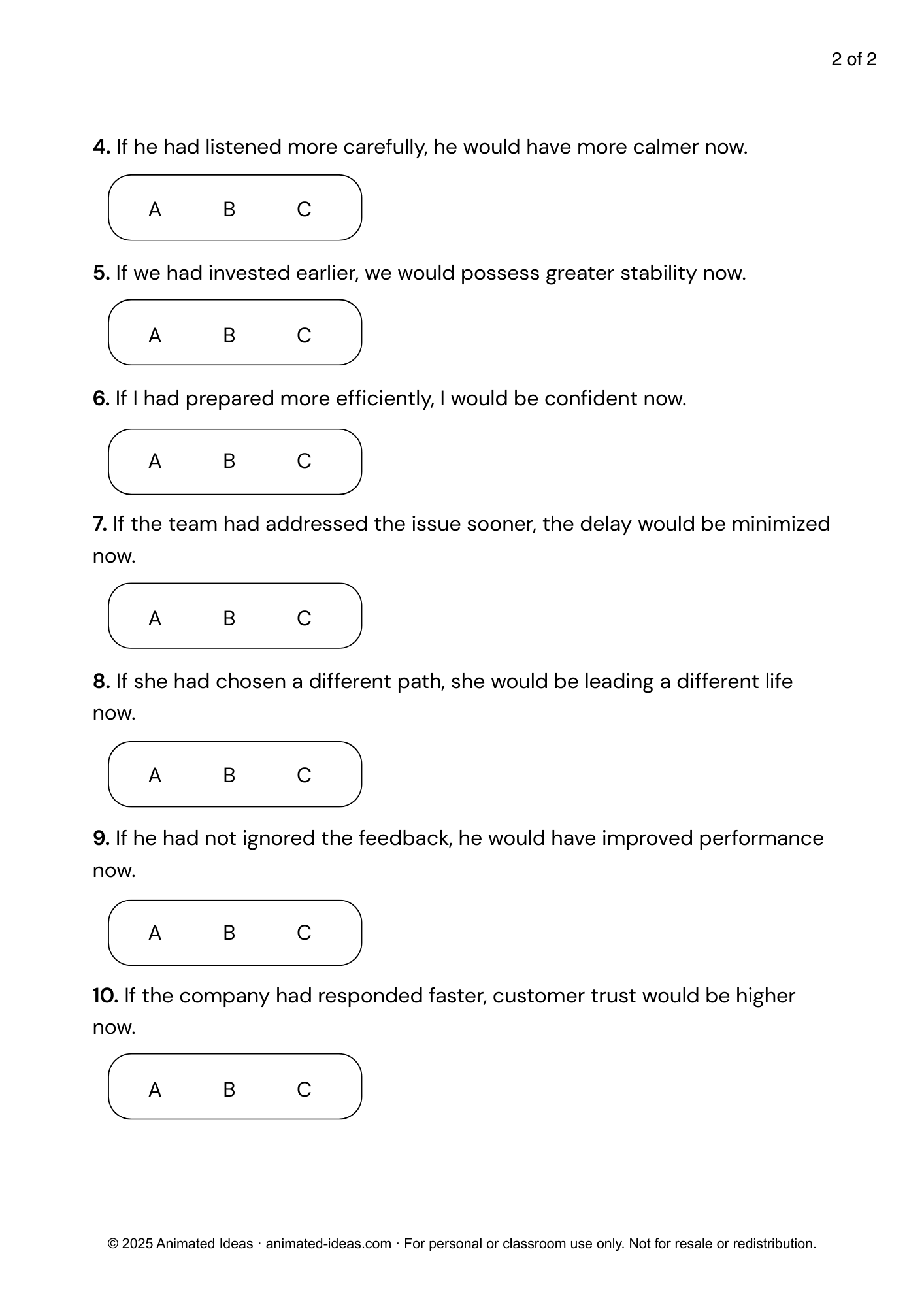
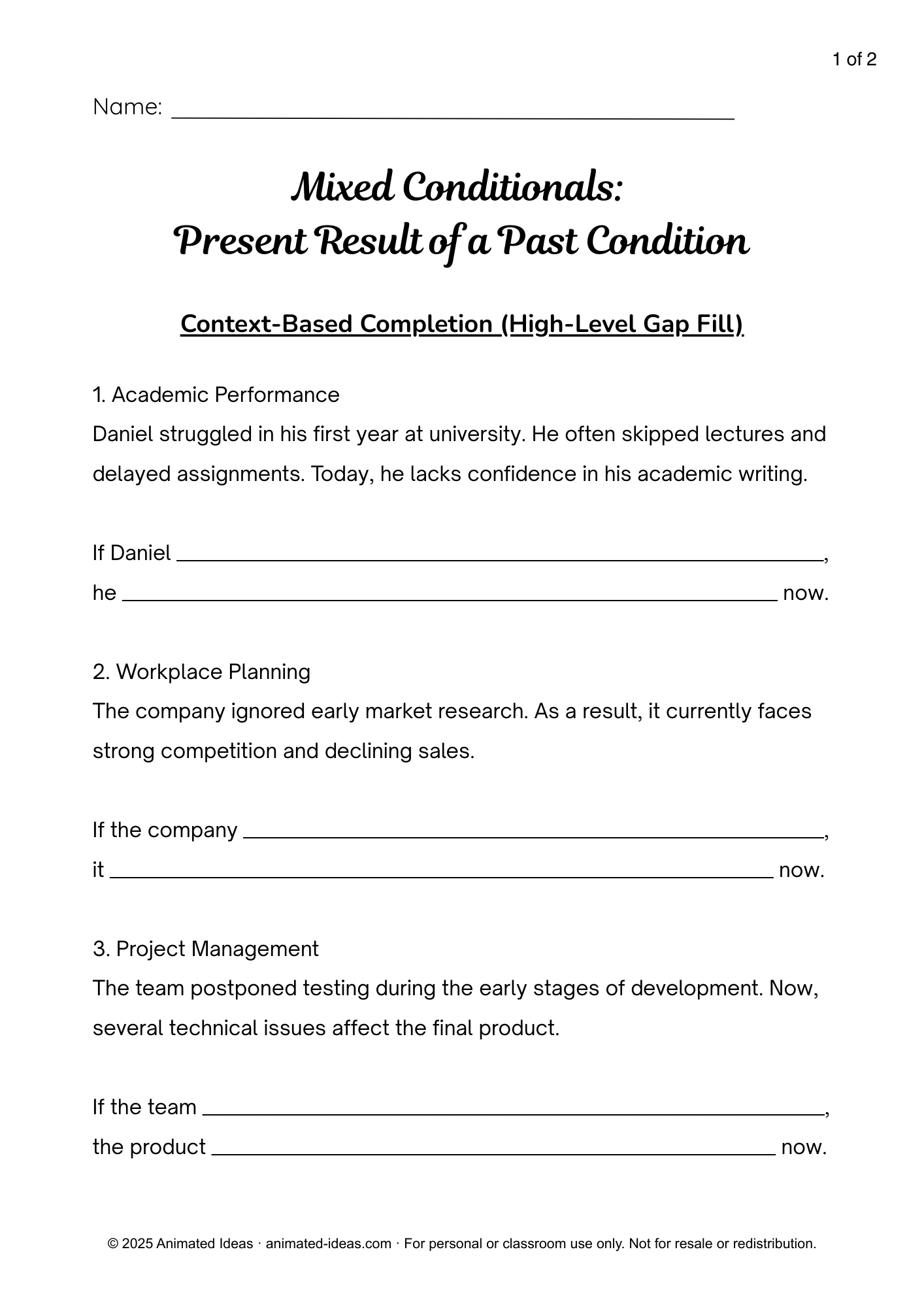
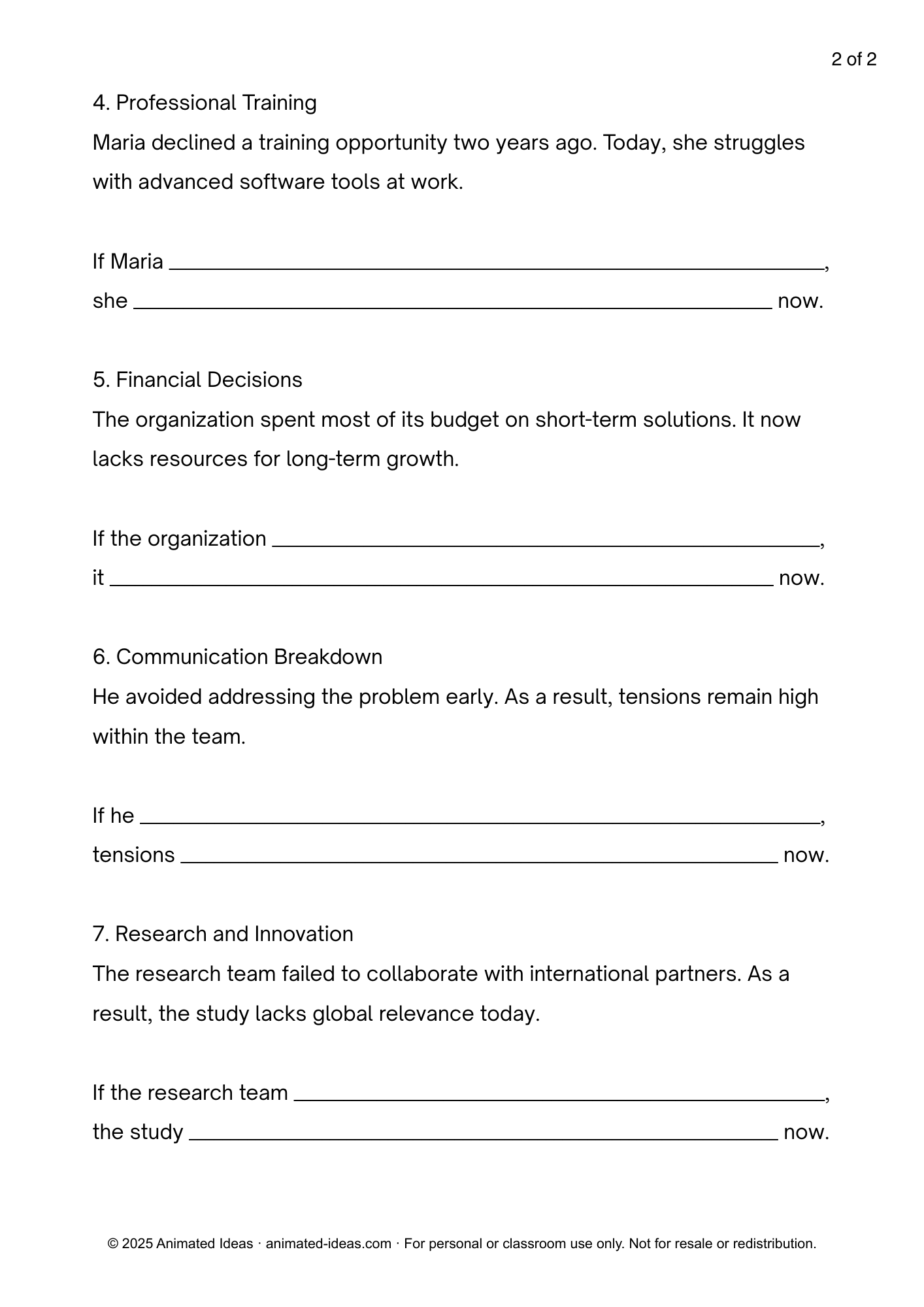
Understanding the Meaning Behind This Mixed Conditional
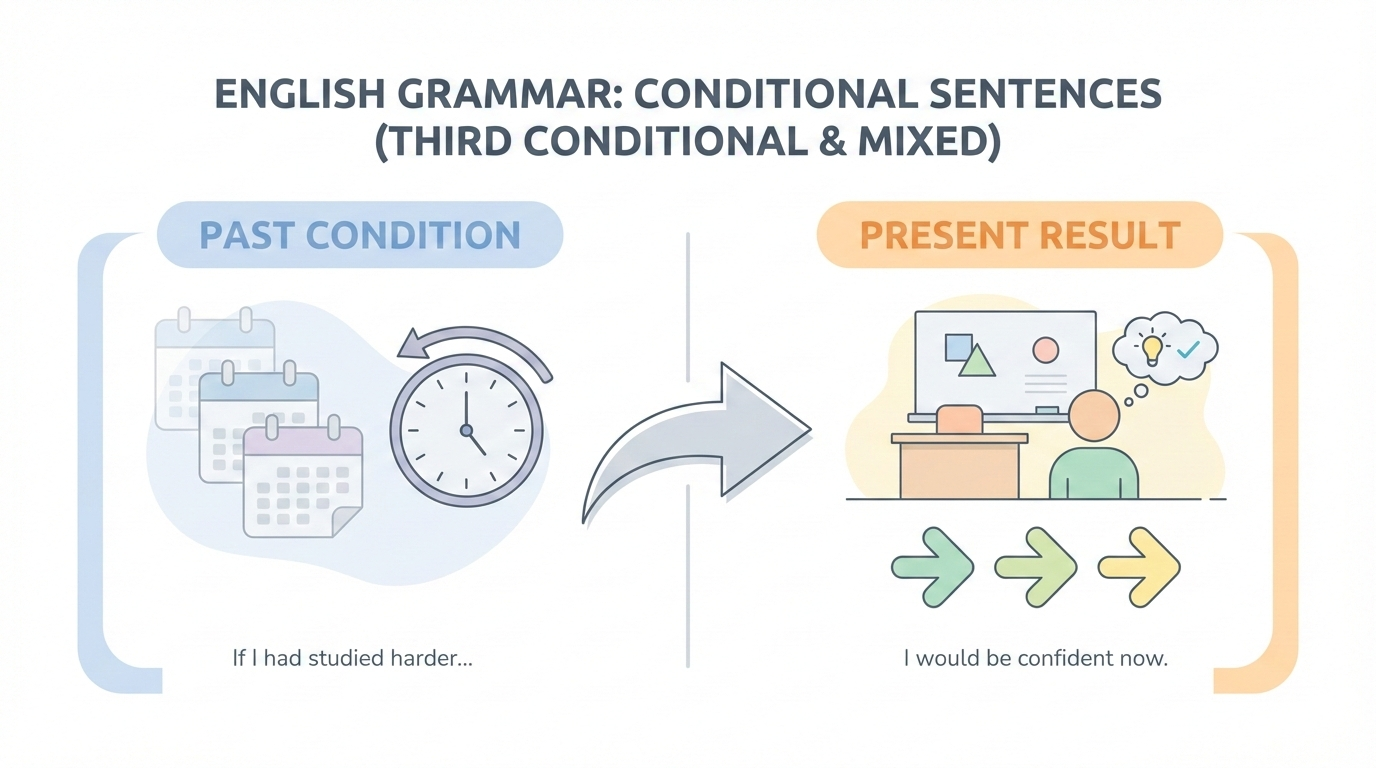
To understand the present result of a past condition, imagine two timelines interacting. One belongs to the past. The other belongs to the present. When you use this conditional, you show that a different past action would create a different situation in the present.
For example:
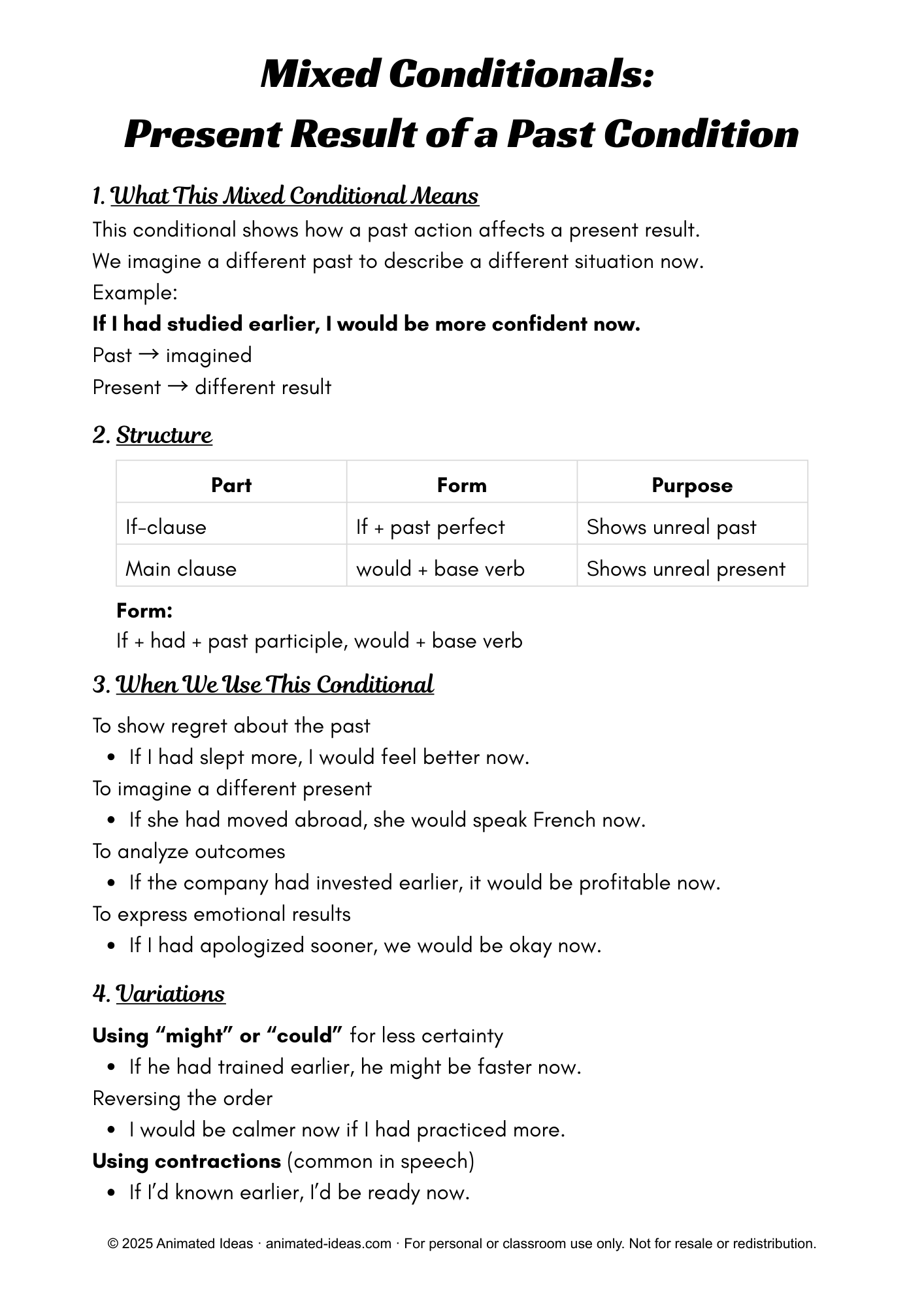
If she had saved more money, she would be traveling now.
The past action did not happen. As a result, the present situation is different. You imagine an alternate past to describe an unreal present. This connection allows you to express regret, insight, prediction, or evaluation.
Because of this, the structure is ideal when you want to reflect on choices, analyze consequences, or describe hypothetical scenarios. You can use it to talk about personal growth, relationships, academic situations, workplace decisions, or even global events.
This mixed conditional stands at the intersection of the Second and Third Conditionals, combining their tenses to express a single idea. Therefore, it allows you to describe how unreal past events shape unreal present outcomes.
The Structure of This Conditional
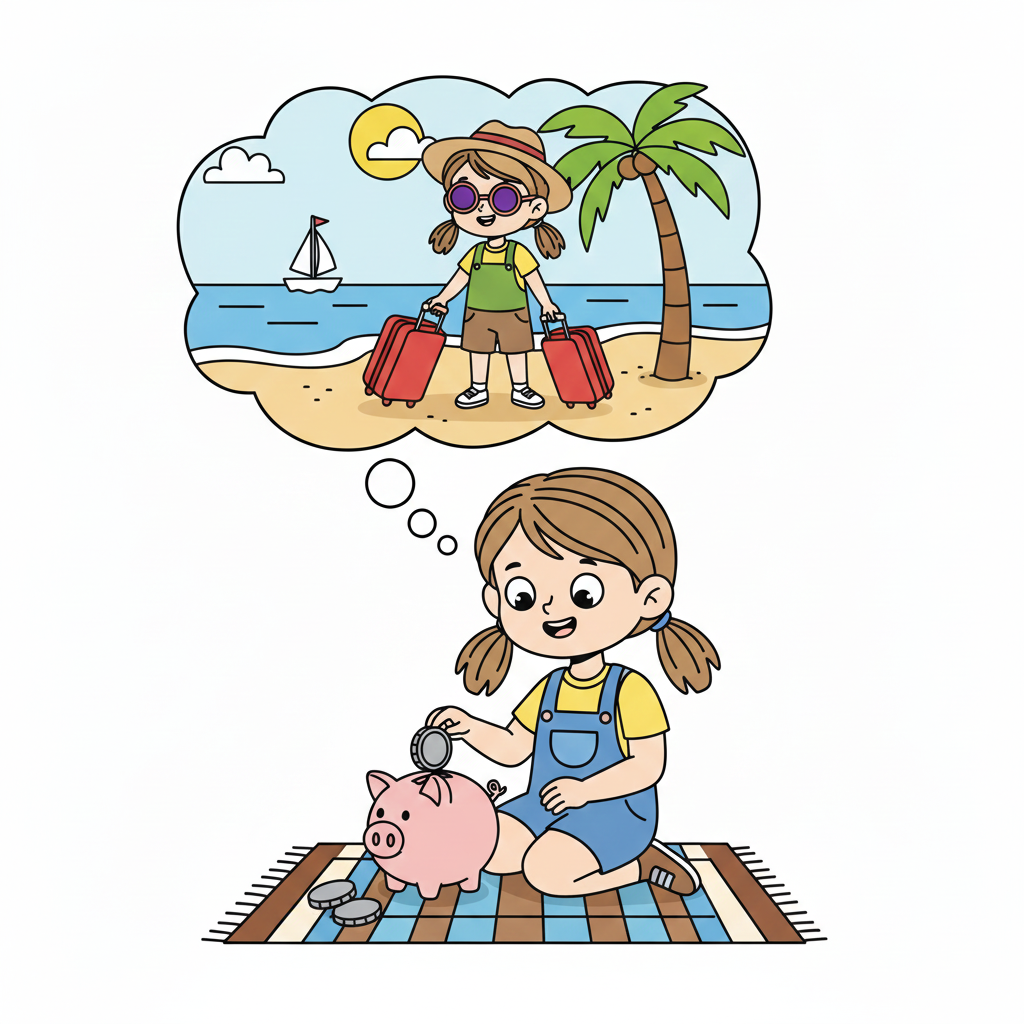
Even though the meaning feels complex, the structure remains simple and predictable. It has two parts:
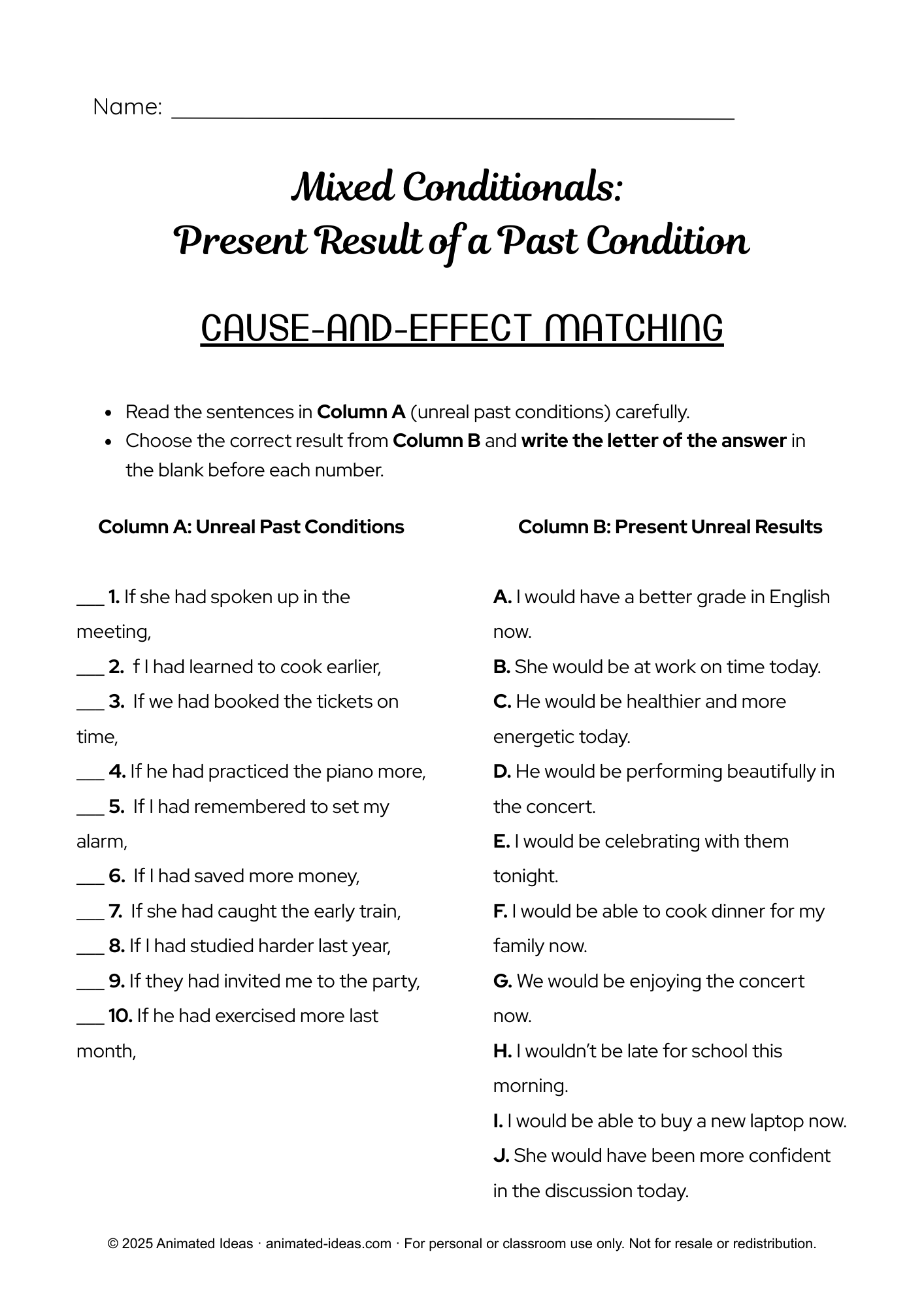
If + past perfect → would + base verb
Example:
If I had saved more money, I would feel more secure now.
- The if-clause uses the past perfect because you refer to an unreal past.
- The result clause uses would + base verb because you describe an unreal present.
| Past Decision (Unreal) | Present Result (Unreal) | Explanation |
|---|---|---|
| If I had woken up earlier | I would not be late now | This shows that a past action (waking up late) affects the present result (being late now). |
| If she had saved more money | She would be traveling now | Her past choice not to save money causes the present situation where she cannot travel. |
| If they had practiced more | They would be winning the game now | Because they didn’t practice enough in the past, the present result is losing the game. |
| If he had studied medicine | He would be a doctor now | Not studying medicine in the past leads to the present unreal result of not being a doctor. |
| If we had taken that job offer | We would be living in another city now | Rejecting the job offer in the past affects the present, so they are not living in the other city now. |
This structure creates a clear timeline contrast. One part looks backward. The other looks at the present. English uses this separation because it avoids mixing tenses inside the same clause. Instead, it uses the timeline of the verbs to express the imagined connection.
Consequently, your sentence becomes precise yet flexible. You highlight a past event while showing how it influences your situation today.
Why English Uses This Form
English uses this mixed conditional to provide nuance. It answers the need to express connections between different time periods. Sometimes people want to reflect on their present situation through the lens of their past decisions. Other times they want to explain present disadvantages, evaluate past choices, or express missed opportunities.
This form allows you to:
- express reflection
- evaluate decisions
- explain consequences
- imagine alternative outcomes
- describe emotional states
- discuss unreal or hypothetical scenarios
Because of its expressive power, the structure appears naturally in both formal and informal communication. For this reason, advanced learners must master the form.
When Speakers Use This Mixed Conditional
This mixed conditional appears frequently in these contexts:
1. Expressing Regret
When someone reflects on mistakes or missed chances:
- If I had apologized sooner, we would be closer now.
2. Evaluating Decisions
Used in business, leadership, planning, and management:
- If the team had followed the strategy, we would be ahead now.
3. Describing Emotional States
Past actions shape present feelings:
- If I had slept longer, I would feel better now.
4. Discussing Identity or Growth
Used when imagining different life paths:
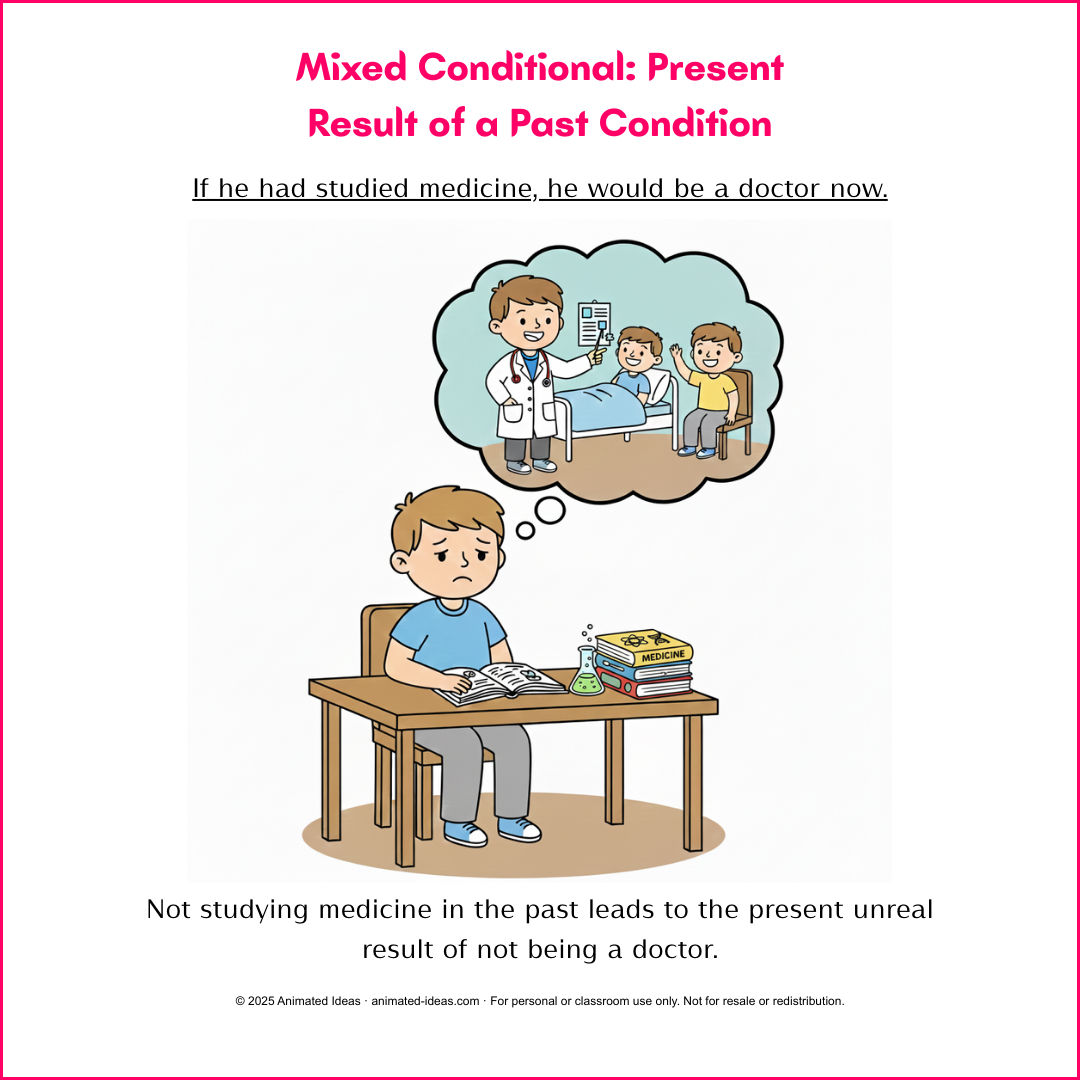
- If he had studied medicine, he would be a doctor now.
5. Reasoning About Current Situations
Used in academic analysis or critical writing:
- If the policy had been implemented earlier, the economy would be stronger now.
Each use shows how the structure fits naturally into advanced communication.
How This Mixed Conditional Differs From Other Conditional Forms
Learners often confuse mixed conditionals with the second and third conditional forms because all three talk about unreal situations. The key difference is in the timeline of the condition and its result.
Not the Second Conditional
- Structure: If + past simple → would + base verb
- Purpose: Talks about an unreal present or future situation.
- Example:
If I were rich, I would travel. - Explanation: Here, the condition and the result are both present or future ideas. It imagines a situation that is not true now or may never happen.
Not the Third Conditional
- Structure: If + past perfect → would have + past participle
- Purpose: Talks about an unreal past situation.
- Example:
If I had left earlier, I would have caught the train. - Explanation: Both the condition and the result are in the past. It imagines a past that didn’t happen.
Mixed Conditional (Past → Present)
- Structure: If + past perfect → would + base verb
- Purpose: Shows how a past unreal action affects the present.
- Example:
If I had left earlier, I would be home now. - Explanation: The past event did not happen, so the present result is unreal. The timeline shifts from past to present, which is why learners often mix it up with the second or third conditional.
| Conditional | Timeline Visual | Example Sentence |
|---|---|---|
| Second Conditional | Past (optional) → Present/Future | If I were rich, I would travel. |
| Third Conditional | Past → Past | If I had left earlier, I would have caught the train. |
| Mixed Conditional (Past → Present) | Past → Present | If I had left earlier, I would be home now. |
Because the time relationship changes, understanding the timeline is essential.
Common Errors to Avoid
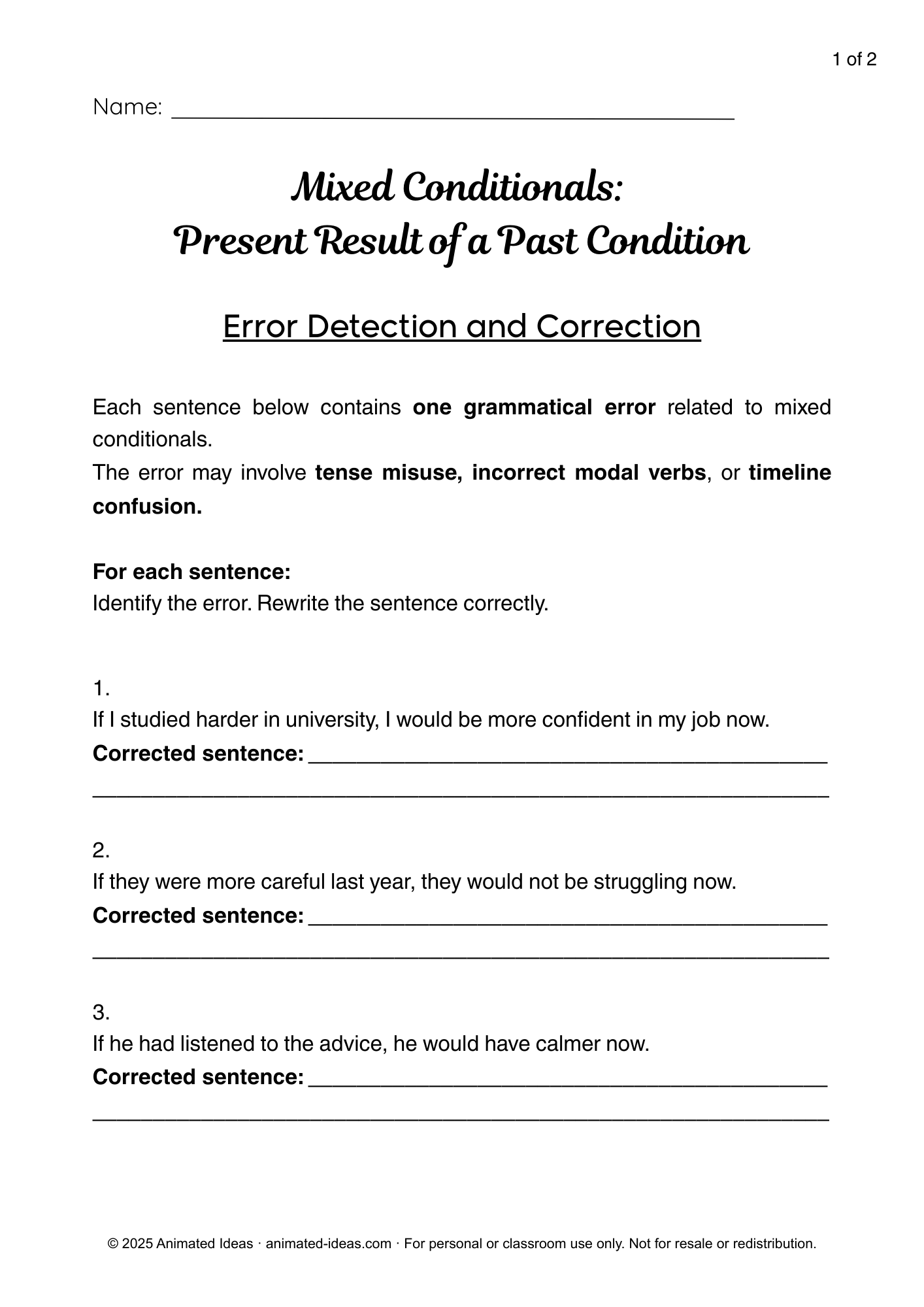
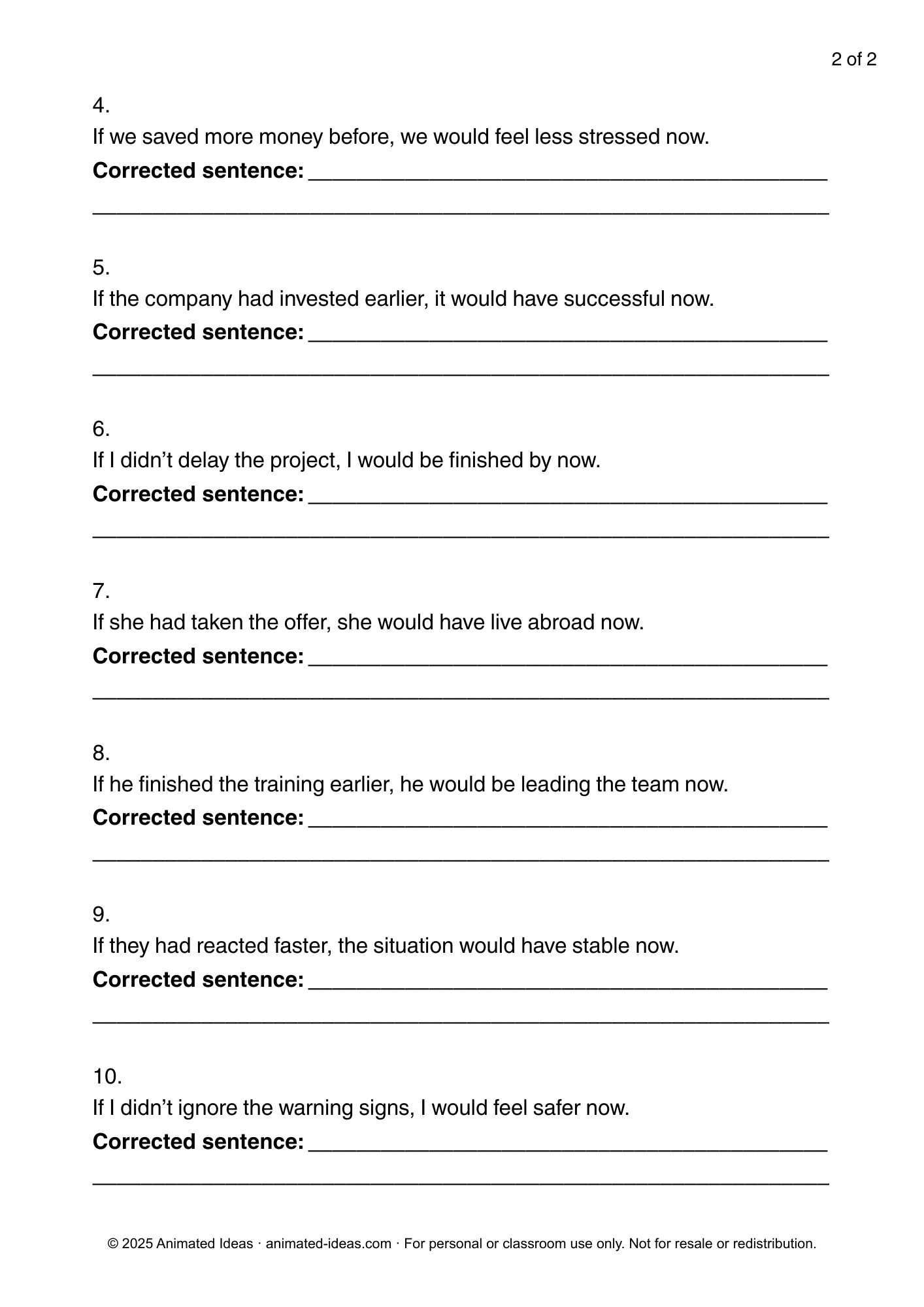
Advanced learners often misunderstand the tense combinations. Below are common mistakes.
❌ Wrong tense in the if-clause
If I studied harder, I would be confident now.
✔ Use past perfect: If I had studied…
❌ Wrong tense in the result clause
If I had studied, I would have confident now.
✔ Should be would be
❌ Mixing time frames incorrectly
If she had practiced, she would play better yesterday.
Present and past conflict
❌ Using this structure for real possibilities
Remember: this conditional is always unreal.
These mistakes are easy to fix once you see the pattern.
Nuanced Variations of This Structure
Although the core structure remains stable, English speakers use natural variations.
1. Using other modal verbs
- might → less certain
- could → more ability or possibility
Examples:
If he had trained earlier, he might be faster now.
If we had saved money, we could be traveling now.
2. Reversed clause order
I would be calmer now if I had finished it earlier.
3. Using contractions in speech
If I’d known earlier, I’d be ready now.
These variations help you sound natural and fluent.
How Native Speakers Use This Conditional in Real Dialogue
Conversation Example 1: Work Stress
A: You seem overwhelmed today.
B: Yes. If I had organized things earlier, I would be more relaxed now.
Conversation Example 2: Career Reflection
A: Do you regret your degree?
B: Sometimes. If I had studied technology, I would be earning more now.
Conversation Example 3: Relationships
A: Things feel different between you two.
B: I know. If I had reached out sooner, we would be fine now.
These examples show how seamlessly the structure appears in natural communication.
Conclusion: The Importance of Mastering This Mixed Conditional
The mixed conditional for expressing the present result of a past condition is a vital structure for advanced English speakers. It allows you to discuss cause and effect across different timelines. It also supports complex reasoning, emotional reflection, and professional analysis. Because of its flexibility, it improves your ability to communicate nuanced ideas with clarity and accuracy.
Once you understand the structure and the logic behind it, the form becomes intuitive. You gain greater control over how you describe imagined outcomes and alternative possibilities. Therefore, mastering this conditional is essential for any learner who wants to communicate at an advanced or near-native level.