
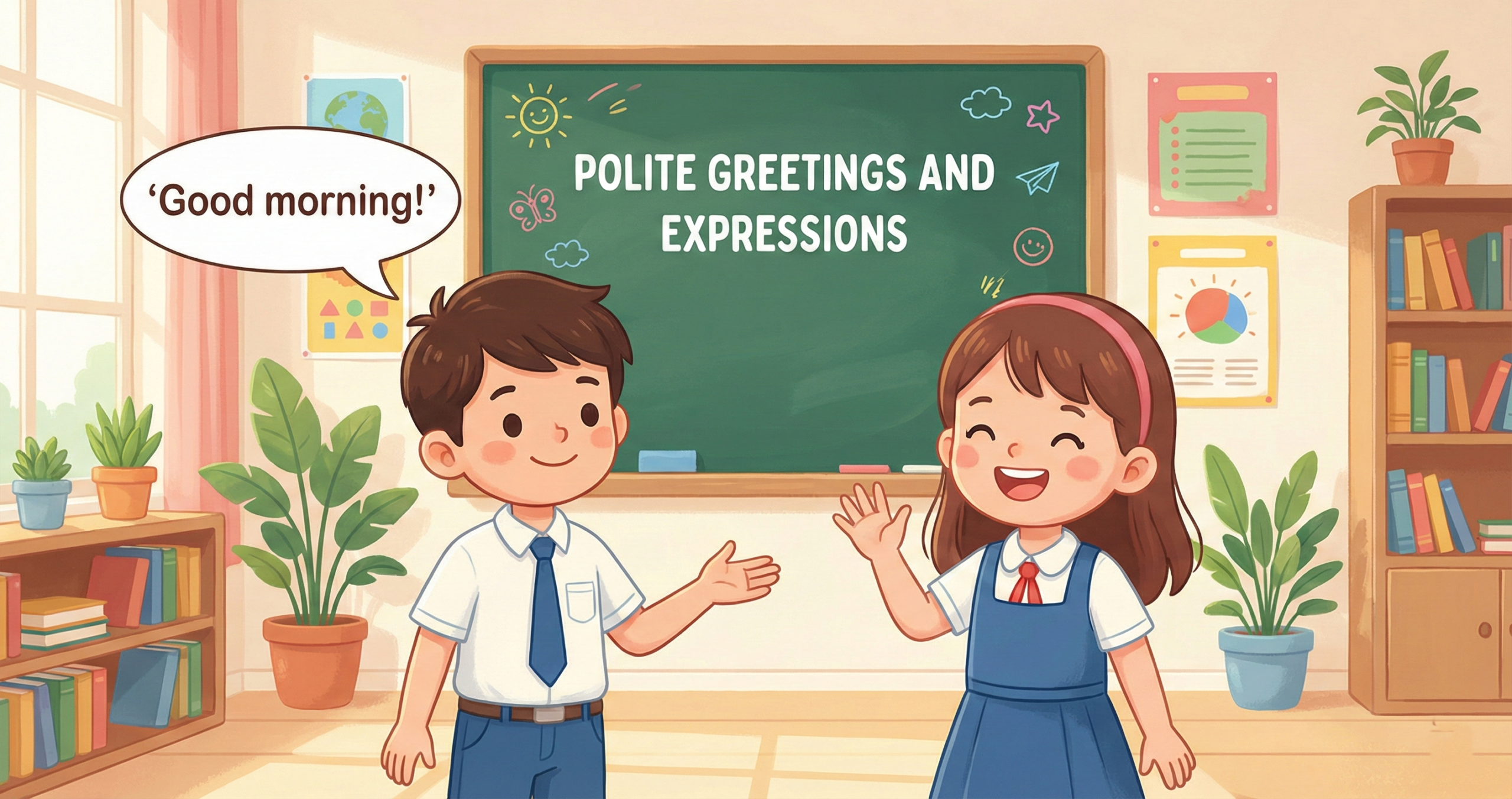
Polite Greetings and Expressions
Learning English can be fun and easier when you know common expressions and polite greetings. These are words and phrases that people use every day to say hello, start a conversation, or show respect.
In this blog, we will share simple examples of polite greetings and useful expressions that students and English learners can use at school, with friends, or online. By practicing these phrases, you will speak more confidently, make friends, and understand English better.
What Are Polite Greetings?
Polite greetings are kind and respectful words we use when we meet someone, say goodbye, or want to show good manners. They are an important part of communication because they help make conversations friendly, positive, and respectful.
Using polite greetings shows that you care about the other person’s feelings and helps build better relationships at school, at home, or in public.
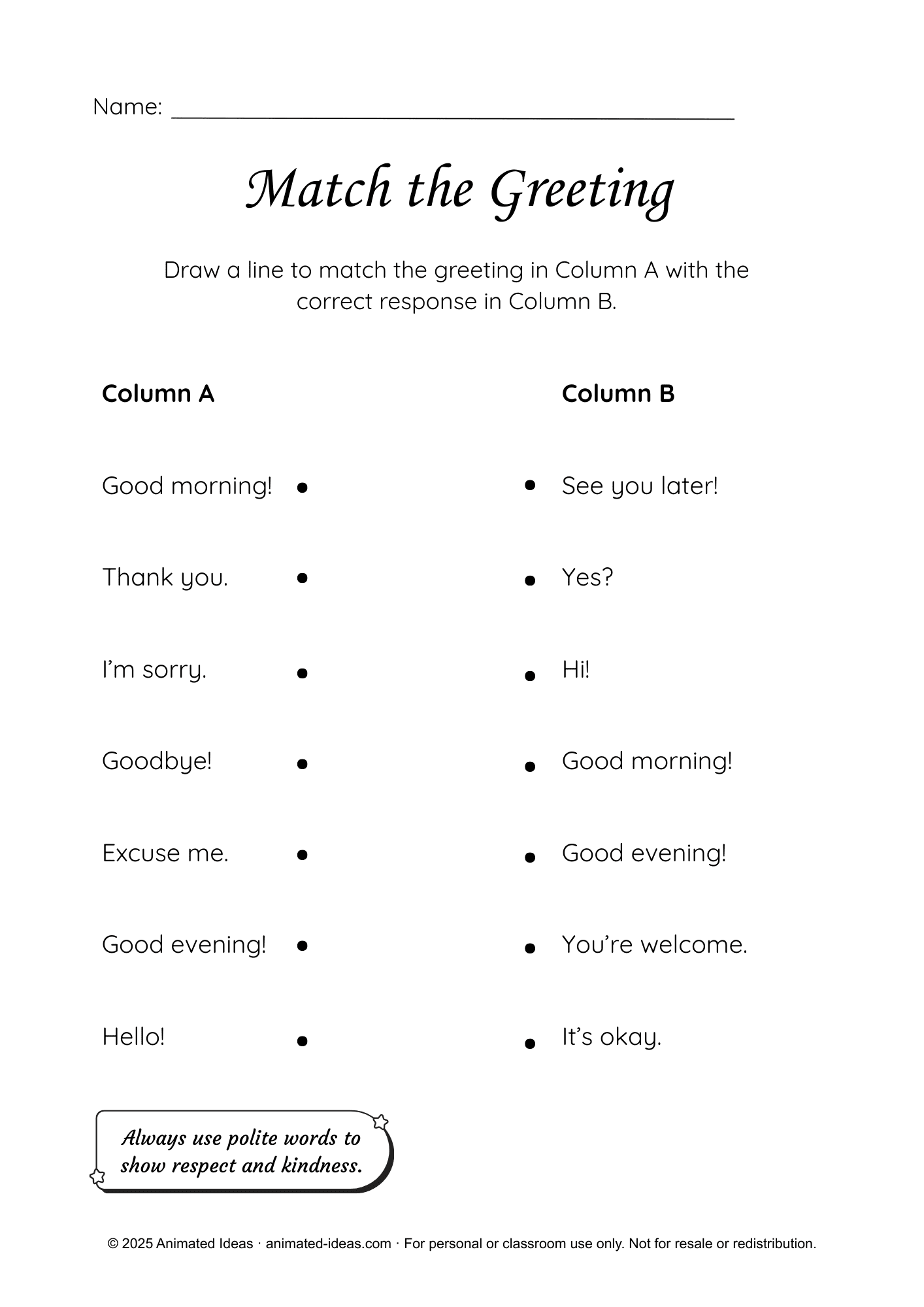
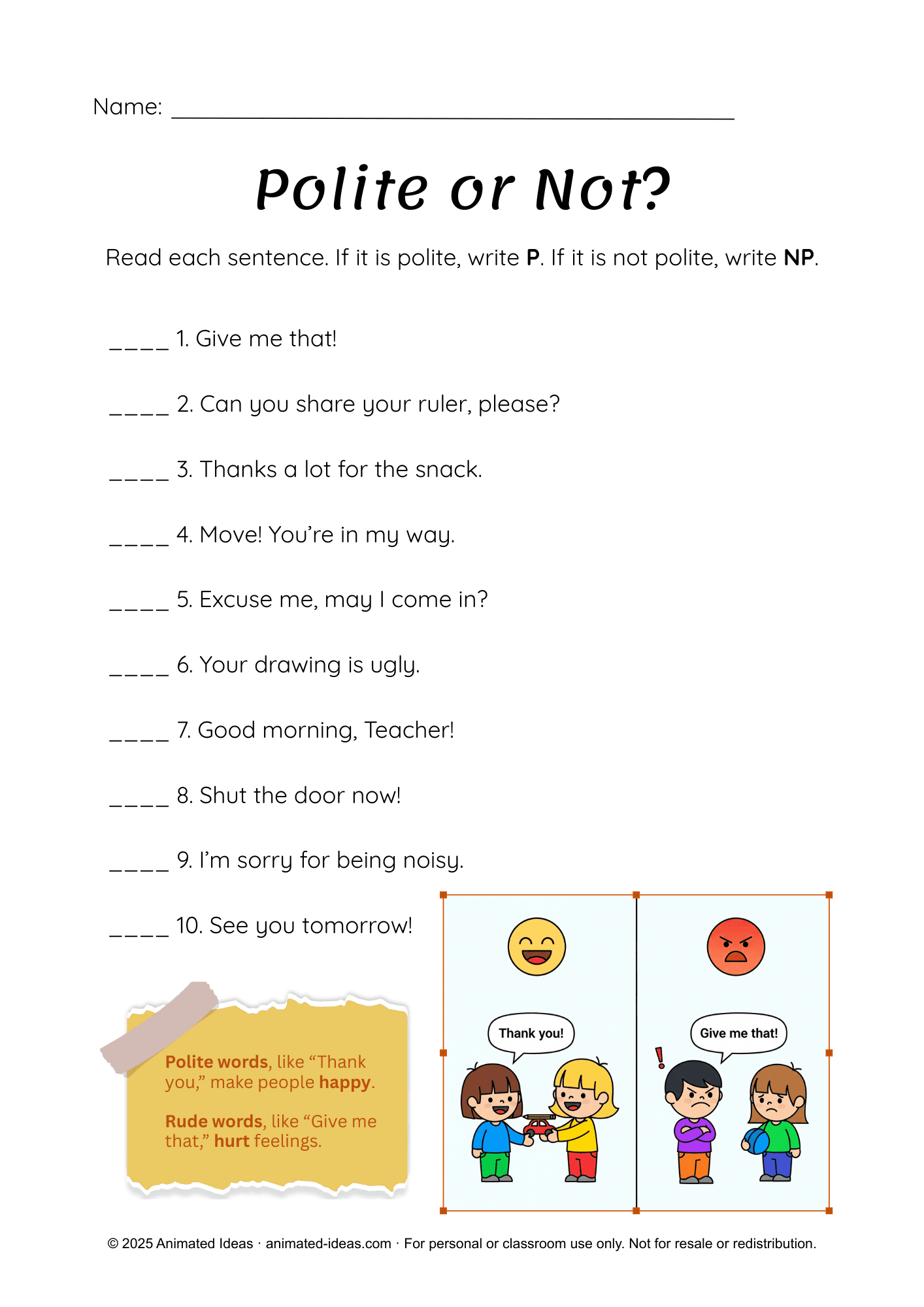
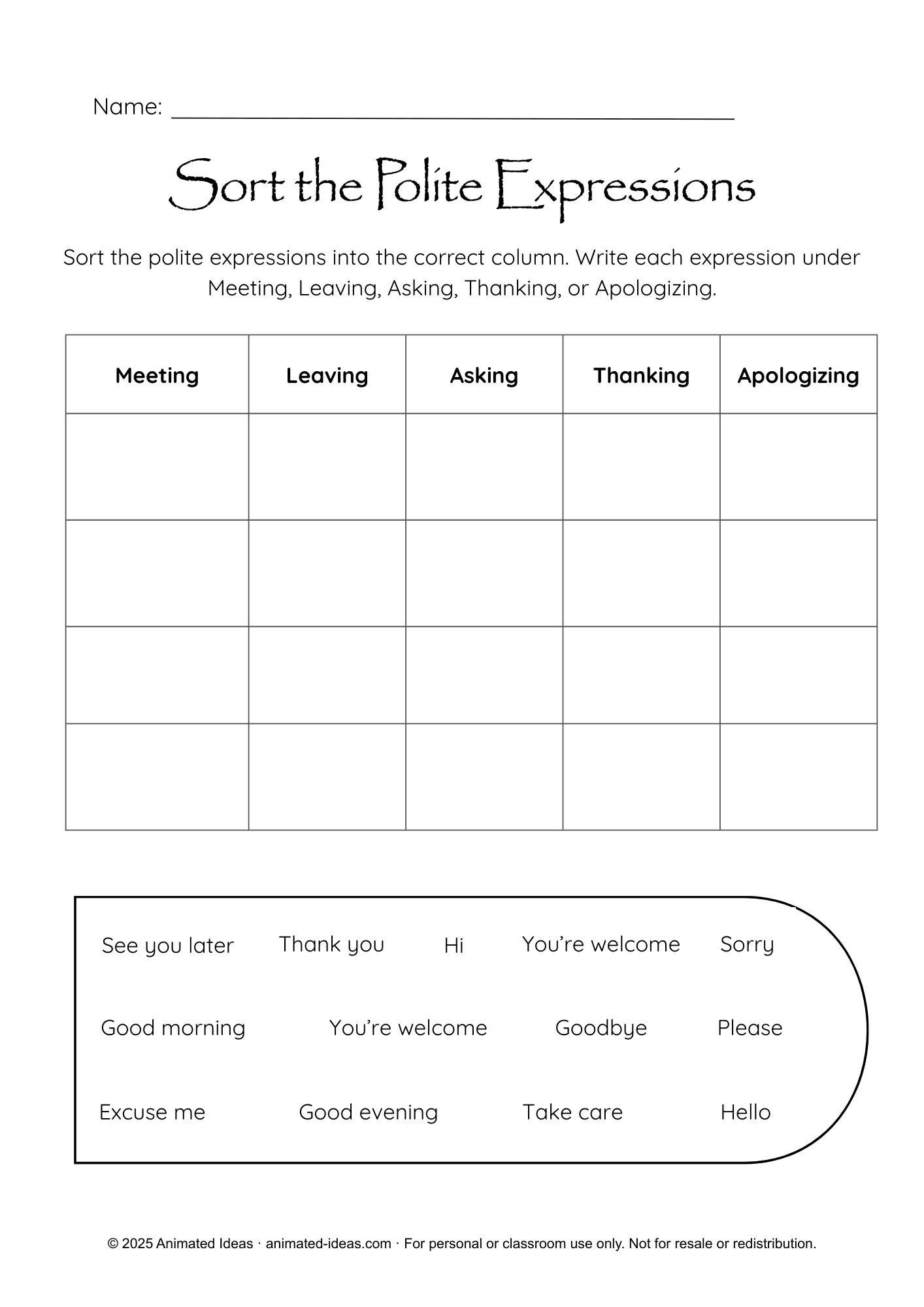
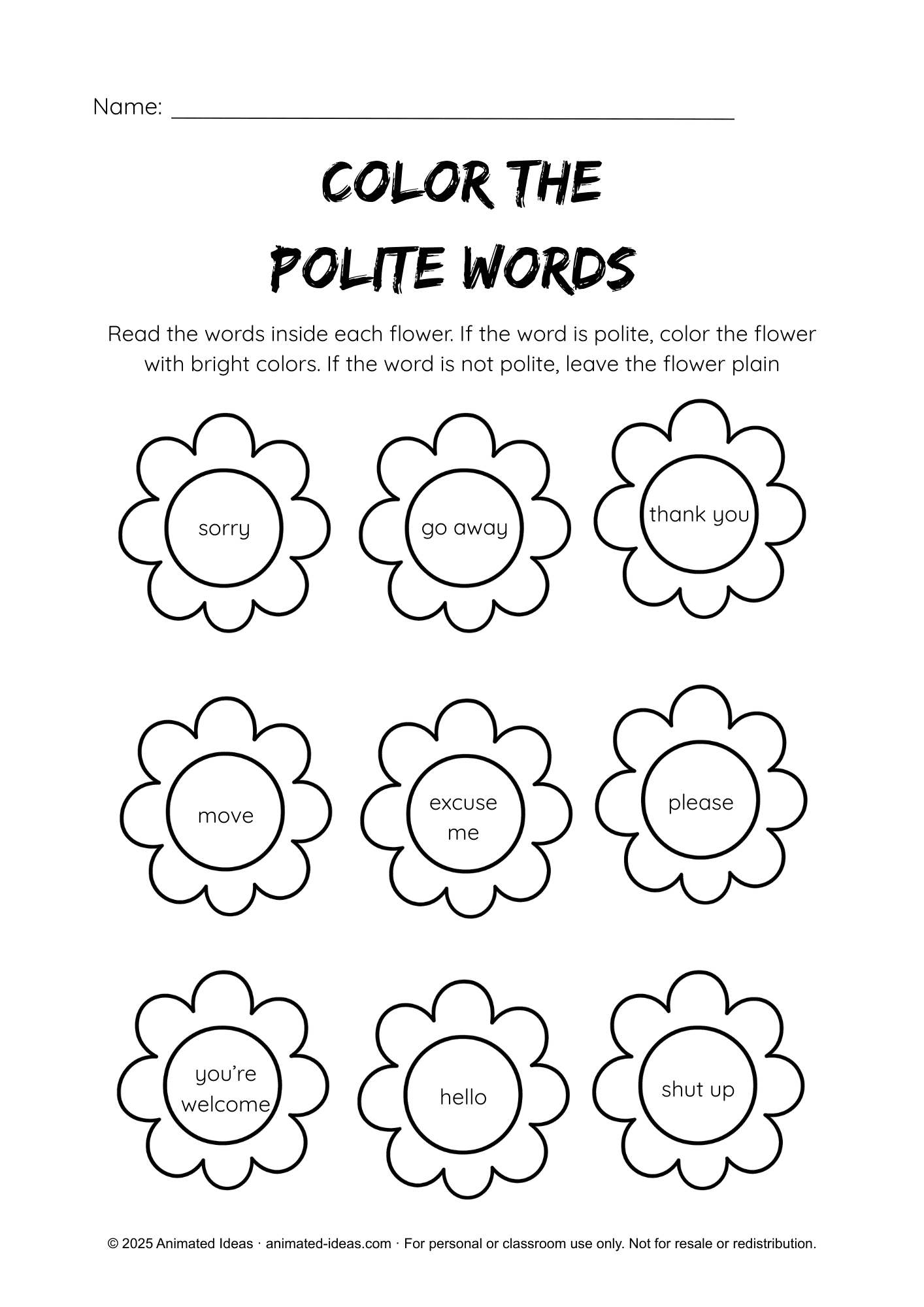
You can also download free resources for this topic by clicking the download button below. These resources include worksheets and handout to help you practice polite greetings every day.
Examples of Polite Greetings
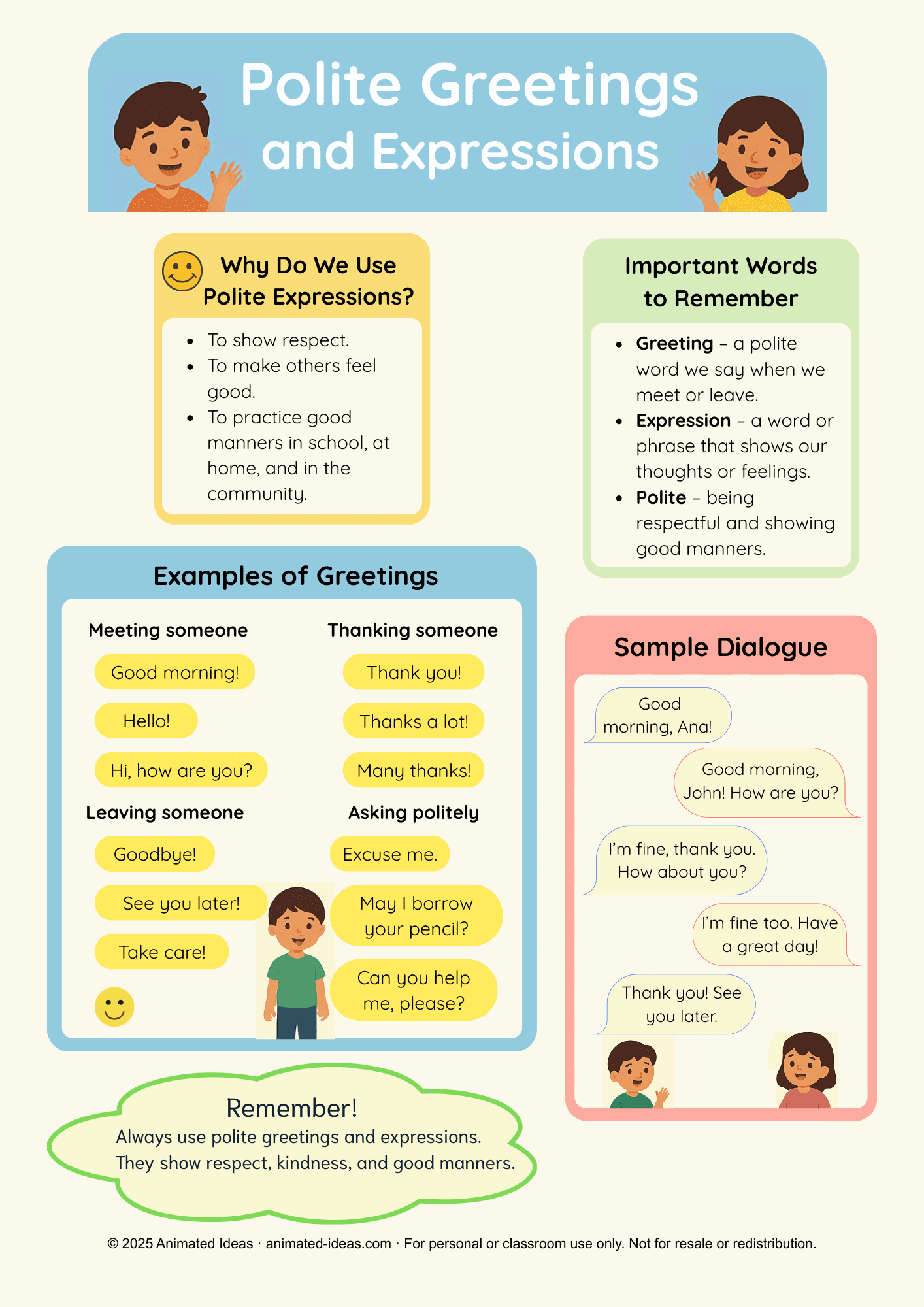
Some common polite greetings include simple phrases like:
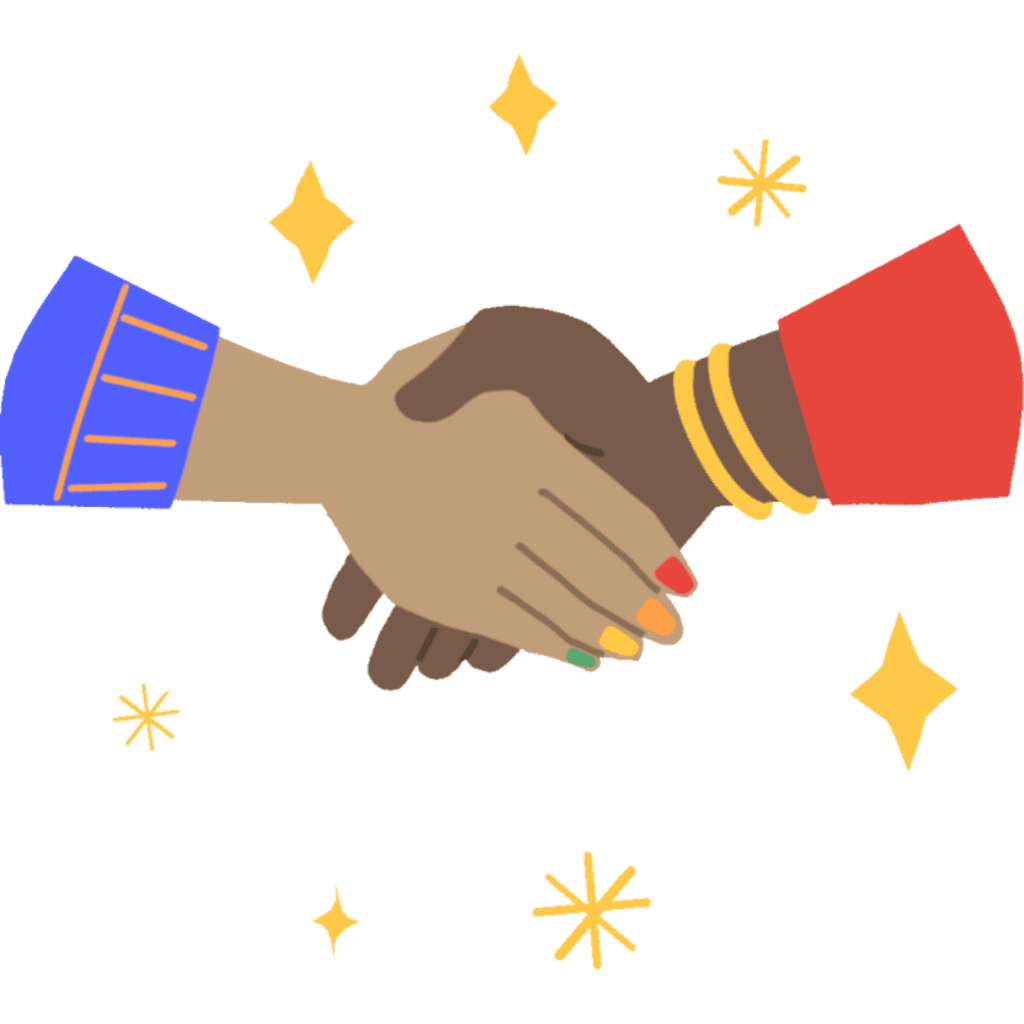
📌 When Meeting Someone:
- “Hi, how are you?”
- “Good morning!”
- “Hello!”
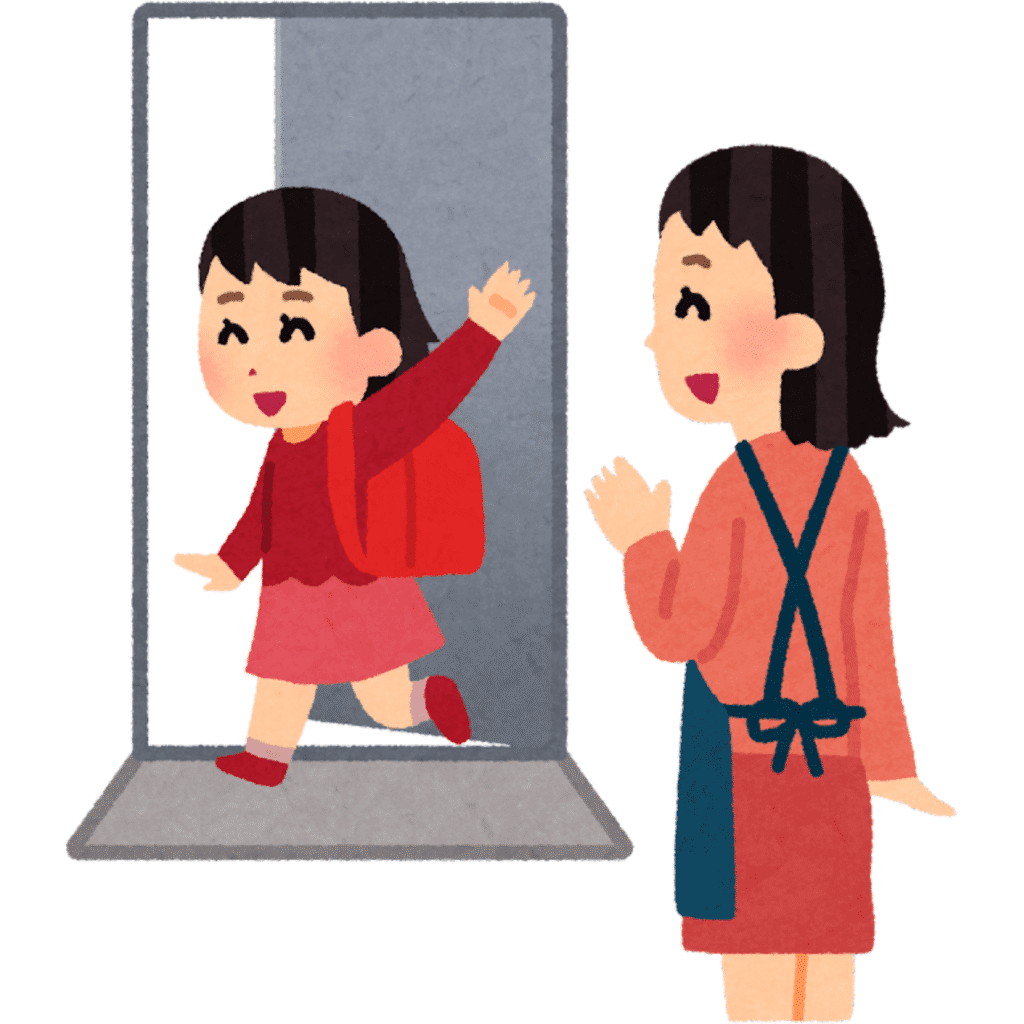
📌 When Leaving Someone:
- “Take care!”
- “Goodbye!”
- “See you later!”
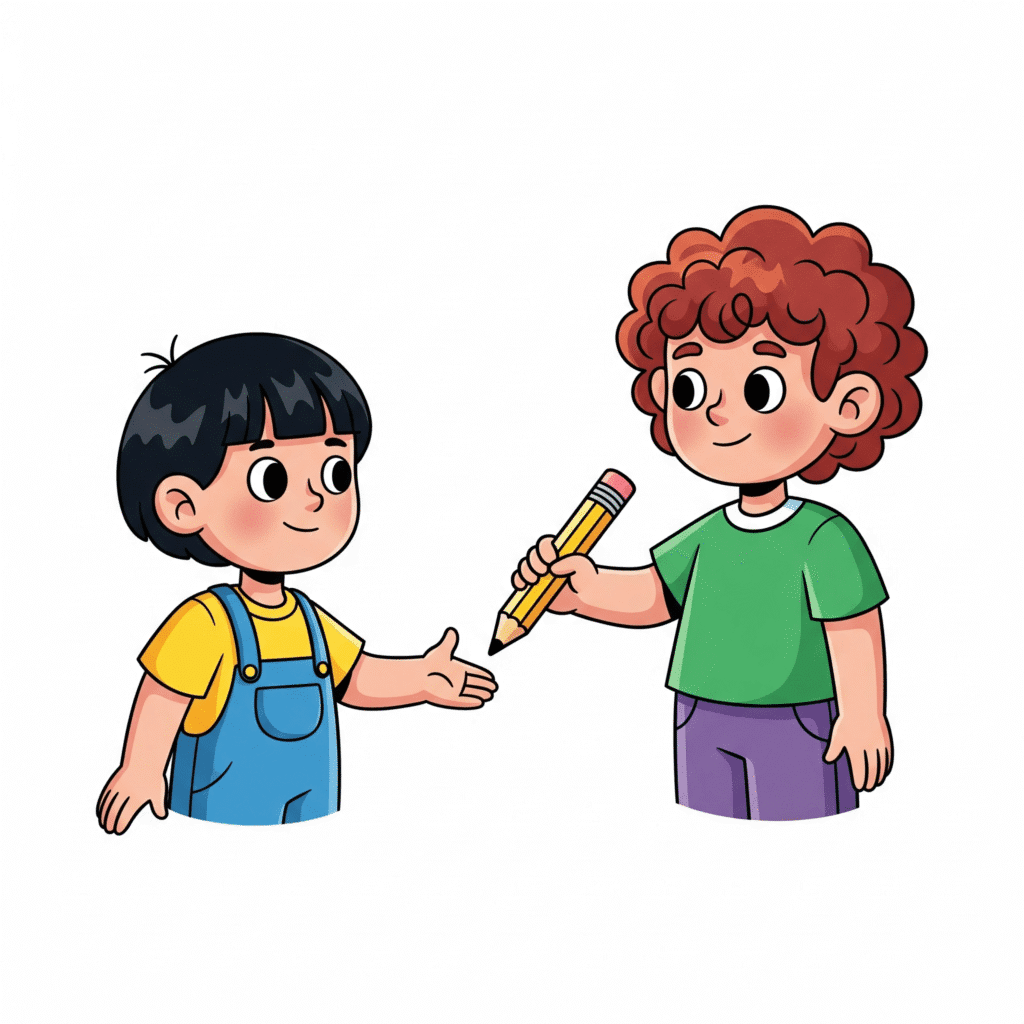
📌 When Asking for Something:
- “May I borrow your pencil?”
- “Please pass the paper.”

📌 When Receiving Something:
- “Thank you very much.”
- “Thank you.”
- “Thanks a lot!”
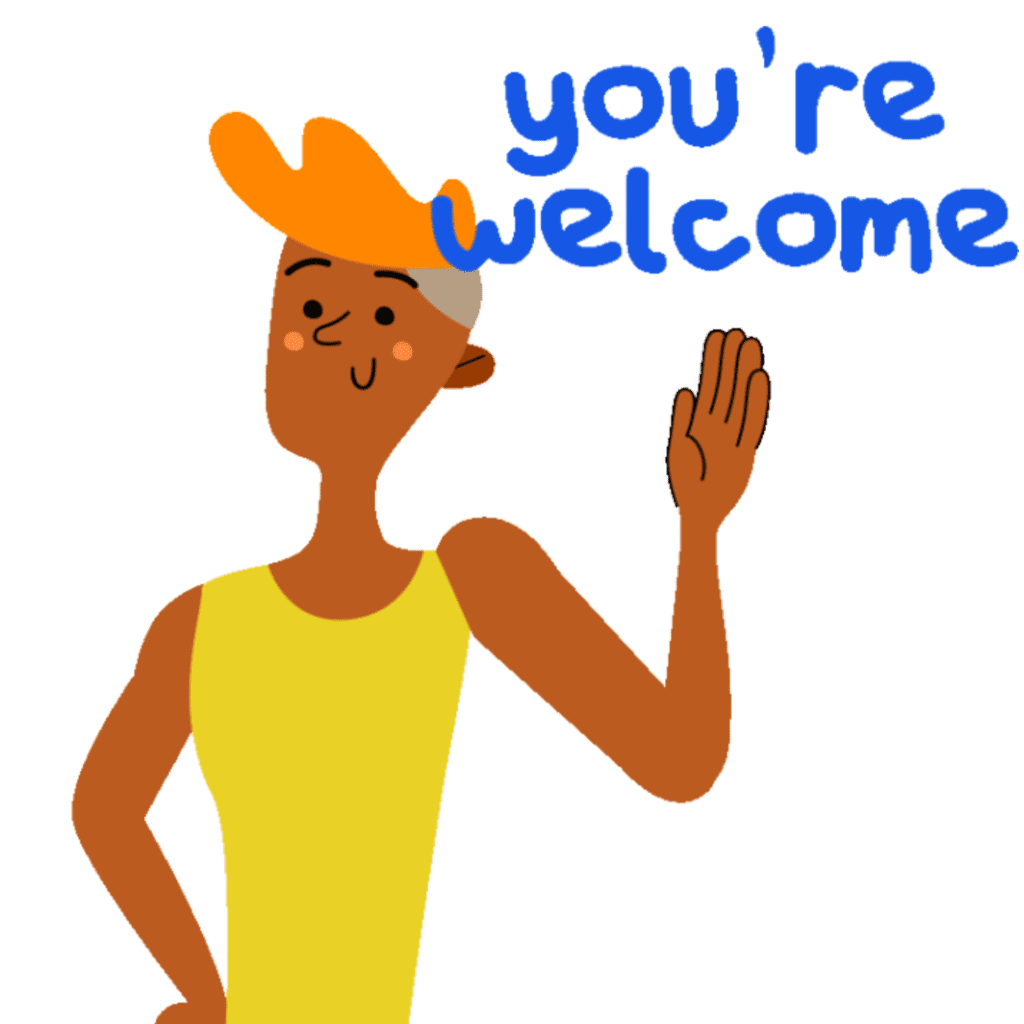
📌 When Someone Thanks You:
“Anytime.”
“You’re welcome.”
“No problem.”
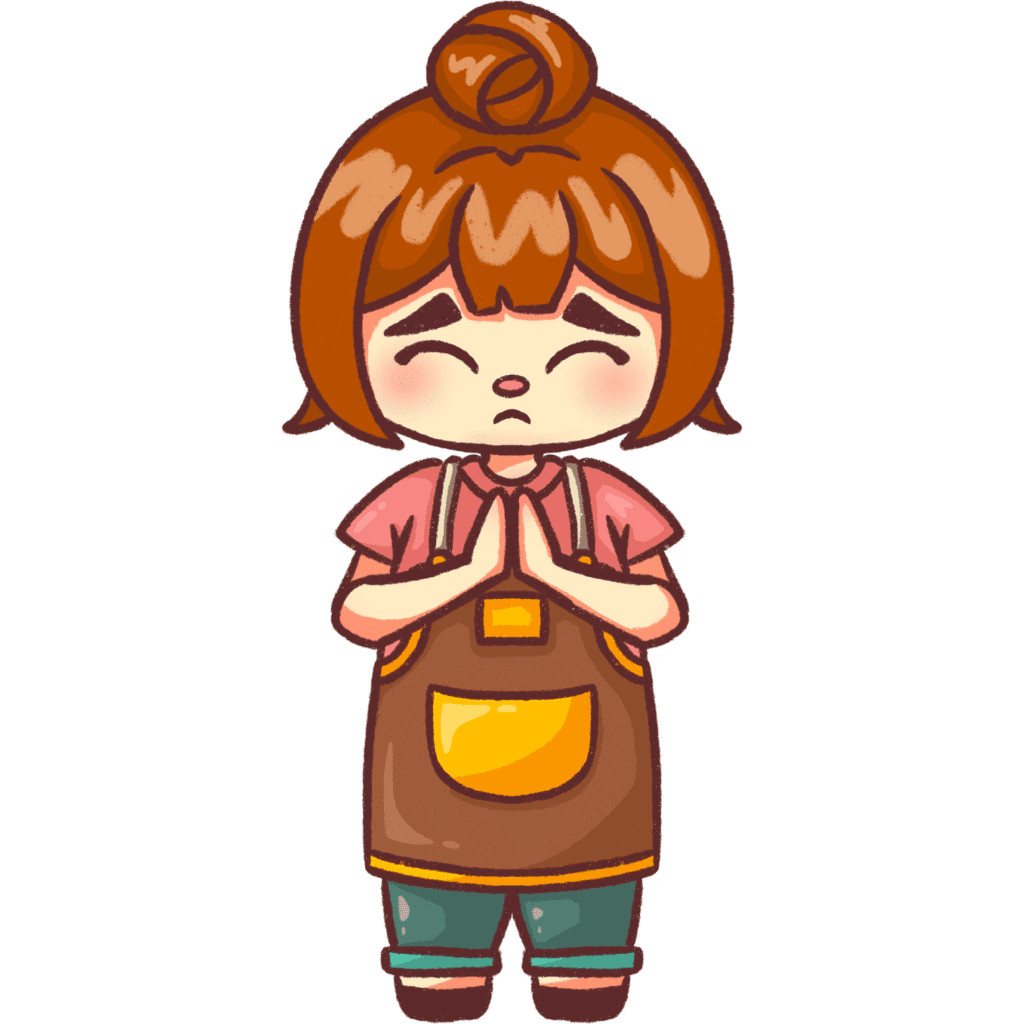
📌 When You Make a Mistake:
“Excuse me.”
“I’m sorry.”
Why Do We Use Polite Expressions?
Polite expressions are an important part of speaking English because they help us communicate in a kind and respectful way. We use them for several reasons:
- To Show Respect
Using polite expressions shows that we respect other people. When we say “please,” “thank you,” or “excuse me,” we let others know that we care about their feelings and appreciate their help or time. Respectful words make interactions smoother and more pleasant. - To Make Others Feel Good
Polite expressions can make people feel happy and comfortable. Simple phrases like “good morning,” “how are you?” or “nice to meet you” create a friendly environment. When people feel respected and appreciated, they are more likely to respond positively and enjoy the conversation. - To Practice Good Manners in Everyday Life
Using polite expressions is a way to show good manners at school, at home, and in the community. Saying “please” when asking for something, or “thank you” when receiving help, teaches children and learners to be thoughtful and kind. Practicing these phrases regularly can help you build better relationships and make a positive impression on others.
In short, polite expressions are not just words—they are tools to communicate with kindness, respect, and confidence. They help students and English learners feel more comfortable speaking in different situations and make everyday conversations smoother and more enjoyable.
Important Words to Remember
- Greeting – a polite word we say to someone when we meet or leave.
- Expression – a word or phrase that shows our thoughts or feelings.
- Polite – being respectful and showing good manners.
Examples of Polite Greetings and Expressions in Everyday Conversation
Let’s take a look at a short conversation between Mia and Ben. By noticing how they speak to each other, we can learn how to use polite greetings and expressions in real life.
As a result, watching and practicing these examples will help students and English learners speak more confidently and respectfully.
✔ They greeted each other with “Good morning.”
✔ They used polite expressions like “please,” “thank you,” and “you’re welcome.”
✔ They showed respect by asking kindly and replying nicely.
Activities to Practice Polite Greetings
Here are some fun and simple activities to help students practice polite greetings and expressions in real-life situations:
- Role-Playing Conversation
Pair up with a classmate. Take turns greeting each other politely and using words like please, thank you, and you’re welcome. Try to act out short everyday situations, like asking for help, giving something, or meeting someone for the first time. - Greeting Corners
Set up corners in the classroom with signs: Morning, Afternoon, Evening, and Goodbye. Walk to the correct corner depending on the time of day and practice saying the right greeting. This helps students remember which greetings to use in different situations. - Polite Words Hunt
Your teacher will describe a situation, such as “You want someone to pass you a book.” Raise your hand and say the polite word or phrase you should use, like please or excuse me. This makes learning interactive and fun. - Pass the Greeting Ball
Stand in a circle and pass a soft ball to a classmate. Before passing it, greet the person politely. For example: “Good morning, Sarah!” This activity helps students practice greetings naturally and actively. - Match the Greeting
One student says a greeting, like Good morning! Another student replies with the correct response, such as Good morning! How are you? You can add extra points for using please or thank you in the conversation.
Key Reminders
- Always greet people politely when you meet or leave.
- Use “please” when asking, and “thank you” when receiving.
- Say “you’re welcome” when someone thanks you.
- Polite words make conversations happy and respectful.
To learn more, watch this video lesson about using polite greetings and expressions. The video includes clear examples, real conversation models, and a short quiz at the end so you can practice what you learned. In addition, this will help students and English learners understand polite expressions better and use them confidently in everyday situations.
Thank you so much for taking the time to read our blog! We hope that you found these resources both helpful and easy to use. Moreover, if you’d like to access more free educational materials, tips, and activities, be sure to stay connected with Animated Ideas on our social media channels. In addition, follow us for the latest updates, fun learning ideas, and even more printable resources to support your child’s learning journey!
❀❀❀❀❀❀❀❀❀❀❀❀❀❀❀❀❀❀❀❀❀❀❀❀❀❀❀
💡 For updates and free resources, don’t forget to follow us on:
📺 YouTube: Animated Ideas
📘 Facebook Page: Animated Ideas
👩🏫 Facebook Group: Learning Resources for Kids