
Pronouns – Words that Replace Nouns
Introduction
In this Grade 3 English lesson, you’ll learn all about pronouns – words that replace nouns. Pronouns help us avoid repeating the same words by replacing people, places, things, animals, and even ideas. You’ll also discover demonstrative pronouns like this, that, these, and those and how they point to specific nouns in sentences.
Have you ever noticed how sometimes we repeat the same words when we talk?
For example: Amy likes cats. Amy takes care of cats every day.
That sounds a bit repetitive, right? Instead of saying “Amy” twice, we can replace it with a word like “she.”
So the sentence becomes:
Amy likes cats. She takes care of cats every day.
That word “she” is called a pronoun.
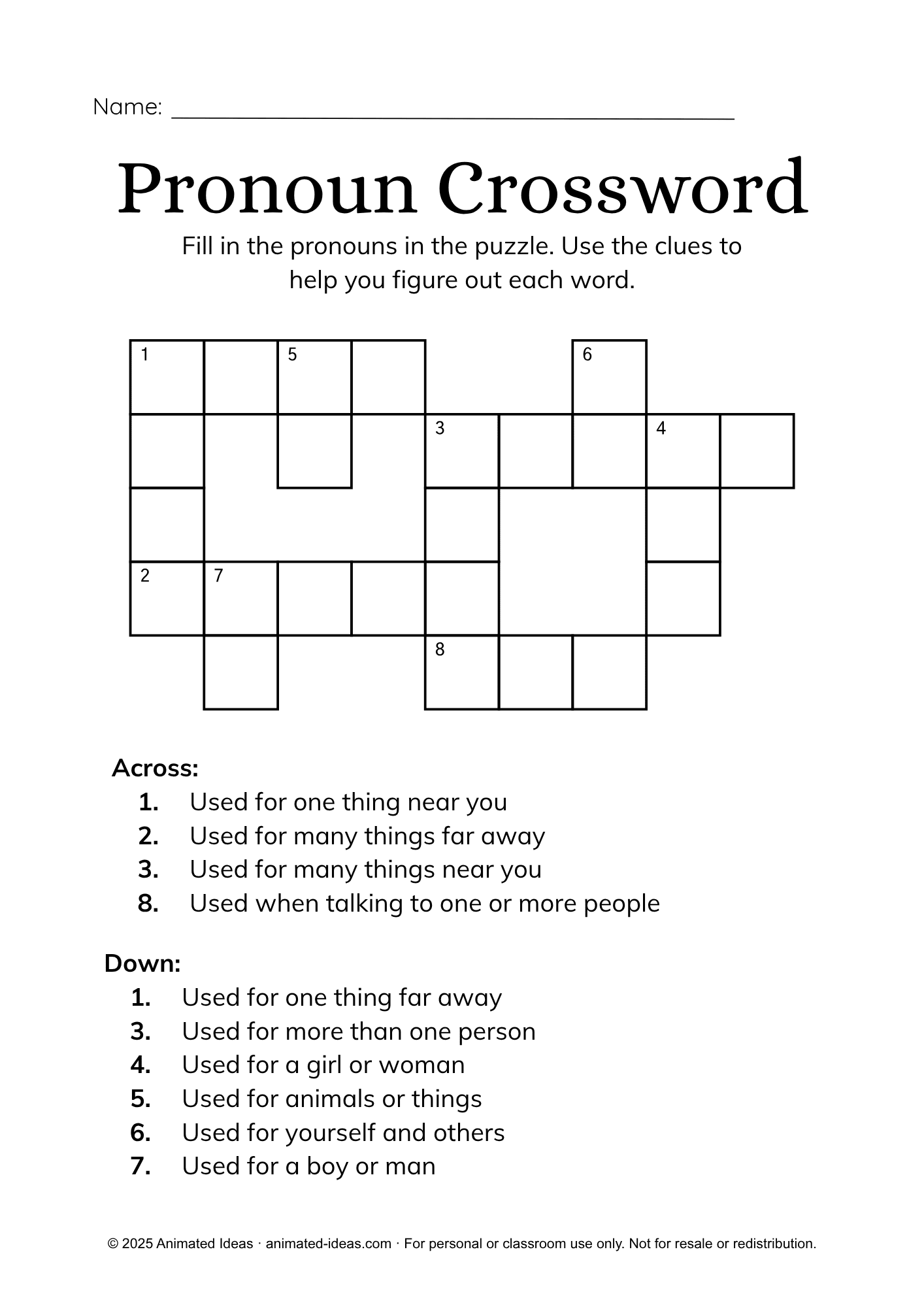
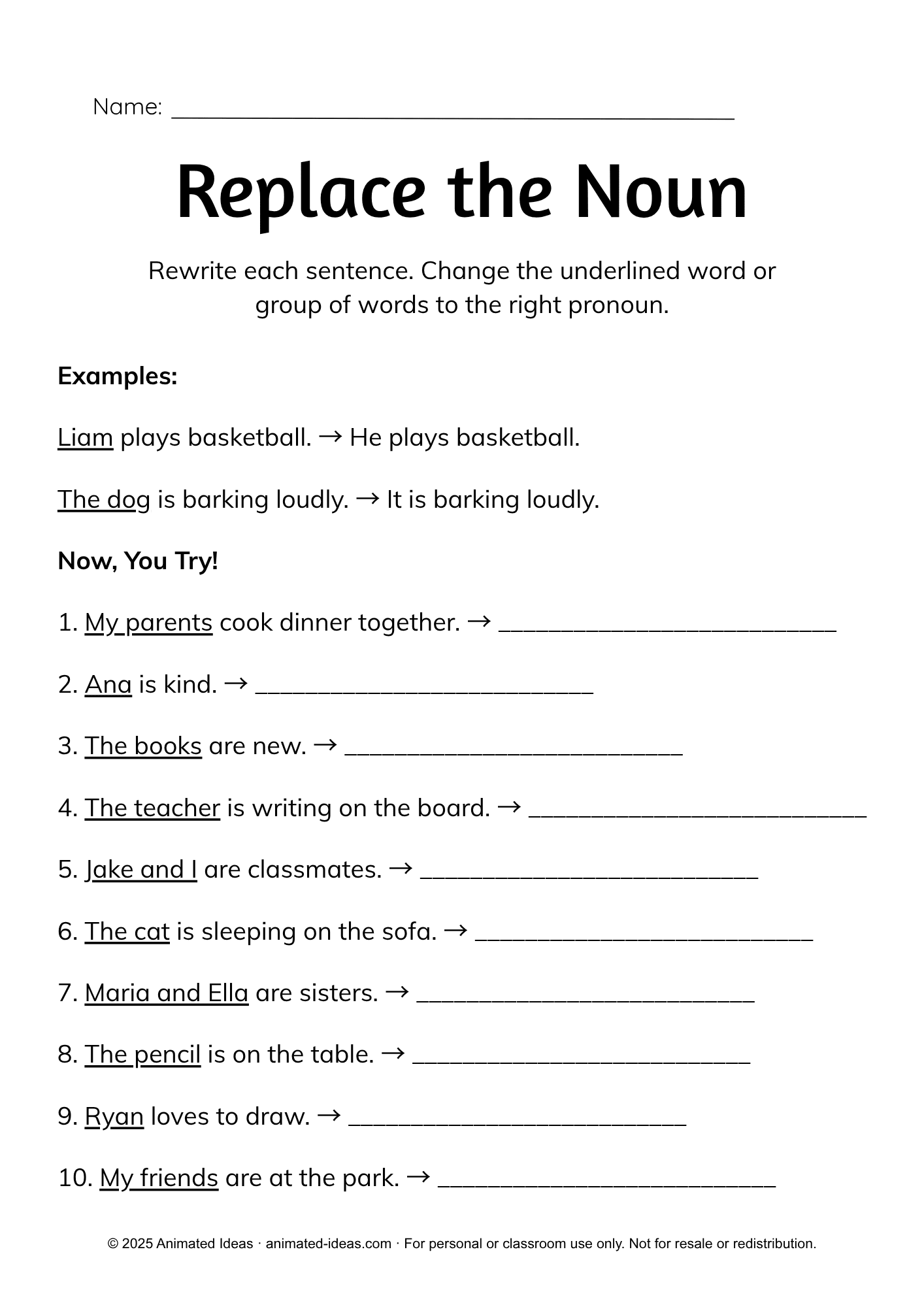
Download Free Worksheets and Handout

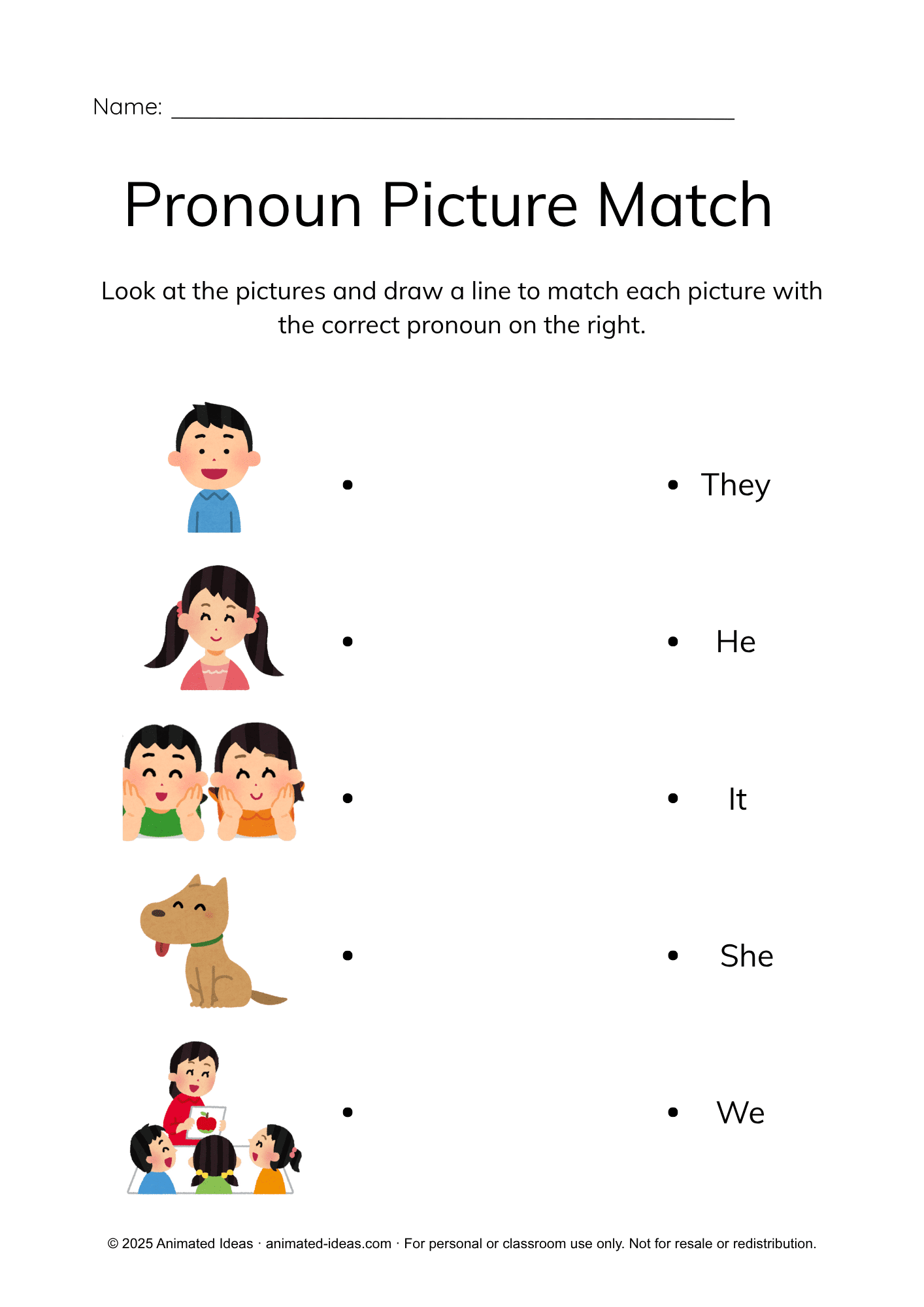
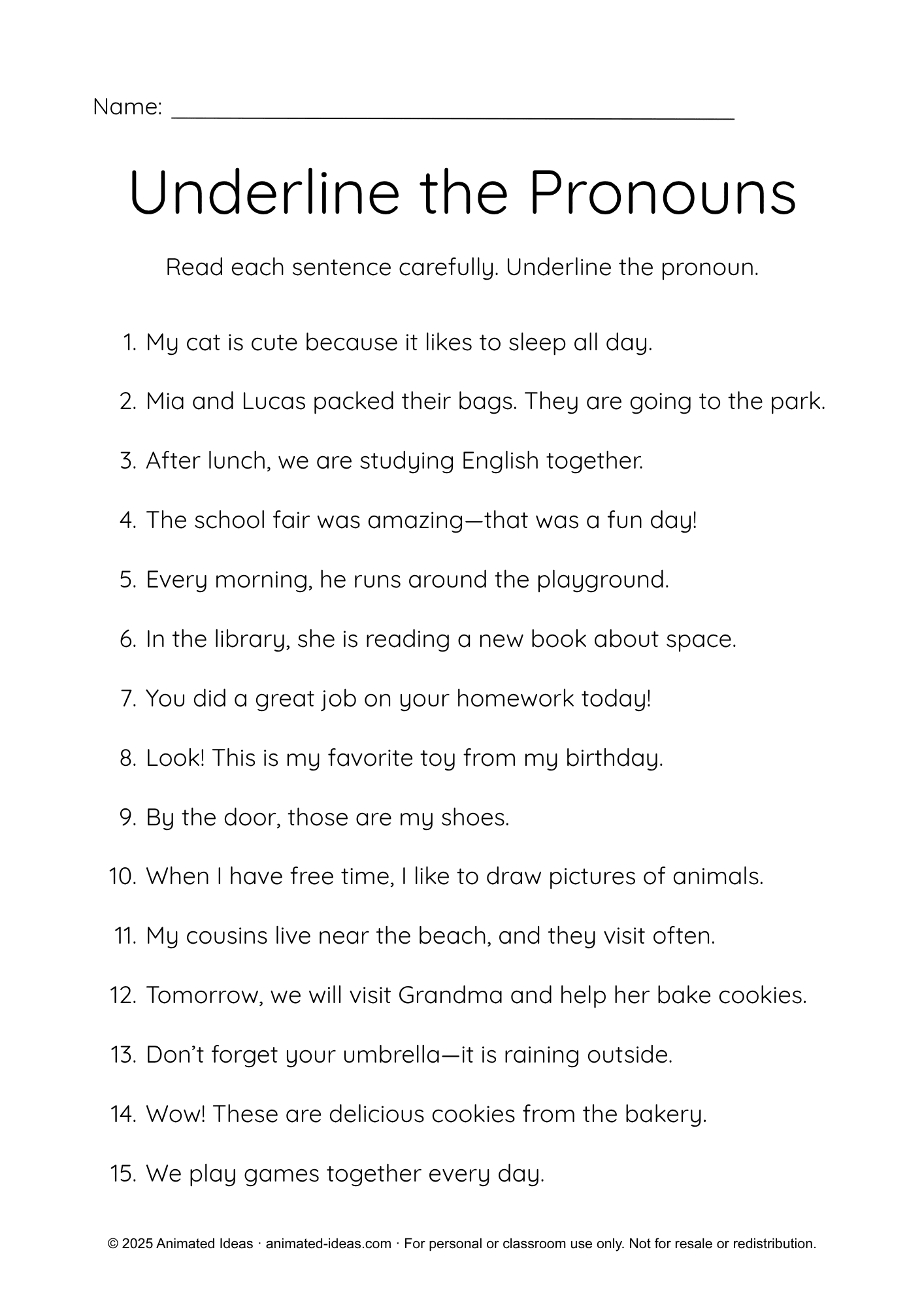
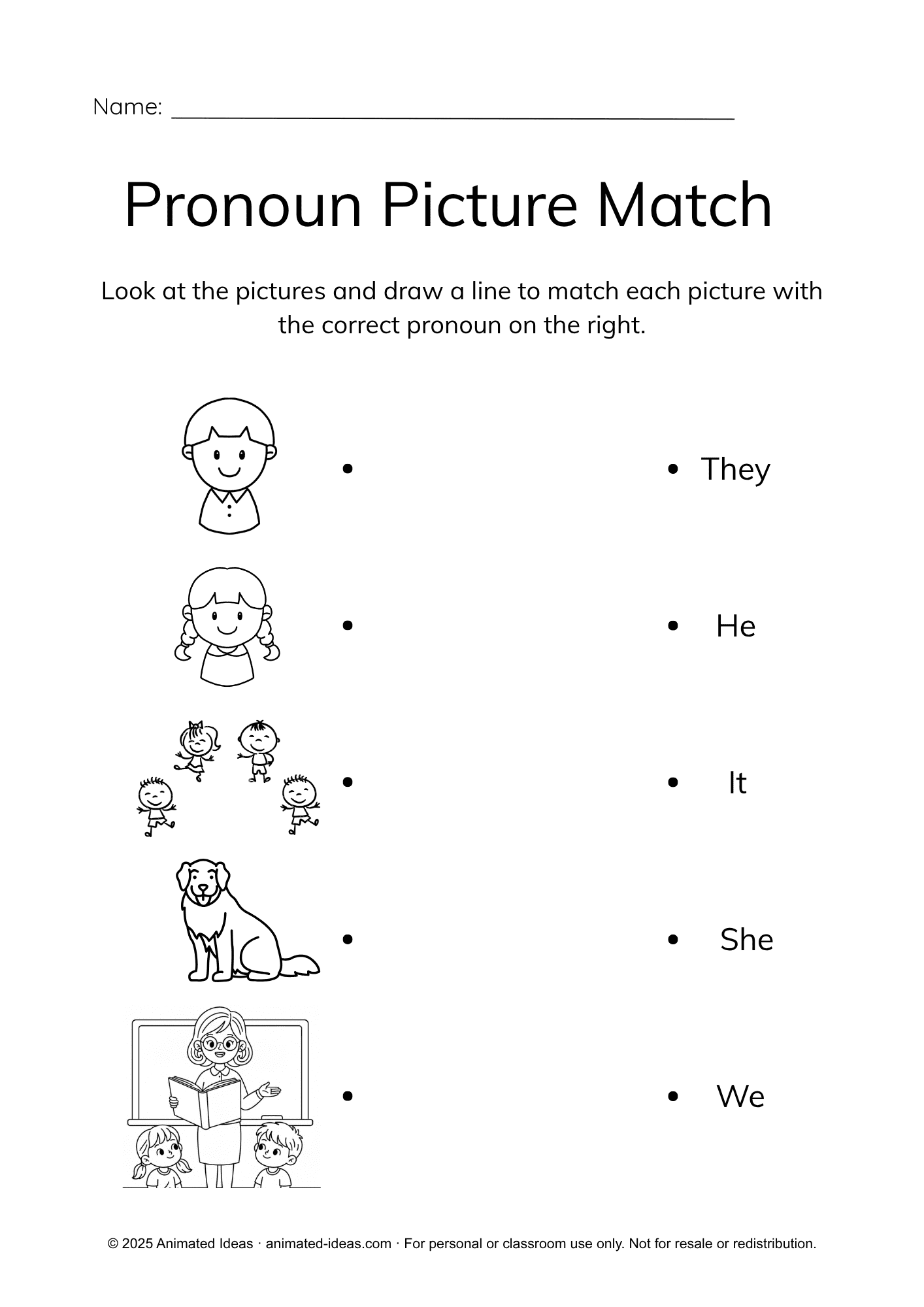

What Are Pronouns?
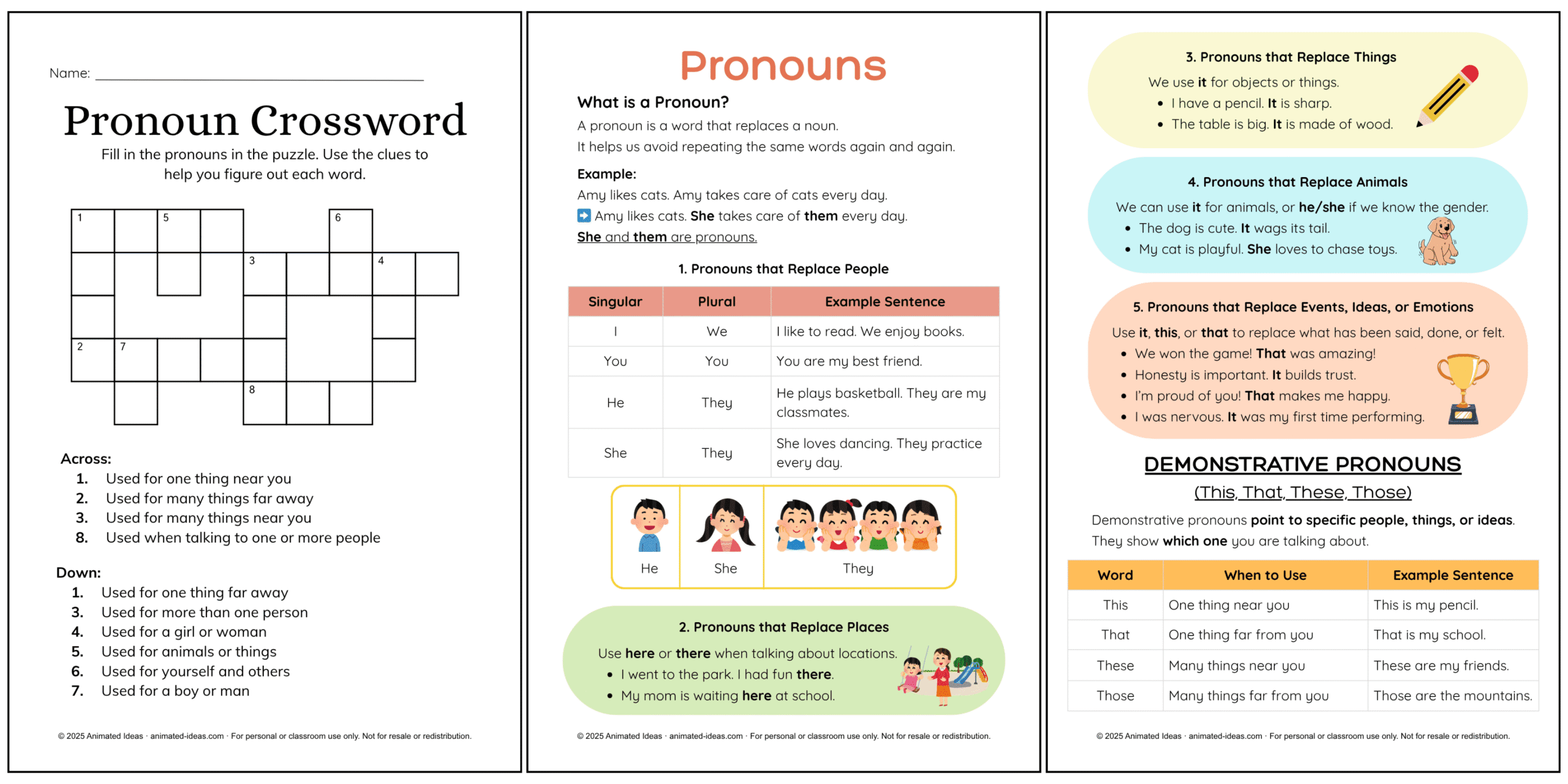
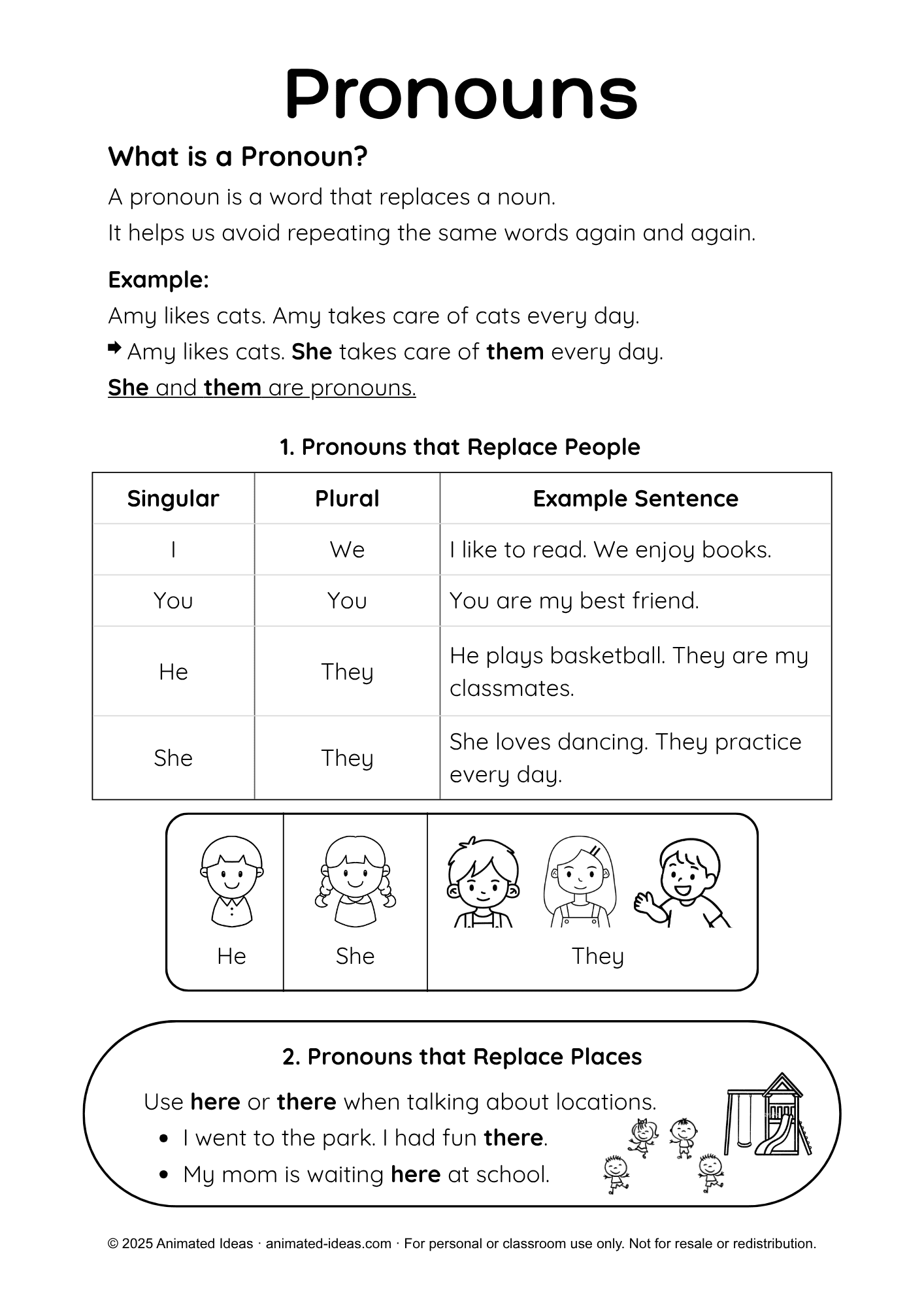
Pronouns are words that take the place of nouns.
A noun is the name of a person, place, thing, animal, event, idea, or emotion.
When we use pronouns, our sentences become shorter, smoother, and easier to understand.
Here’s an easy way to remember it:
➡️ Pronouns replace nouns.
Why Do We Use Pronouns?
We use pronouns to avoid repeating the same words. They make our sentences sound better, shorter, and less boring.
Using pronouns also makes our writing and speaking sound more natural. When we talk or write, repeating the same name or word too many times can make our sentences feel heavy or awkward. Pronouns help our sentences flow smoothly.
Pronouns also save time when we speak or write. Instead of saying a person’s name over and over, we can use a pronoun and get straight to the action.
Let’s look at an example: Liam is a kind boy. Liam always helps his friends. Liam likes to share his toys.
We can replace “Liam” with he to make it sound natural:
Liam is a kind boy. He always helps his friends. He likes to share his toys.
See how much easier and smoother it is to read? That’s why pronouns are very helpful in everyday writing and speaking.
Types of Pronouns
Let’s go through the common types of pronouns and what they replace.
🧍♀️ 1. Pronouns that replace people
These pronouns are used instead of the names of people. They help make our sentences shorter and easier to read or say.
Some common pronouns that replace people are:
- He – for a boy or man
- She – for a girl or woman
- They – for more than one person
- We – when you talk about yourself and others
- You – when you talk to someone
Examples
He:
John is my friend. He likes to play soccer.
She:
Maria is my sister. She loves to draw.
They:
Tom and Ana are my classmates. They enjoy reading.
We:
My friends and I are going to the park. We will have fun together.
You:
Are you ready for the game?
Using these pronouns instead of repeating names makes your sentences sound smooth and natural.
🏠 2. Pronouns that replace places
These pronouns are used instead of the names of places. They help make our sentences shorter and easier to read or say.
Some common pronouns that replace places are:
There – for a place that is not where you are
Here – for a place that is where you are
Examples:
There:
I went to the park. There, I had fun.
Here:
My mom is waiting at school. She is waiting here.
These pronouns make it easier to talk about locations without repeating the same words.

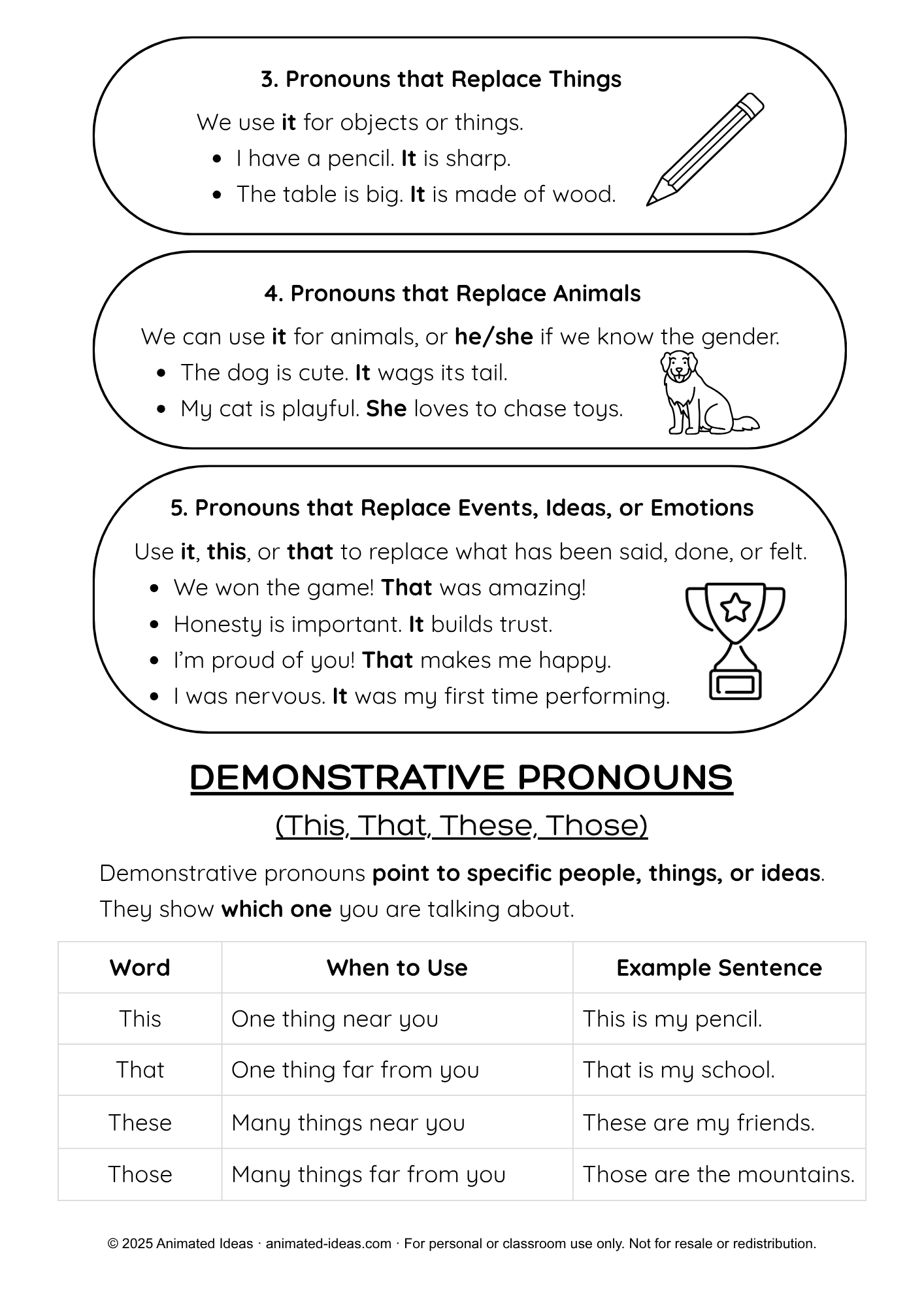
🧸 3. Pronouns that replace things
These pronouns are used instead of the names of objects or things. They help make our sentences shorter and easier to read or say.
The most common pronoun that replaces things is:
It – for an object, animal, or thing
Examples:
It:
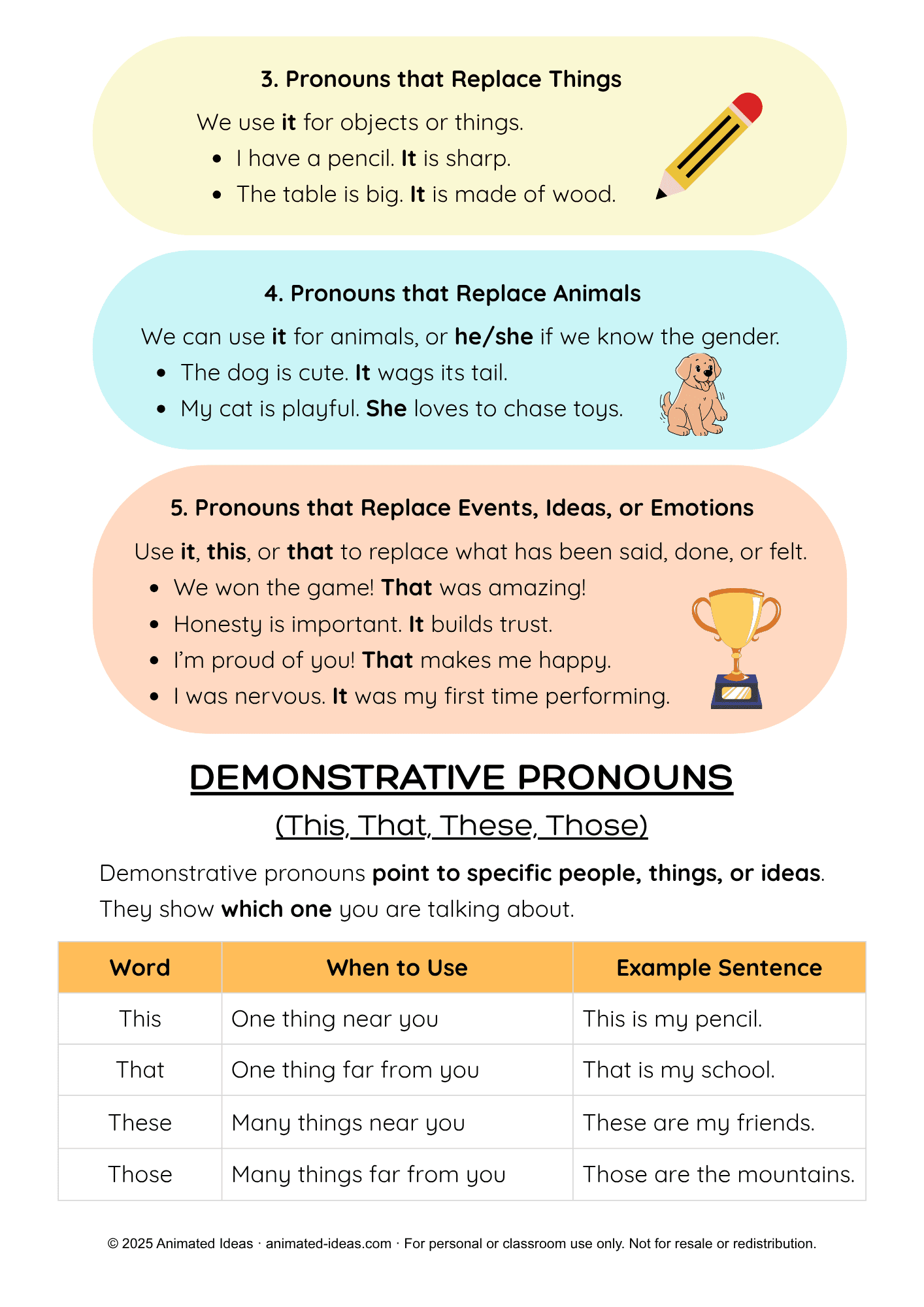
I have a pencil. It is sharp.
The table is big. It is made of wood.
Using it instead of repeating an object’s name makes your sentences easier to follow.
🐶 4. Pronouns that replace animals
These pronouns are used instead of the names of animals. They help make our sentences shorter and easier to read or say. We can use it for animals when we do not know their gender, and he or she when we know if the animal is a boy or a girl.
Some common pronouns that replace animals are:
It – for an animal when the gender is not known
He – for a male animal
She – for a female animal
Examples:
It:
The dog is cute. It wags its tail.
She:
My cat is playful. She loves to chase toys.
These pronouns help your sentences flow naturally when describing pets or animals.
🎉 5. Pronouns that replace events, ideas, and emotions
These pronouns are used instead of the names of happenings, thoughts, or feelings. They help make our sentences shorter and easier to read or say. We can use it, this, or that to replace events, ideas, or emotions.
Some common pronouns that replace events, ideas, and emotions are:
It – for a thought, feeling, or situation
This – for something happening now or something just mentioned
That – for something that happened before or something already mentioned
Examples:
That:
We won the game! That was amazing.
It:
Honesty is important. It builds trust.
That:
I’m so proud of you. That makes me happy.
It:
I felt nervous. It was my first time performing.

These pronouns help your sentences flow better and make them easier to understand.
Demonstrative Pronouns: This, That, These, and Those
Now, let’s learn about a special group of pronouns called demonstrative pronouns.
These pronouns point to specific people, places, things, or ideas.
They help us show which one we are talking about.
There are four main demonstrative pronouns:
| Demonstrative Pronoun | When to Use | Example |
|---|---|---|
| This | One thing near you | This is my pencil. |
| That | One thing far from you | That is my school over there. |
| These | Many things near you | These are my friends. |
| Those | Many things far from you | Those are the mountains we climbed. |
Demonstrative pronouns are also used when talking about events, ideas, or emotions — they point to something mentioned or experienced.
Examples:
- We won the contest! That was exciting!
- This is what I love about teamwork.
- These are wonderful ideas!
- Those were happy days.
🗣️ Tip for kids:
If you can imagine yourself pointing at something when you say the word, it’s probably a demonstrative pronoun!
Summary of the Lesson
Let’s review what we learned today! 🎯
✅ Pronouns are words that replace nouns — names of people, places, things, animals, events, ideas, or emotions.
✅ Using pronouns makes our sentences sound smoother.
✅ Common pronouns include I, you, he, she, it, we, they.
✅ Demonstrative pronouns like this, that, these, and those point to specific things, people, or ideas.
Pronouns make our sentences more natural and help us express ideas clearly!
Key Vocabulary
- Noun – a word that names a person, place, thing, or idea
- Pronoun – a word that replaces a noun
- Demonstrative Pronoun – a pronoun that points to something (this, that, these, those)
Recommended Resources from Animated Ideas
- Grade 1 Pronoun Worksheets – I, Me, My, Mine Activities
- Grade 3 Notes and Worksheets
- Study Notes for Students (all-in-one review, homework & exam prep)
💡 For updates and free resources, follow us:
📺 YouTube: Animated Ideas
📘 Facebook Page: Animated Ideas
📌 Pinterest: Animated Ideas