
The Water Cycle
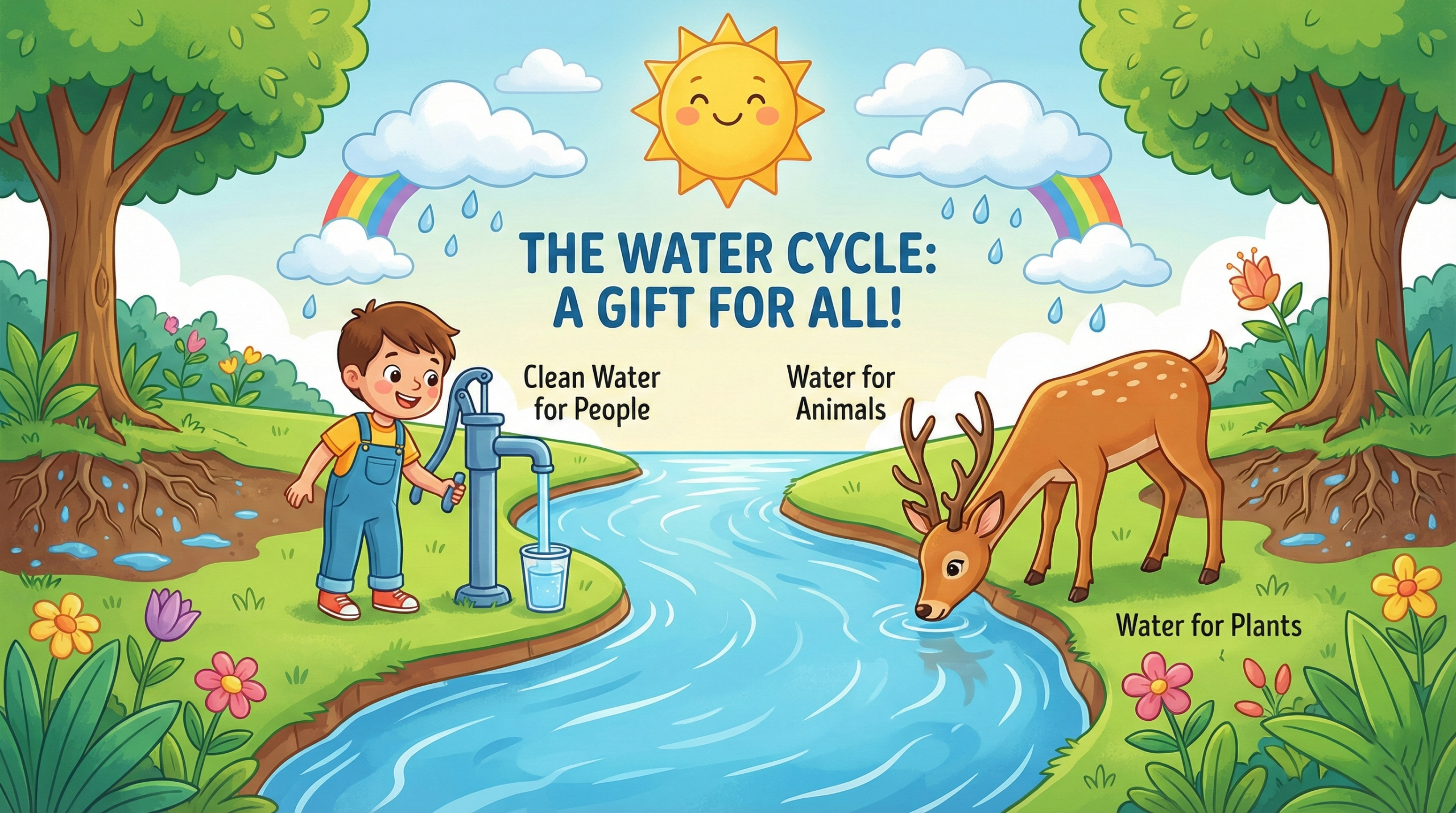
The water cycle is an amazing natural process that moves water all around the Earth. It is important for life because it provides fresh water for animals, plants, and people. Water is always moving, changing forms from liquid to gas, then back to liquid.
Understanding the water cycle helps kids learn why it rains, where rivers get water, and how clouds form. Let’s explore it in a fun and simple way.
What is the Water Cycle?
The water cycle is the continuous movement of water on, above, and below the surface of the Earth. It does not stop. Water travels in a cycle that repeats over and over.
There are four main stages in the water cycle:
- Evaporation
- Condensation
- Precipitation
- Collection
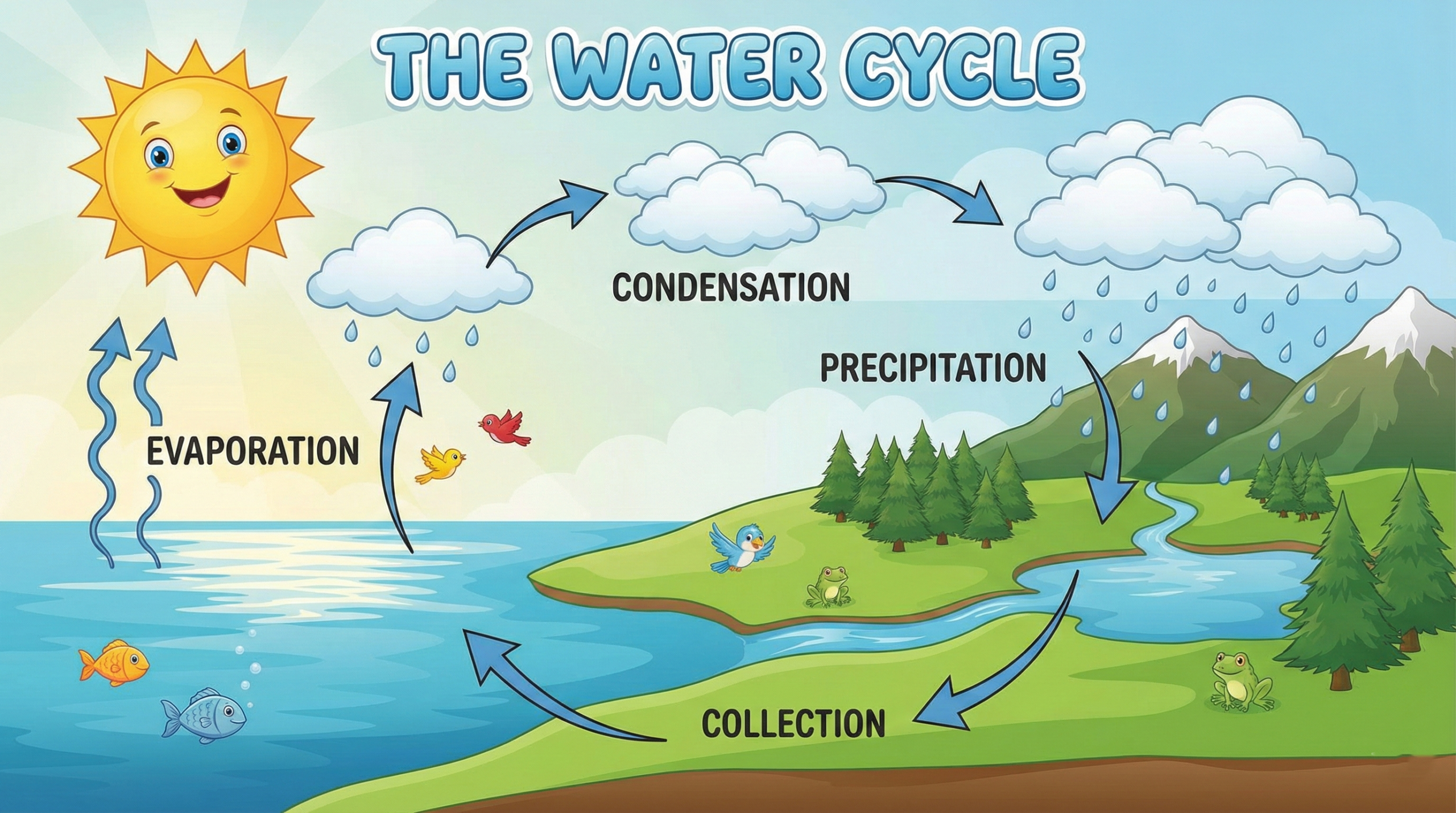
Each stage has an important role in keeping our planet alive and healthy.
Evaporation: Water Changes to Gas
Evaporation happens when water from oceans, lakes, rivers, and even puddles turns into water vapor. The sun’s heat warms the water, and tiny water droplets rise into the air as gas.
For example, after a sunny day, puddles on the road slowly disappear. This happens because the water evaporates.
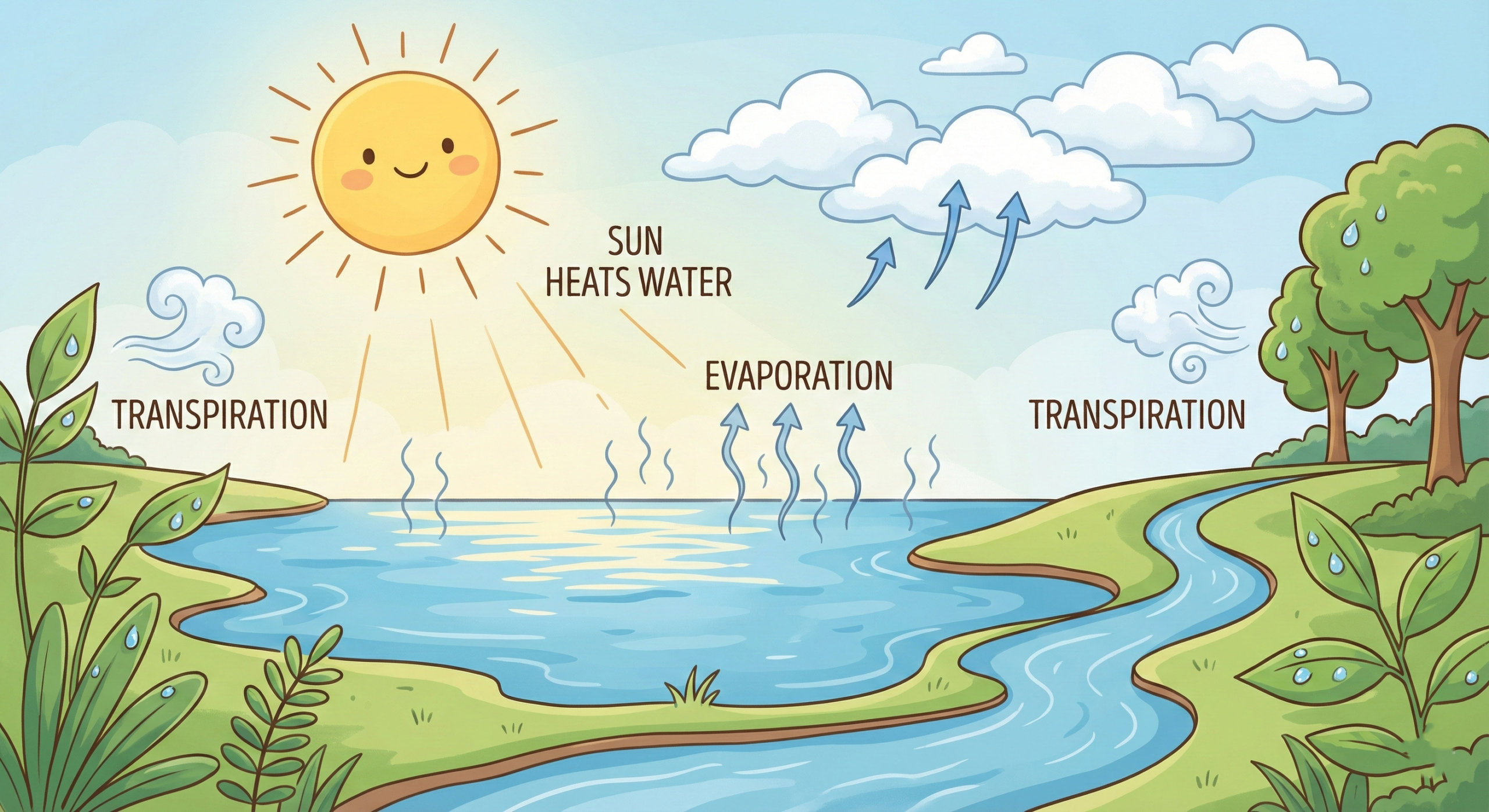
Evaporation also happens in plants. Water in plants moves to their leaves and changes into vapor. This process is called transpiration, which is part of the water cycle.
Condensation: Gas Becomes Water
After evaporation, water vapor rises into the air. As it goes higher, the air gets cooler. The water vapor then turns back into tiny droplets of liquid water. This process is called condensation.
Condensation forms clouds in the sky. Clouds are made of millions of tiny water droplets. Without condensation, we would not have clouds or rain.
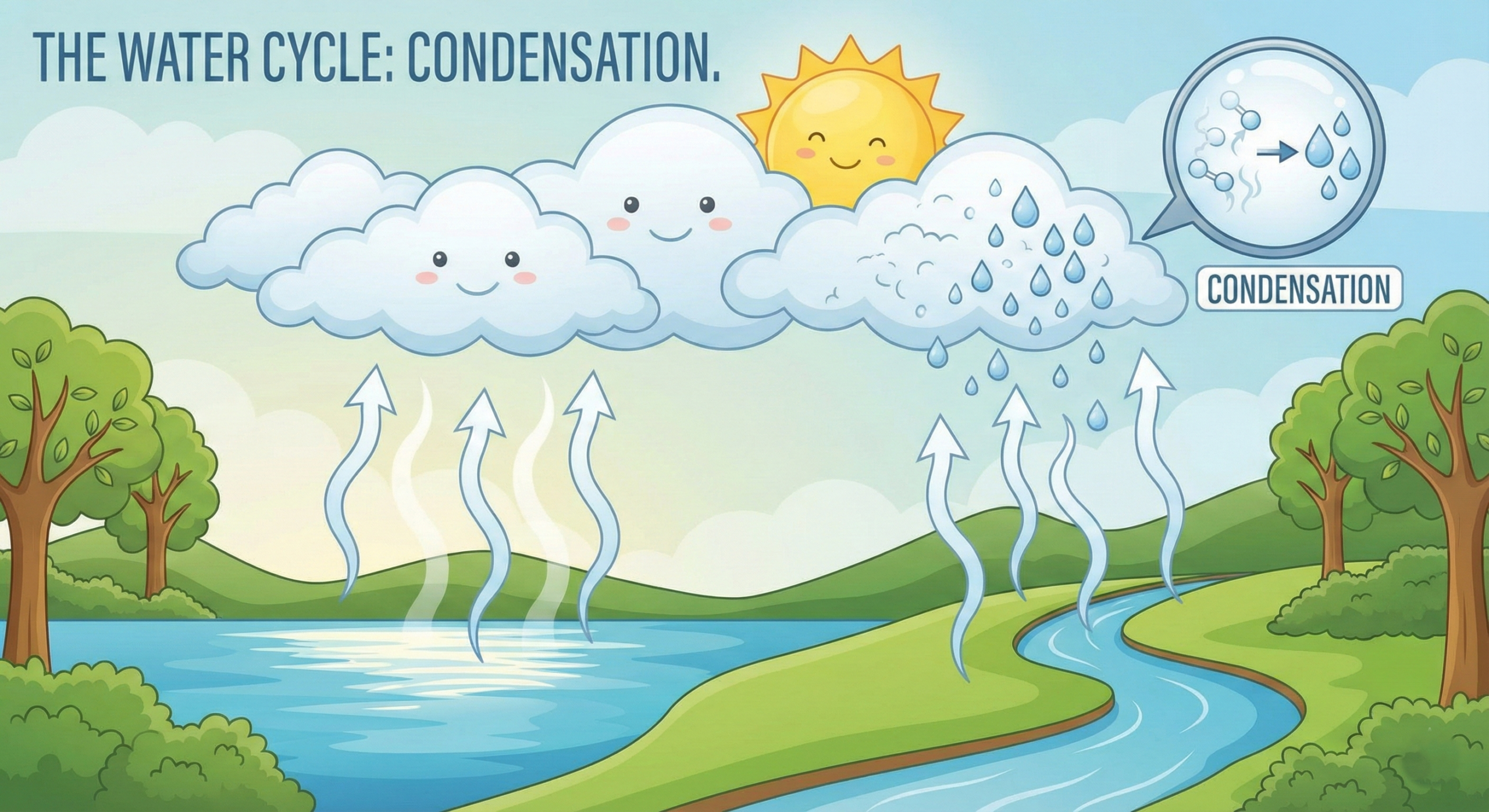
For example, when you breathe on a cold window, you see fog appear. This is condensation in action.
Precipitation: Water Falls Back to Earth
Precipitation occurs when water droplets in clouds become too heavy to stay in the air. They fall back to Earth as rain, snow, sleet, or hail.
Rain is the most common form of precipitation. Snow happens when the temperature is very cold. Sleet and hail are other types of precipitation that fall in winter storms.
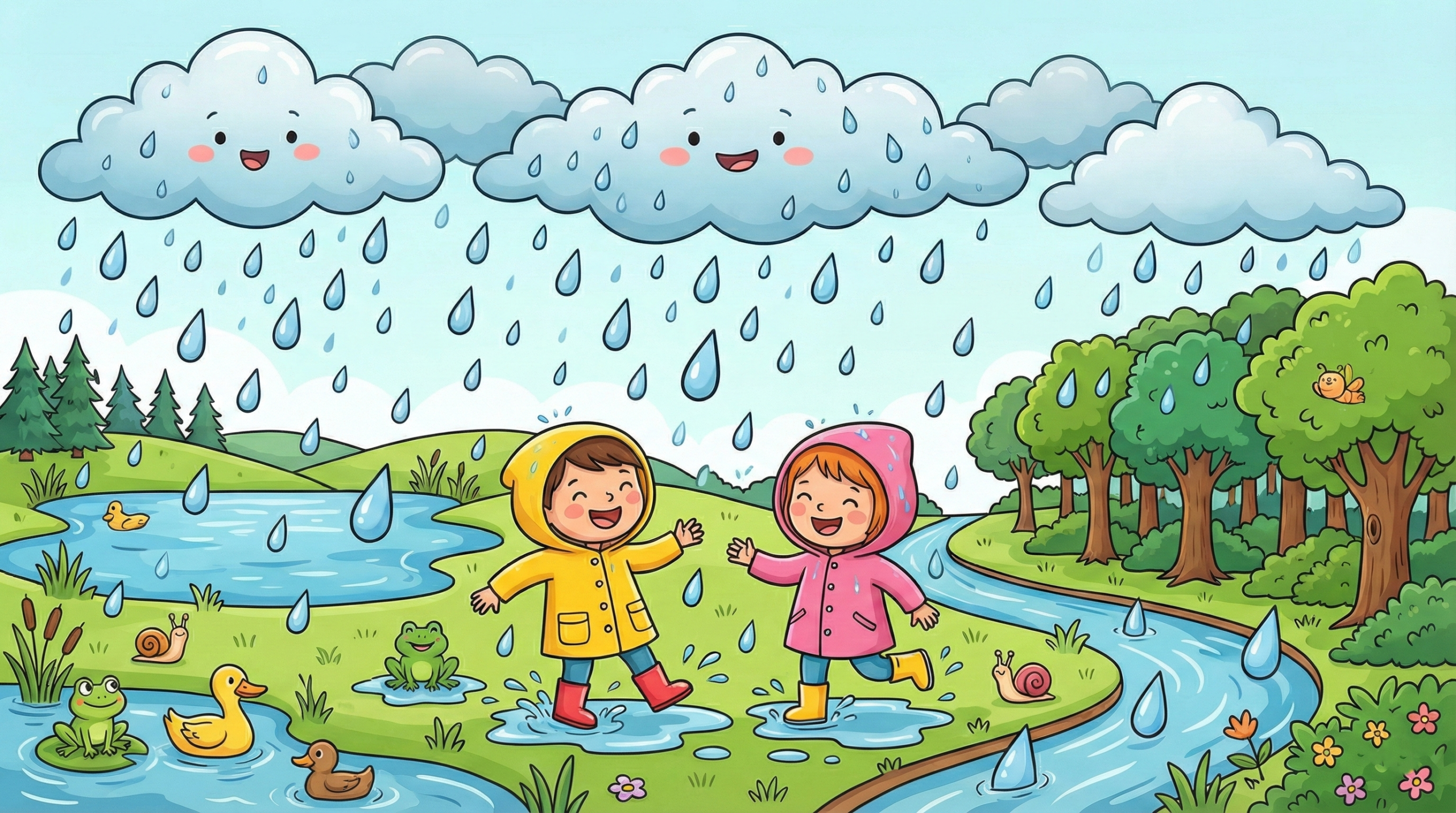
Precipitation is important because it supplies fresh water to rivers, lakes, and the ground. It helps plants grow and animals survive.
Collection: Water Returns to Lakes and Oceans
After precipitation, water gathers in rivers, lakes, oceans, and even underground. This process is called collection. Water in oceans can evaporate again, continuing the water cycle.
Collection also includes groundwater. Some water soaks into the soil and becomes groundwater. Plants absorb this water through roots.
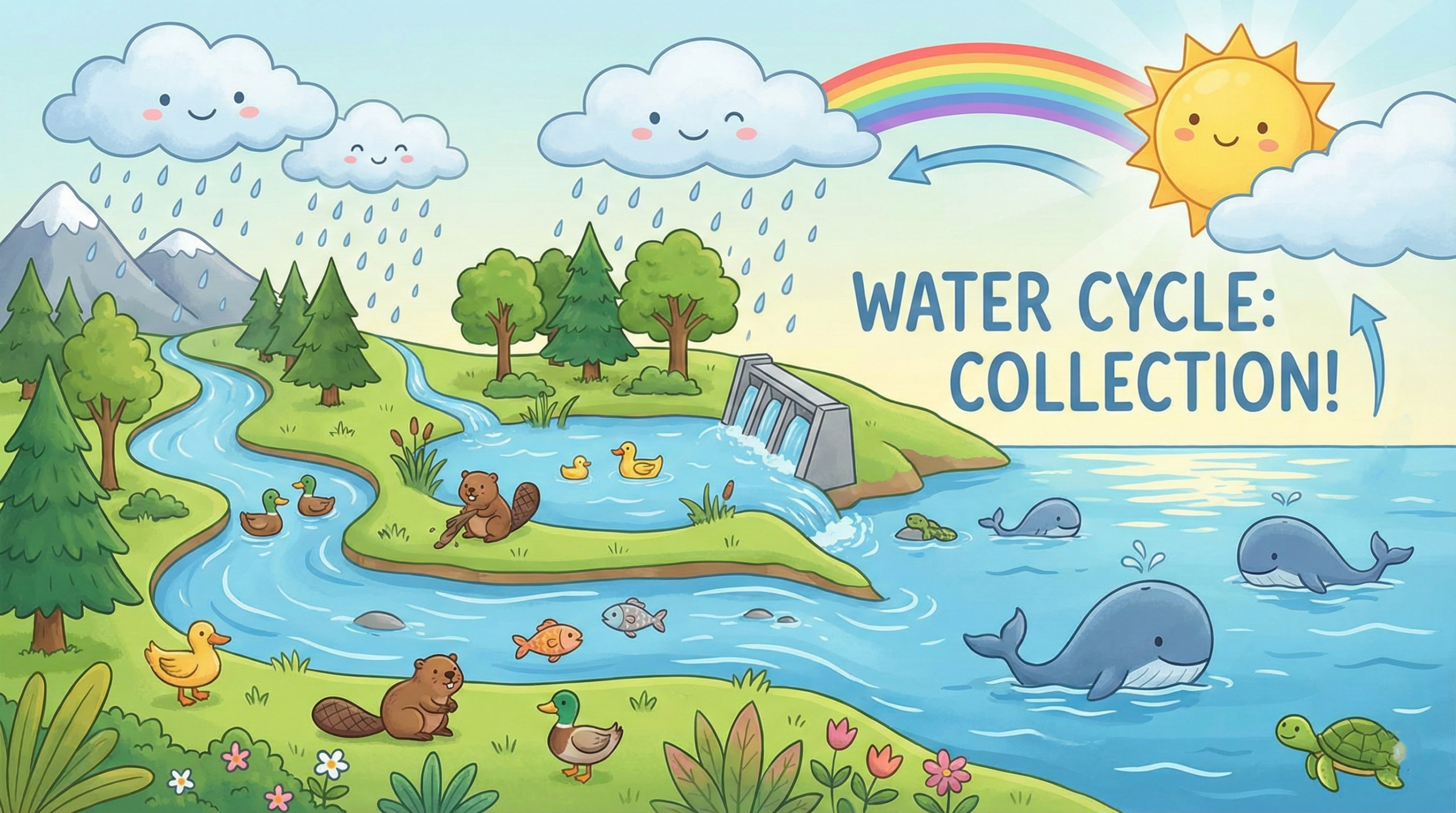
For example, after rain, puddles form on the ground. These puddles eventually dry up through evaporation, continuing the water cycle.
Why the Water Cycle is Important
The water cycle is essential for life. Without it, we would not have fresh water for drinking, farming, or animals.
- Plants need water to grow.
- Animals need water to survive.
- Humans need water for drinking, cooking, and cleaning.
It also helps regulate temperature on Earth. Oceans and clouds store heat from the sun and distribute it across the planet.
Fun Facts About the Water Cycle
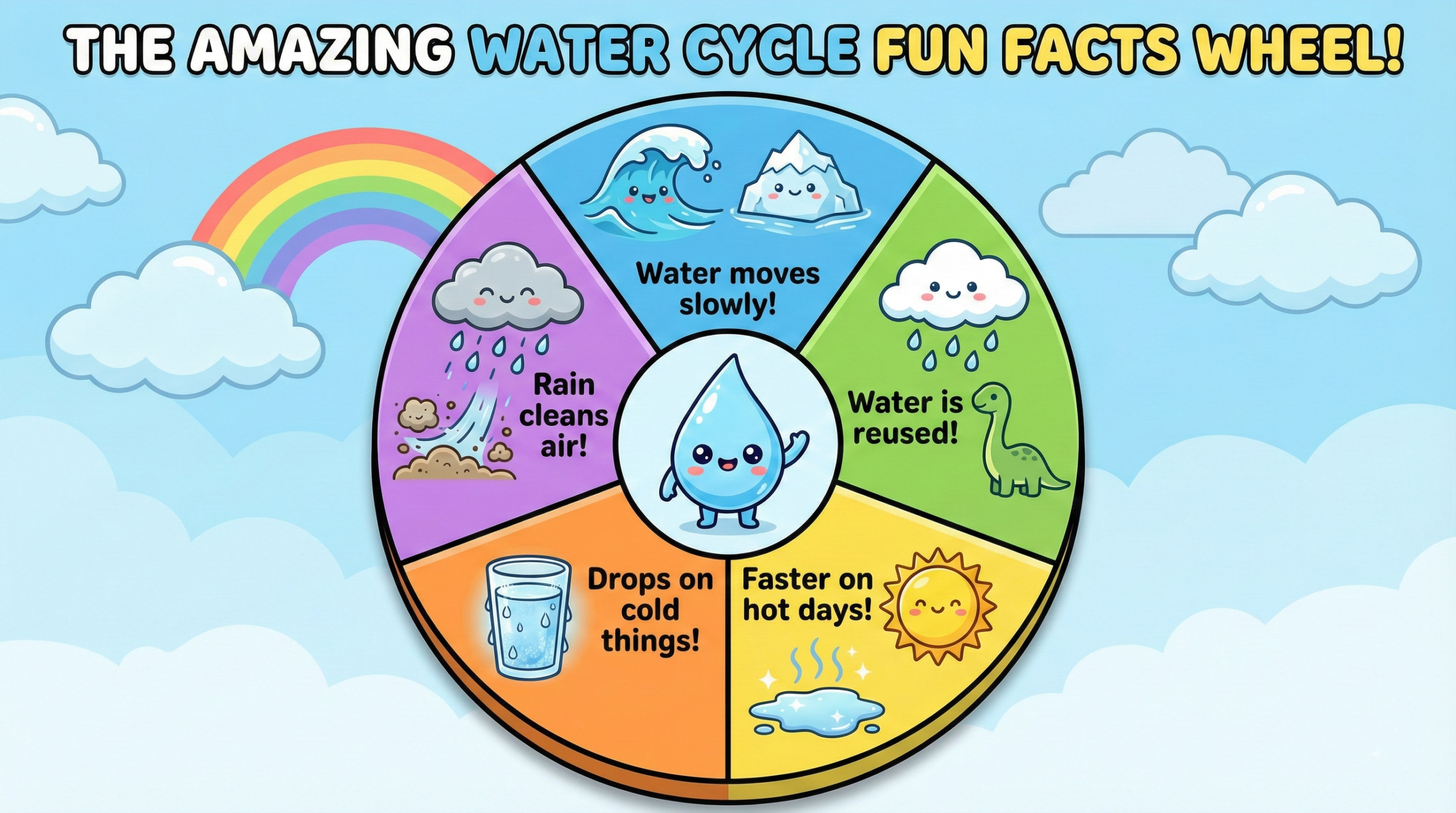
The water cycle is full of amazing and surprising facts! These fun facts help us understand how water moves, changes, and supports life on Earth. Here are some exciting things to learn:
1. Water Can Take Thousands of Years to Travel Through the Cycle
Some water moves through the cycle very quickly—like when rain falls, evaporates, and becomes clouds again.
But some takes a very long time to finish the cycle.
For example:
- Water deep in the ocean may stay there for thousands of years before evaporating.
- Water frozen in glaciers or ice caps may stay frozen for a very, very long time before melting and moving again.
This shows that some parts of the process happen fast, while others take a long time.
2. Water Is Always Recycled
The water on Earth today is the same water that existed millions of years ago.
This means:
- The water you drink today might have fallen as rain during the time of dinosaurs!
- The water in your glass may have once been part of the ocean, a cloud, a river, or even inside a plant.
Water never disappears—it just changes places and forms.
3. Evaporation Happens Faster on Hot Days
When the sun is strong and the weather is hot, water evaporates more quickly.
You can see this when:
- Puddles dry up faster after a hot sunny day.
- Wet clothes dry more quickly outside when the weather is warm.
Heat gives water energy, helping it turn into vapor faster.
4. Condensation Happens Indoors Too
You don’t need clouds for condensation to happen! You can see it at home.
Examples:
- When you have a cold glass of water, tiny water droplets form on the outside.
- When warm air in your house touches a cold window, you may see foggy patches or droplets.
This is the same process that forms clouds in the sky.
5. Precipitation Helps Clean the Air
Rain does more than just water the plants—
It also helps clean the air!
When raindrops fall, they catch:
- Dust
- Smoke particles
- Tiny bits of dirt
- Pollution
This makes the air fresher and cleaner after a good rain.
Summary of the Water Cycle
To summarize, the water cycle has four main stages:
- Evaporation: Water changes to vapor due to heat.
- Condensation: Water vapor forms clouds.
- Precipitation: Water falls back to Earth as rain, snow, or hail.
- Collection: Water gathers in rivers, lakes, oceans, and underground.
The cycle keeps repeating, ensuring life on Earth has fresh water. Remember, water is always moving, changing, and recycling.
Conclusion
The water cycle is an amazing natural system that keeps water moving around our planet. It helps explain why we have rain, clouds, rivers, and even snow. Most importantly, it shows how water never disappears. Instead, it changes form and travels through different stages again and again.
Because of this, people, animals, and plants always have access to fresh water. Even though the water changes forms, it stays part of the same cycle. This means the water you drink today may have once been rain, snow, or even ocean water.
Furthermore, understanding this process helps children appreciate nature. When kids learn how water evaporates, condenses, and falls as precipitation, they begin to understand weather patterns. They notice how sunny days can lead to evaporation. Then, they connect cloudy days to condensation. After that, they can link rainfall to precipitation. These simple connections help kids become better observers of the world.
In addition, learning about the it teaches responsibility. Water is precious. Although the water cycle repeats endlessly, clean and safe water is limited. Kids learn the importance of taking care of rivers, lakes, and oceans. They discover why we must avoid wasting water and throwing trash into waterways.
Moreover, the water cycle shows how everything in nature works together. The sun provides heat for evaporation. The wind helps move clouds. The land collects water after it rains. Every part has a role. Because of this, children begin to see how connected the Earth is.
Finally, it encourages curiosity. Kids can observe evaporation, condensation, precipitation, and collection in everyday life. They can watch puddles dry, see droplets on cold surfaces, observe clouds, and notice rain collecting in streams. These simple observations help science come alive.
In the end, the water cycle is more than a science lesson. It is a reminder that water supports life and connects every part of our planet. When kids understand this cycle, they become more aware, responsible, and curious learners. And with this knowledge, they can make better choices that protect our environment and support a healthier Earth for everyone.