
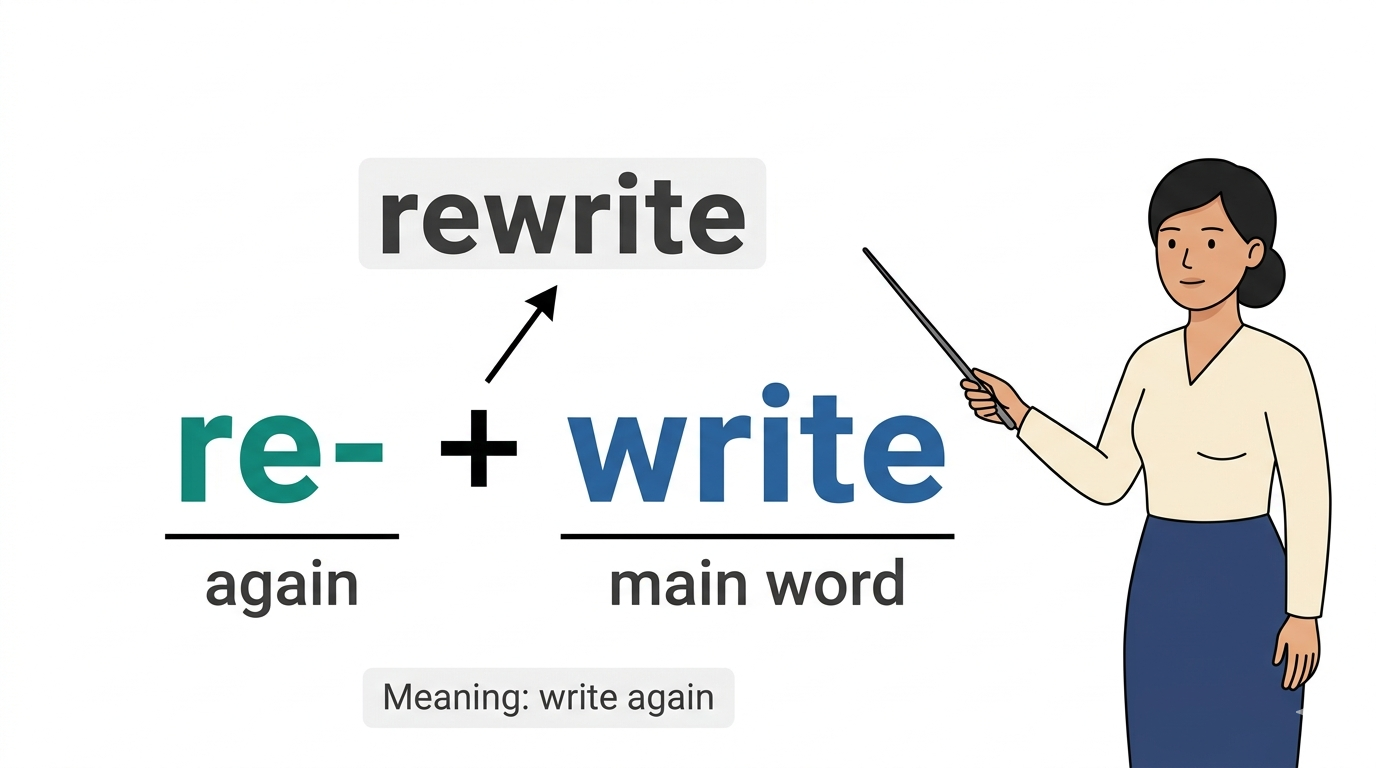
Root Words Prefixes Suffixes – Structural Analysis
The topic root words prefixes suffixes is very important in learning English vocabulary. It helps learners understand how English words are formed from smaller parts.
When you study root words, prefixes, and suffixes, you will see that many English words are not random. Instead, they are built from meaningful parts that work together.
In English, many words are made from smaller parts. These parts are called:
- root words
- prefixes
- suffixes
These parts work together to create meaning. Therefore, when you understand them, you can understand many words more easily.
Let us look at an example:
Word: disagreement
We can break it into parts:
- dis- → not or opposite
- agree → root word
- -ment → result or condition
Now, we combine the meanings: disagreement = the condition of not agreeing
Because of this, learning root words prefixes suffixes helps you:
- understand new words faster
- improve reading skills
- expand vocabulary
In addition, this skill helps you feel more confident when reading English texts.
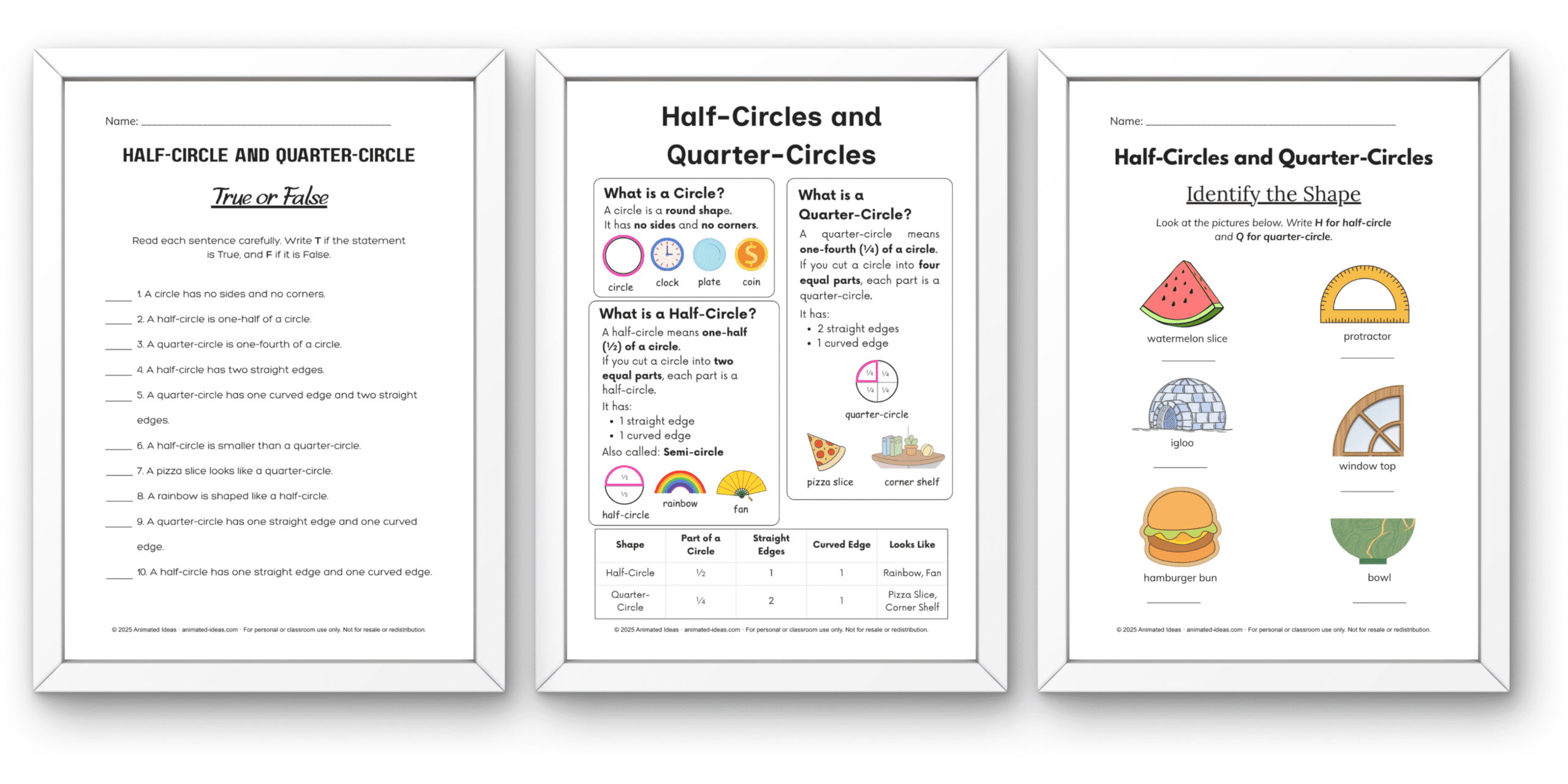
Download Free Worksheets and Notes
To support your learning, you can download free materials about root words prefixes suffixes. This is best for:
- beginner learners
- ESL students
- elementary students
- teachers
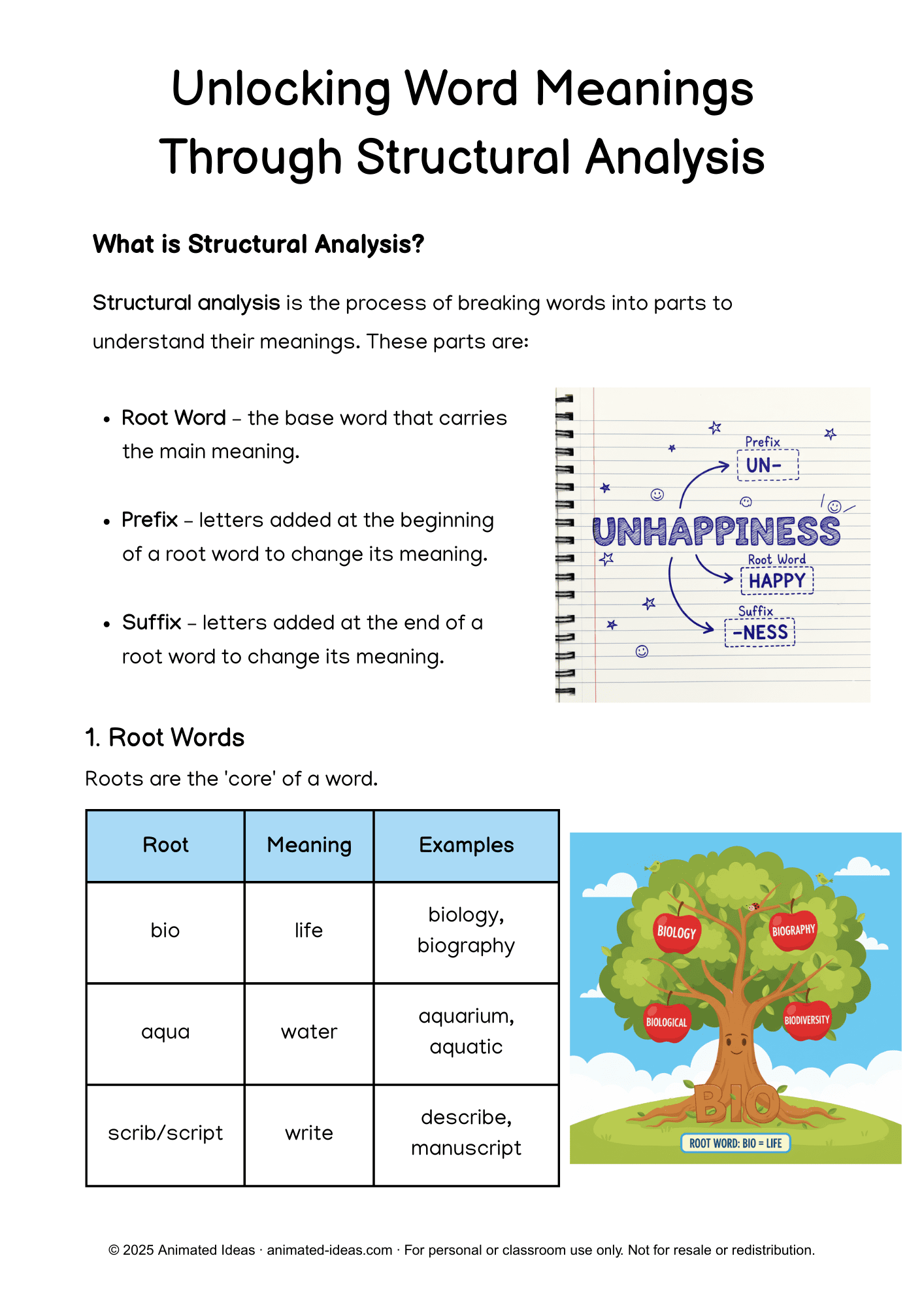
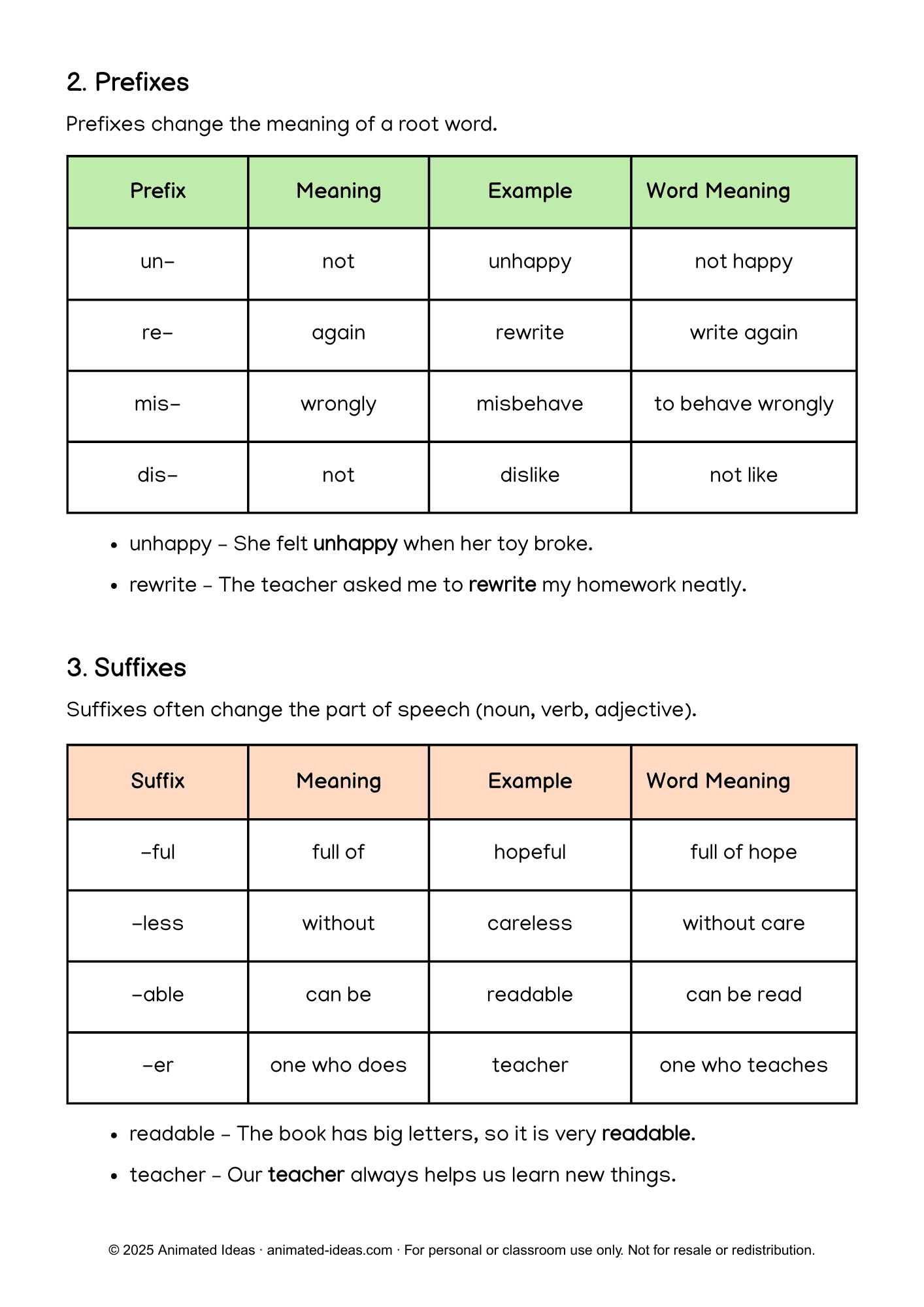
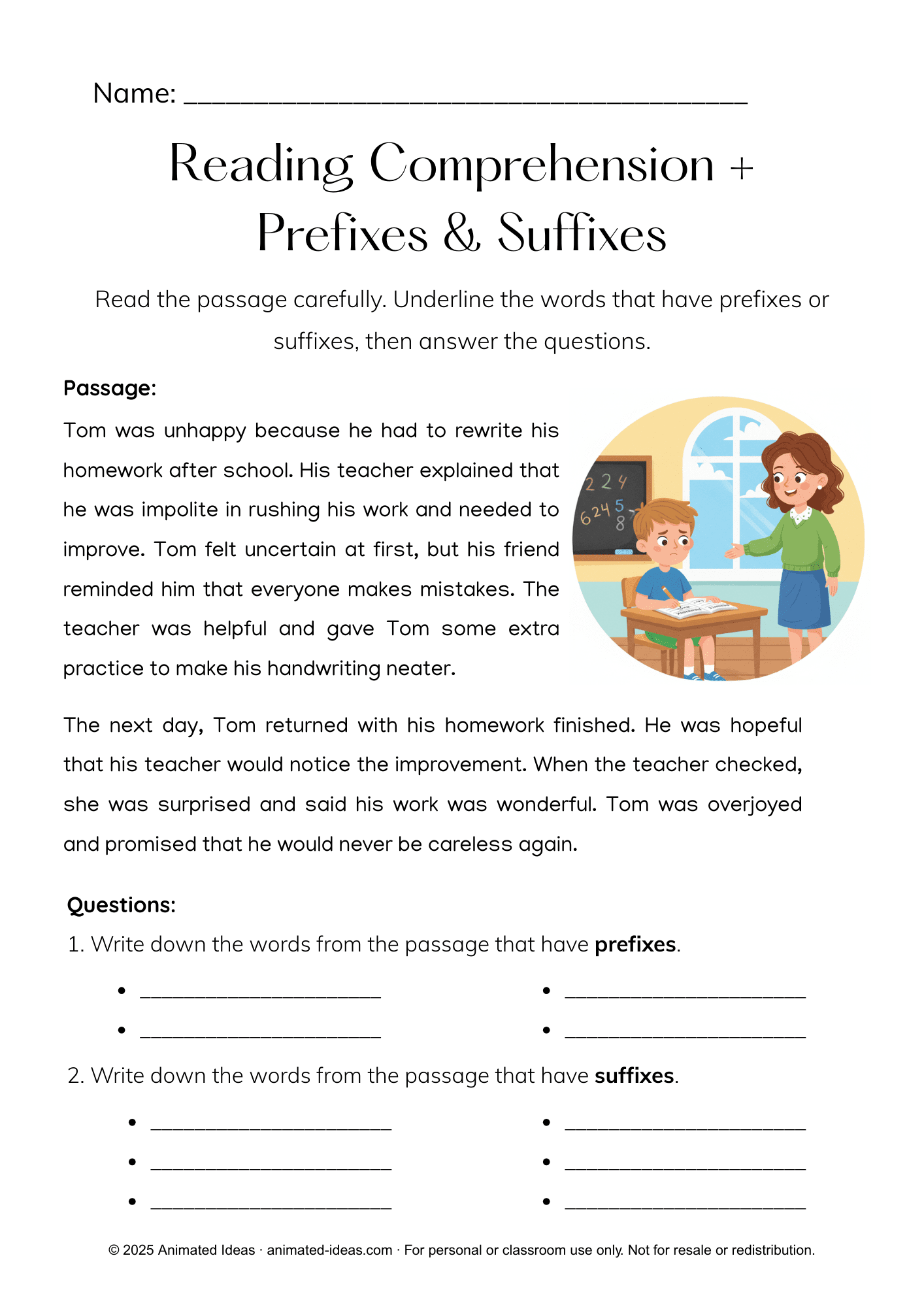
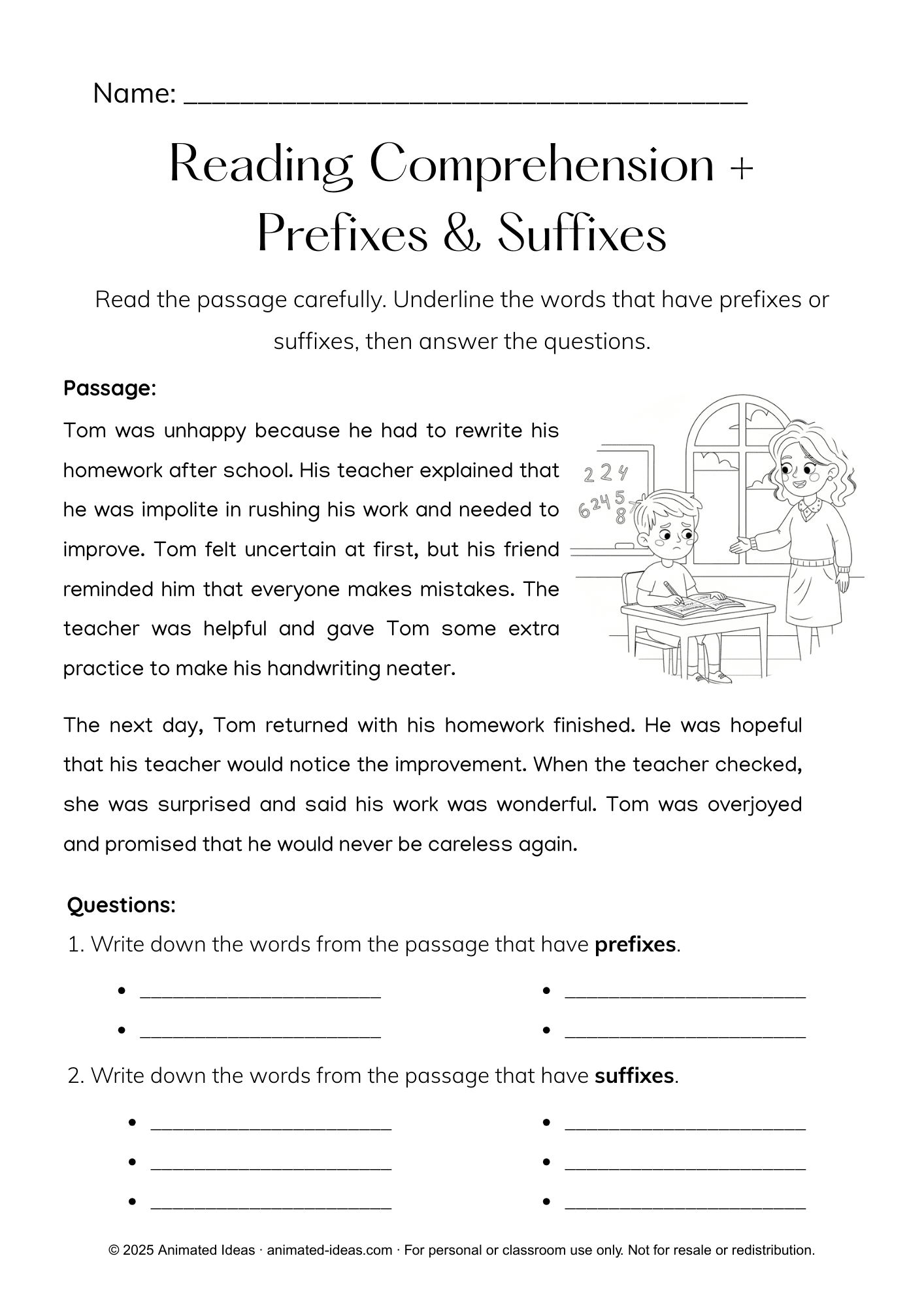
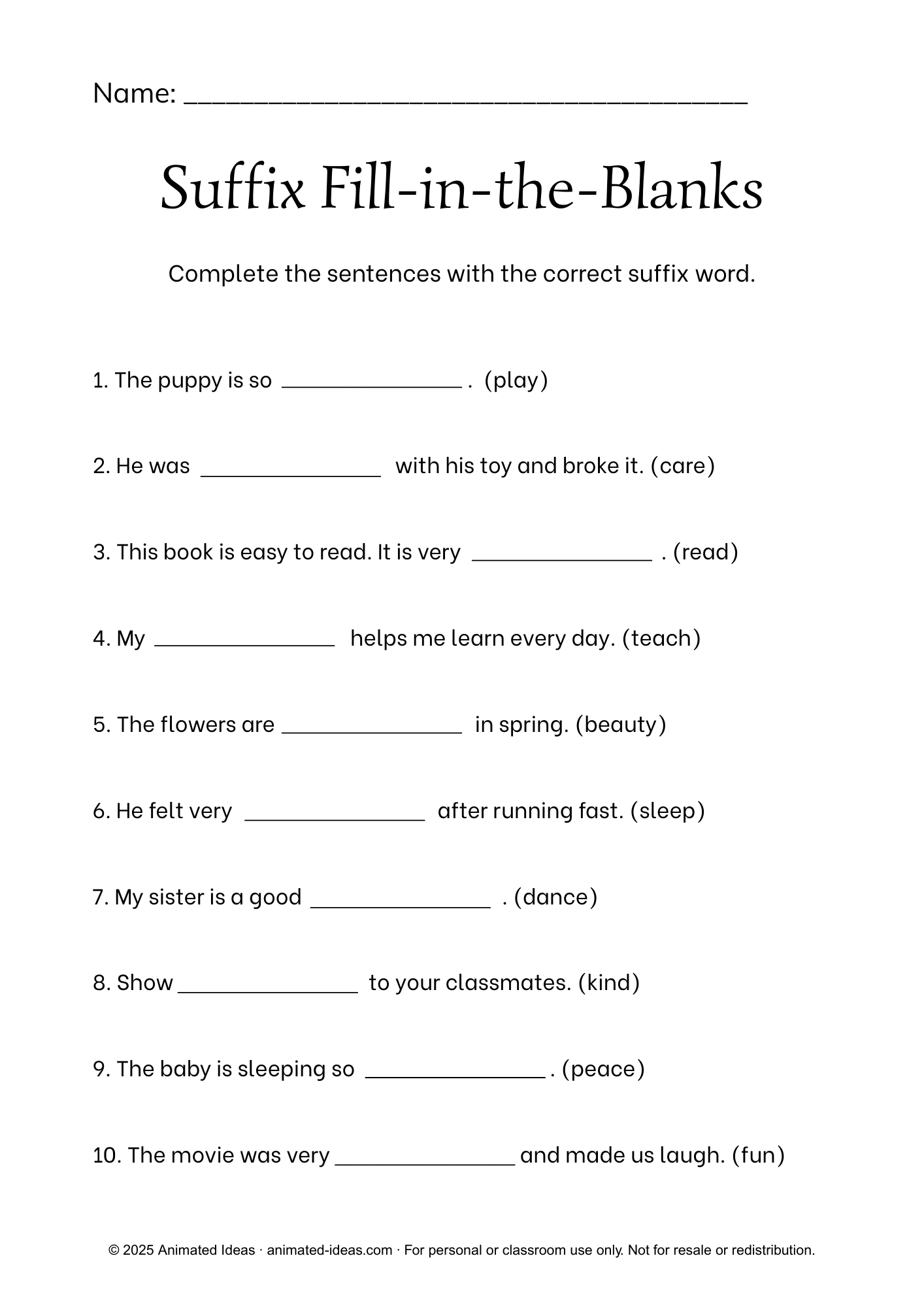
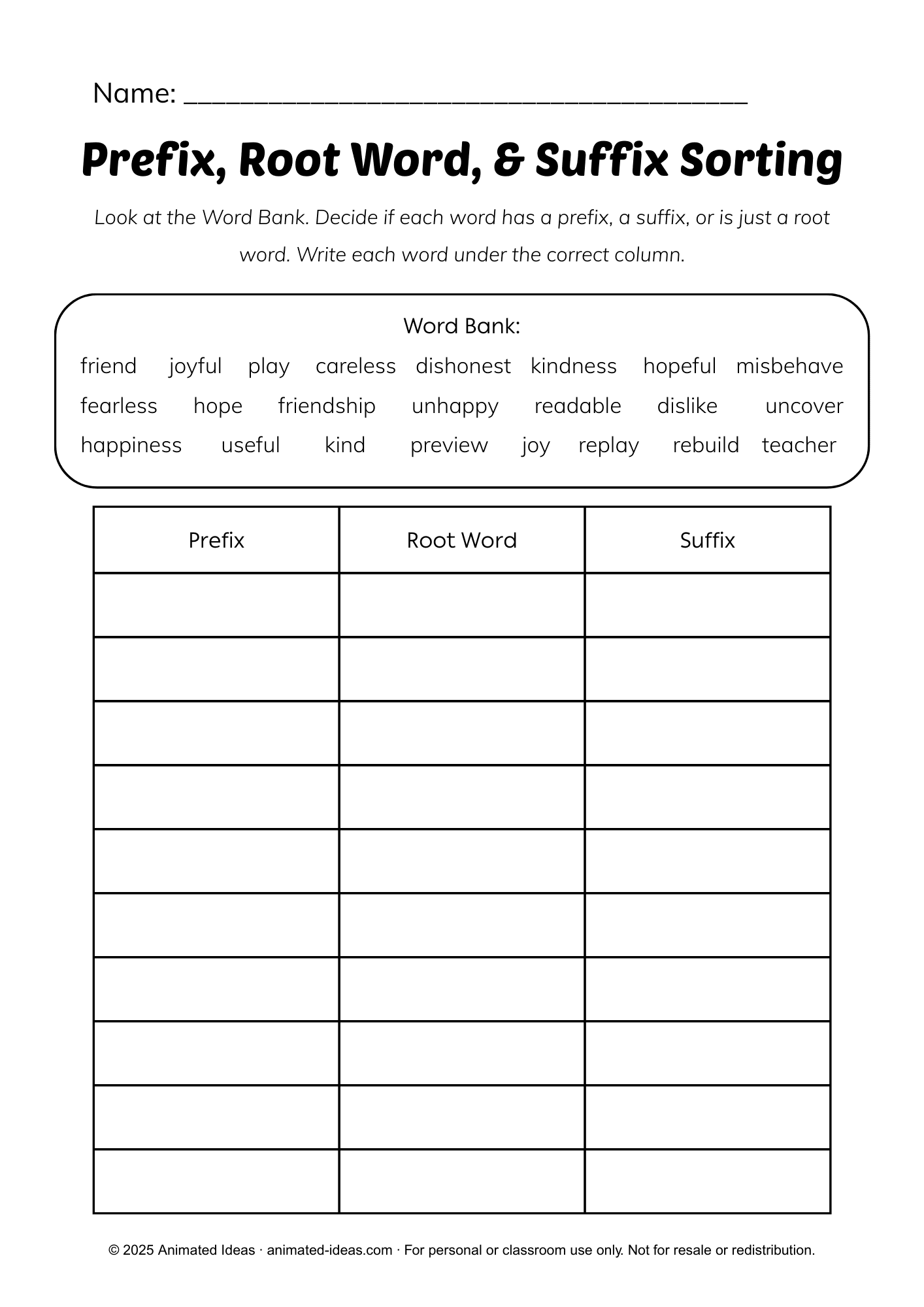
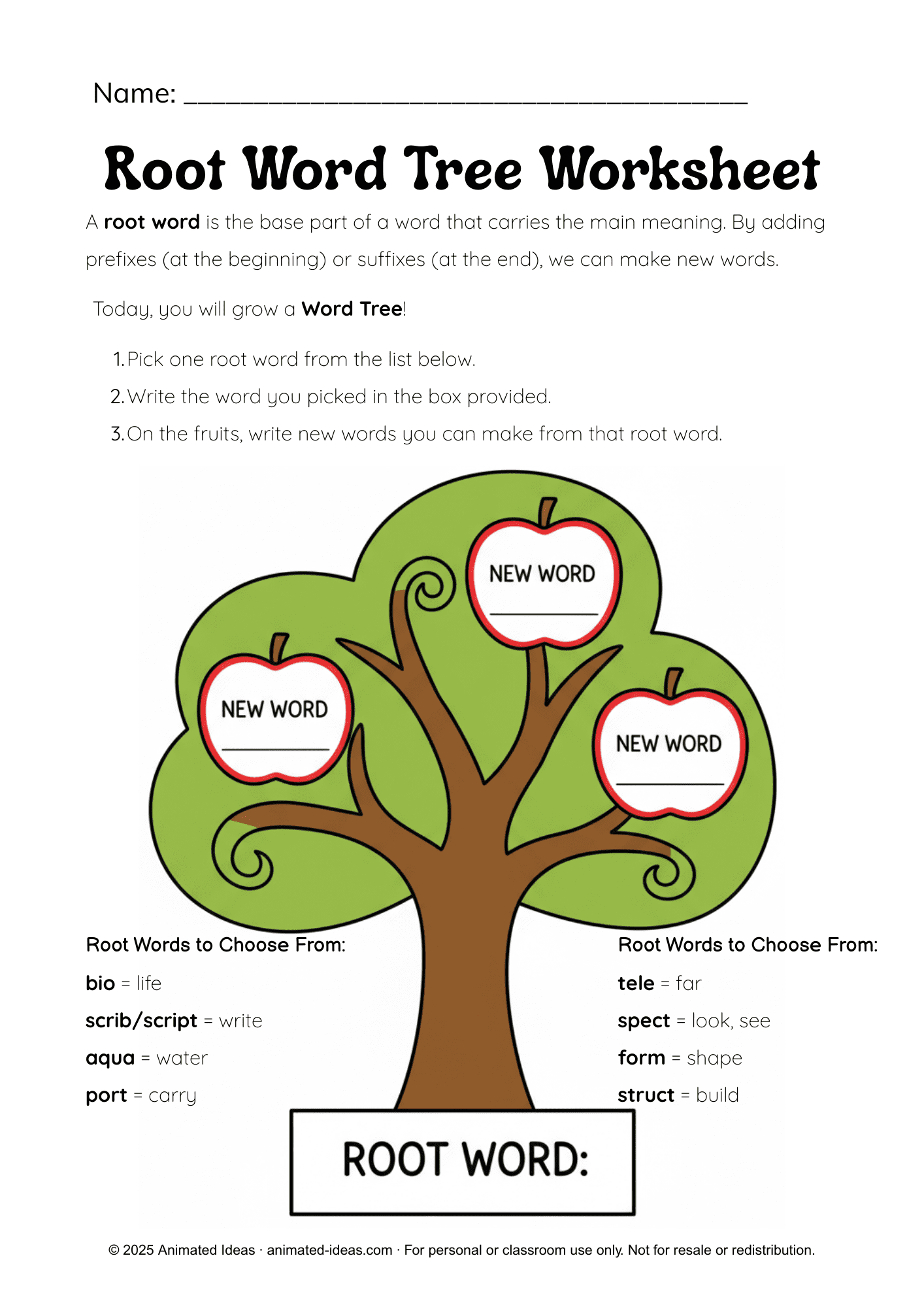
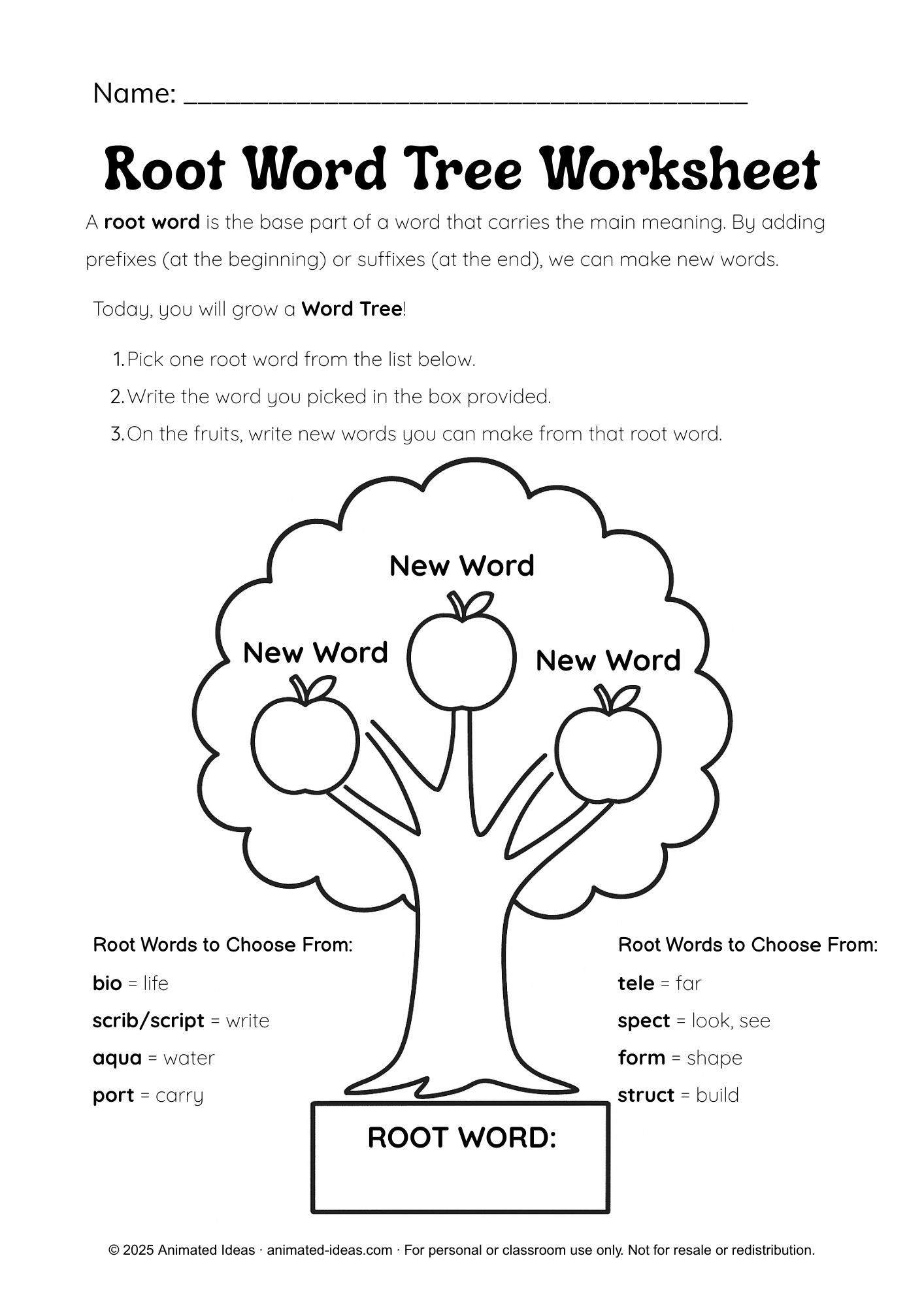
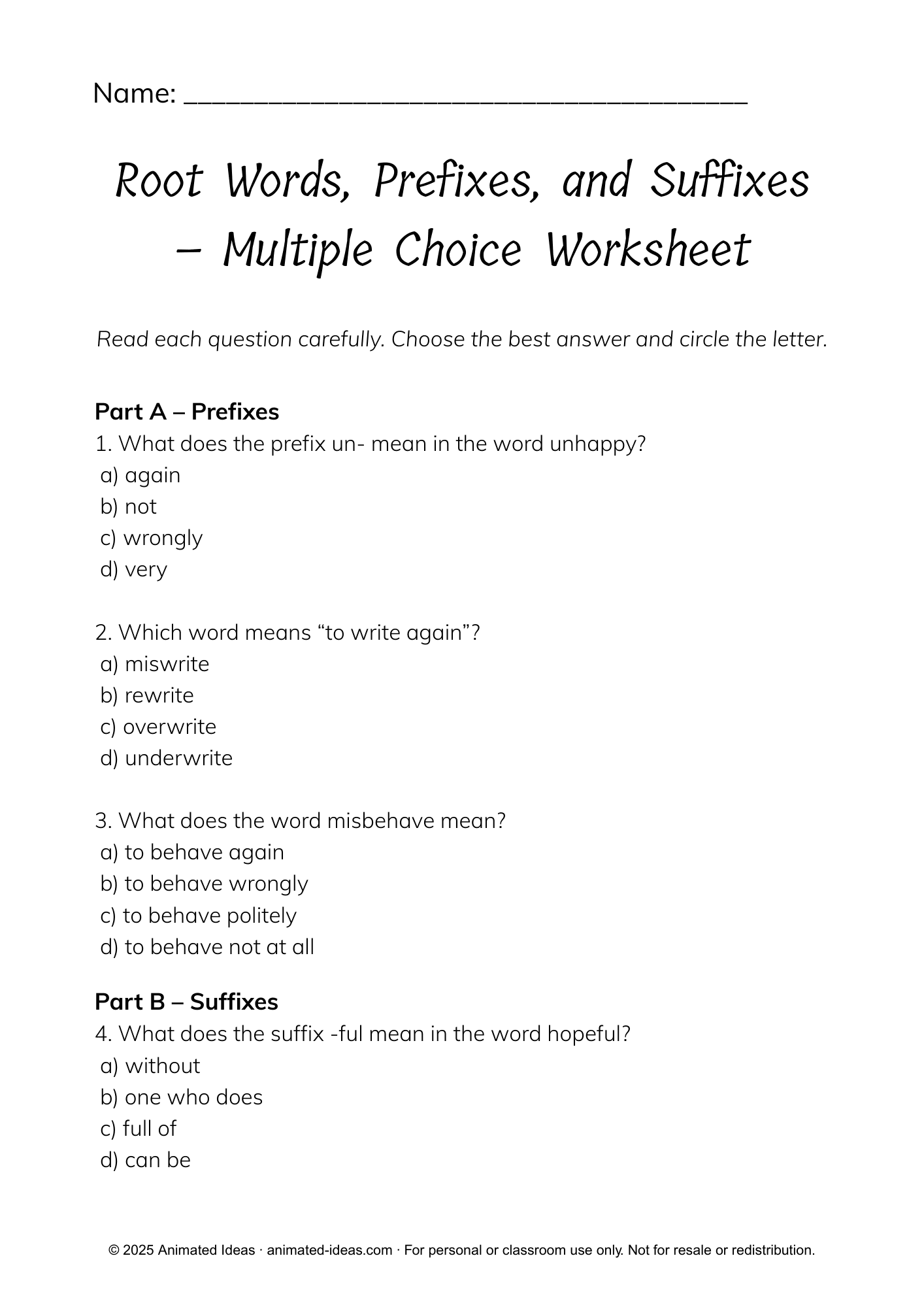
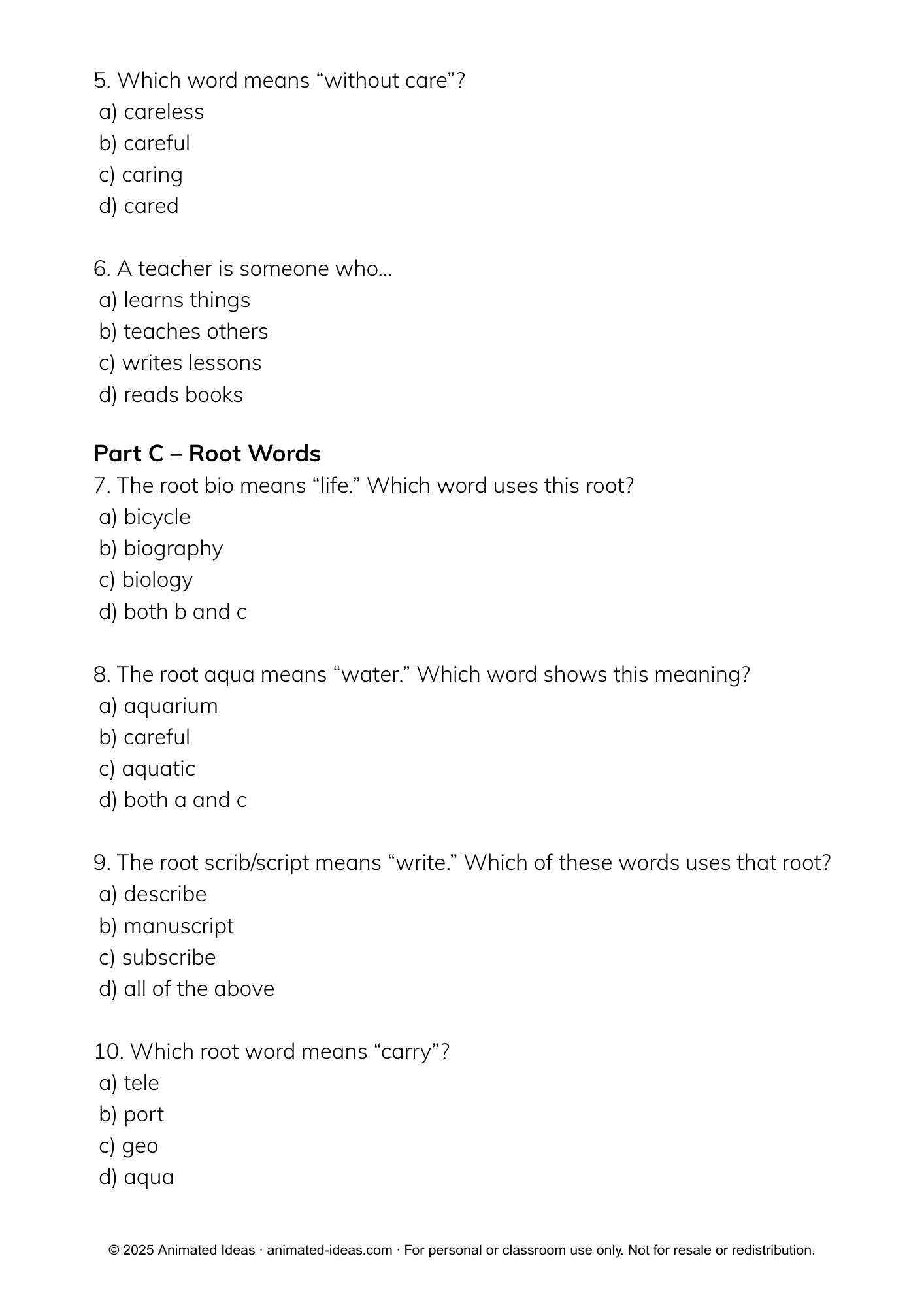
These materials help you practice regularly, understand structure and improve faster.
What Are Root Words?
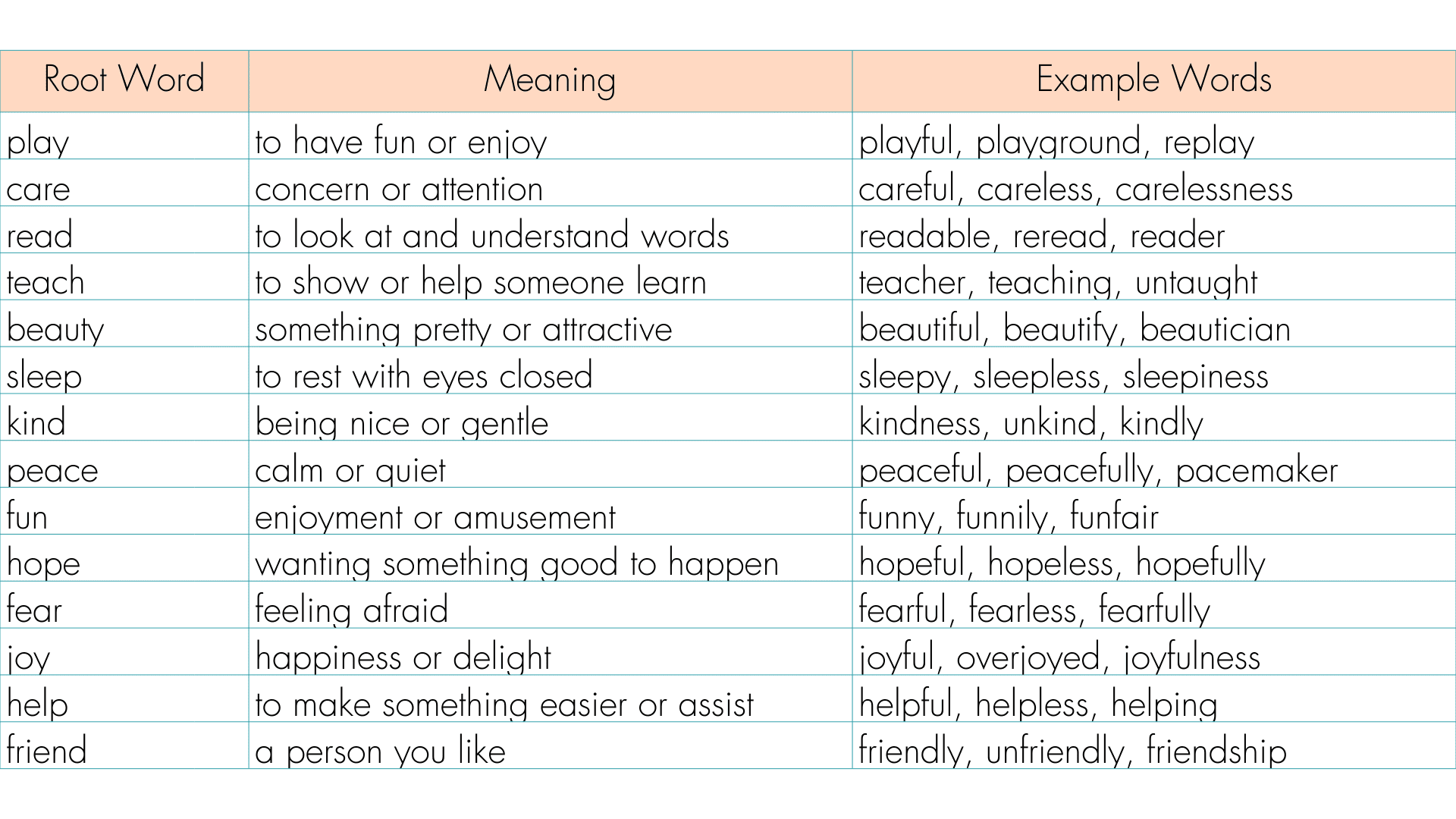
A root word is the most important part of a word. It carries the main meaning. In other words, it is the “heart” of the word.
Without the root word, the word has no meaning.
Root Words as the Base of Meaning
Let us look at a simple example:
Word: teacher
Breakdown:
- teach → root word
- -er → suffix
The root word teach tells us the main idea. The suffix only adds more information. Therefore, the root word is always the most important part.
Root Words Can Stand Alone
Some root words are complete words.
Examples:
- play
- read
- jump
- talk
These are called free root words. They can be used alone in a sentence.
Example: I play every day.
Root Words That Cannot Stand Alone
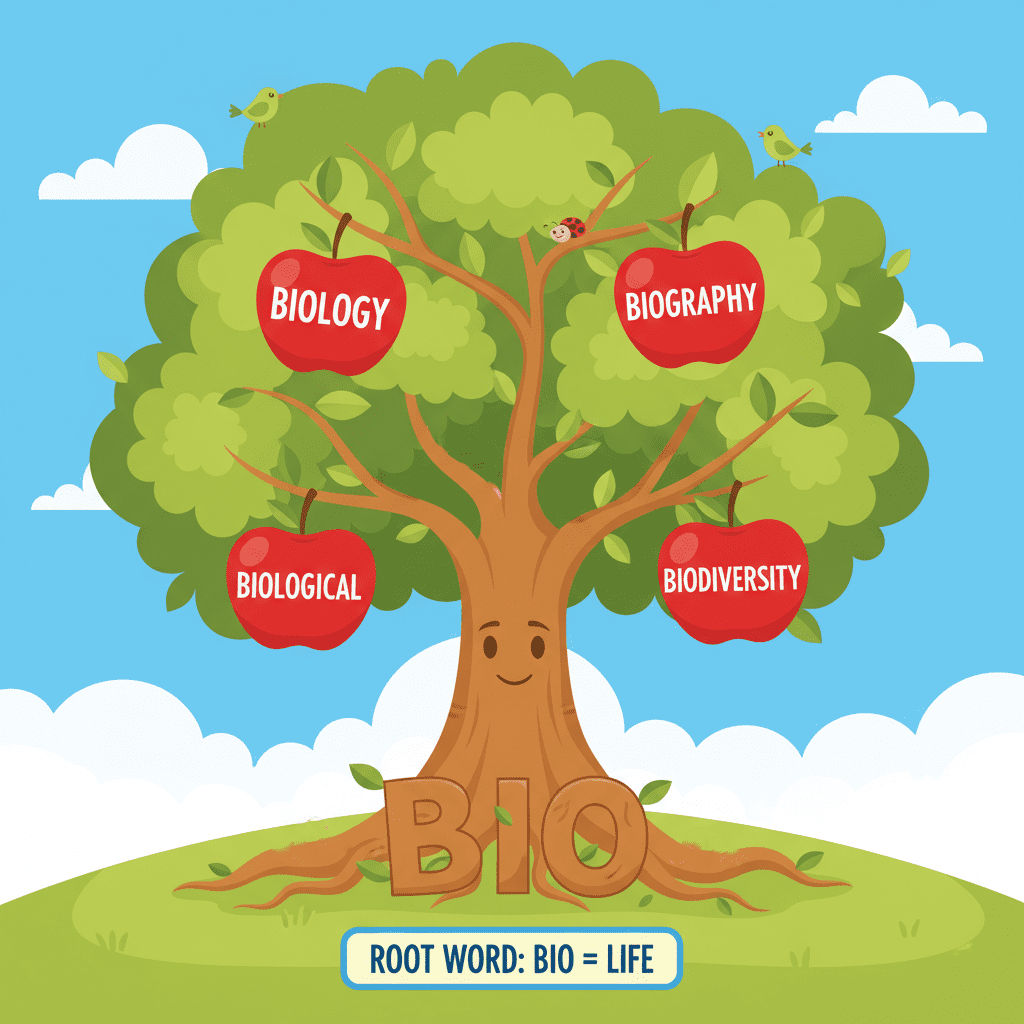
Some root words cannot stand alone. These are called bound root words.
Examples:
- bio → life
- geo → earth
- dict → say
They need other parts to form a full word.
Examples:
- biology
- geography
- dictionary
How Root Words Help Vocabulary
If you know one root word, you can understand many words.
Example with write:
- writer
- writing
- rewrite
- written
Even if you see a new word, you can guess its meaning.
What Are Prefixes?
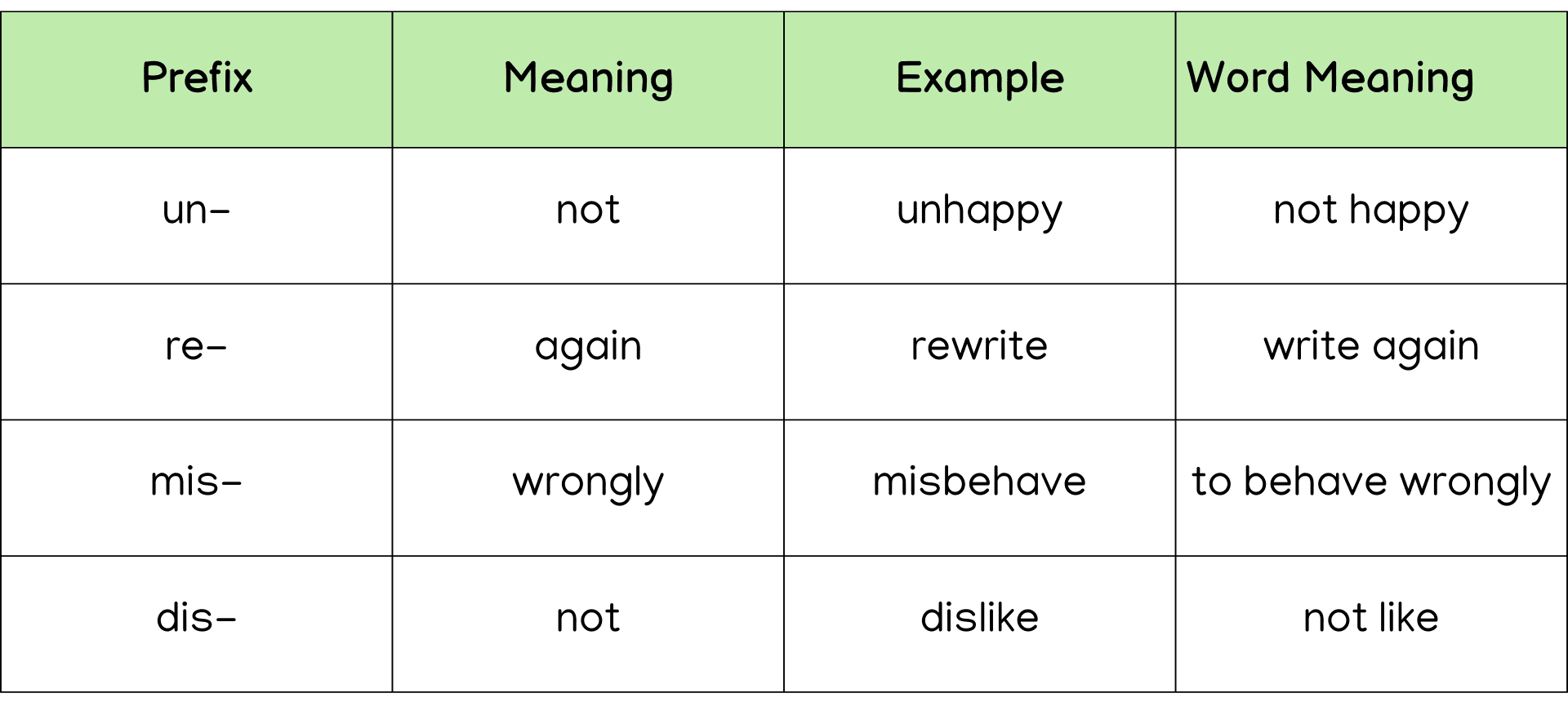
A prefix is a group of letters added to the beginning of a root word to change its meaning. Prefixes are very useful. They help create new words quickly.
Understanding Prefix Position
The prefix always comes before the root word.
Structure: prefix + root word
Example: un + happy = unhappy
Example Sentences:
- Tom was unhappy because he lost his book.
- Please rewrite your answer neatly.
- The students will misbehave if they do not follow the rules.
- I dislike eating vegetables, but I know they are healthy.
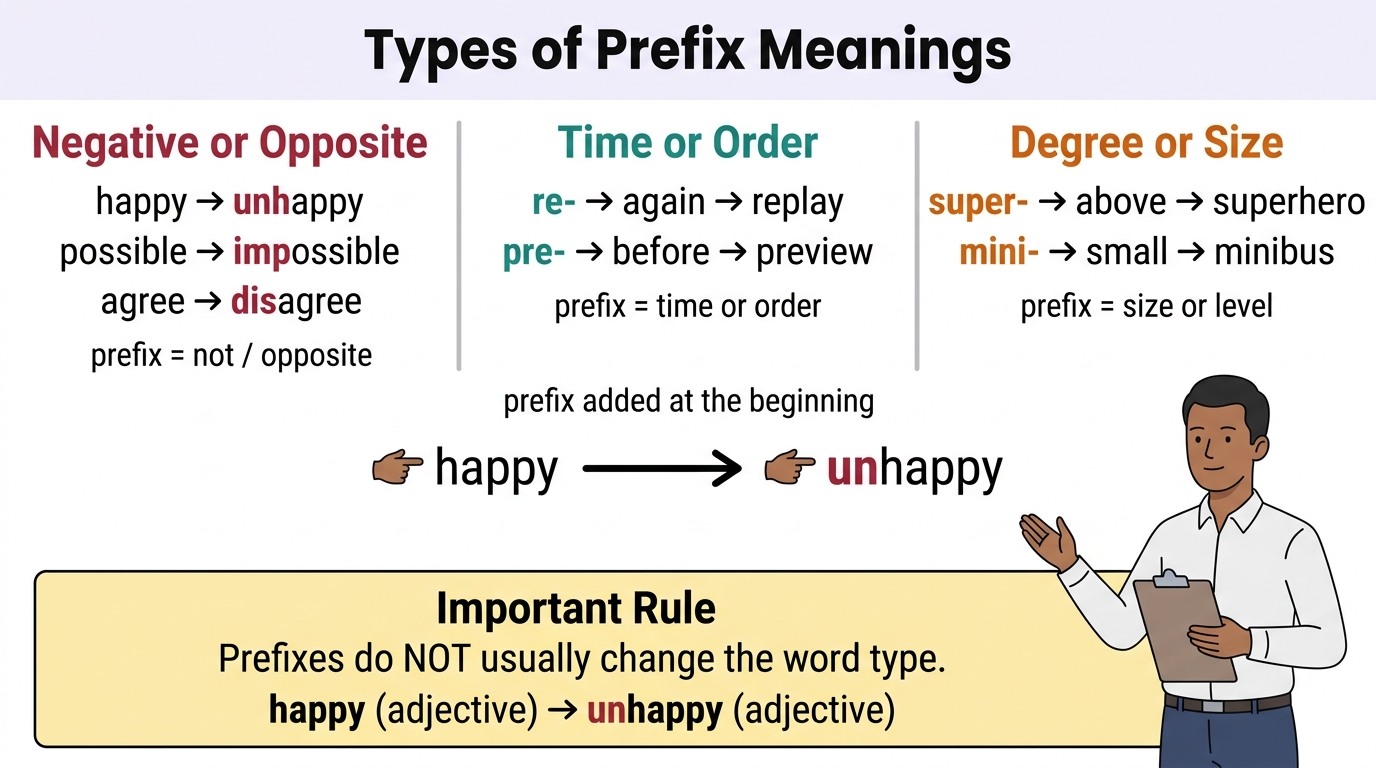
Types of Prefix Meanings
Prefixes can show different ideas.
1. Negative or Opposite Meaning
These prefixes make the word mean the opposite.
Examples:
- happy → unhappy
- possible → impossible
- agree → disagree
These words now show a negative meaning.
2. Time or Order
These prefixes show when something happens.
Examples:
- re- → again → replay
- pre- → before → preview
These help show time clearly.
3. Degree or Size
Some prefixes show size or amount.
Examples:
- super- → above → superhero
- mini- → small → minibus
Important Rule About Prefixes
Prefixes do NOT usually change the word type.
Example: happy (adjective) → unhappy (still adjective)
What Are Suffixes?
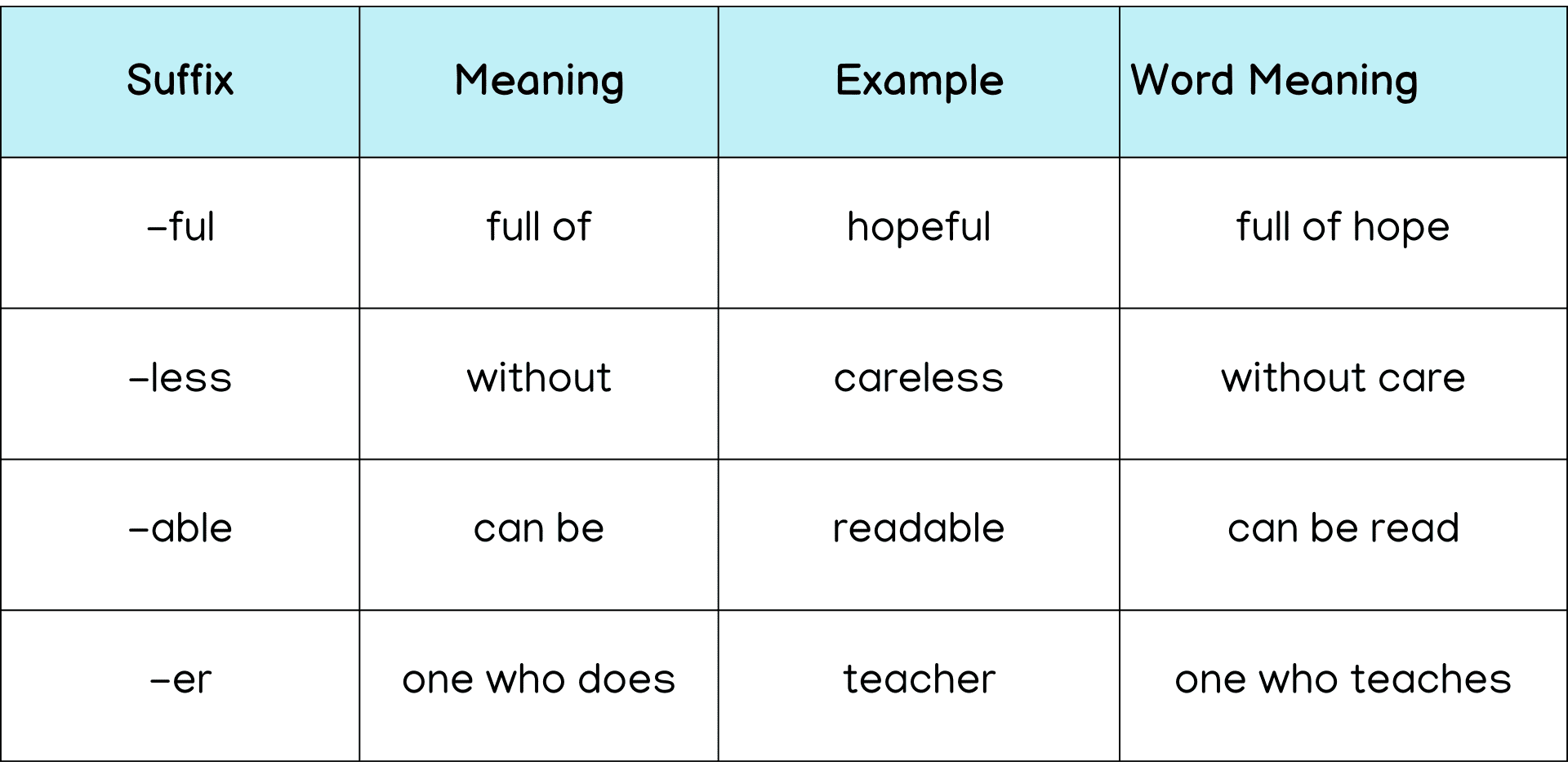
A suffix is a group of letters added to the end of a root word. Suffixes can change the word’s meaning or its part of speech (noun, adjective, verb, etc.). Suffixes are very important in grammar and sentence structure.
Structure: root word + suffix
Example: teach + er = teacher
Types of Suffixes
Suffixes can be grouped into types.
1. Suffixes That Change Word Type
These are very important.
Examples:
| Root | Type | New Word | New Type |
|---|---|---|---|
| teach | verb | teacher | noun |
| happy | adjective | happiness | noun |
| quick | adjective | quickly | adverb |
2. Suffixes That Add Meaning
These suffixes give more meaning but may not change type.
Examples:
- helpful → full of help
- careless → without care
3. Action Suffixes
Examples:
- -ing → running
- -ed → walked
These show actions or time.
Why Suffixes Are Important
Suffixes help you:
- form sentences correctly
- understand grammar
- create new words
Example Sentences:
- She was hopeful about winning the game.
- He was careless and dropped his pencil on the floor.
- This book is very readable because the letters are big and clear.
- My teacher helps me learn new words every day.
Structural Analysis
Structural analysis is the process of breaking words into their parts—prefix, root, and suffix—to understand their meaning. This skill helps students:
- Decode unfamiliar words in reading.
- Expand vocabulary.
- Improve spelling and writing.
Steps for Structural Analysis:
- Identify the prefix (if any) at the beginning of the word.
- Find the root word.
- Look for a suffix at the end of the word.
- Combine the meanings of each part to understand the full word.
Example:
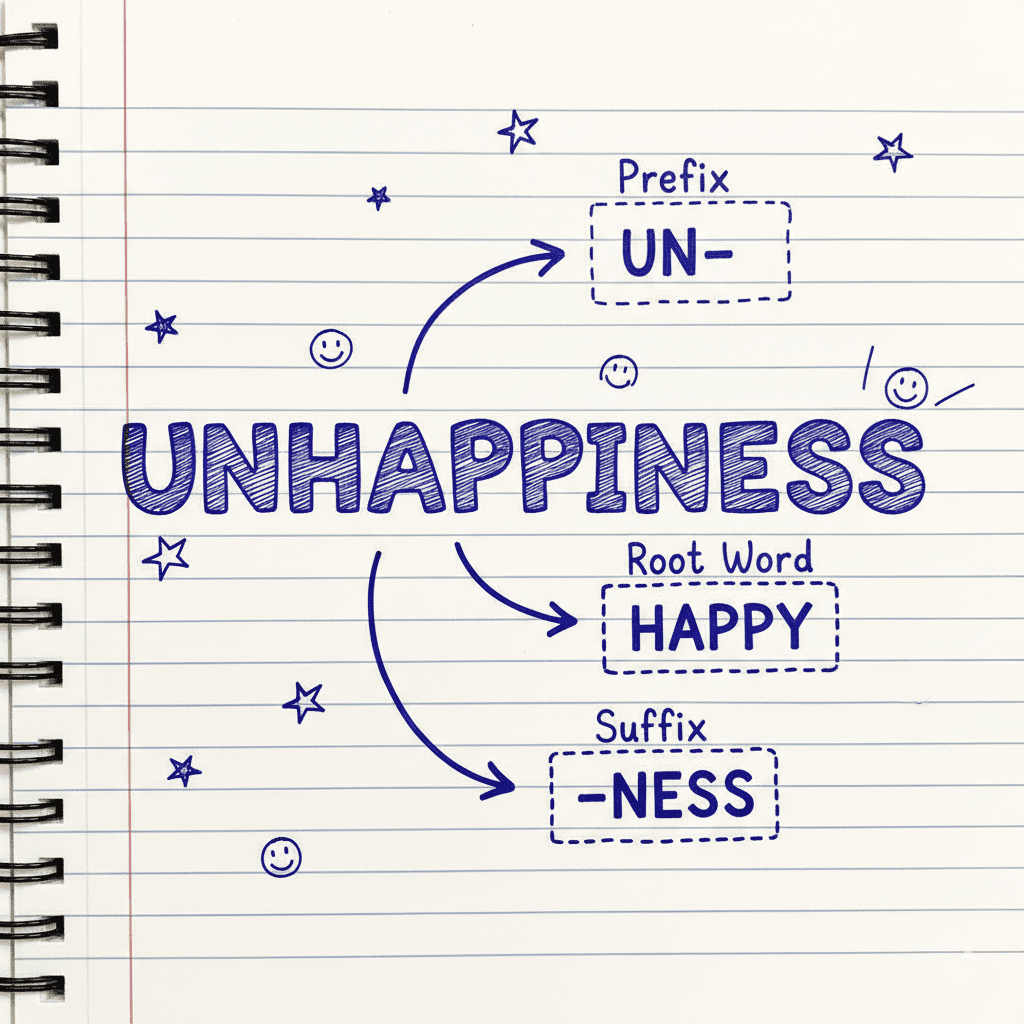
Word: unhappiness
- Prefix: un- = not
- Root word: happy = feeling glad or joyful
- Suffix: -ness = state of
Meaning: “The state of not being happy.”
Combining Root Words, Prefixes, and Suffixes
Many English words use all three parts. These words may look long. However, they are easy to understand when broken down.
Step-by-Step Example
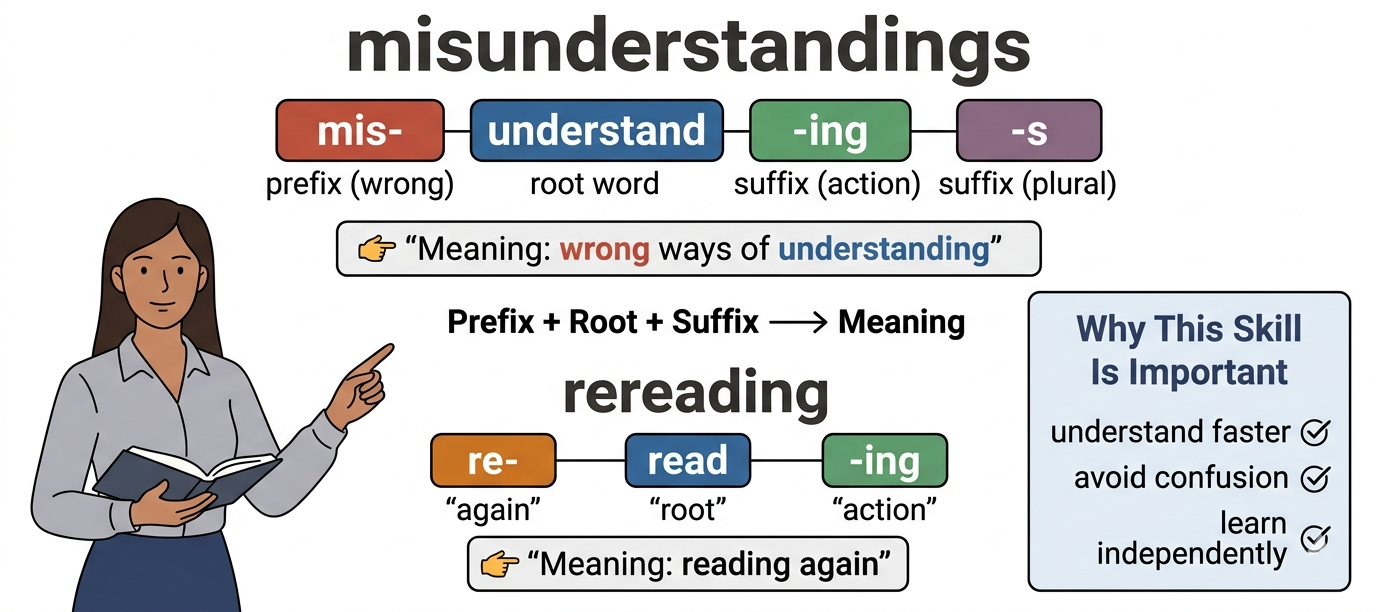
Word: misunderstandings
Breakdown:
- mis- → wrong
- understand → root
- -ing → action
- -s → plural
Meaning: wrong ways of understanding
Another Example
Word: rereading
- re- → again
- read → root
- -ing → action
Meaning: reading again
Conclusion
In conclusion, root words prefixes suffixes are the foundation of English words.
Root words give meaning.
Prefixes change meaning.
Suffixes change meaning and form.
When you understand these parts, you can learn English faster.
Therefore, this topic is essential for every beginner.
For updates and free resources, follow us:
📺 YouTube: Animated Ideas
📘 Facebook Page: Animated Ideas
👩🏫 Facebook Group: Learning Resources for Kids